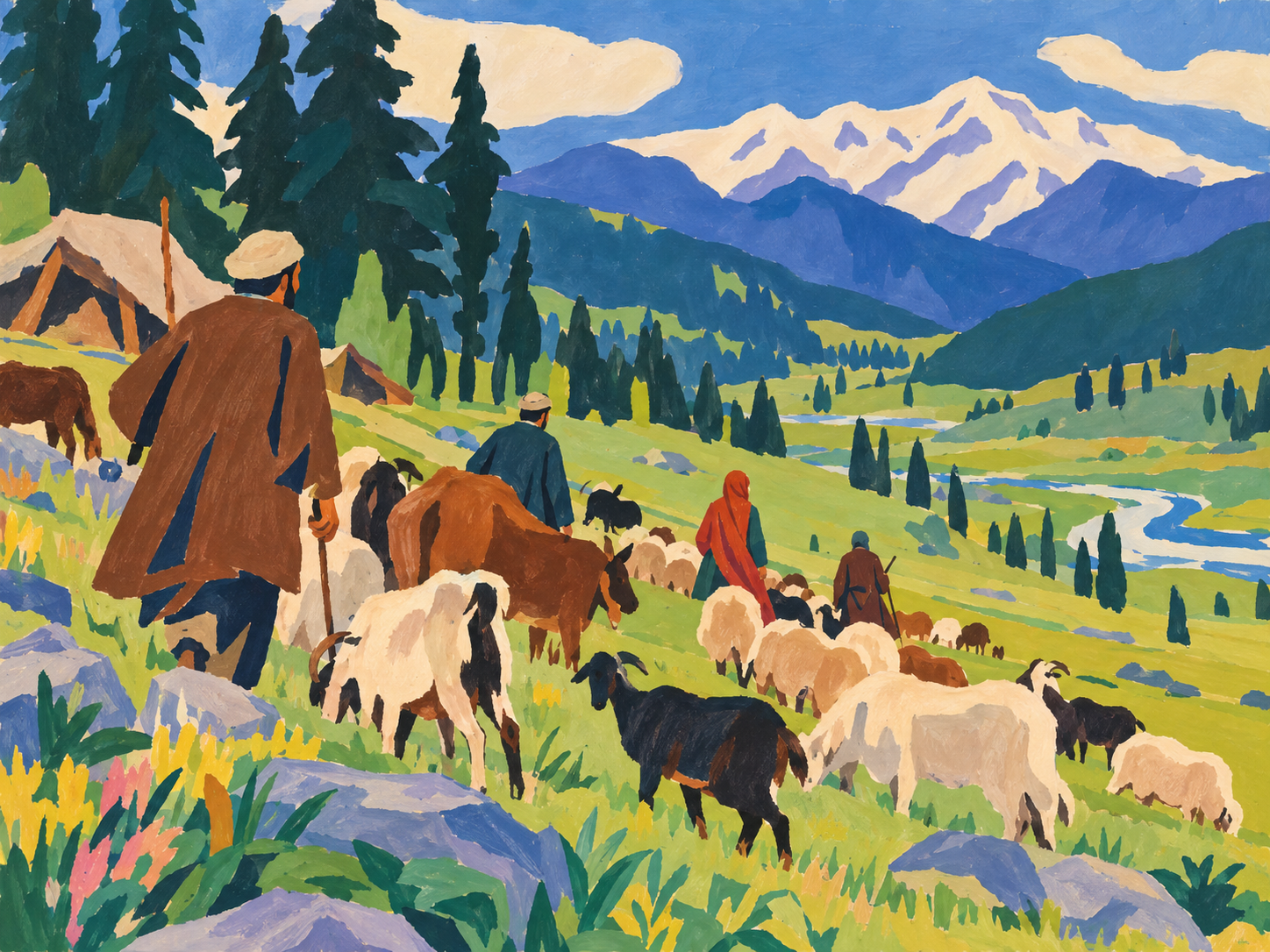
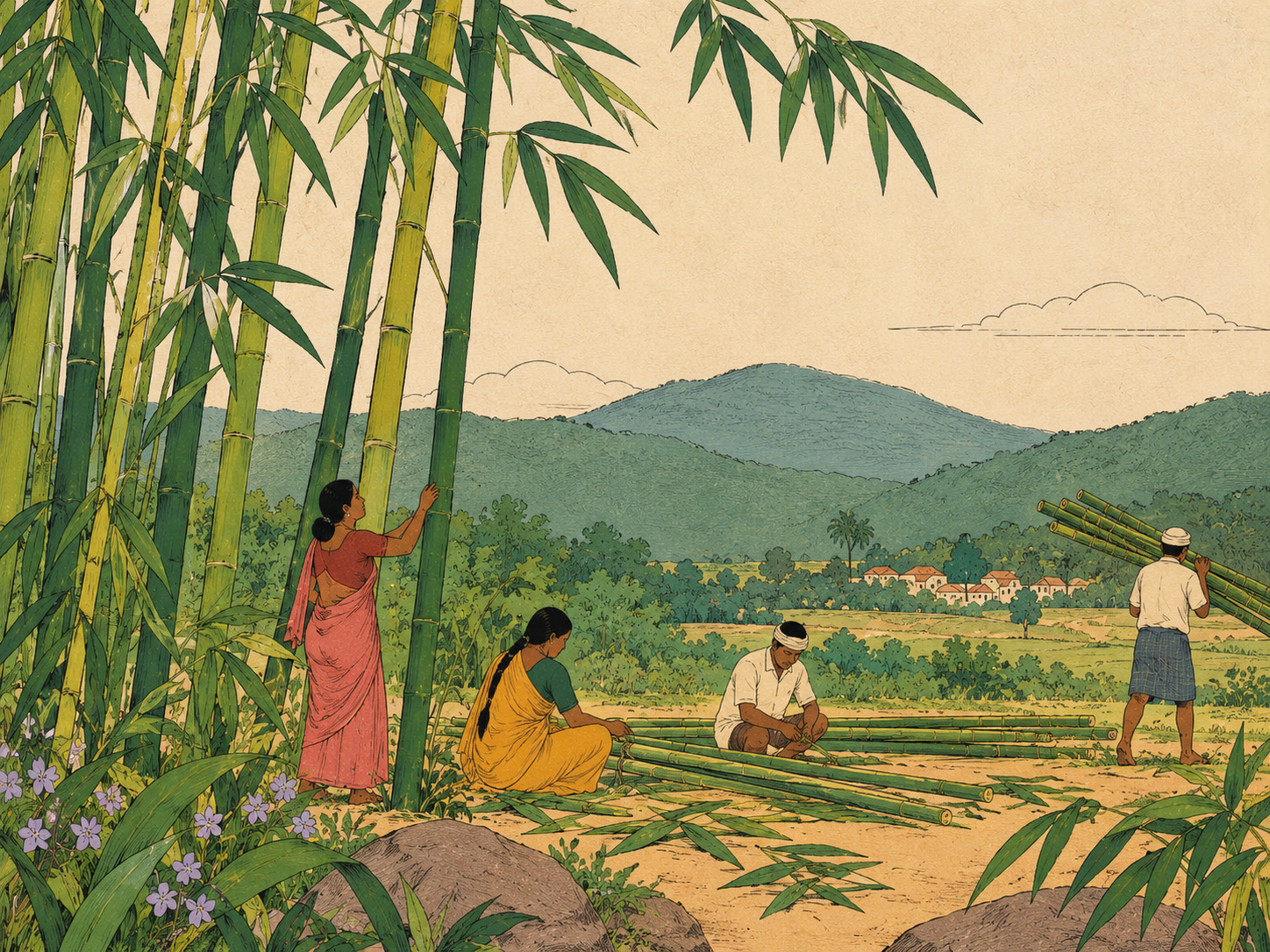
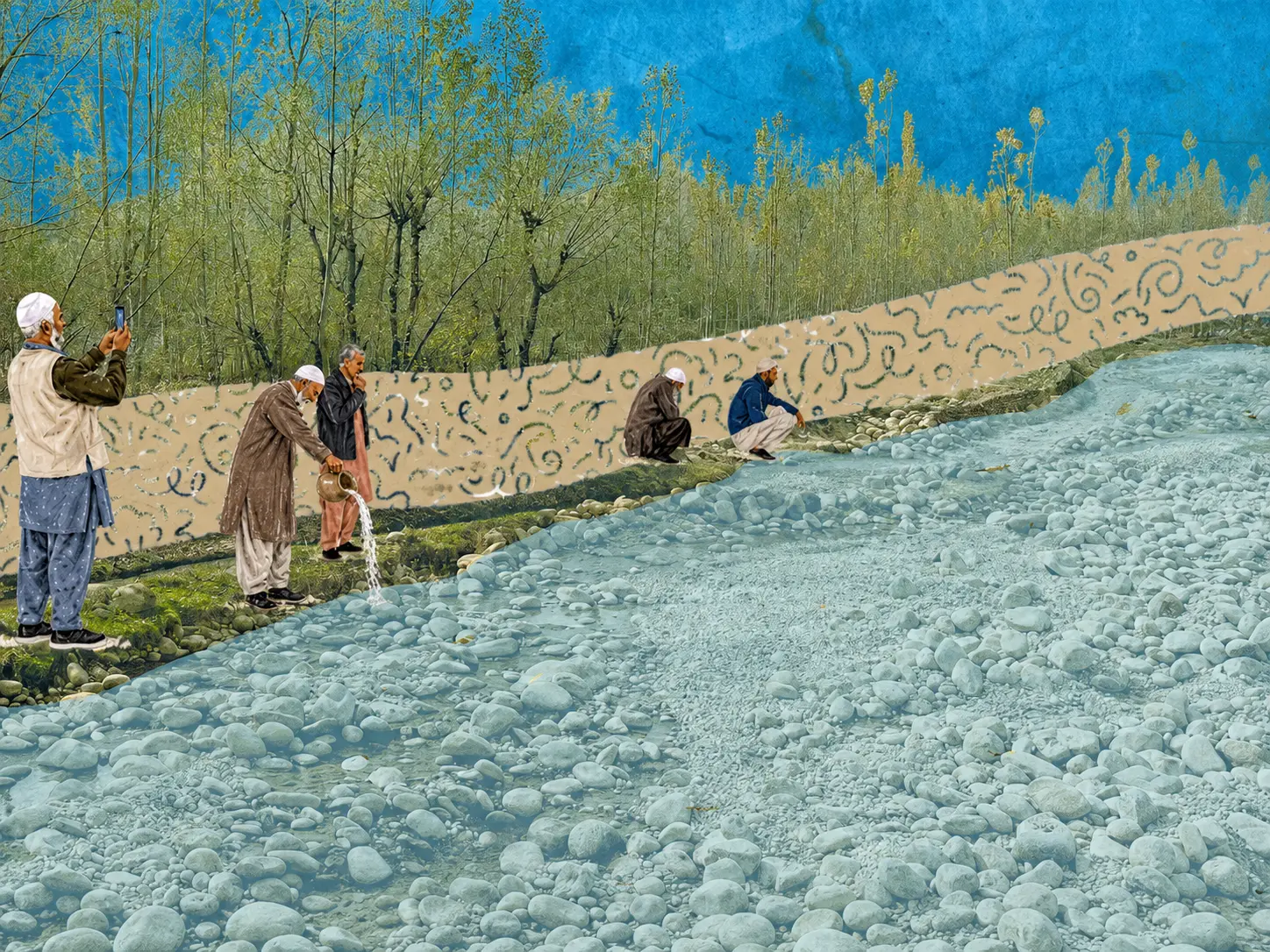
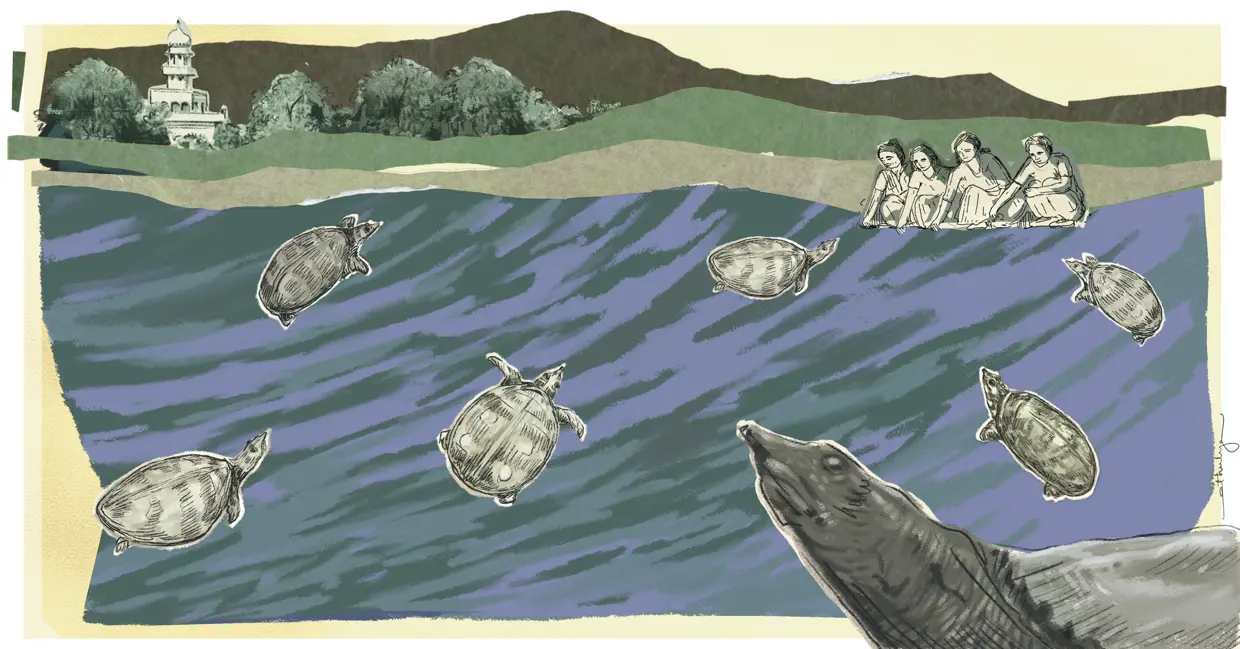
Srinagar, Kashmir: The shikaras (wooden boats) push off from Mir Behri at first light, two women to one boat, oars slicing the still surface of the Dal lake in Kashmir. On their way, the boats graze against floating mats of tall reed, and invasive weeds and water hyacinth that spread like tentacles across the water. In order to gain access to the reeds, the women haul, bundle and load the entire lot of plants. What the layman would consider trash, is raw material for their sustenance.
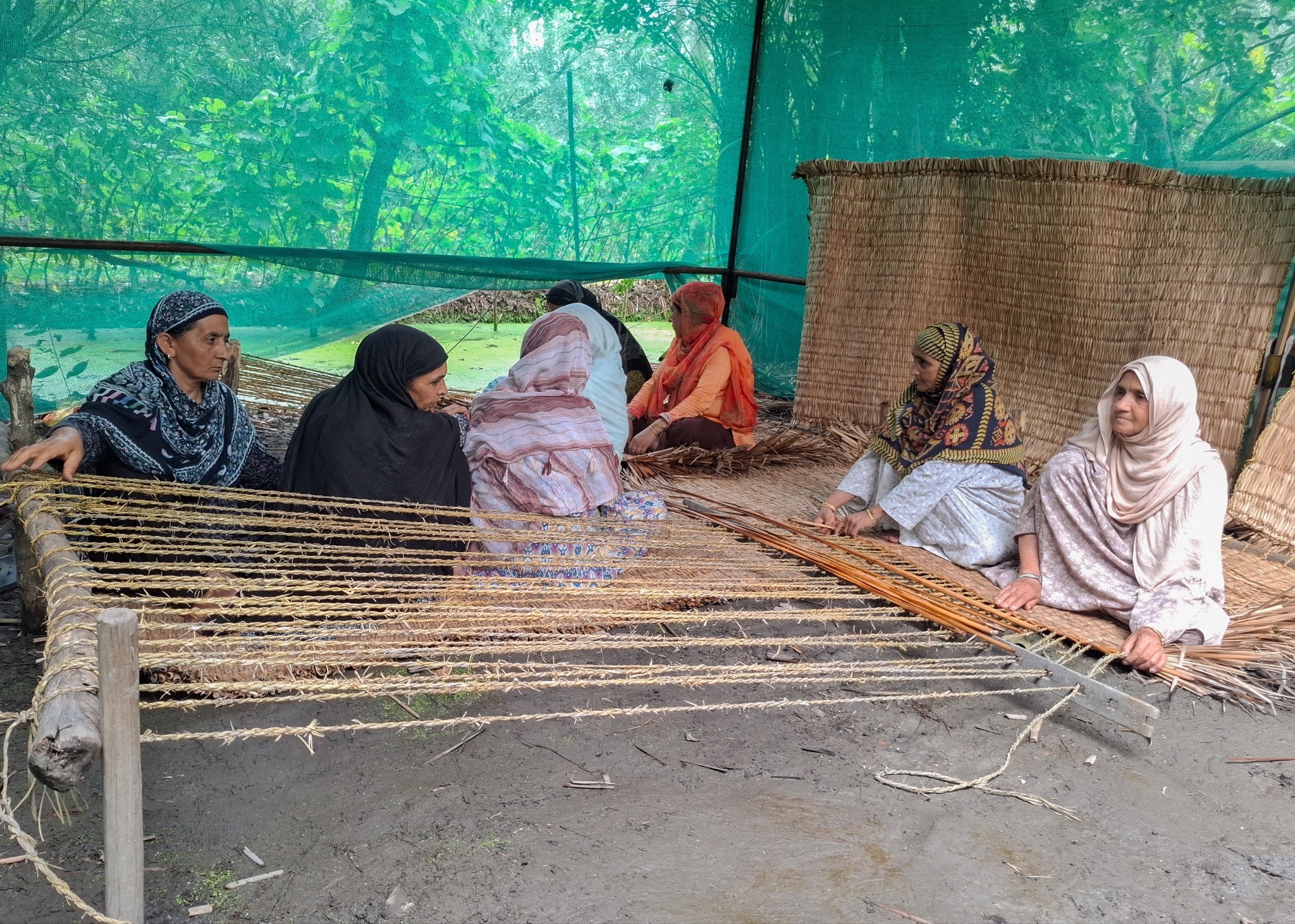
By midmorning, bundles of reed are stacked on the shoreline and spread out to dry. The sun not only leaches out the moisture, but also some of the stench. Later, they split, braid and weave the reeds into wagoo (traditional Kashmiri mats, baskets and trays), the once ubiquitous craft. The work may be slow and tedious, the pay modest, but their toil cements their stake in the health of Dal lake.
“I grew up around this lake,“ says 25-year-old Tanzeela Hussain, who heads a small craft centre employing 15 to 20 women at Mir Behri. “When I decided to restart wagoo weaving, the people said its time was over. Regardless, we started again.”
Tanzeela, attending a postgraduate course in Persian at Kashmir University, Srinagar, traces the decline of wagoo produce to the 2000s when plastic and machine-made mats came on the scene. By 2012, she says, the craft had almost vanished from the local markets, and many families abandoned the trade. Her decision to revive it in 2024 began as a private project, with her father collecting the reeds. Within months, a group was formed, and in the next year the State Handicrafts and Handloom Department listed the centre under its ‘Karkhandar scheme’, opening the doors for material support, skill training, access to tools and safer work conditions. The department arranges exhibitions which leads to orders from hotels and local businesses.
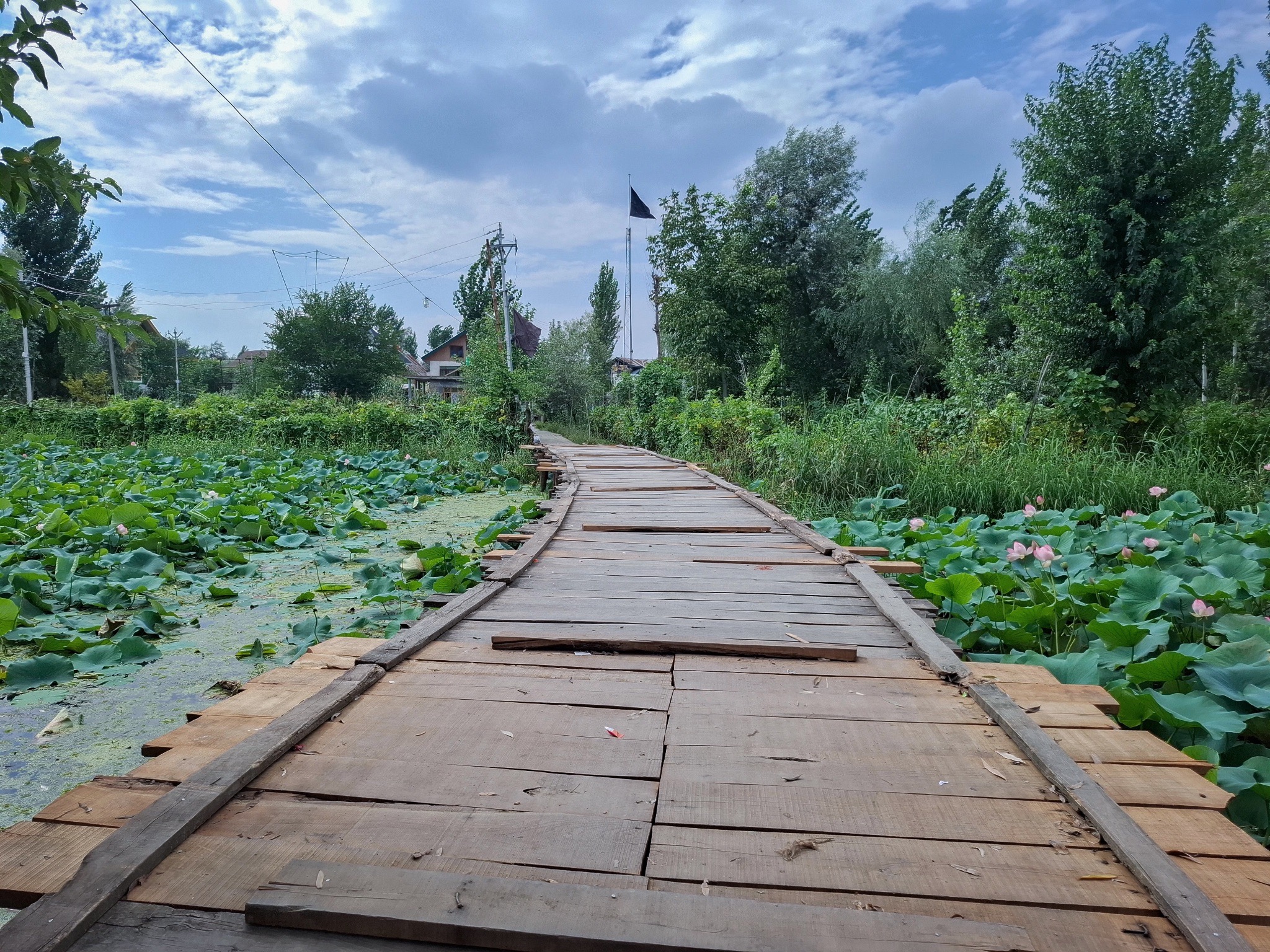
“We do not wait for outside help to clean the lake,” says Tanzeela. “Instead, we organise our own boats, drying space and the production. We are stewards here, collecting, processing and selling the craft. It keeps us from depending on others.”
The women of Mir Behri are purpose-driven. Income matters, even a modest one, to help run their households. For many, wagoo weaving is a skill passed down through generations and represents not just livelihood, but a social duty and a sense of belonging.
“I have been weaving wagoo for 20 to 25 years,“ says Rubeena, 38. “When plastic mats arrived, nobody bought wagoo. Now we have made a comeback. The money may be little but we want to keep the craft alive.”
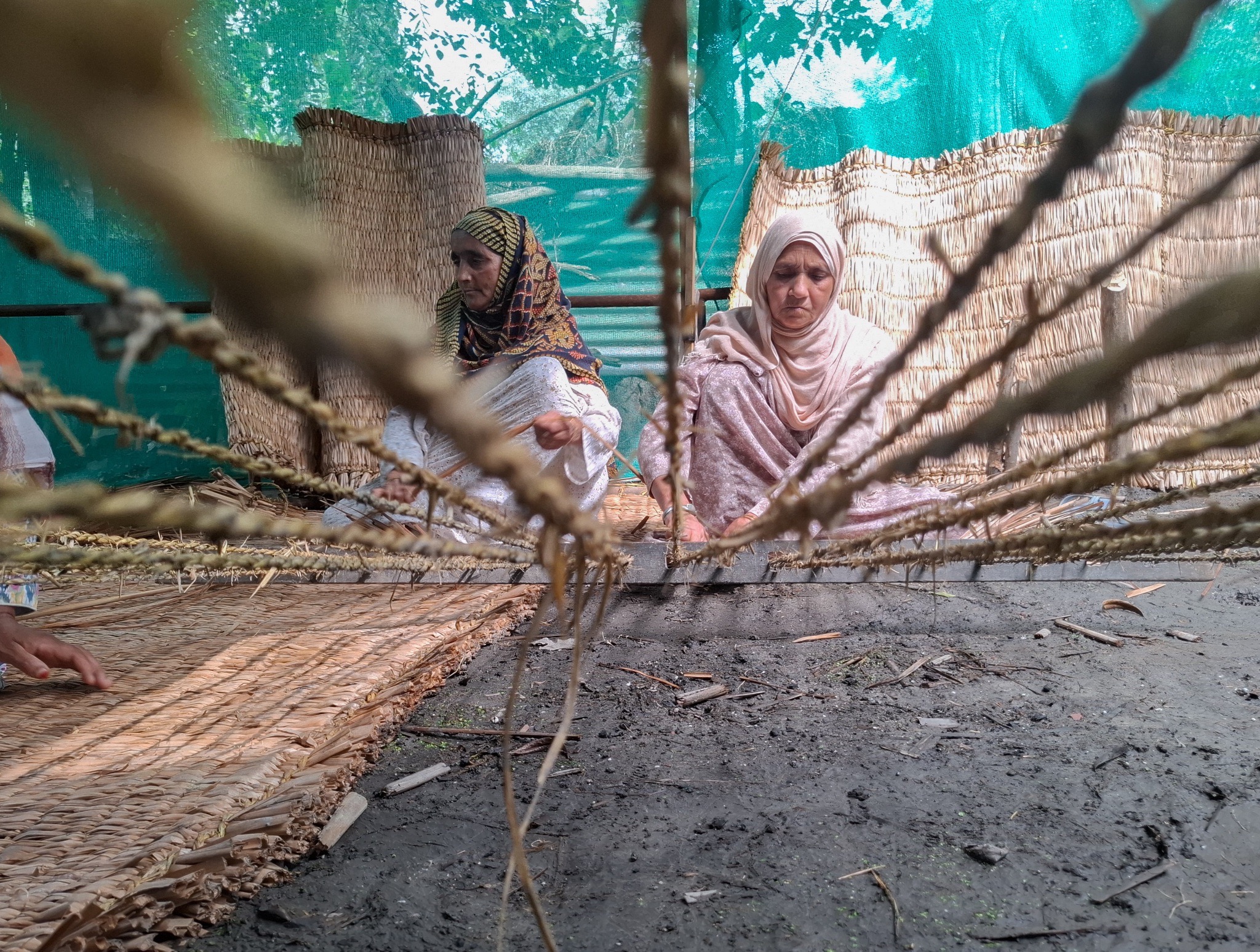
The elderly recall the time of steady demand. “People used to buy wagoo out of curiosity and because it was handwoven,” says Fatima Begum, 62, who comes to the centre daily despite chronic pain. “Now we get orders from restaurants or government departments. It takes two women to make one wagoo a day.”
The material for wagoo is collected from the lake and surrounding paddy fields. Around 70 per cent of their requirement of reeds (paetch) comes from the lake, while the rest is procured from market points such as Maloora and Khanpath, in central Srinagar, at around ₹ 300 a bundle.
Collecting reeds is not easy. The water carries untreated sewage and algae, and on many mornings the stench is cloying. In April this year, Tanzeela says, they stopped weaving because it was too difficult to obtain clean reeds.
Despite the difficulties, the harvesting of weeds improves the habitat. Dal lake has suffered decades of degradation owing to unchecked settlement on its margins; inflow of untreated sewage; and the spread of invasive plants that impede boat movement. Inventories indicate a steep decline in wetland area across the Kashmir valley. Local residents and researchers report shrinking reeds, fewer native plants and stressed fish populations.
Mohammed Maqbool Dar, 78, who has been clearing the waters for more than 30 years, says, “I sell paetch, yes, but I also keep the lake from choking. This is my livelihood and my duty.” Maqbool acknowledges Tanzeela’s efforts. “Her energy brought us together. When a younger person cares, older ones follow,” he says.
When local people clear the weeds, it negates the need for mechanical or municipal removal that creates piles of biomass that again must be disposed of. The women’s approach reduces the cost burden on public agencies. Further, the model converts that biomass into value: mats for homes and businesses, baskets, trays and smaller craft items.
Step-by-step they toil
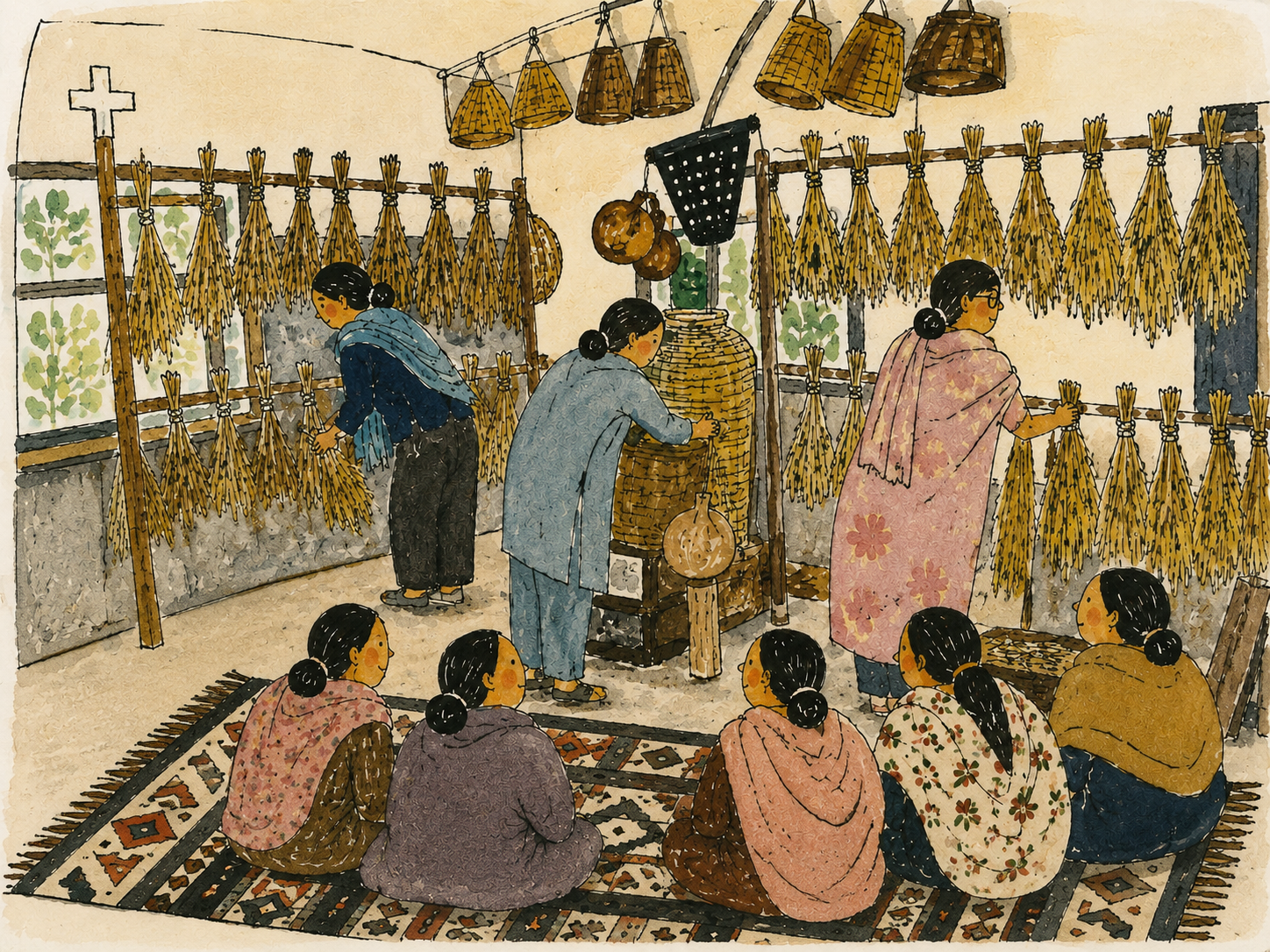
At the Mir Behri centre, the work is organised in stages. Early mornings are for collection. Midday is for drying and initial processing, when reed is sorted and split. Late afternoons and evenings are for weaving. Women work in small groups; older artisans train younger ones. The centre serves as a production site, drying yard, and meeting place where orders are taken and payments recorded.
“Earlier, everyone worked alone,“ says Saja Begum, one of the artisans. “Now we are a group. The department’s involvement made a difference.”
Prime Minister Modi’s mention of wagoo weaving in a Mann Ki Baat broadcast in July this year raised the profile of the craft. “Being mentioned gave us hope,“ one artisan said. “It tells us that people are listening.”
The revival, though, is not a full market recovery. Wagoo faces competition from machine-made alternatives that customers perceive as more durable. Sales remain irregular. Health issues complicate production as weaving strains the neck, back and hands, and long working hours leave many artisans fatigued. For older women like Fatima, the impact is greater. “My fingers bleed sometimes,“ she says. “It is hard work. But I am here because it helps with household expenses and I like doing it.”
The wagoo story has a social aspect as well. It has created a local economy anchored in shared labour and purpose. Younger women learn from the elders. Men supply boats, collect reed and manage some sales. Older men, like Maqbool, continue to forage the lake and sell batches of reed to the centre and other artisans. The work reconnects families to the lake in practical ways. “This island settlement depends on the lake for food and work, so when it chokes, fish and lotus stems decline. By harvesting reed and hyacinth, we clear channels and help neighbours who fish and gather food,” adds Tanzeela.
Local fishermen confirm that weed clearance has helped in navigation. “When the reed spreads, boats can’t move and nets don’t work the same way,” says fisher Gulzar Ahmad, 36, from Mir Behri. “Any hand that clears the weed helps us too.”
Though the women’s approach is not a substitute for larger infrastructure, sewerage and watershed management, it shows how local labour and knowledge can provide an interim, low-cost remediation that creates livelihoods.
However, harvesting alone cannot restore the lake. “Removing biomass helps in the short term, but without addressing sewage inflows and hydrological connectivity, the weeds will return,” warns Jehangir Ahmad, waste management expert and professor of Environmental Studies, Kashmir University. “Community initiatives help and should be supported, but they must be part of an integrated restoration plan.”
The women at Mir Behri are aware of those limits. Their aim is to keep a part of the lake functioning. “We are not engineers,“ Tanzeela says. “We are weavers and collectors. But our work keeps the water moving a little, and it helps families.” It also restores their dignity and reconnects people with a waning cultural practice. “My mother used to use wagoo in winter and summer,” Maqbool says. “It keeps things simple and local.”
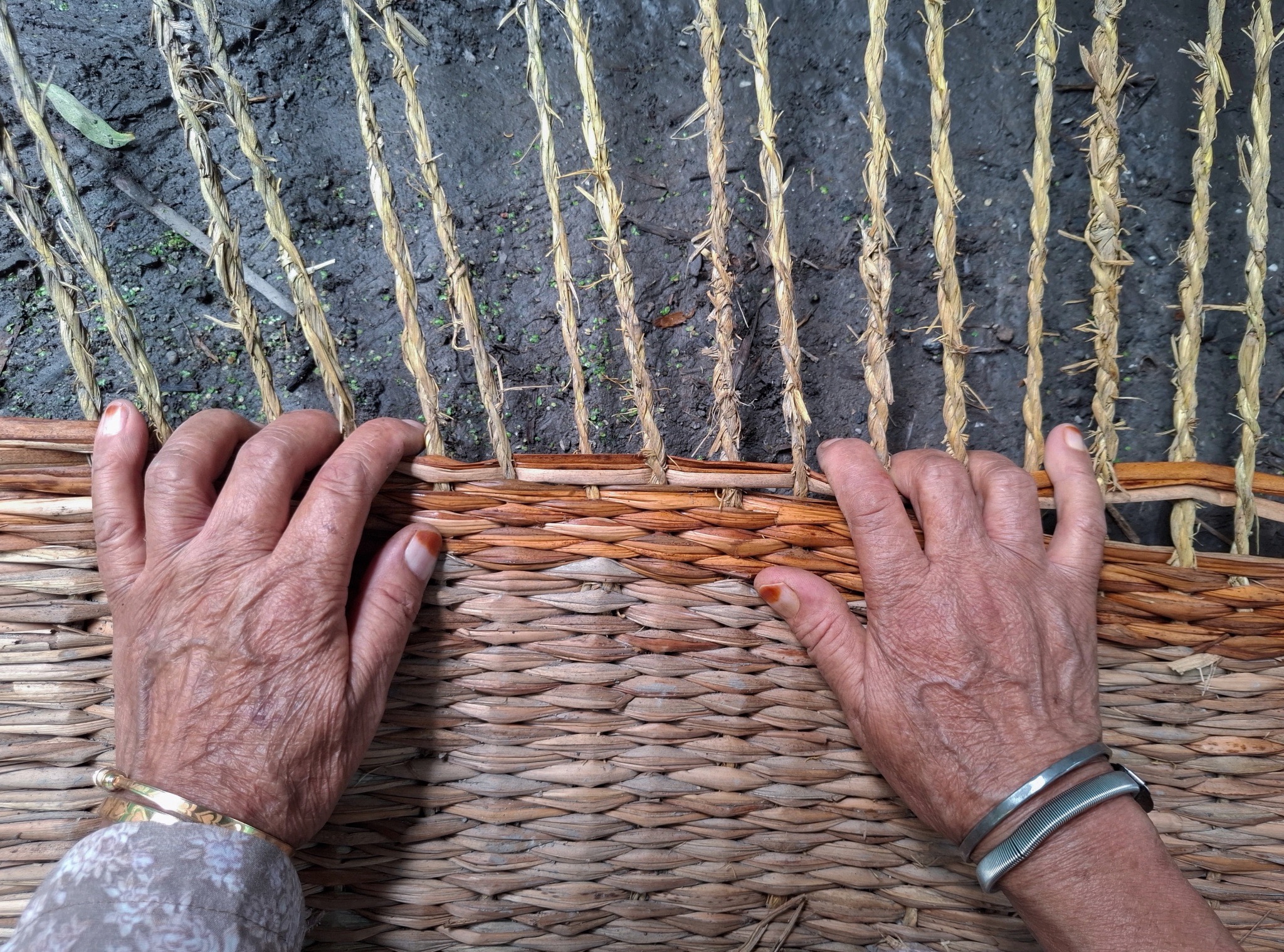
In recent seasons, local restaurants and hotels have sourced wagoo for their floors and wall decorations, and households buy small mats for their living rooms. Tourism stalls sell trays and baskets. Institutional orders are still rare.
Small changes in production have helped too. Artisans experiment with finishes and product sizes; some combine reed with supplementary materials to create sturdier items. They track orders and try to align weaving schedules with demand. Those adaptations suggest a pathway from occasional sales to steadier income.
Still, the economics remain tight. The women leaders say they need regular, large orders or greater access to markets. “If the demand grows, we can hire more women,” Tanzeela says. “People want to work.” They also need technical support such as safer weaving benches to reduce strain, better drying yards, and protective gear for handling polluted reed.
Each stage of the wahoo process connects labour to landscape – hands in water, hands on reed, and hands on loom – weaving a link between people and place. Their story is a model for other communities facing environmental decline. “When the lake was cleaner, wagoo was everywhere,” says Fatima. “We want that again. We are making it happen again.”