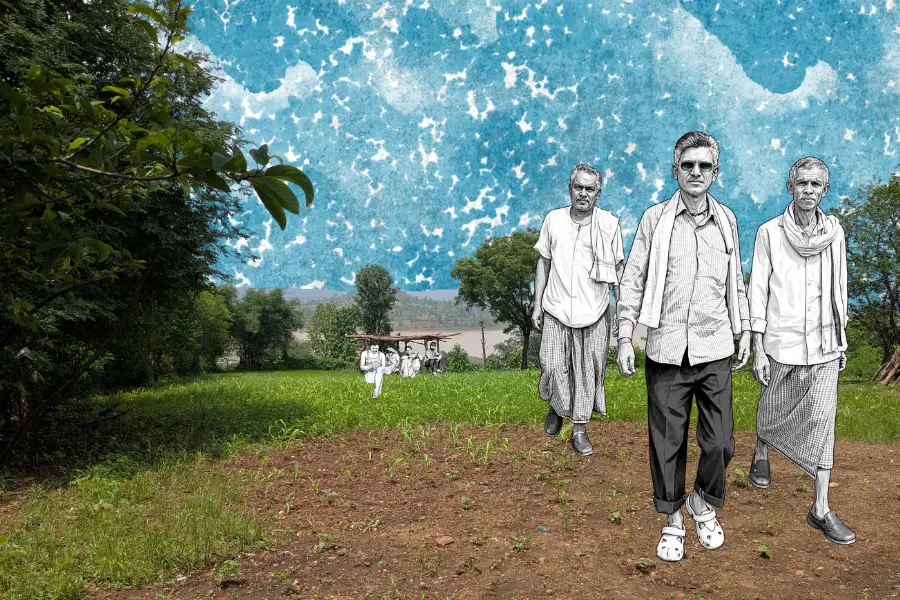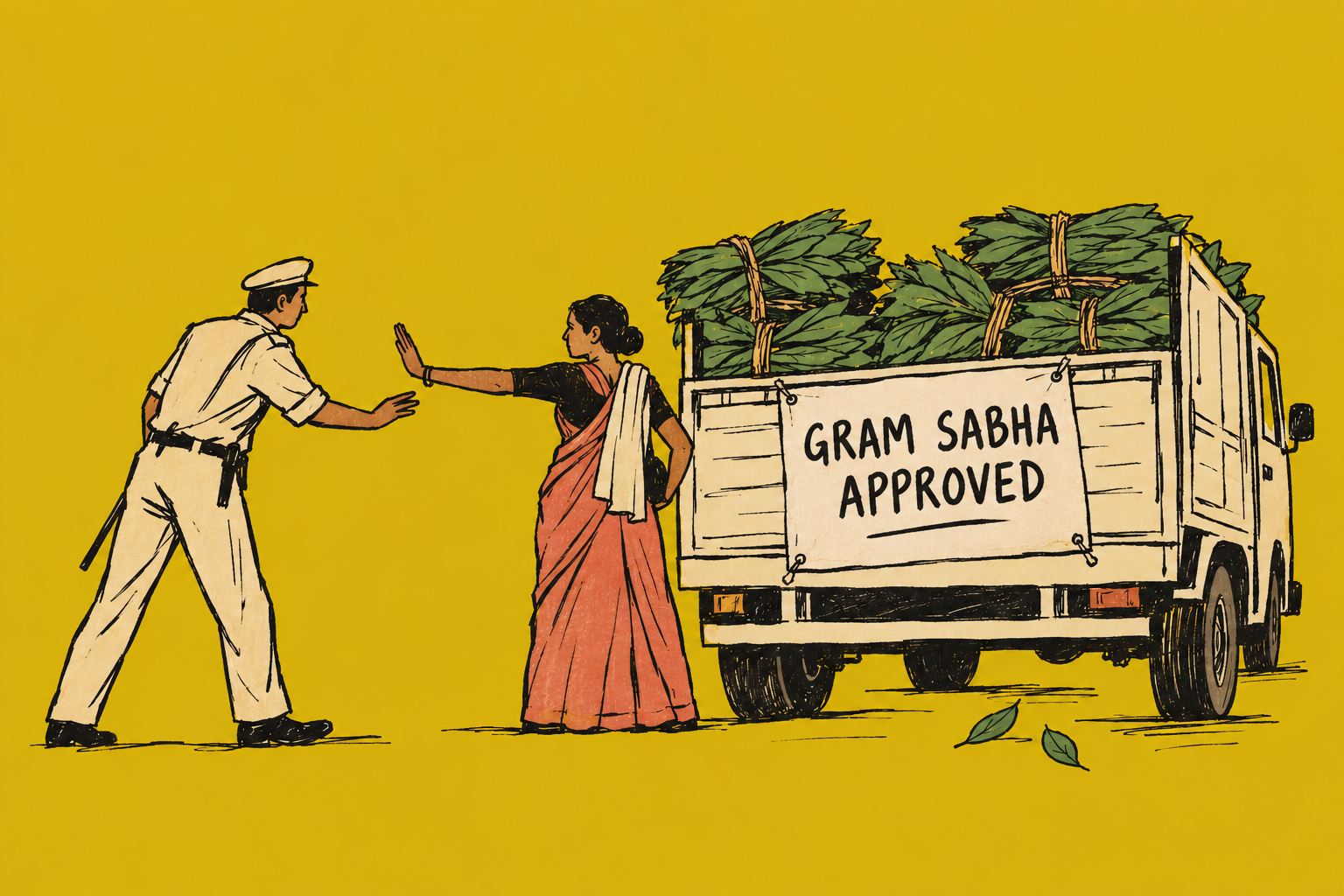
Gondia, Maharashtra: Jagan Ganuji Salame looks younger than his 43 years. His gaunt frame hides much more: the strength to fight for community rights. In 2023, Maharashtra’s forest department seized a truck carrying forest produce worth Rs 1.80 lakh. The goods – tendu leaves, used to wrap beedis, a poor man’s cigarette – belonged to Jagan’s village, Mhaisuli, located inside the Navegaon National Park. Villagers and forest-dwellers had long held the right to collect and sell those resources, an annual process that the forest department previously controlled. Jagan was clear that it was “misuse of power”. He challenged the seizure in court and won back the goods.
The legal battle set a greater precedent. It compelled the forest department to respect the autonomy of all Gram Sabhas – village assemblies – in the State.
What’s more, in November 2025, the Maharashtra government issued a government resolution (GR) that formally recognised the Gram Sabha’s authority to issue transit passes to move the produce to the market. That brought to an end a decade-long conflict between the forest department and tribal and other forest-dwelling communities.
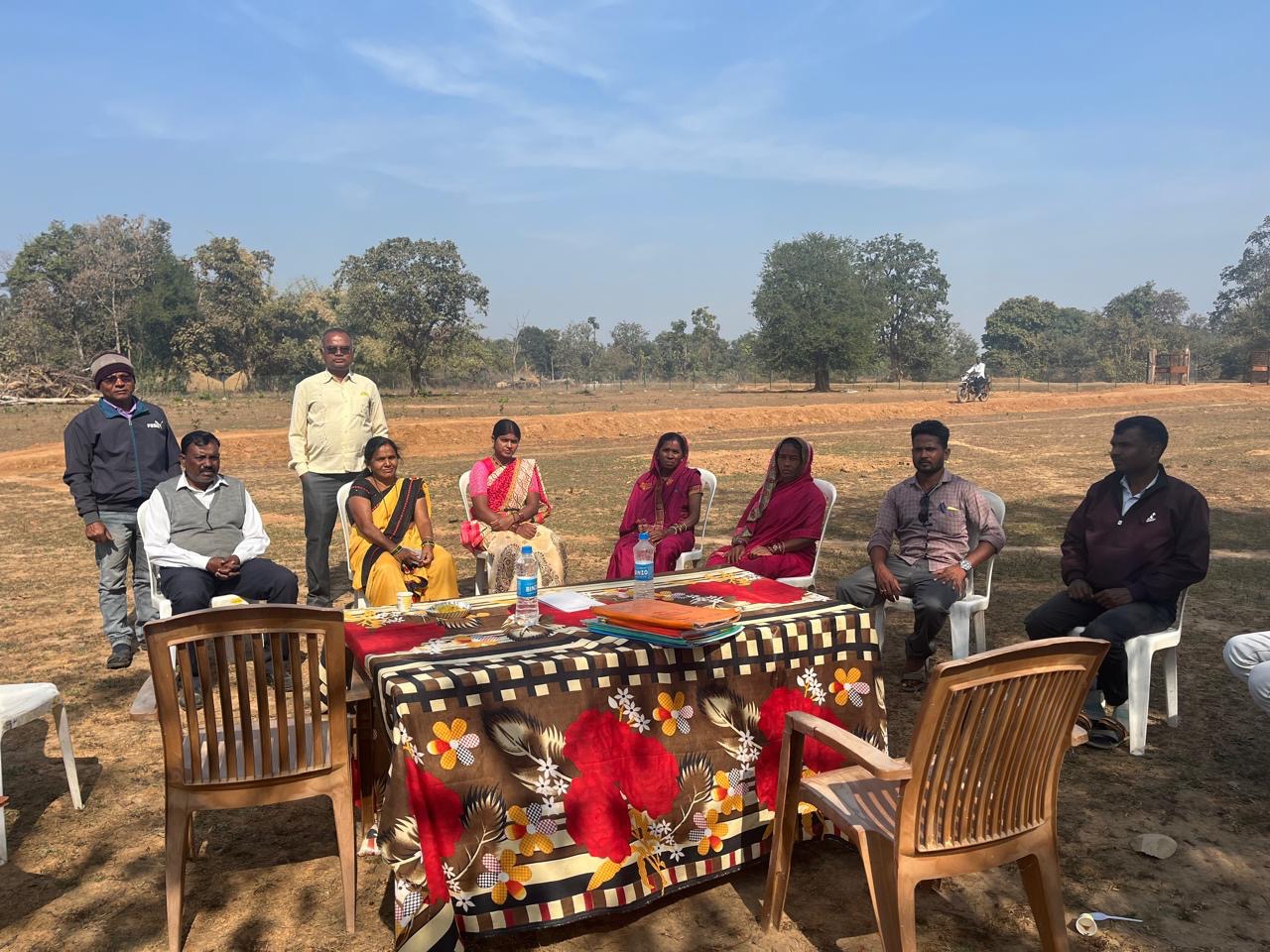
Commons are shared lands such as forests, pastures, water bodies and mangroves, which cover 205 million acres, or one-fourth of India, and form the lifeline for over 350 million people, including marginalised groups like Scheduled Castes, Scheduled Tribes and women. Communities across India have traditionally protected, restored and managed these commons through customary self-governance practices. These customary rights and practices, however, haven’t been formally recognised or recorded in many parts of the country.
Despite these challenges, communities across India are showcasing that reclaiming, restoring and managing commons through customary self-governance practices plays a crucial role in their ecological, social and economic upliftment.
The might of the Mahasabha
The legal victory was not achieved in isolation. Mhaisuli is part of a Federation – the Mahasangh – of 34 villages in Deori Block in Gondia district. The Federation, formed in 2013, brought together villages that had secured Community Forest Rights (CFR), which recognise the ownership, management, and conservation authority of tribal and forest-dwelling communities over their customary forest lands.
What started with just three villages expanded to include 31 more, as communities realised that reclaiming control over their traditional livelihoods, long appropriated by the forest department, not only increased their earnings but also strengthened their collective empowerment.
The ground had been set.
“When this confiscation incident occurred, it wasn’t just the residents of our village but many from neighbouring ones who rallied around, taking the number of protesters to lakhs. Since we know the law and that law permits us to transport and sell forest resources, no one can stop us from exercising these rights,” says Jagan.
Jagan’s legal battle, however, is not over. He continues to fight, before the Nagpur Bench of the Bombay High Court, the forest department’s claim that the truck was transporting more resources than Mhaisuli was entitled to.
The Federation was crucial in drawing the attention of the upper echelons of administration. It played a crucial role in organising protests and writing letters to different government officials, which eventually led to the Maharashtra government restoring the right to transport Minor Forest Produce (MFP), including tendu patta, to the Gram Sabhas.
Organisations such as the Vidarbha Nature Conservation Society (VNCS), dedicated to the protection and management of natural resources, played no small part. Dilip Ghode, Executive Director of VNCS, who had termed the confiscation “completely illegal”, was a key figure in influencing the government.
“The spirit of collection should be kept in mind. These villagers collect tendu in scorching heat. No one else will do this backbreaking work. They are contributing to the society and should have the power to earn a decent livelihood from it without harassment,” says Ghode.
The landmark Transit Pass Policy for MFP, brought back by the government, was meant to “return the rightful powers to Gram Sabhas under FRA and PESA (Panchayats Extension to Scheduled Areas Act, 1996). The policy strengthens tribal livelihoods, ensures dignity in forest-based work, and offers a replicable governance model for the nation.”
Reclaiming minor forest produce
When the forest department confiscated Mhaisuli’s rightful produce, it had not only questioned the Gram Sabha’s authority to issue transit passes for the sale of tendu leaves, authorities claimed that the number of bundles, each comprising 70 leaves, exceeded what could be produced from the forest land recognised under CFR. According to them, the truck was carrying 3,00,000 bundles when only 80,000 bundles could be collected. The matter was subsequently taken to the Bombay High Court.
Jagan countered this claim. “Under Clause 3(1) of the Forest Rights Act, the forest land within or near our village boundaries that has been used by our ancestors is legally ours to use and manage,” he says, adding that “under CFR, gram sabhas have not just the power to issue transit passes but to decide how much yield has to be sold since it differs as per season.”
He was referring to the 2006 legislation that recognised the rights of ownership, sale, and management of these resources by forest-dwelling individuals and communities and has been crucial in shifting control away from the state and empowering local communities to secure their livelihoods and food security.
The case, led by Jagan, resulted in an interim victory, with the petitioners securing the release of their confiscated goods. However, the litigation remains ongoing, as the broader issue of restrictions imposed by forest officials on the quantity of forest produce that can be collected from CFR areas is yet to be resolved.
From labourers to owners
Narayan Kulsingh Salame, president of the Federation, explains that there was a time when villagers had no say in the tendu trade. The forest department employed them for the backbreaking work of collecting leaves. In turn, they received wages for the labour. Officials were known to underreport the quantity sold in order to skim off funds. They even capped collections well below the forest’s potential. These practices, besides being highly exploitative, brought no significant income to the villagers.
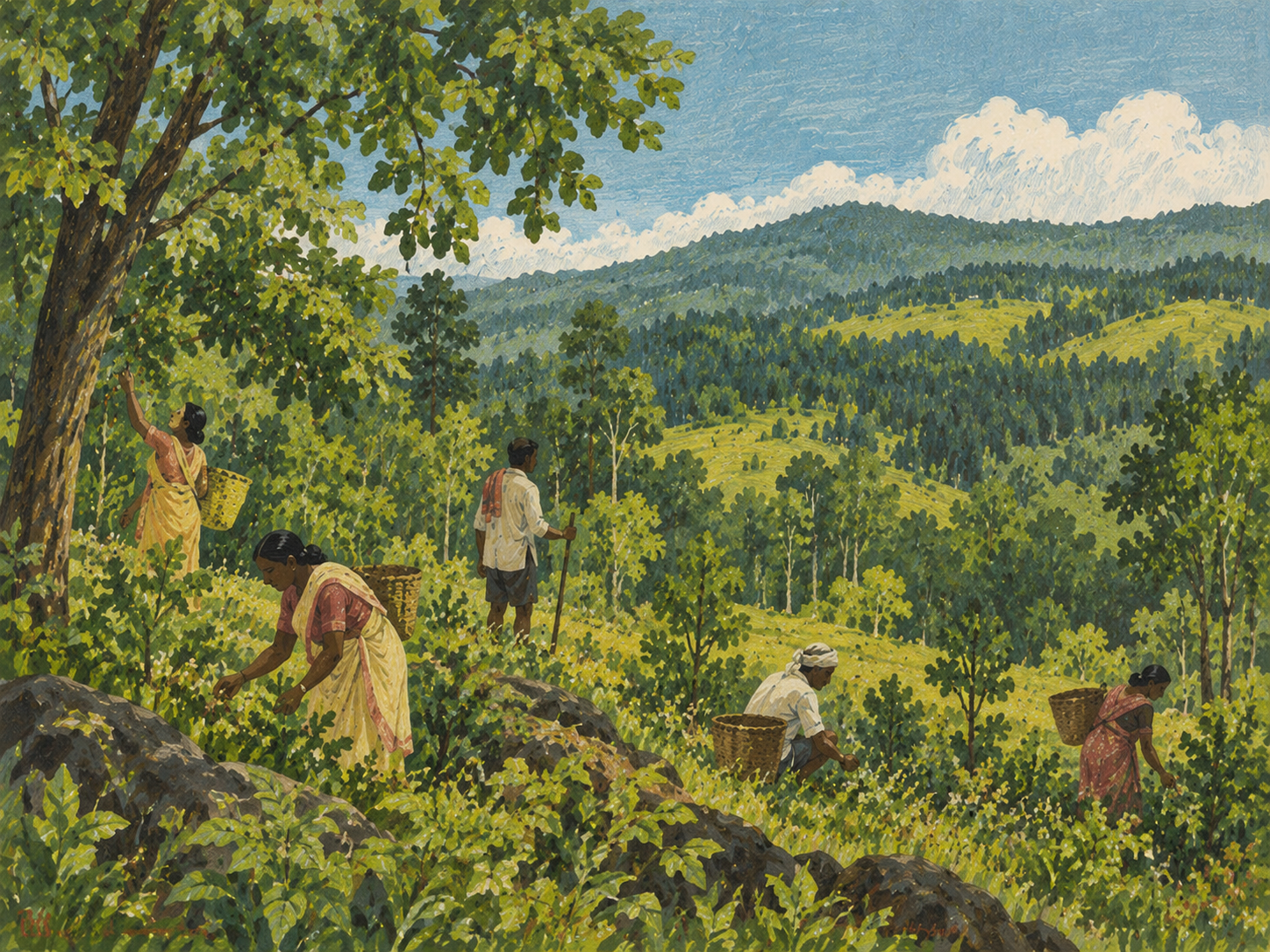
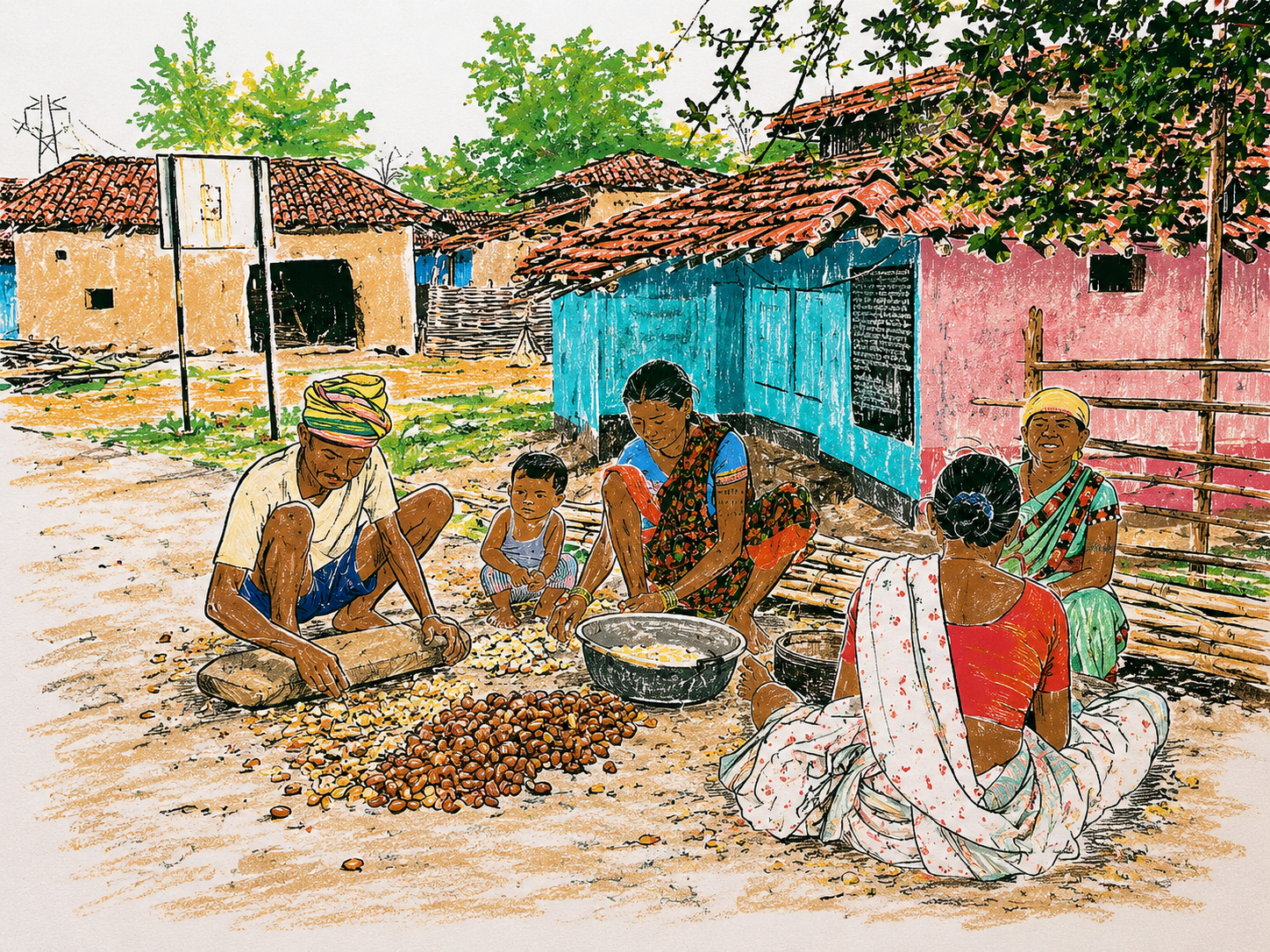
Tendu patta accounting for a large part of the forest economy. According to a 2025 research report, India produces approximately 3.5 lakh tonnes of tendu leaves annually, worth around Rs 19.01 billion (US$200 million), with Madhya Pradesh contributing about 25% of the country's production, followed by Chhattisgarh (20%), Odisha (15–20%), and Maharashtra (10%).
“Earlier, we had no idea how much tendu was taken from our forests or at what price. We were treated as labourers and had to follow orders. Today, we are the owners of our land and decide our own fate,” Narayan says.
In 2013, when the Federation broke the forest department’s monopoly and started the process of collection and auction, not a single contractor came forward to bid for the produce. The federation had to borrow Rs 28 lakh from the Adivasi Vikas Vibhag, the government’s tribal development department, to pay wages to the families involved in collection.
“The next year, we sold bundles from both from the previous year and the current year. We repaid the loan and still gave a good price for each senkra, made up of 100 bundles,” recalls the Federation’s president. The Federation paid Rs 230 per senkra, which included Rs 195 for labour and Rs 40-45 bonus from profits. The forest department at that time was giving just Rs 140 per senkra, he notes.
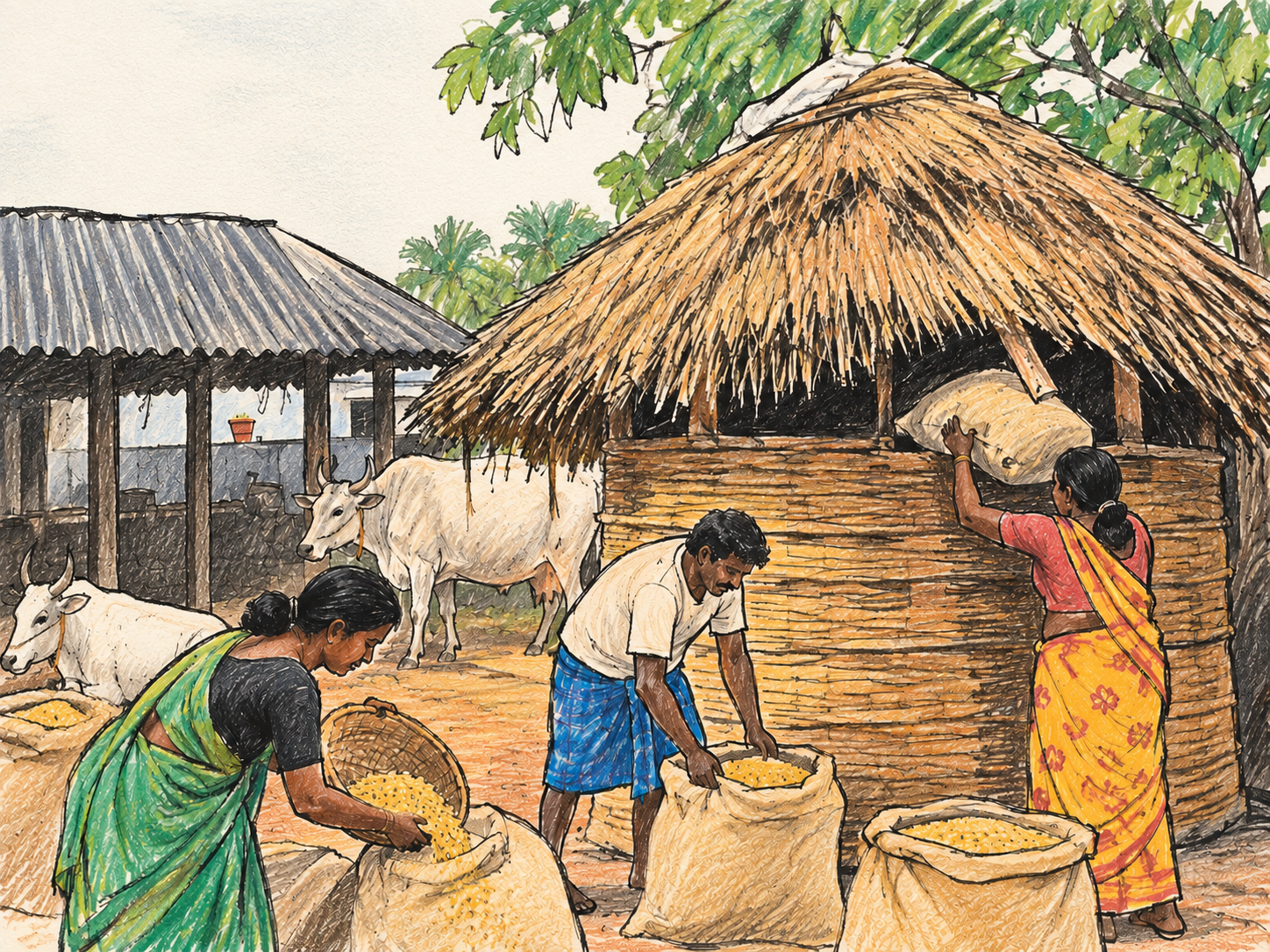
On average, each family collects 100–200 bundles of tendu leaves a day during the 15-day season, amounting to 15–30 senkra per season. In the early days of the federation when a bag of leaves fetched about Rs 230, families earned roughly Rs 4,500–9,000 during a season. At current prices, Rs 900–1,000 per bag, annual earnings have risen to around Rs 30,000–35,000 per family.
Vijay Tikaraa Salame gave a break-up of the earnings: “Earlier, the forest department paid us only Rs 100–150 per senkra and rarely shared any bonus. Now, selling on our own, we earn Rs 300–400 per senkra, which goes up to Rs 900–1,000 with bonuses”.
Year No. of villages Total Earnings
2014 3 villages 8 lakh
2015 9 villages 30 lakh
2019 27 villages 2.38 crore
2025 34 villages 4.58 crore
A figure showing the growth of the federation tendu trade.
As the federation’s strength rose from 3 villages in 2013 to 34 villages, so did the earning.
Self-governance at work
Tularam, resident of Dhamditola village and member of the Federation, explained how the Federation had streamlined the process by issuing green cards to each family to record daily collection, with totals entered in a village-level A1 register.
“The heads of the CFR committee of member-villages are represented in the Federation. They elect the president, secretary and treasurer of the Federation,” he said.
Every August, gram sabhas pass the resolution to initiate and oversee the tendu tender process, which is shared with the district transformation committee, the forest department, and the tribal development department.
In the months of November and December, group gram sabhas from eight districts meet under the Vidarbha Tendu Federation to decide the auction timeline and tender terms. Contractors submit sealed bids, and the highest bidder is selected, first at the federation level and then discussed at the gram sabha levels.
Decisions are also made regarding labour payments. Once finalised, the contractor pays a 20 per cent advance. Payments are released in three instalments, 20, 40 and 40 per cent, with the final tranche paid as a bonus.
“Initially the police had questioned us for giving better rates to villagers compared to what the forest department used to give us, questioning if we were being influenced by outsiders. At that time, the Sub-Divisional Magistrate (SDM) Rahul Dwivedi told them off – arguing it was our right to determine how we sell it,” Tularam recalls.
Meanwhile, the Federation successfully extended the 9-10 day season to 15 days, keeping a bigger target between 1 May and 25 May, since collection is not continuous.
This is reflected in the family incomes. Each family now earns Rs 30,000–40,000 from tendu leaves and another Rs 15,000–20,000 annually from the sale of mahua (Madhuca longifolia). Paddy cultivation brings in about Rs 50,000–60,000 yearly. In addition, income from herbal forest resources such as hirda (Terminalia chebula), bheda (Terminalia bellirica), and natural resin like lac takes the total annual earnings to around Rs 1 lakh per family.
Self-governance also increased awareness of government schemes at their disposal. “Since we work together and talk to government officials frequently, we keep each other aware of government schemes. Earlier, only someone very smart who had perhaps visited block-level government offices for some work, was able to get such information,” says Tularam.
Villagers are now availing of schemes such as the Birsa Munda Krishi Kranti Yojana, which provides financial assistance to Scheduled Tribe farmers to develop sustainable irrigation facilities, and the Dr Babasaheb Ambedkar Krushi Swavalamban Yojana for Scheduled Castes, aimed at agricultural self-reliance through improved irrigation and farming infrastructure. These have supported irrigation, boosting farm production.
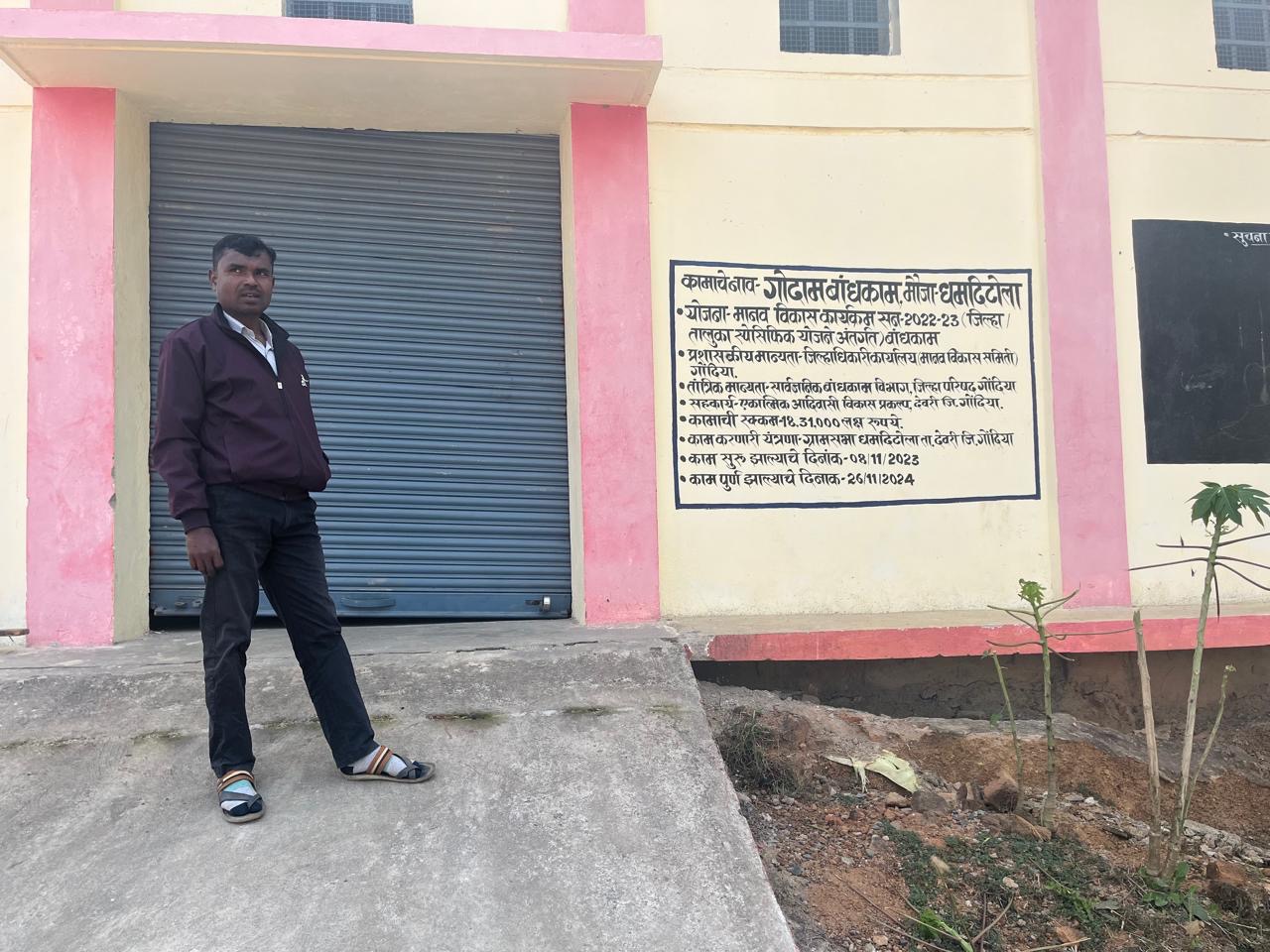
For management costs, the Federation sets aside Rs 7-15 lakh which goes towards stationery and travel expenses of members. They even bought 2 acres in Dhamditola village for a proposed warehouse to store grain. It has also raised a loan from the tribal development department for a processing unit to extract oil from mahua seeds.
Reaping the benefits
Back in Mhaisuli, these profits have translated into unexpected spinoffs. Residents have built chowks (intersections), statues of tribal leaders like Rani Durgawati, a tribal warrior, and even contributed Rs 2.5 lakhs to a pond-building project initiated by the Azim Premji University.
“About 12-15 families have better irrigation facilities now and they are able to expand their farming produce to include brinjal and chilly. We want this for the entire village and have written a letter to the irrigation department to avail a scheme for creating small farm ponds and conserving rainwater for irrigation,” said Sisudhala Ganeshram Nuruti of Mhaisuli.
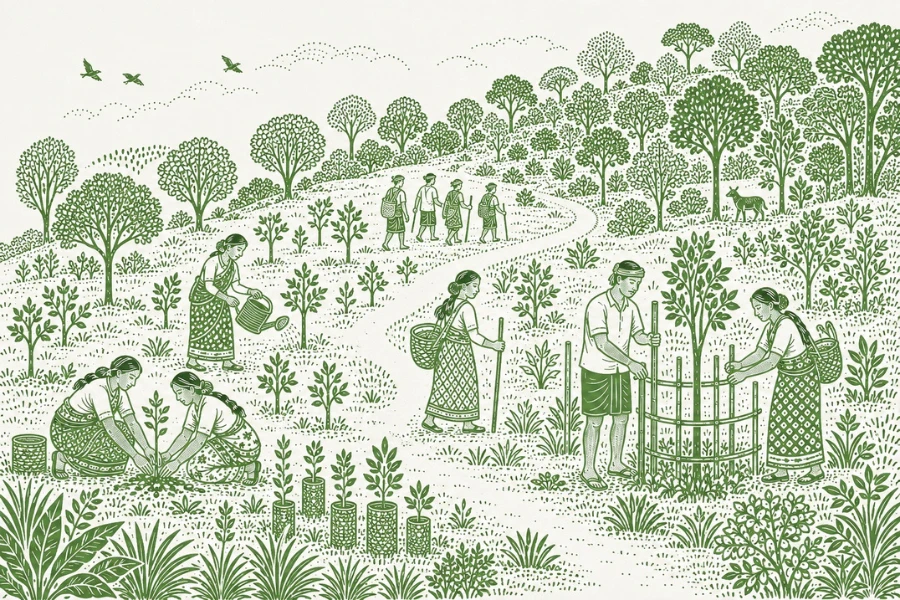
Many member villages want to develop plantations through FRA management plans. Taking a cue from Pauljhola village, many villages want to build fish ponds through Corporate Social Responsibility (CSR) funding. Dhamditola village has gone a step further by signing an agreement with an Australian nature-based company for a carbon credit project. These villages aim to earn revenue through the plantation of bamboo, jamun, and mango, which will also benefit them directly.
Together, the villages are scripting a new story for themselves. What started as a fight to own and trade resources from their forest commons has opened new avenues for the community’s prosperity.