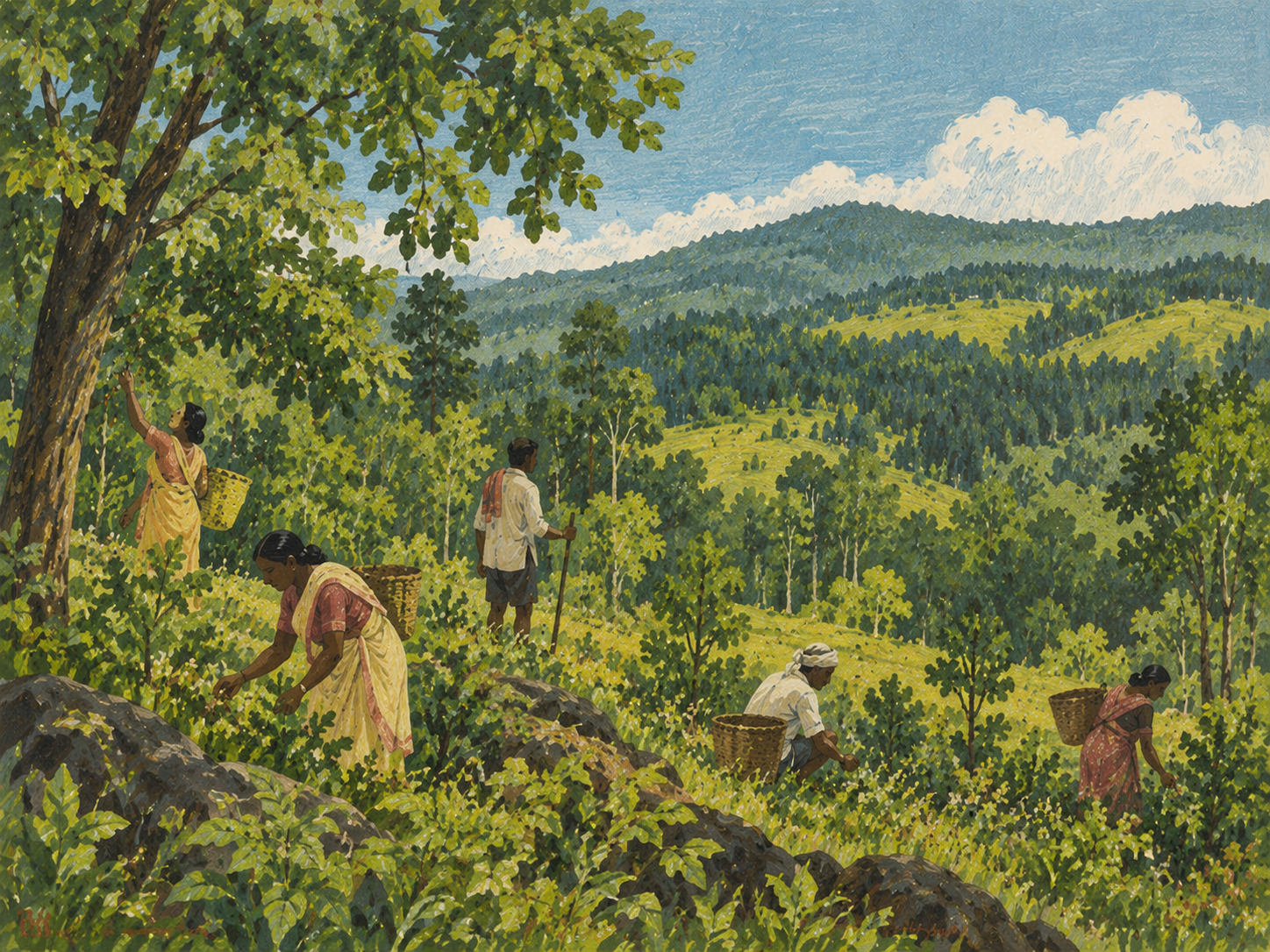
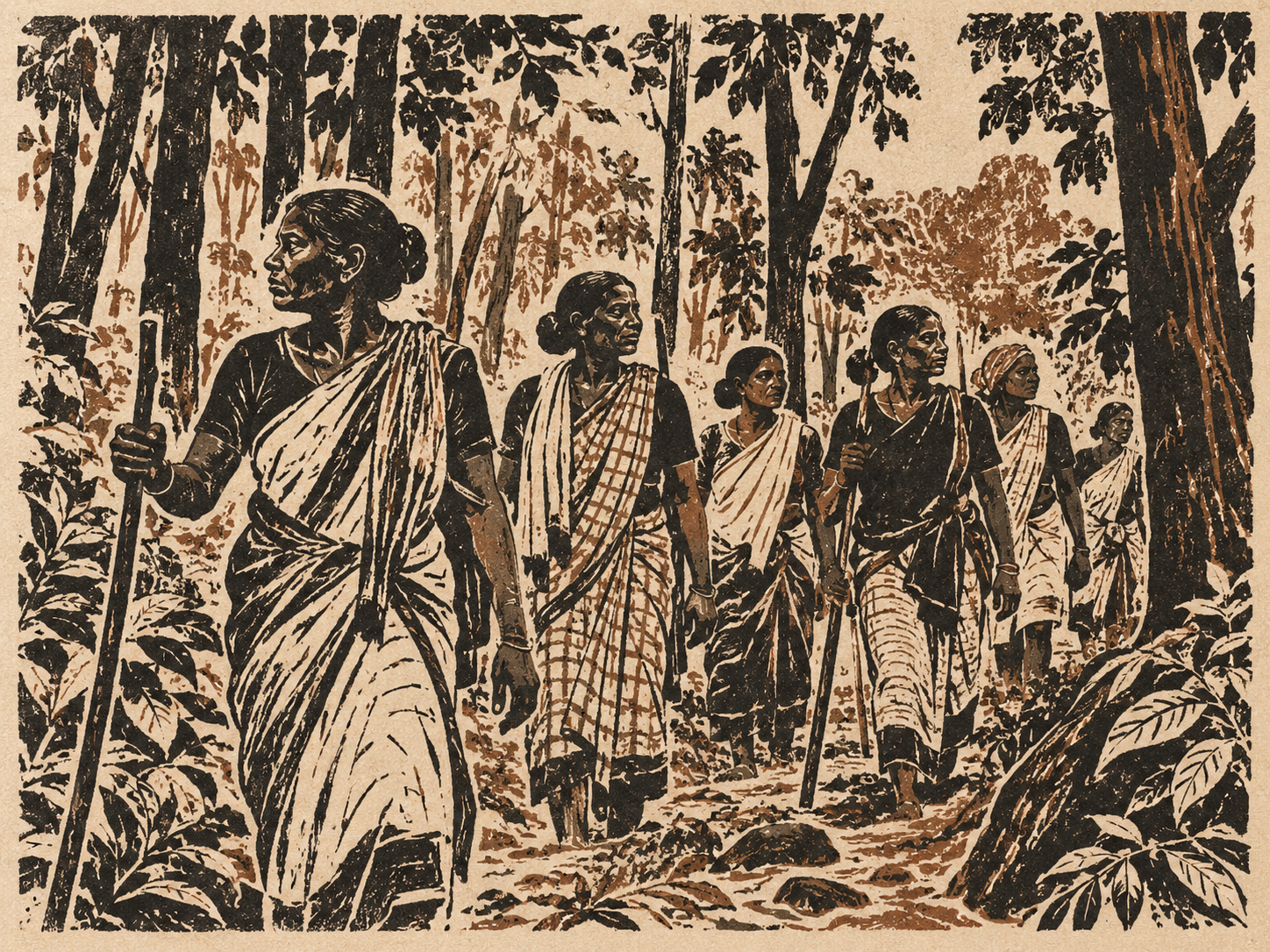
Bhadradri Kothagudem, Telangana: When the first rays of the sun fall on Sandralabodu – a tribal village in Telangana – Tellam Laxmaiah and wife, Tellam Narasamma, step into their village forest with sickles in hand. They are not looking for timber or firewood, but for the Kodisai Chettlu trees.
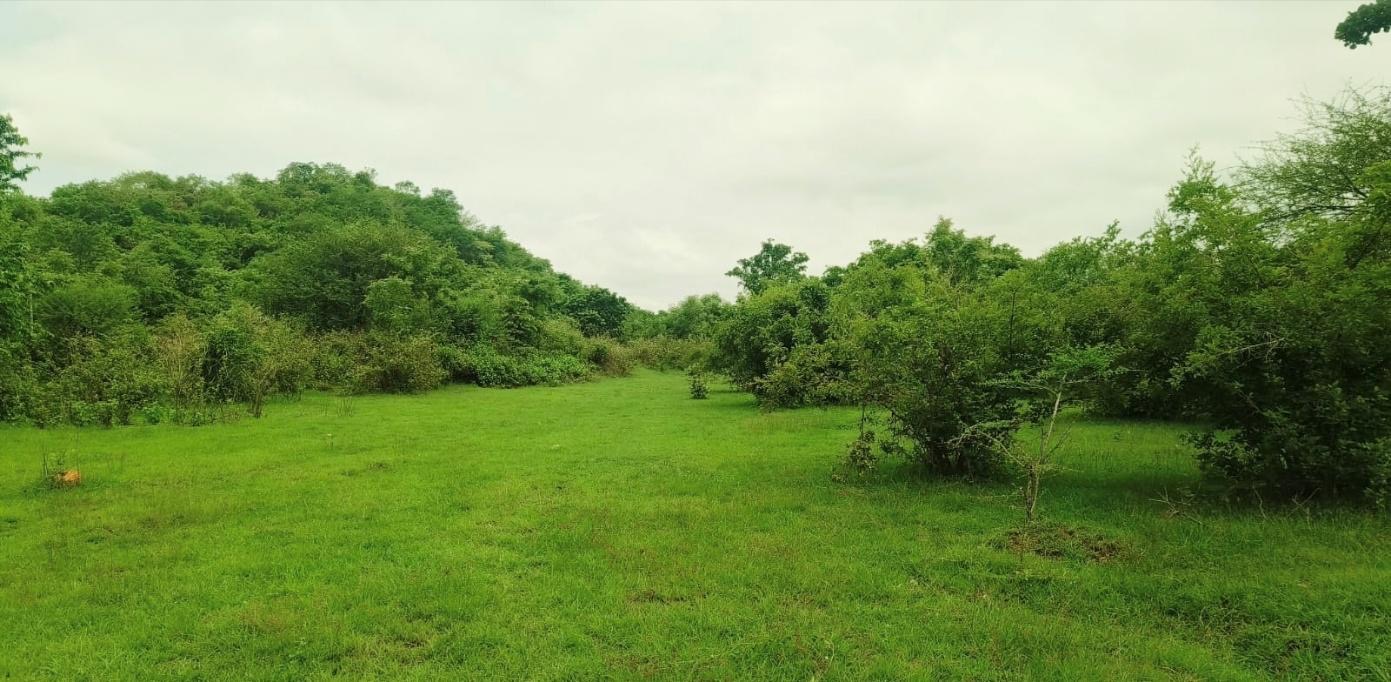
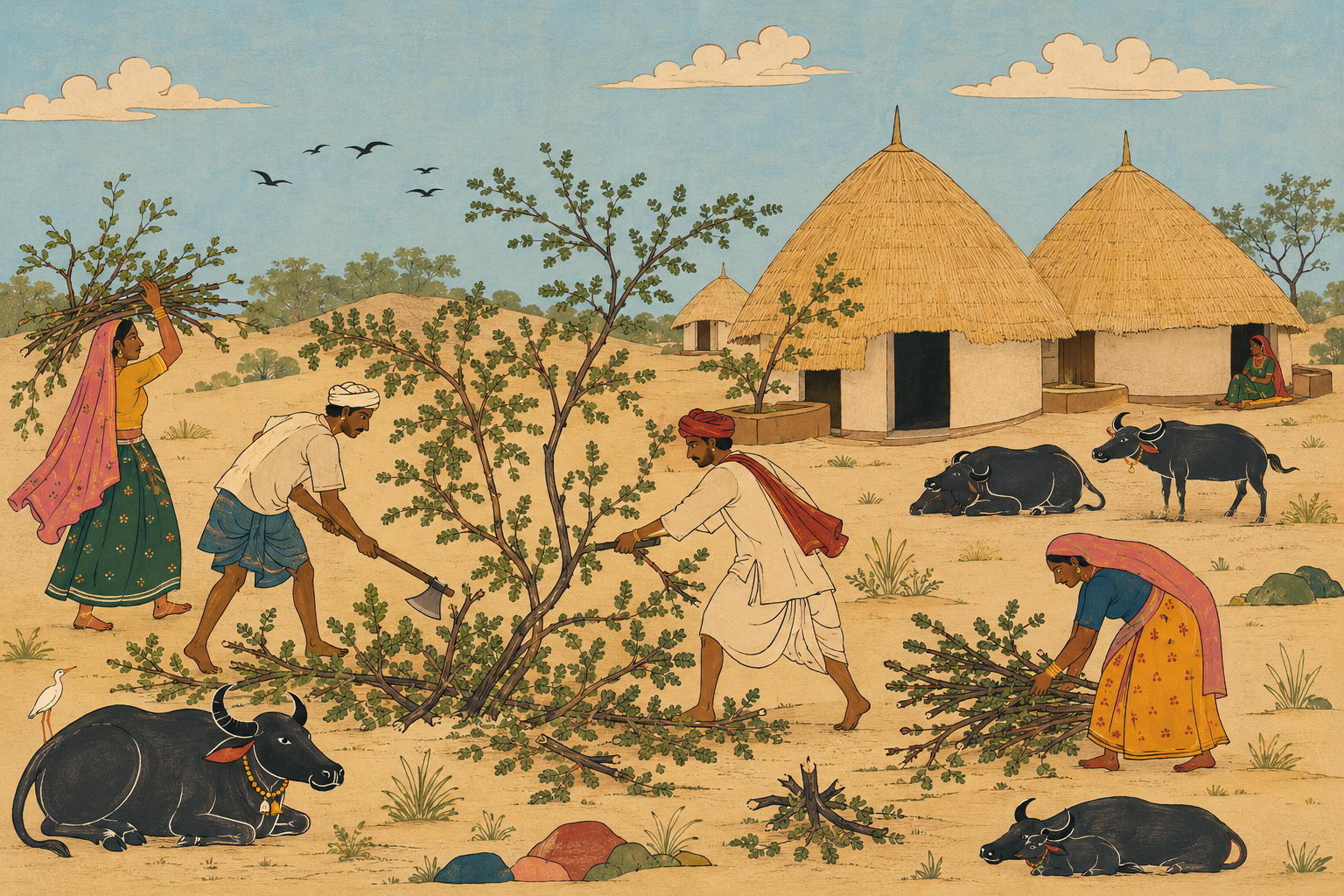
As they sight one Kodisai tree, they pause before it and run their fingers gently along its branches. Some branches are too slender, while others are brittle with age. Years of experience has taught the couple that not every branch of the tree is suitable for what they have in mind. A few flexible branches are selected, leaving the rest untouched to continue growing.
Laxmaiah reminisces about his childhood as he cuts off the branches. “My father taught me how to choose the right ones and leave the ones that need to grow stronger,” he says, adding, “Our Koya tribal communities hold extensive knowledge of not just Kodisai but all other native plant species growing in our village forest.” Sandralabodu itself has around 150 households.
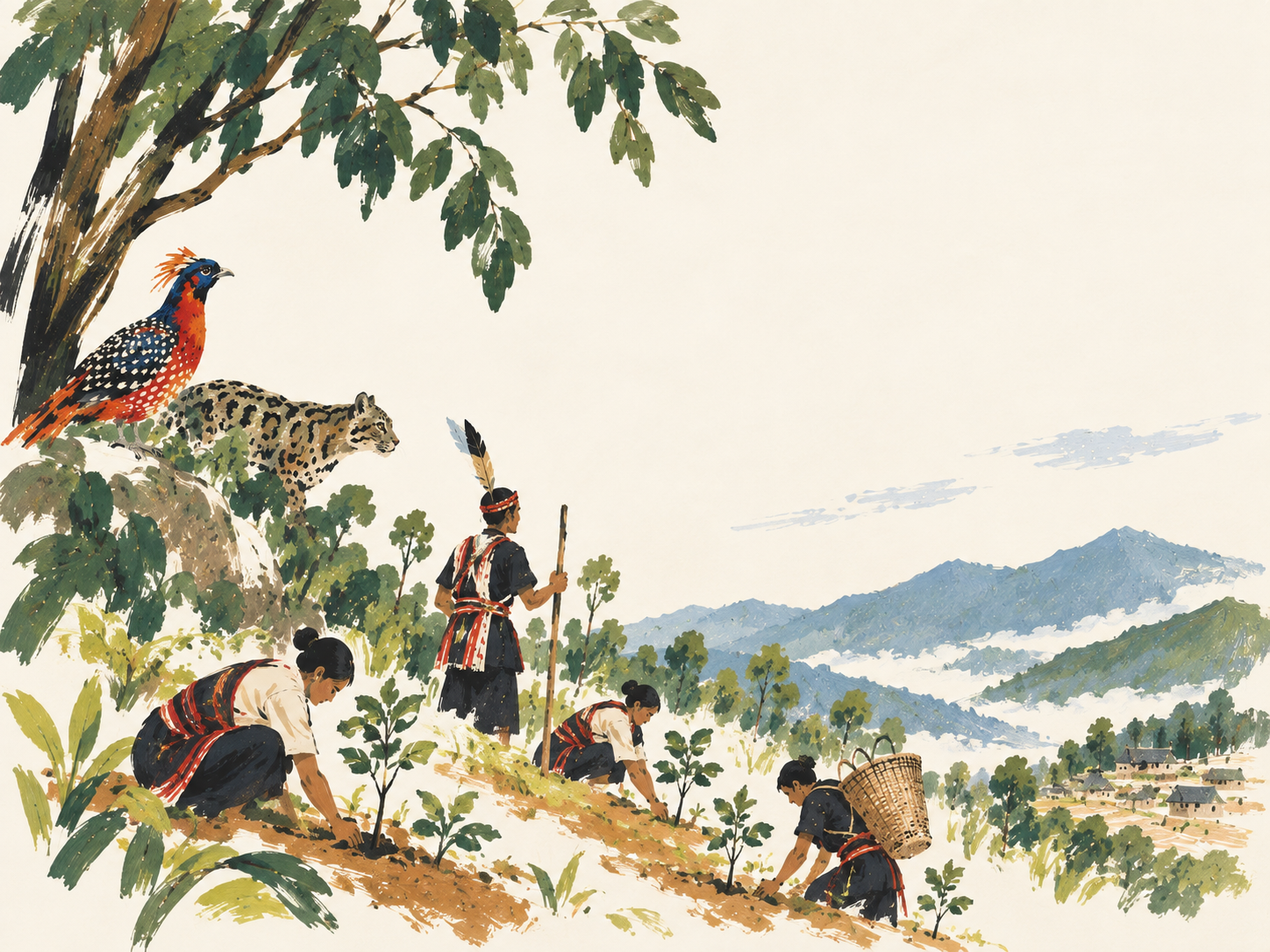
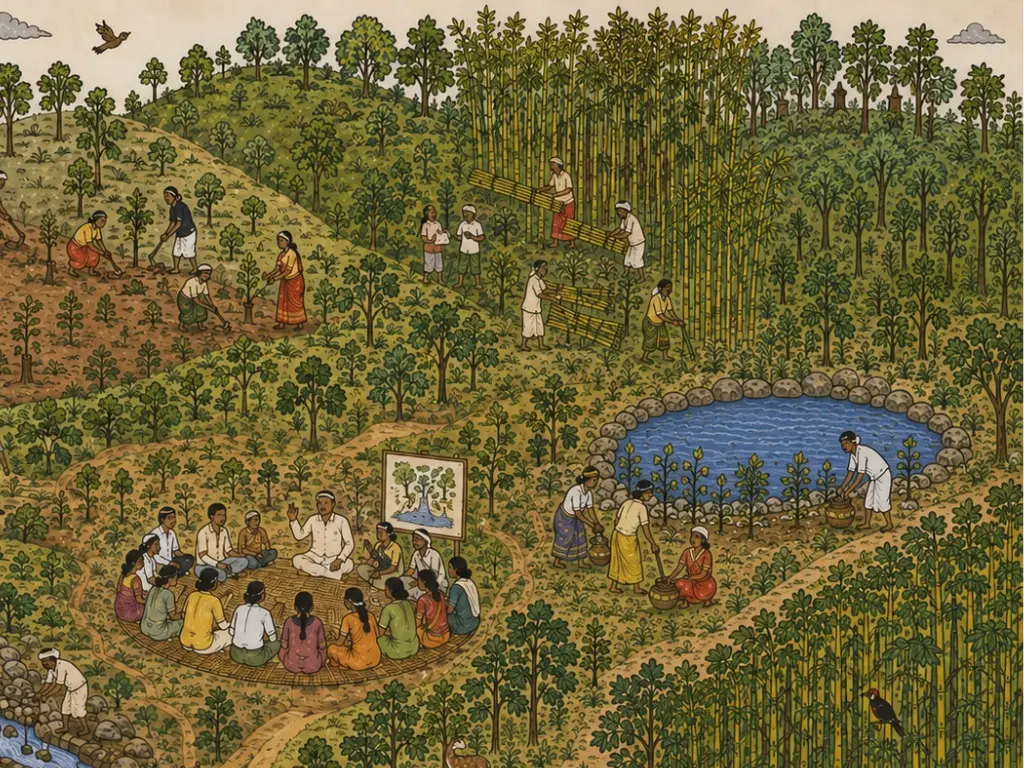
The forests are a shared landscape and the people’s knowledge is as valuable as the tangible resources the dense foliage provides. It is natural that the tribal communities have a deep connection with their surroundings as their livelihoods are sourced here through low-cost, sustainable practices that strengthen community stewardship.
Community stewardship is therefore more about everyday choices rather than formal conservation. It is about taking only what is needed and leaving the rest untouched so that nature regenerates itself. This allows the people to return, from season to season, without any damage to the landscape.
All village forests are governed by local communities and operate within the ambit of the Scheduled Tribes and Other Traditional Forest Dwellers (Recognition of Forest Rights) Act 2006. The Community Forest Rights (CFR) provision allows the tribals to use forest resources sustainably.
The forest resources include fruits, medicinal herbs, firewood, bamboo and wood to build homes, as well as tree branches for the roofing of traditional grain storage structures such as the Gummi. For many farmers, matters of food security begin in the paddy fields, but for the Koya tribal community, it begins in the village forests where the building of the Gummi takes root.
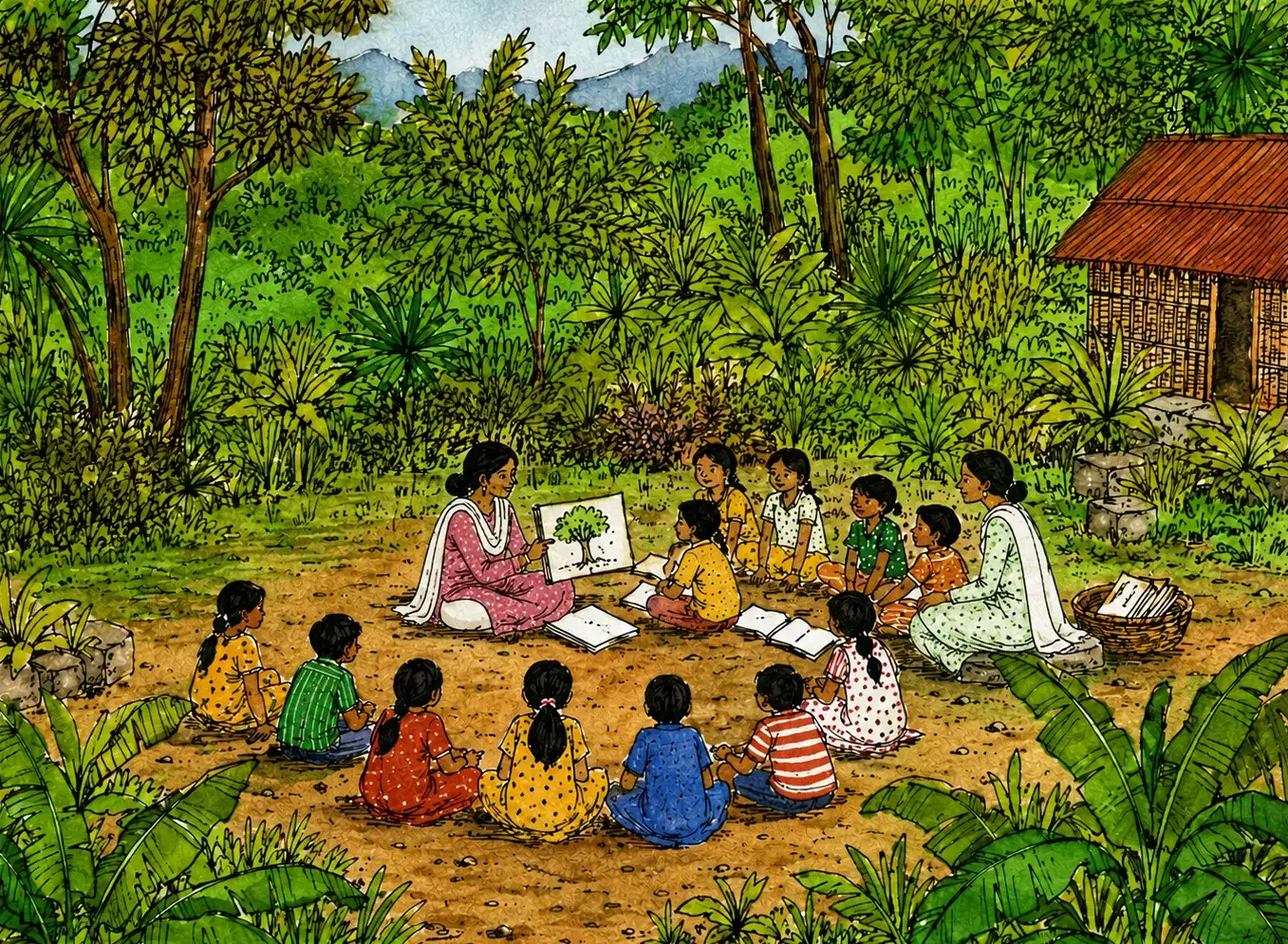
For generations, the commons have shaped the Koya tribals’ livelihoods, customs, indigenous knowledge systems and their understanding of the seasons. Little of this knowledge has been documented, but it has been passed down to generations orally in the form of songs by grandparents; walks through the forests beside elders who taught them to identify medicinal herbs, and how to pick only edible fruits. They have learnt the art of harvesting without collateral damage, thereby allowing forests to regenerate within a timeline. However, in this era of modernisation, this indigenous knowledge is becoming increasingly fragile.
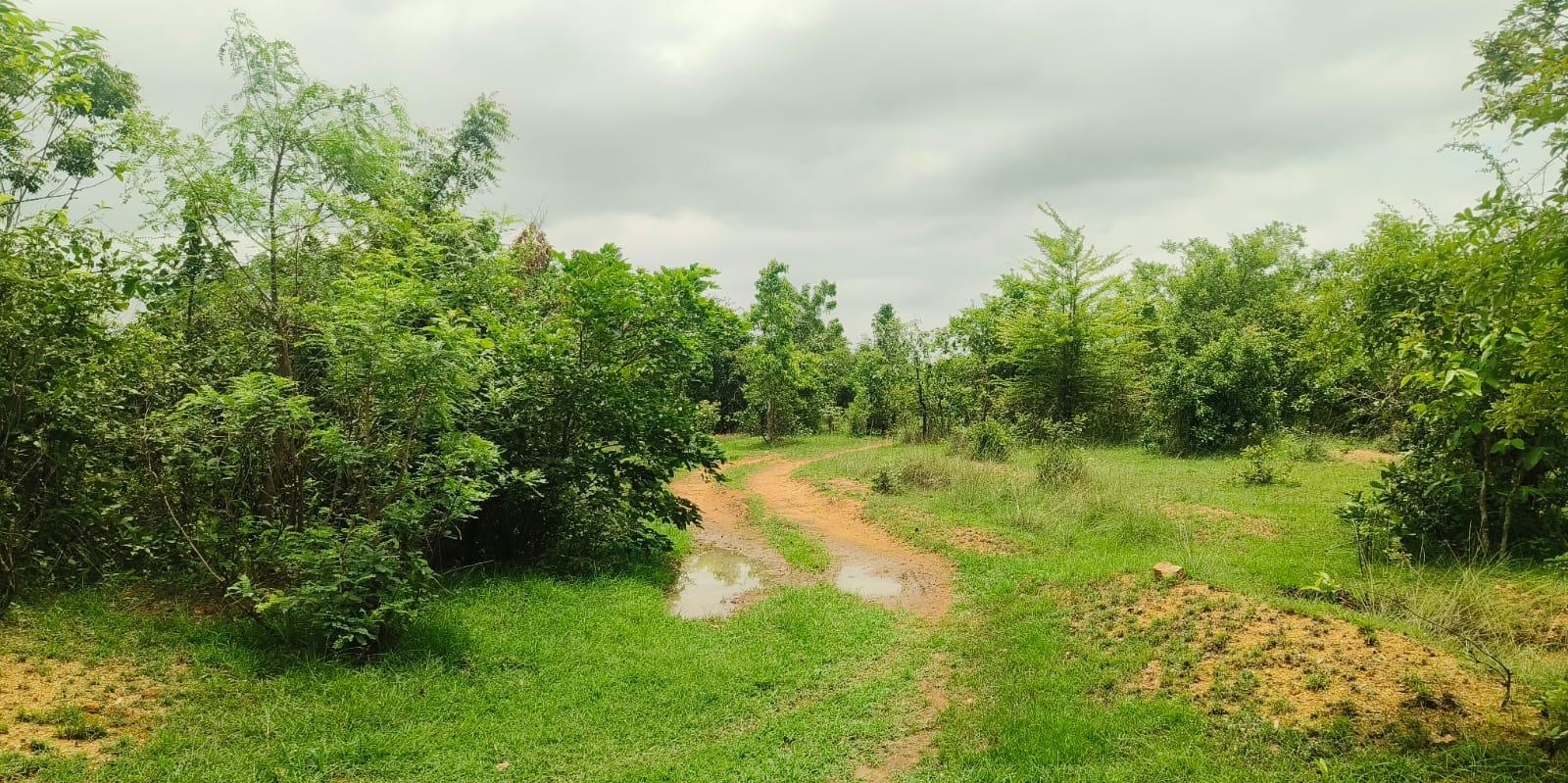
Laxmaiah cherishes his childhood memories of accompanying his parents into the forest. The priceless lesson he learnt is that every tree has a rhythm and a purpose. He does not see the commons as a commercial supply chain. Instead, it demands his responsibility.
The materials to make the Gummi are best sourced in the monsoon season. As the paddy sowing begins, so does the focus on the Kodisai trees and its branches. This symbolises how the cycle of nature aligns cohesively.
Making of a Gummi
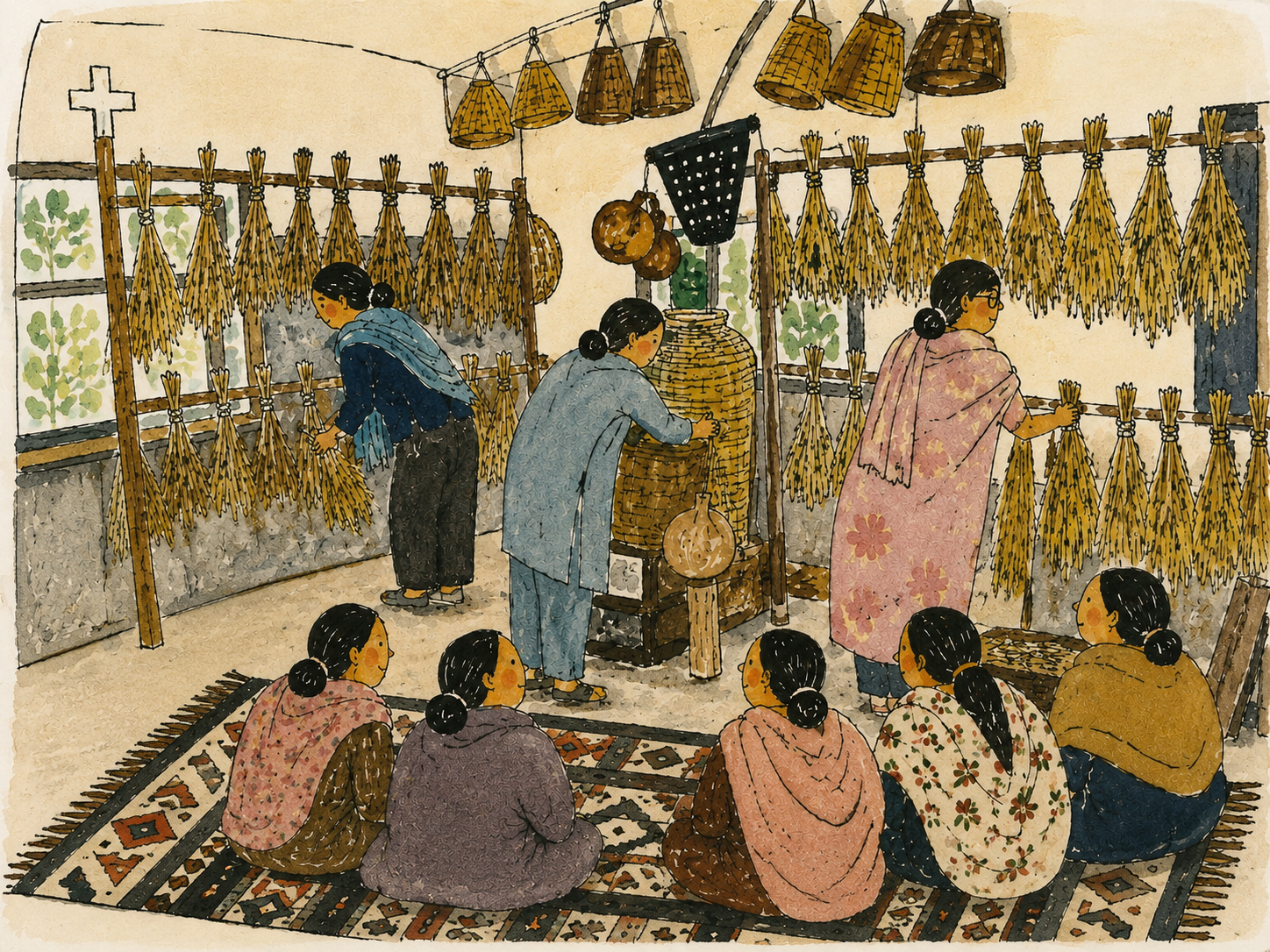
The construction of the Gummi involves seven steps. The framework is prepared by painstakingly interlacing Kodisai branches to form a cylindrical barrel. The cylinder is then dried to the right level of flexibility. A smooth natural plaster – made of a mix of mud and cow dung – is applied internally and externally to seal and make the structure watertight. The Gummi is allowed to dry for two to three days in the sun to attain tensile strength and impermeability.
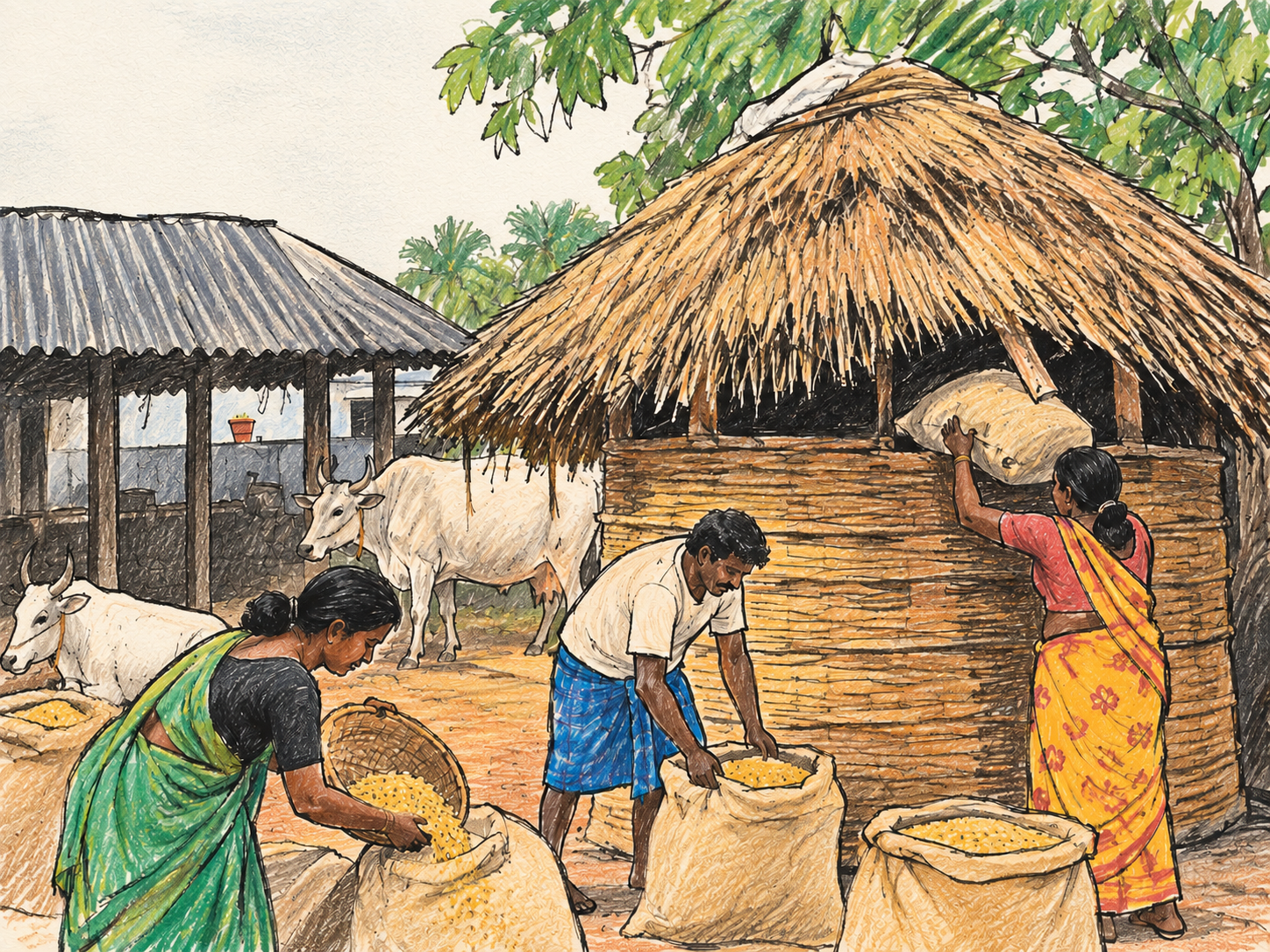
The Gummi is ready to be filled with harvested grain. The top is sealed with a lid made of a thick layer of rice stalk fibre, upon which a two-inch coat of mud paste is applied. The lid has no contact with the grain. The roof of the Gummi is made of palm leaf and rice straw fibre. The double covering protects the foodgrain from exposure to moisture and sunlight. The entire structure rests atop a raised wooden or stone base. As is evident, every element of the Gummi is sourced locally.
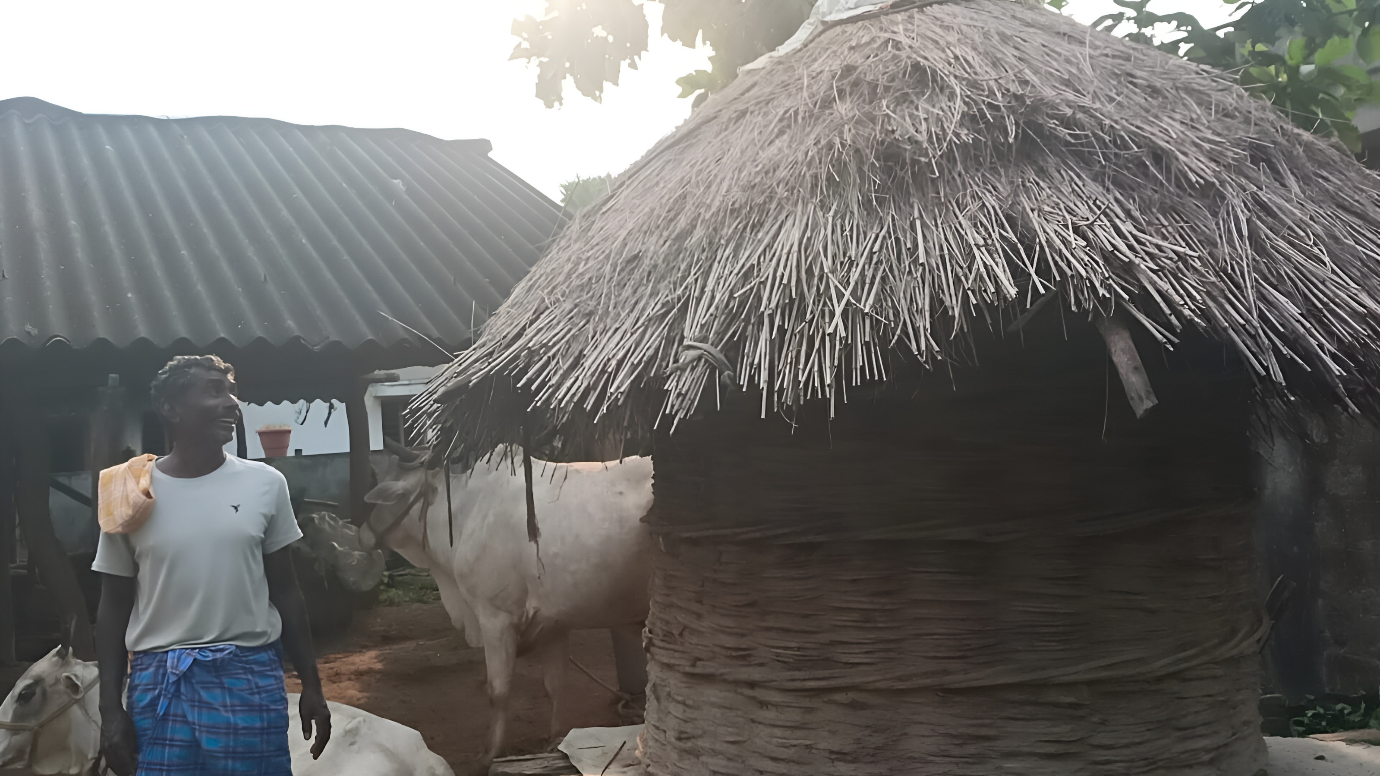
A typical Gummi has a storage capacity of up to 1.6 tonnes of grain. The grain stored this way has a shelf life of up to two years, while the Gummi itself will hold for up to seven to eight years.
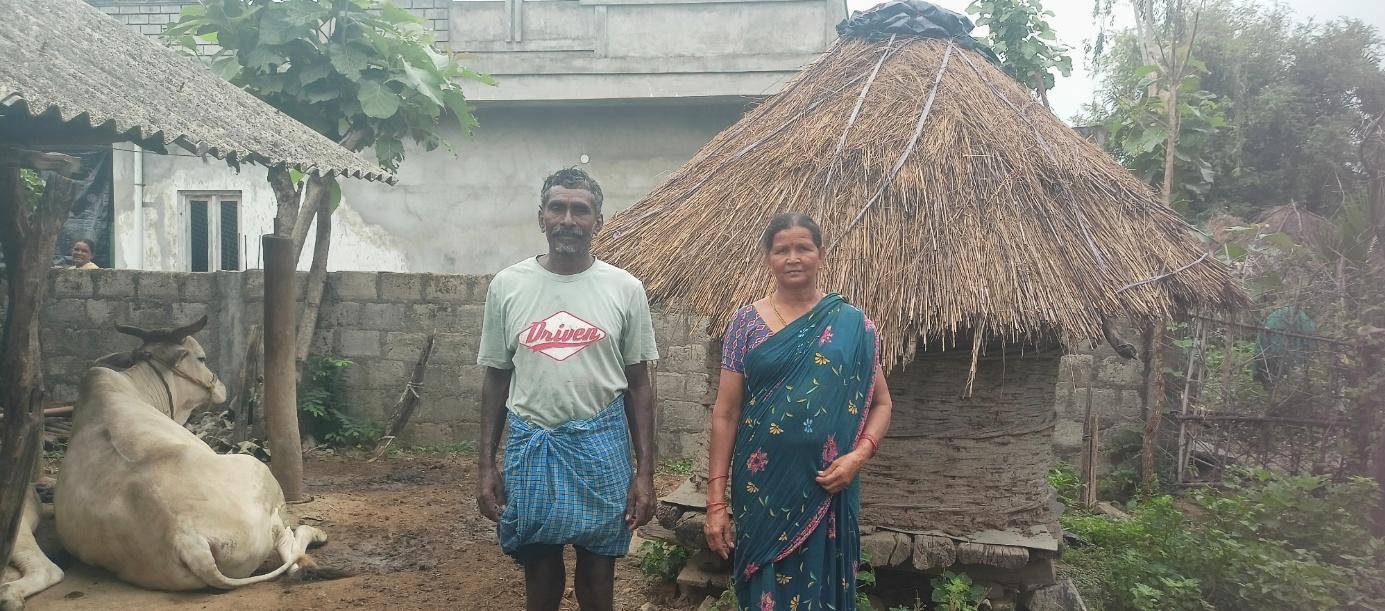
The Gummi structure, which stands in Tellam Laxmaiah’s backyard, is the clearest example of an indigenous knowledge system serving as a climate-adaptive solution to ensure food security. It demonstrates that resilience stems from using locally available materials and the knowledge to match. Yet, this symbiosis between community and forests is under pressure today.
In most of the settlements, traditional food storage structures are being replaced by commercial grain storage systems. The youth are migrating to towns and cities for education and employment, and traditional practices that require craftsmanship and patience are losing ground. As fewer Gummi structures are built, fewer people get exposure to this practice. The gradual disappearance of these structures from the villages signal the erosion of indigenous knowledge.
Narasamma says, “Safeguarding our village forest is not just about protecting biodiversity but about learning of the living and breathing ecological classroom outdoors. I often feel anxious about whether the younger generations will continue to practise it.”
Kunja Pullaiah, a village elder, adds, “In my childhood, almost every household had a Gummi installed. Our neighbours used to help us build it, and vice-versa. Now, very few households have it. The process of building the Gummi shows us how communities can collaborate and help each other.”
As the harvest season ends, Laxmaiah climbs onto the wooden platform, breaks the mud seal of his Gummi and takes out some of the grain for his family. He seals it once again.
The Gummi structure stands tall in his backyard, a symbol of resilience and wisdom. It is a reminder that when communities protect the commons, the commons protect the communities in equal measure.


.webp)
.webp)
.avif)
.webp)

.webp)