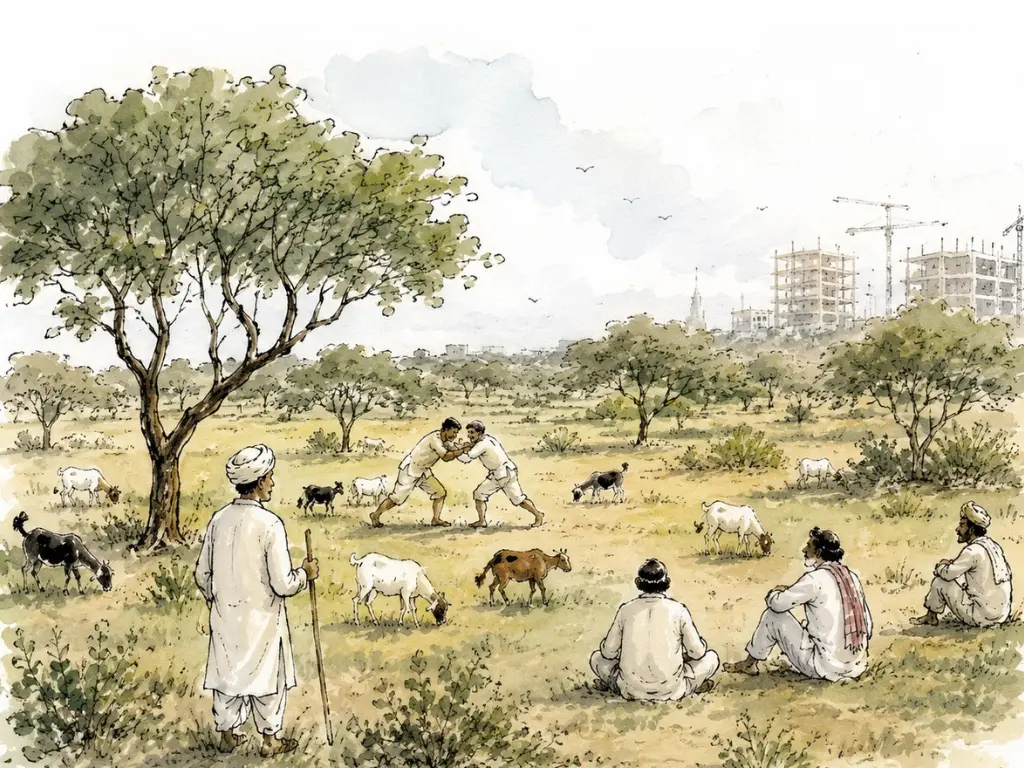
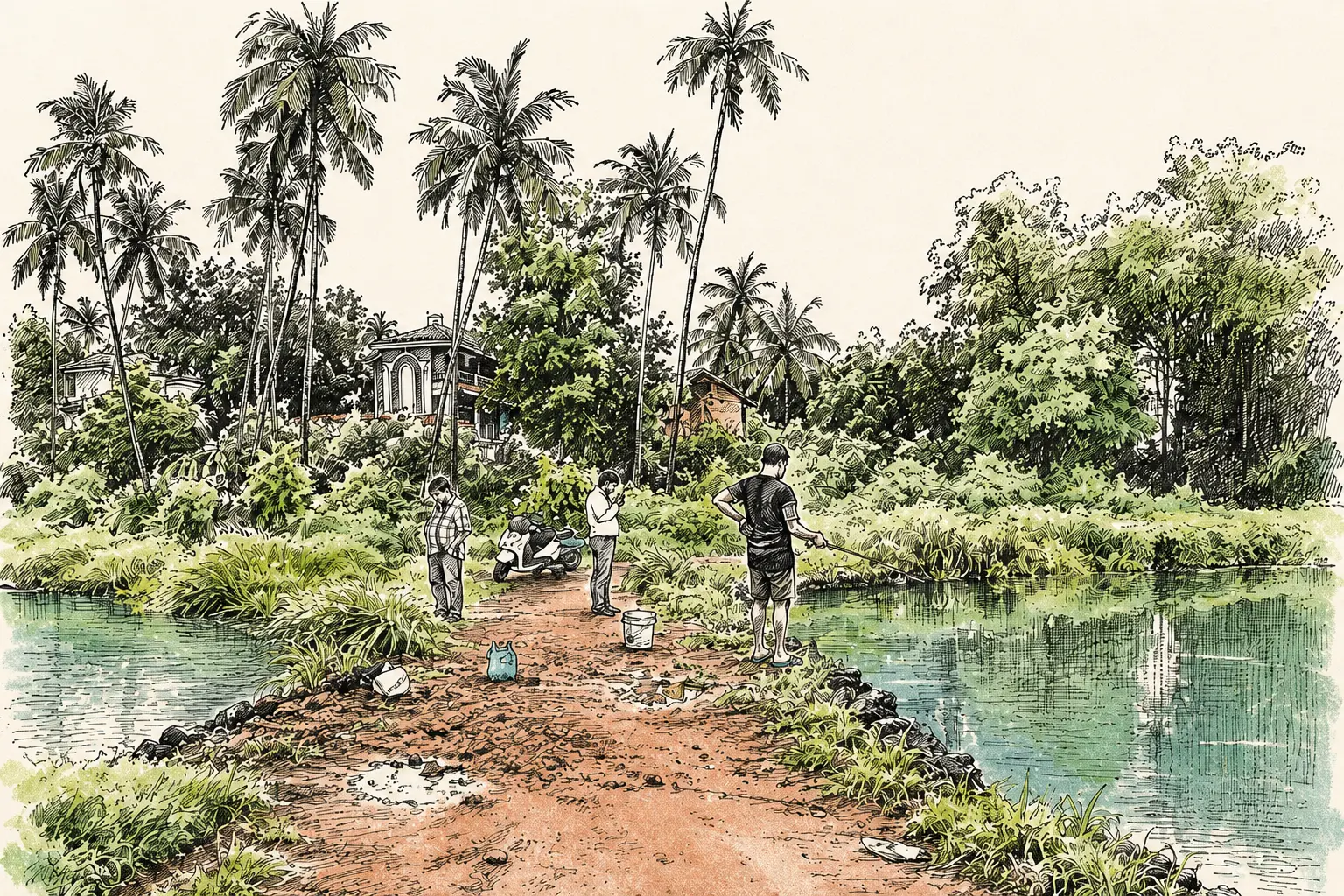
Santa Cruz, Goa: As a child, Elsa Fernandes remembers being too frightened of Bondvol Lake to swim in it. "We were told that my uncle would dive into the lake to open the valve," says the 54-year-old architect-teacher whose family has farmed around the lake for generations. "For me, it was a complete fantasy; what exactly must he be doing to get that going?" The valve sat deep on the lakebed, connected by a channel to the embankment, through which the community's water was rationed field by field.
That image, of a man diving into darkness to release water for a village, captures what Bondvol has always been: a commons managed through intimate, embodied knowledge passed down across lifetimes.

For generations, the 30-hectare reservoir behind Goa University in Santa Cruz, North Goa, shaped nearly every aspect of village life. Built in 1908 by the Portuguese-era Calapor Comunidade, a village institution that predates India itself, the lake, locally known as "Bondvoll tallee" or "Bondava," sustained paddy fields, irrigated orchards, recharged wells, added fish to the community's diet, and supported a rich belt of wetland vegetation and bird life. Up to two hundred farmers still depend on its waters. "People have died in Goa due to lack of water," says Jose Vincent Fernandes, former President of the Calapor Comunidade. "With Bondvol, there is plenty of water for villagers in Santa Cruz to survive."
By the early 2000s, however, encroachment, siltation, valve-tampering, and the quiet advance of real estate pressures had degraded the lake. By 2015, a proposed construction near the feeder channels made one thing clear: if the village did not act, its Kohinoor, as Jose calls it, would be lost. What followed was a decade-long struggle that ultimately produced a victory few environmental commons cases in India can claim: an official notification declaring Bondvol a protected wetland under the Goa State Wetland Authority in October 2022.
Reclaiming their commons
Commons are shared lands such as forests, pastures, water bodies and mangroves, which cover 205 million acres, or one-fourth of India, and form the lifeline for over 350 million people, including marginalised groups like Scheduled Castes, Scheduled Tribes and women. Communities across India have traditionally protected, restored and managed these commons through customary self-governance practices. These customary rights and practices, however, haven’t been formally recognised or recorded in many parts of the country.
Pressure over resources, caste and class hierarchies and environmental degradation has curtailed communities’ access to commons, leading to over-exploitation of commons and exposing them to climate vulnerabilities and rural distress. Despite these challenges, communities across India are showcasing that reclaiming, restoring and managing commons through customary self-governance practices plays a crucial role in their ecological, social and economic upliftment. This story from Santa Cruz is about residents who refused to let their land slip quietly from their hands. They took every tool at their disposal, from social media, gram sabha appeals to legal action to stop the devastation of the Bondvol reservoir.
A community’s lifeline
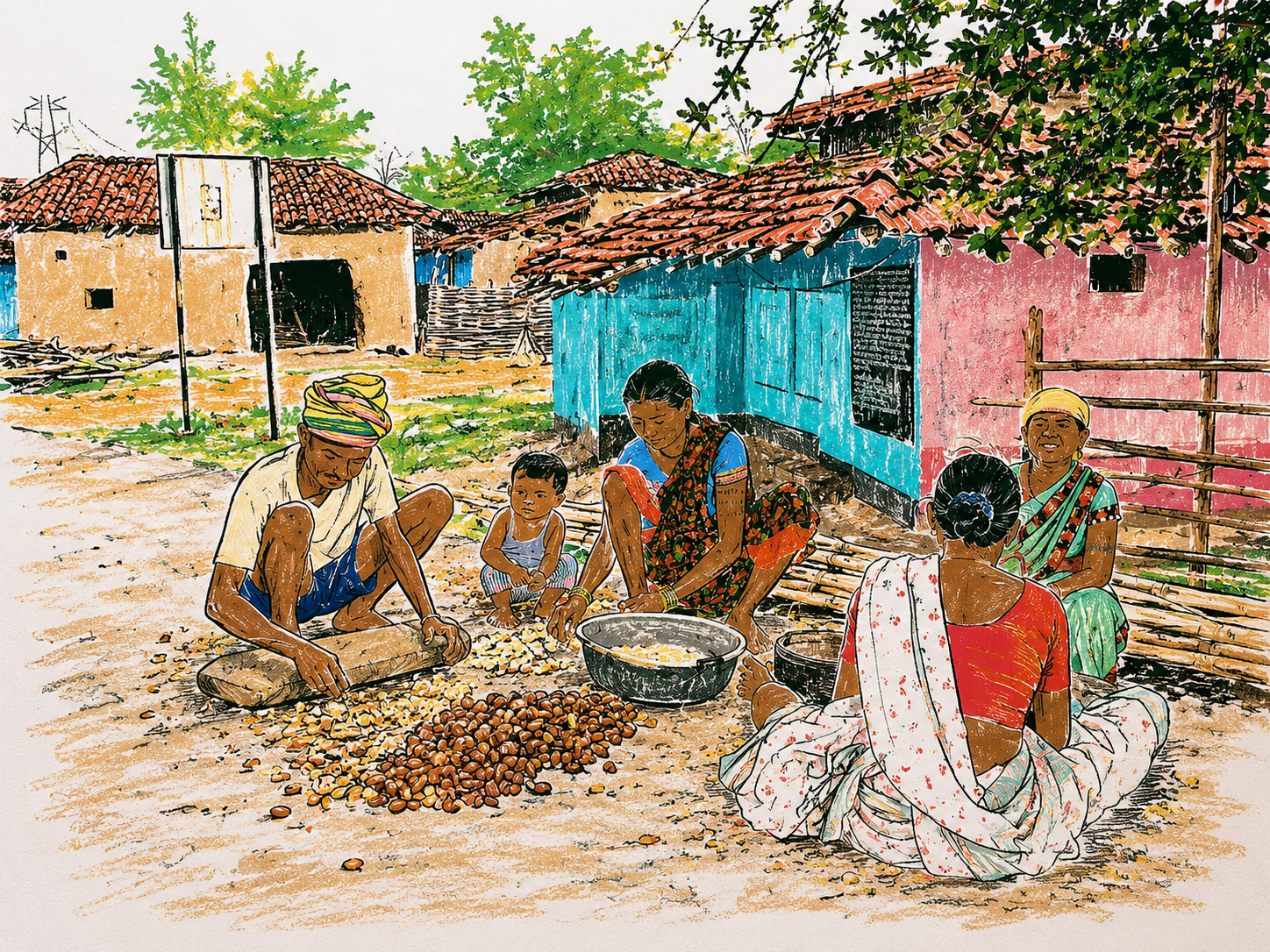
Today, the two million cubic metre Bondvol reservoir holds water all year round. Wildlife – birds, fish, wetland vegetation – has returned. The water table in the surrounding areas has stabilised. Farmers report that wells which had begun to turn brackish during the dry years now have fresh water. Farming families have resumed the rhythm the sabotage had disrupted. The paddy fields around the lake are active. The organic plots of watermelon, onion, chilli and brinjal that Jose tends are watered by Bondvol yet again. The commons is back to functioning as a commons: shared, governed and productive. Jose, who faced threats to his life during his fight to reclaim the lake, says, "The future depends on protecting these spaces."
Bondvol Lake was built in 1908 by the Calapor Comunidade, the traditional village collective whose records date back to Portuguese colonial rule. Shaped like an axe and 15 metres at its deepest, the lake was constructed to bank water and to ensure food security through the lean months. Older residents remember helping to build the embankment by hand. Farmers like Pedro Dias, now 65, have worked the surrounding fields for over four decades, relying on the lake’s water to compensate for erratic rainfall. "Each farmer gets at least 50 kg of rice," he says, describing the yields that community farming once guaranteed. At least 20 quintals of produce were reserved for the village annually.
In fact, the comunidade system that governed the lake is a long-established institution from Goa’s pre-colonial times. A form of village collective that managed land and resources, it was formalised under the Portuguese and retained in Goa's legal framework even after its liberation from colonial rule. The Calapor Comunidade held formal ownership of Bondvol and the surrounding land. Farmers who used the water were not tenants but participants in a commons, their rights derived from membership in the village community rather than individual title.
Conspiracy of private interests
The slow dispossession of Bondvol began with a single tenant. Under a historical arrangement, this tenant was permitted to cultivate a parcel of the wetland that surfaced above water only during the dry season. Over time, the tenant began encroaching into the lake bed, cultivating land that had not been part of the original agreement. This started to reduce the reservoir's effective capacity. Worse, there were repeated attempts to disrupt the irrigation system on which the community depended. This was carried out by tampering with the valve, the deep-set mechanism that regulated the entire village’s water supply. "Community efforts to safeguard the valve were repeatedly sabotaged, isolating the water supply so the tenant could grow crops throughout the year," Pedro recalls.
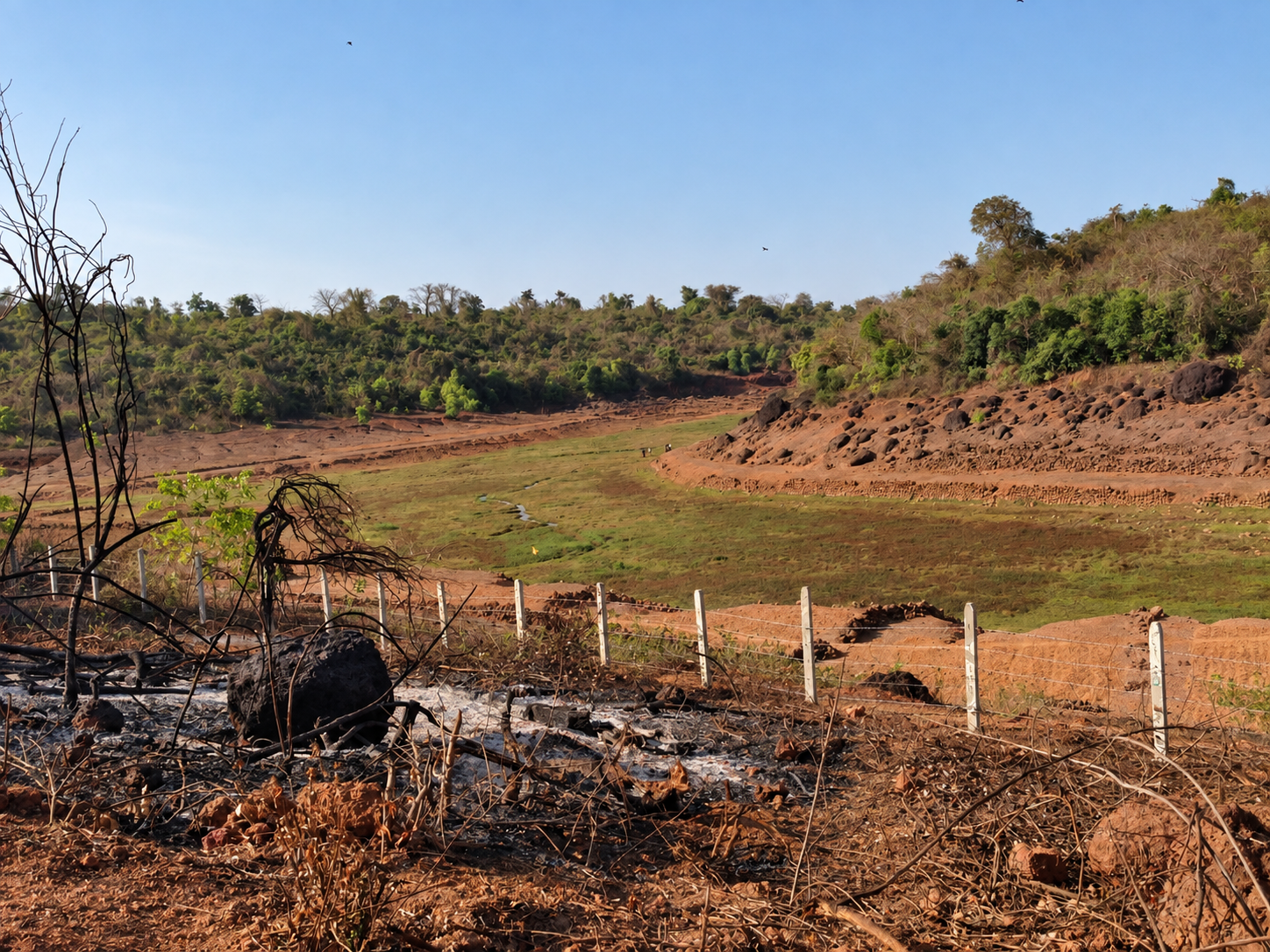
The legal system, which should have offered redress, let the community down. Elsa Fernandes is candid about how. "Corrupt practices such as bribery and political influence were at play," she says. "The court declared ex parte the tenancy matter in favour of the tenant. Comunidade representation was never there."
An exploited legal gap, a politically connected tenant, and a comunidade without proper legal representation were the main hurdles. This precise combination is the very structural vulnerability that makes commons susceptible to capture by private interests.
By the early 2010s, the lake was silting badly. Real estate interest in the land surrounding it was intensifying. And the valve continued to be sabotaged.
It takes a village
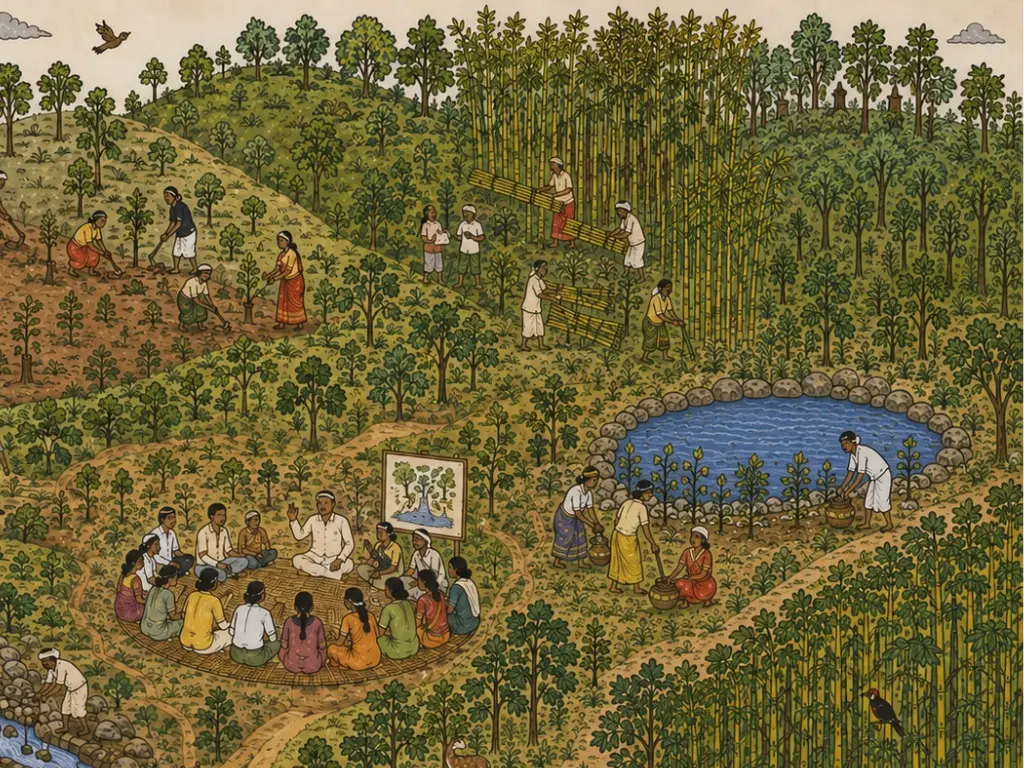
The turning point came in 2016 when the lake started drying up and preparations for a lake-front construction appeared on the periphery. This spurred the village into organised action. Gram Sabha resolutions were passed. Protest marches were organised. Social media drew wider attention. Local churches, institutions with deep roots in Santa Cruz's predominantly Christian community, provided crucial moral authority and organisational reach. The Save Bondvol Lake movement of 2017 brought together farmers, school children, lawyers, and the clergy in a coalition whose breadth would prove to be its resilience. The plan, as Elsa puts it, was "to take the whole community to the lake, to make noise on social media, and to file for ensuring Wetland status of the lake in the High Court".
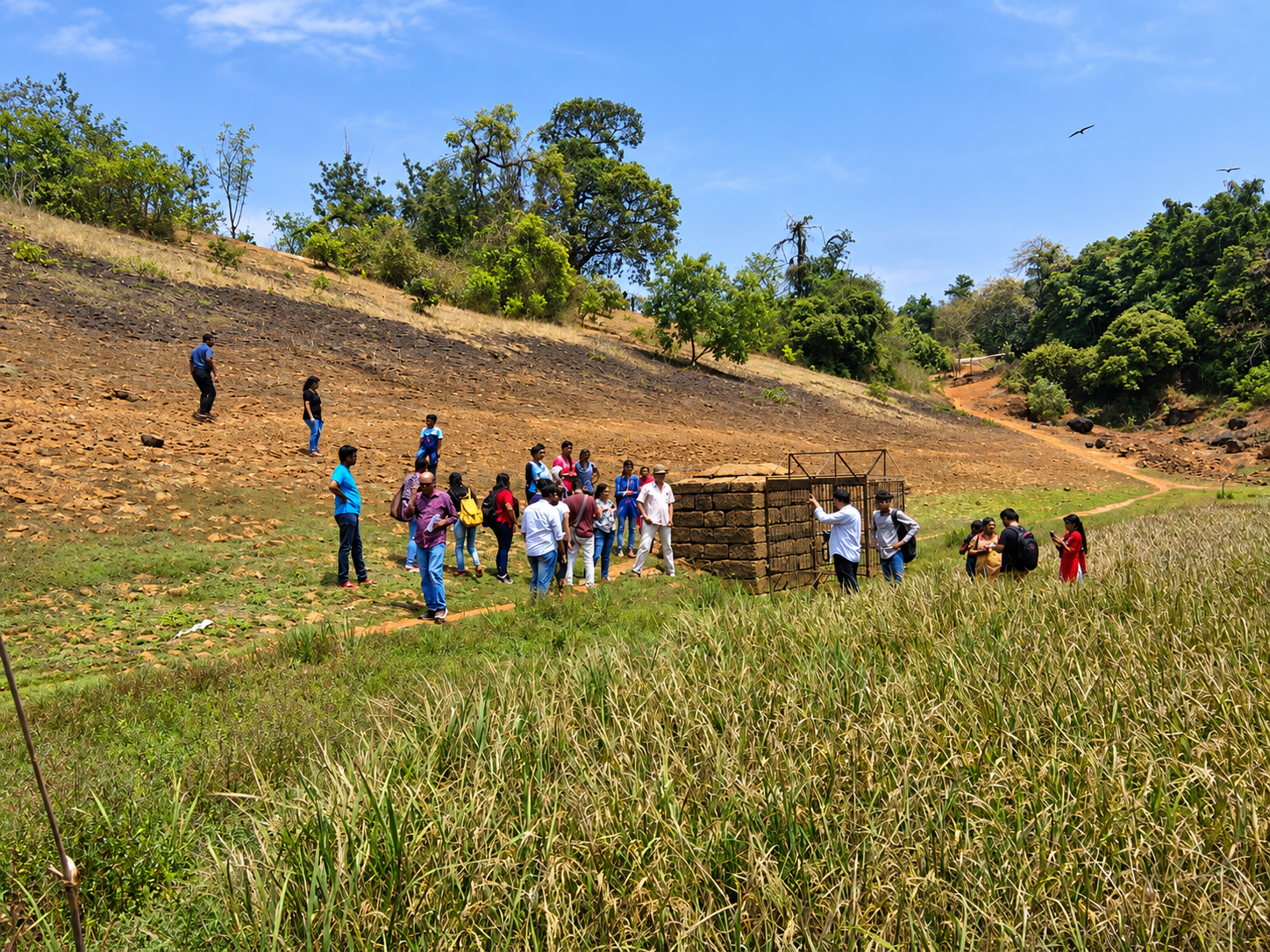
Father Alexander, the parish priest, played a central role during the movement's most difficult years, both spiritually and organisationally, serving as a "continuous vitamin," recalls Elsa. "Every time there was an attempt to demotivate, distract, or digress, he would keep everybody together. He became like a father figure."
Leaders of communities, welfare associations and non-governmental organisations rose to the occasion, and some of them, including Arturo D'Souza, approached the High Court seeking protection of the wetland.
The High Court made a most consequential early intervention. It constituted a High Court Task Force to independently assess Bondvol. The Task Force mapped the lake, counted its trees, documented its community fishing and cultural rights, and ordered the repair of the sluice gates left broken by the sabotage. Its report, submitted by 2018, became the evidentiary foundation for every legal protection that followed. It also recommended the constitution of a Lake Management Committee under the Goa State Wetland Authority, a formal institutional mechanism for ongoing governance.
Counter-pressures were persistent. Planning Development Authority notifications threatened to rezone the lake's buffer. Powerful development interests resisted the litigation. The political networks that had enabled the original encroachment did not simply withdraw. But backed by the High Court Task Force report, sustained Gram Sabha pressure, and consistent media and church support, the community held firm.
By 2021, Bondvol was assessed for inclusion among Goa's first formally notified wetlands. The notification came in October 2022, carrying strict prohibitions on encroachment, land conversion, industrial expansion, dumping of construction debris, discharge of untreated effluents, and commercial extraction of soil, sand, or rock, alongside mandatory buffer zone protections within 50 metres of the lake.
Inheritance of a responsibility
Today, the Calapor Comunidade remains the formal custodian of Bondvol. However, the practical stewardship of the lake, as always, is shared. Its caretakers remain active and passionate. For them, Bondvol is more than a water body, a resource or an ecological asset. It is a responsibility.
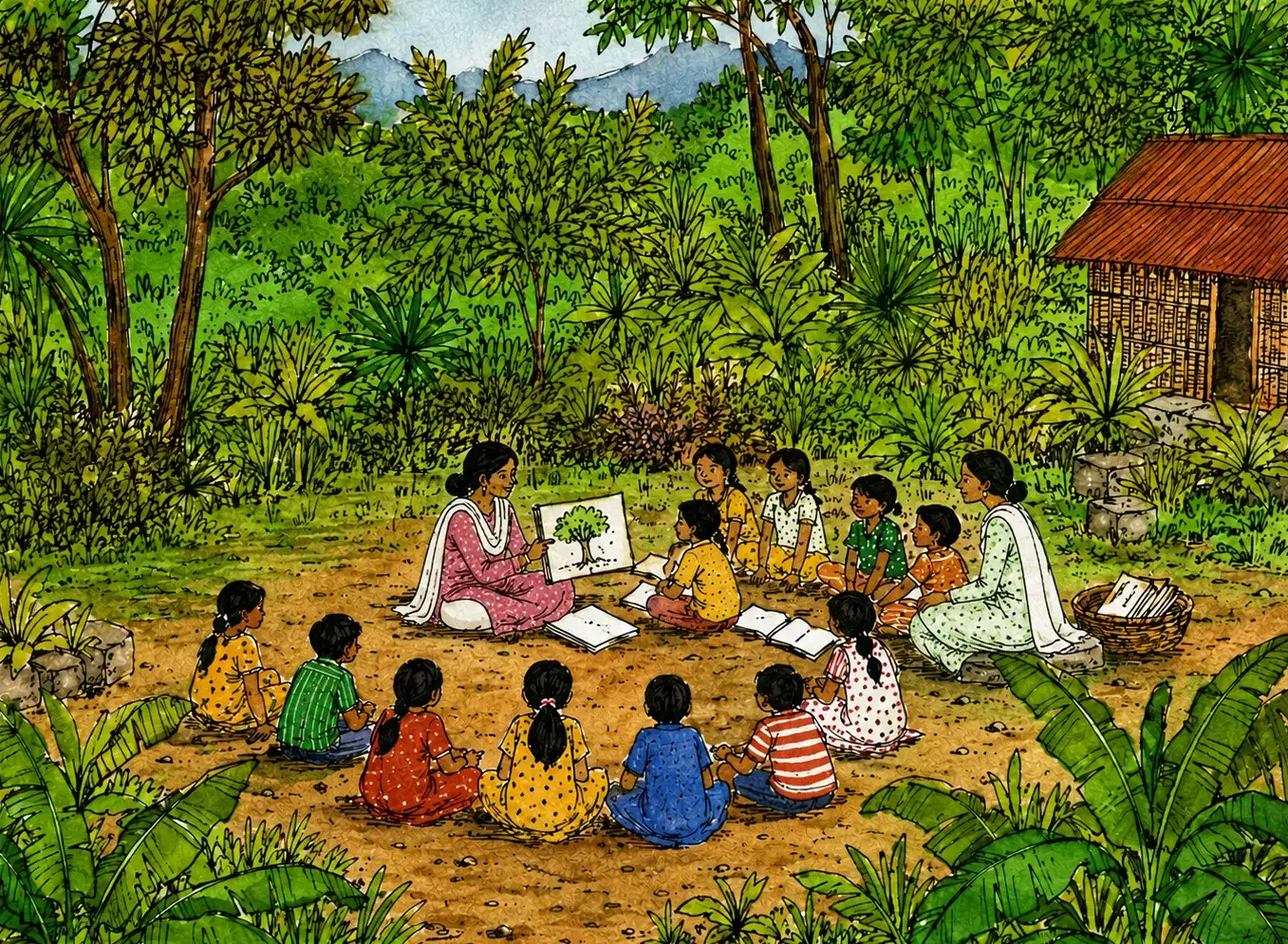
The farmers who use its water, the church that held the community together during the worst years, the lawyers who fought the encroachments in court and the children who once marched with placards and will one day dive deep to open the valves themselves, guard its future.
Elsa hopes to pass on to her children the same resolve that the older generations of Santa Cruz carried. The lake is a place of reverence, a place that awes the adult in her as much as it did the child. It is a commons held not just in law, but in memory.












.webp)
.webp)

.avif)
.webp)


.webp)