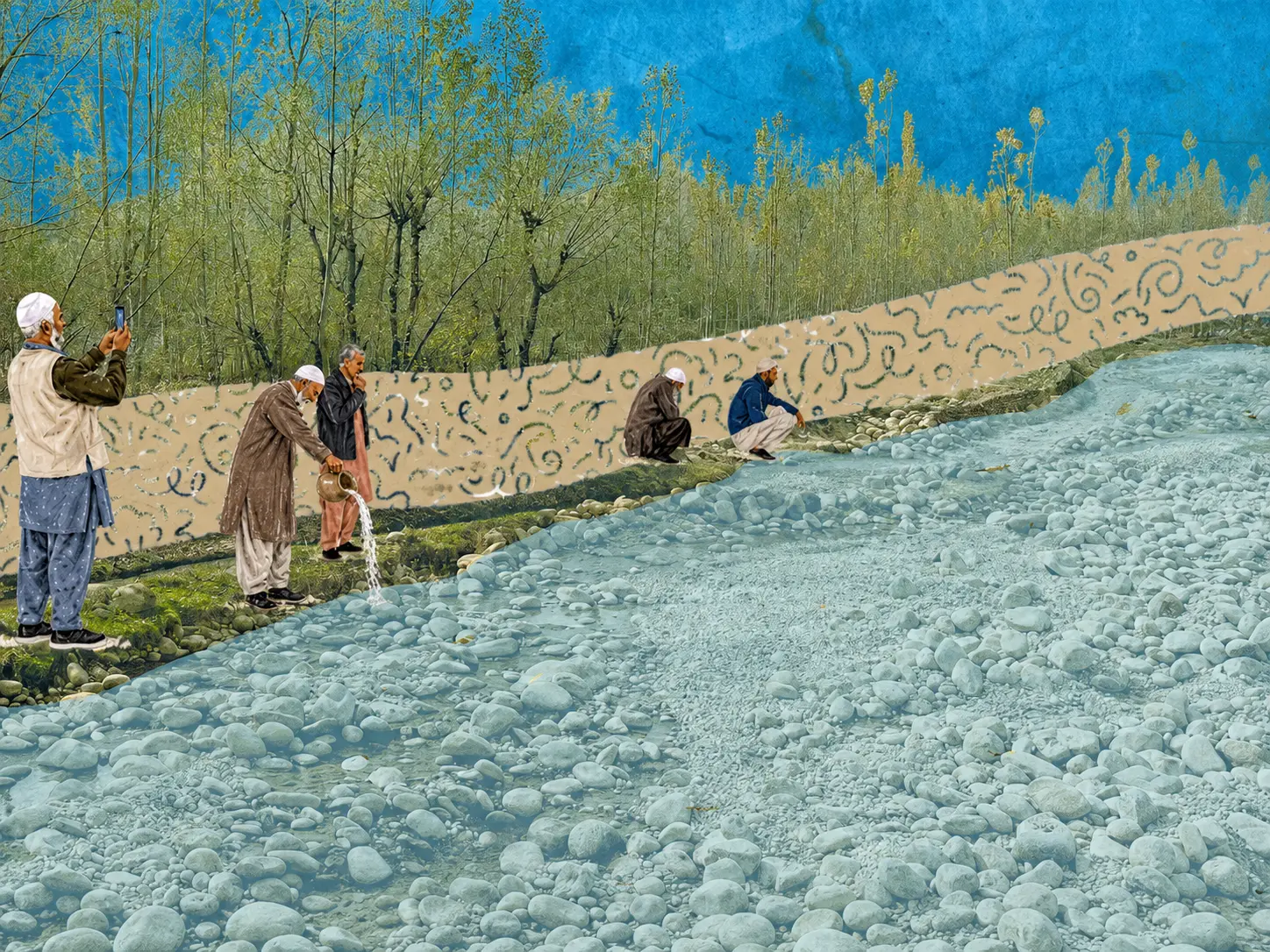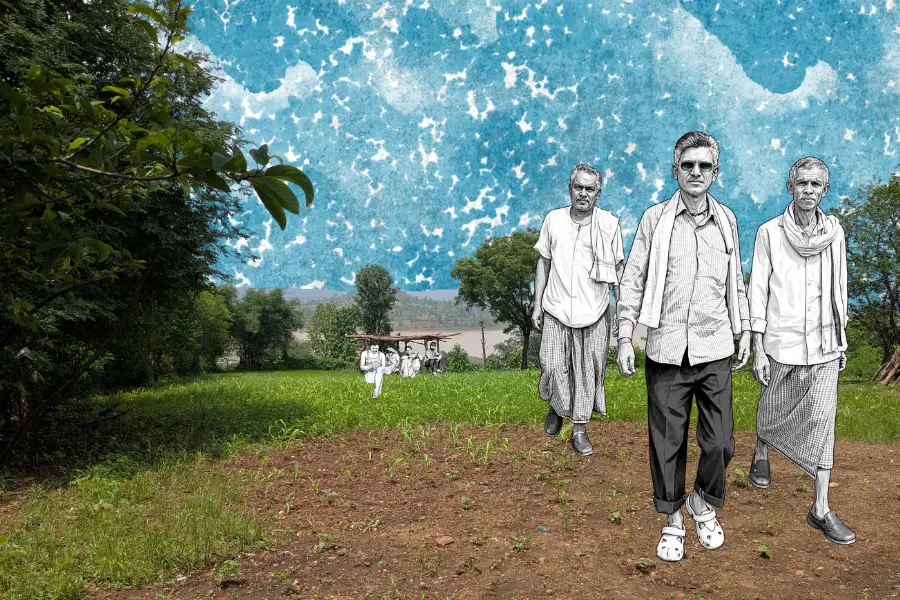
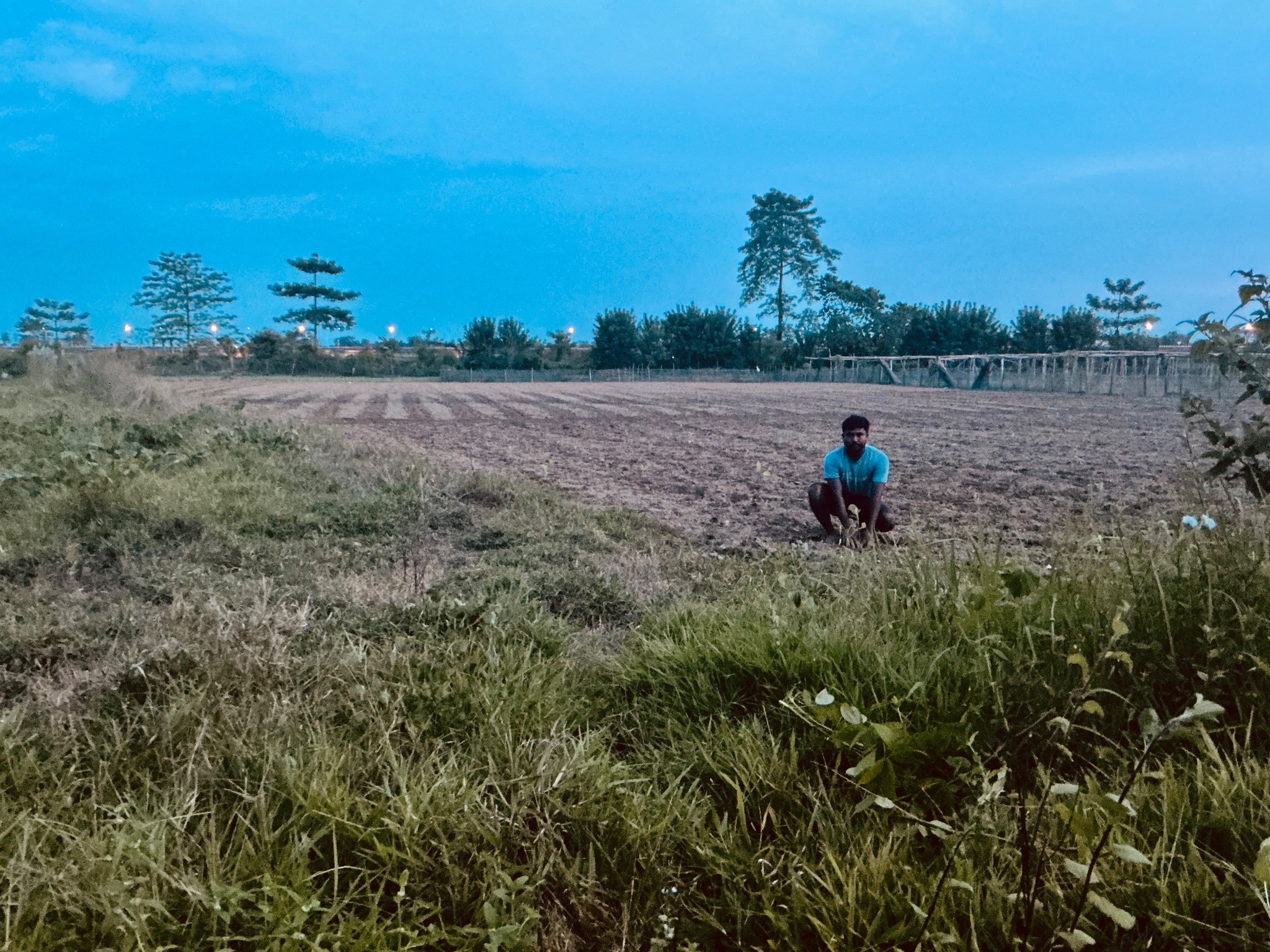
Sadiya, Assam: From the banks where Suman Das has set-up his vegetable farm, the Lohit River resembles a sea. Even at this point, a few kilometers before it meets the Brahmaputra, the river is so wide that the 19.5km Dhola-Sadiya bridge seems to disappear into the horizon.
30-year-old Suman is from the migrant Bengali community and has no land of his own. For many years now, his family has been leasing village-governed land along the ever-shifting Lohit River where they would cultivate rice, maize and mustard.
In August 2023, a few kilometres from his leased farm, the Assam state government had a grand inauguration to launch the National Mission on Edible Oils, an attempt to reduce India’s dependence on imports for palm oil by promoting the lucrative crop. The targets were ambitious. Nearly 3.75 lakh hectares - or, more than the size of the state of Goa - of new plantations were to be created. The policy offered a bouquet of incentives to farmers like Suman to grow palm trees: from financial assistance to buy saplings, subsidies on farm inputs to ensuring a lucrative sale price.
Monoculture palm oil plantations proliferated across 22 villages of Saidya region where Suman lives. “It felt like an invasion,” said Tiken Das, a local leader of the Assam Kisan Sabha, a grassroots farmers’ organisation.
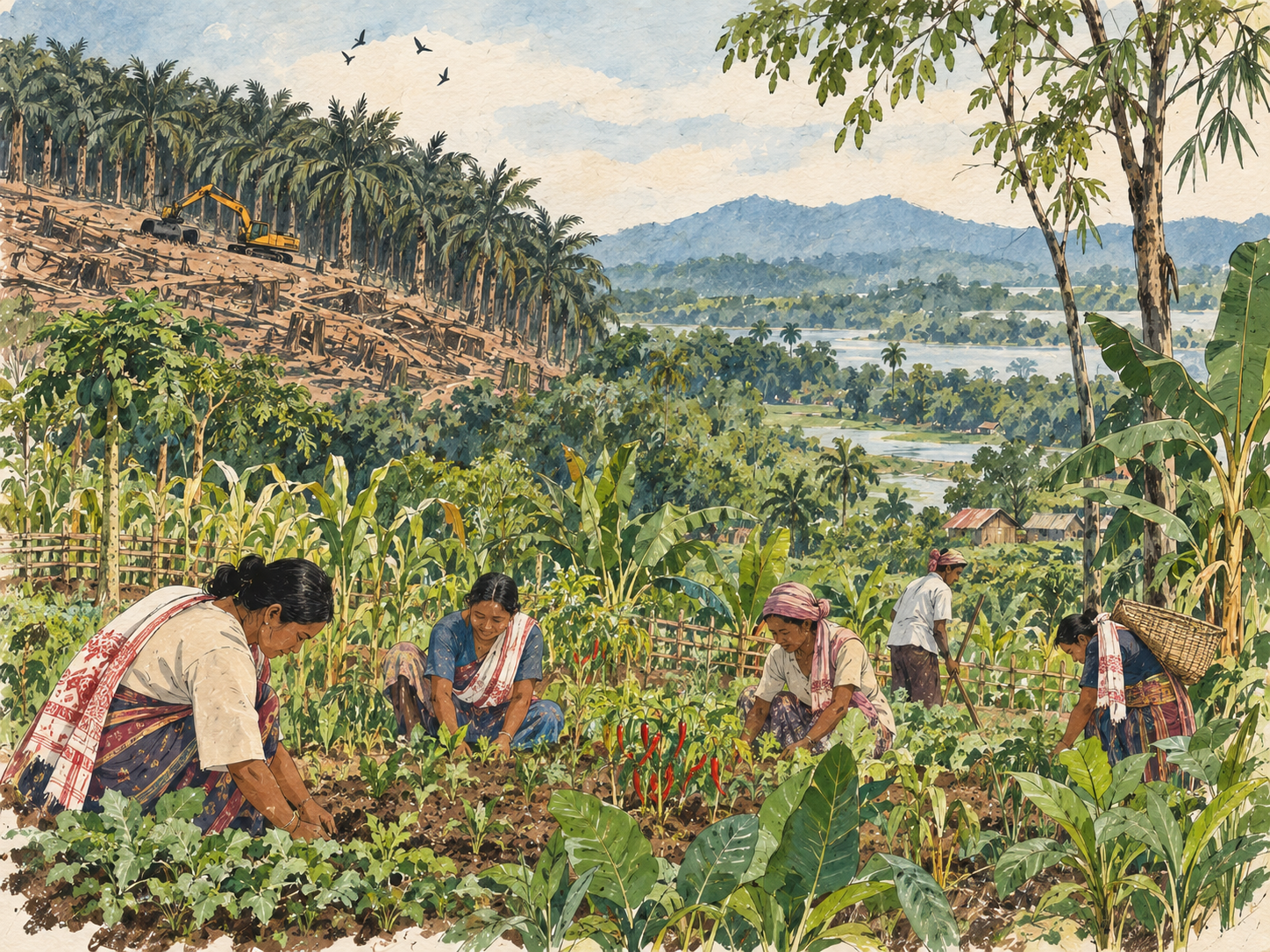
As neat rows of palm trees encircled the commons around the river, Suman had to change his cultivation practices. Now, he and other lessees carefully plant rows of tomatoes, eggplants, papaya, chillies and bottle gourd. It’s a conscious shift decided by the village: to counter the lure of monoculture palm plantations through lucrative multicropping.
Fighting monoculture with diversity
The palm oil expansion is coming at the cost of local common forests and grazing lands. Riverine lands have been subsumed, while forests were denotified. Fears arose of declining crop diversity and depleting water resources(palm oil extracts more groundwater than other forms of cropping). While the plantations could boost the national economy, it could come at devastating costs to the local economy.
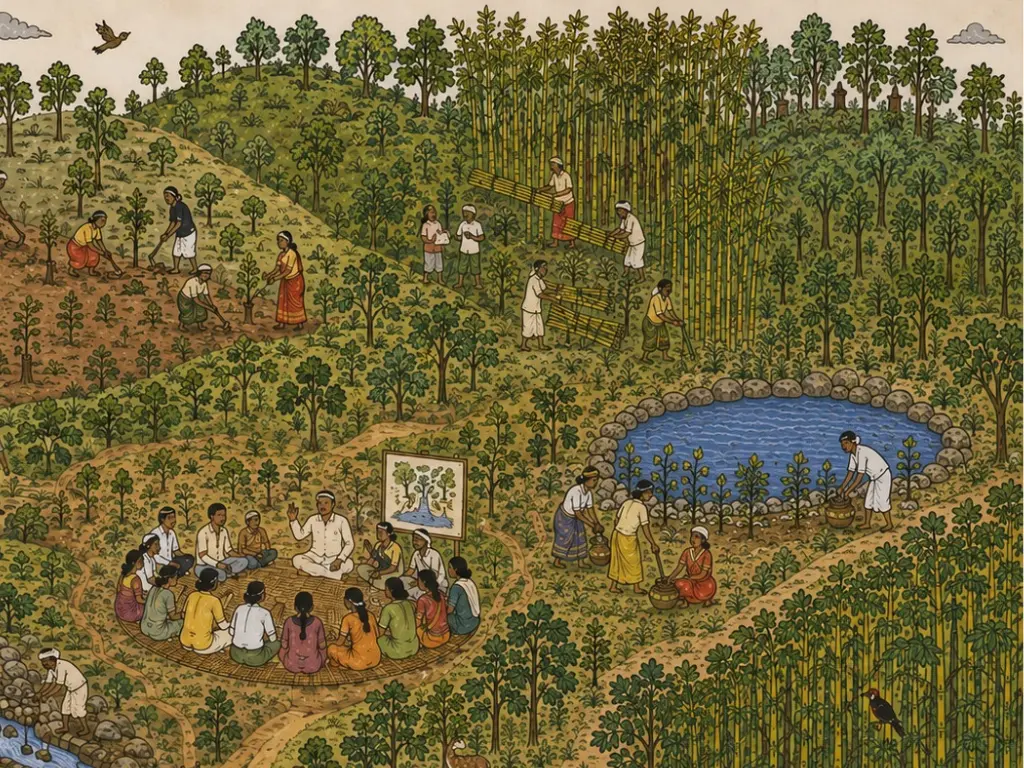
Villages across the Sadiya region, close to the Assam-Arunachal Pradesh border, have turned towards their commons to shore up their defence against the march of monoculture. At Sisini Gaon, vegetable cultivation and fisheries were expanded on leased commons on river banks. Those leasing the land were given training in planting a diverse set of crops to augment incomes and boost soil health.
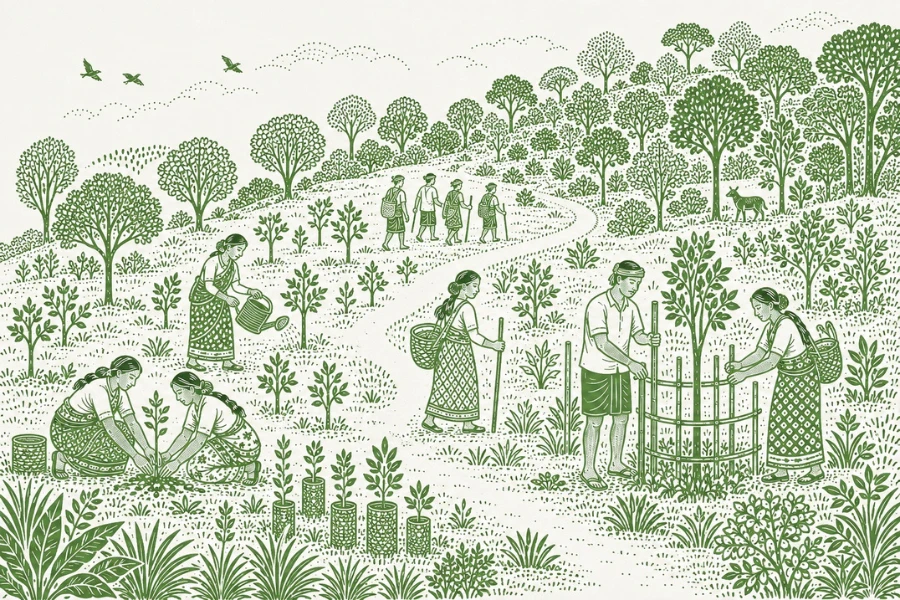
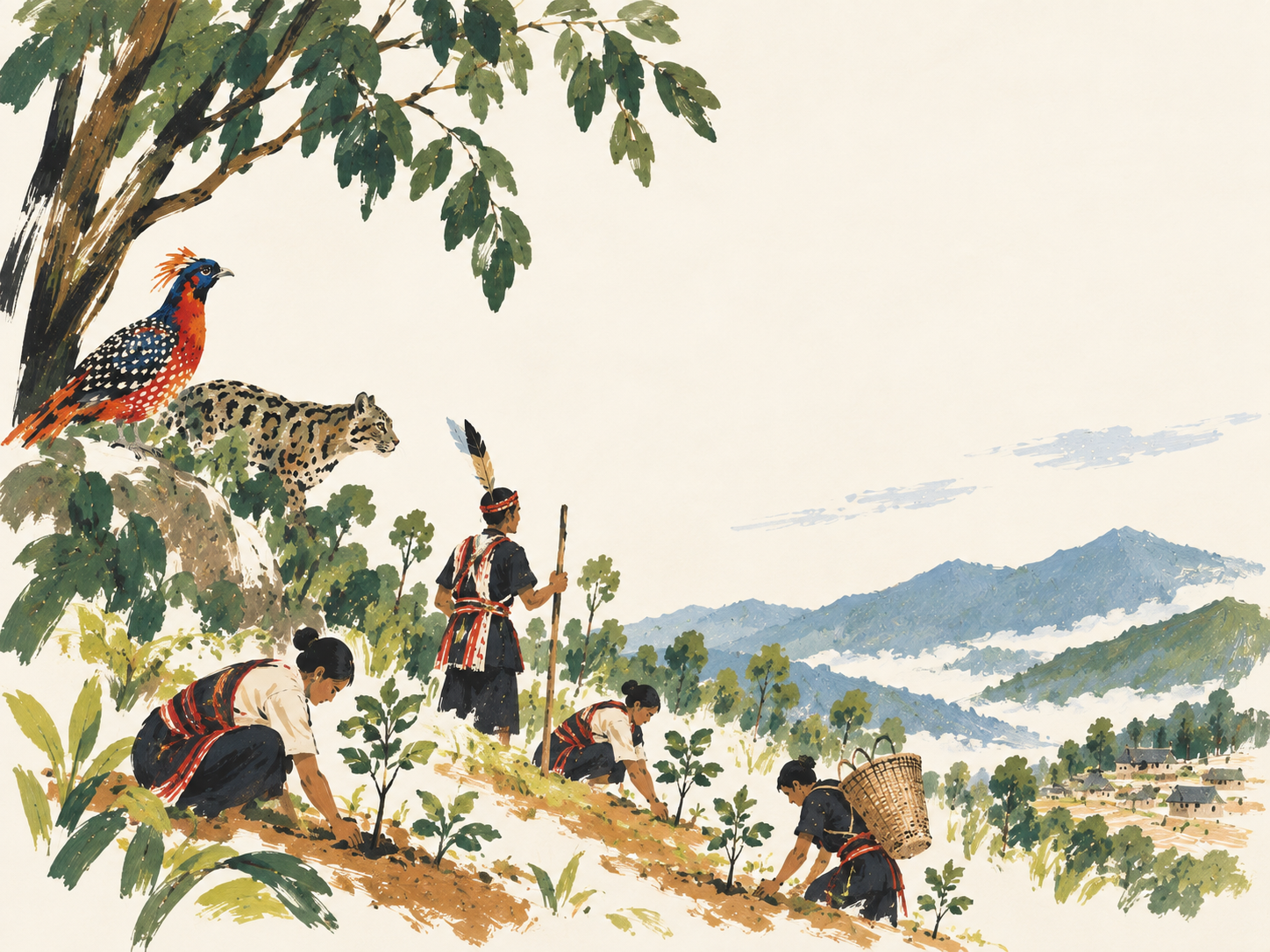
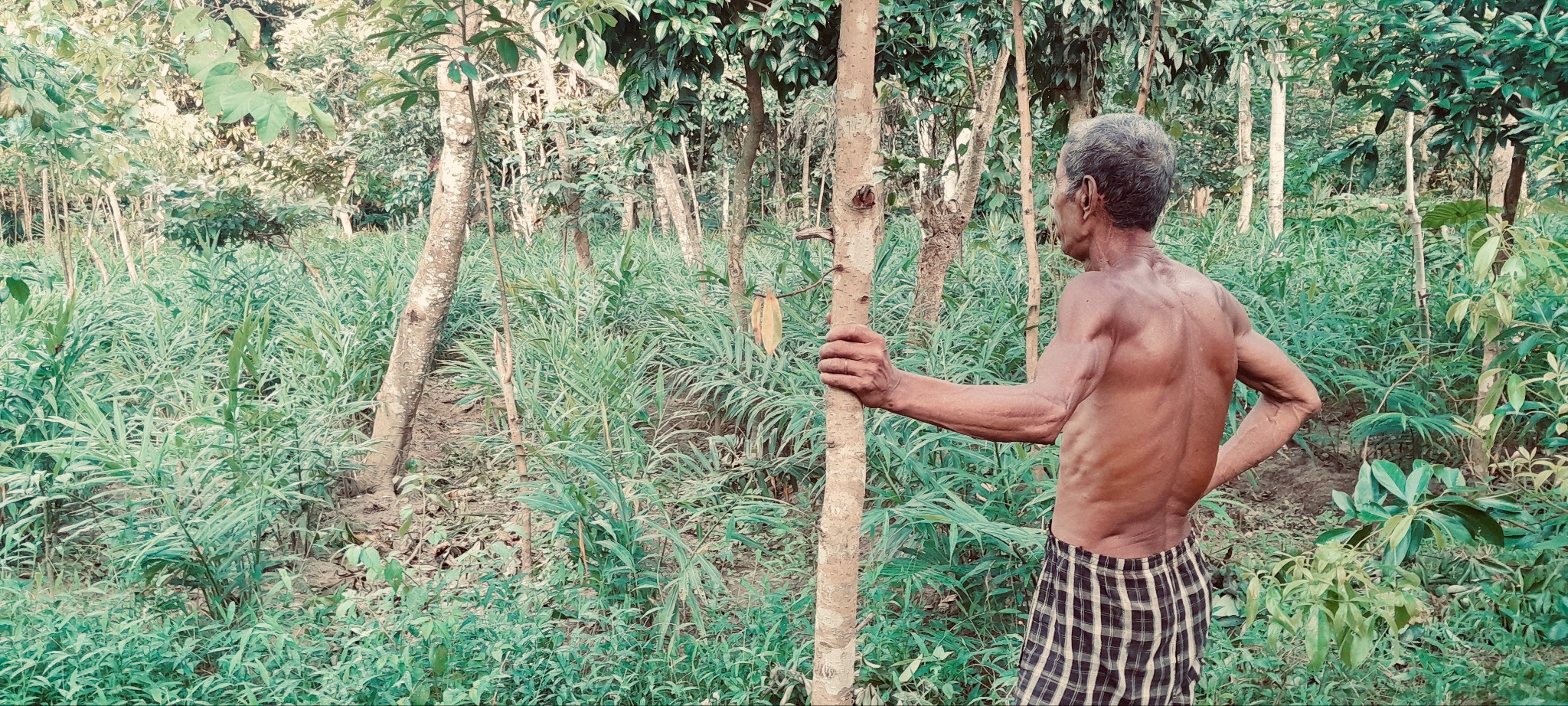
Meanwhile, communities turned towards local forests which had degraded over the years. Kachijan, for instance, revived 25 hectares of degraded forest commons with firewood trees and ginger plantations. The hope was not just to increase incomes, but also to create a buffer against land conversion by reinforcing the community’s dependence on these lands.
Across India, commons—shared lands such as forests, pastures, water bodies and mangroves— cover 205 million acres or one fourth of India and form the lifeline for over 350 million people, including marginalised groups like Scheduled Castes, Scheduled Tribes and women. Communities have traditionally protected, restored and managed these commons through customary self-governance practices. These customary rights and practices, however, haven’t been formally recognised in many parts of the country.
The protection of commons has continued despite contesting demands over resources, lack of formal aid or policy recognition, environmental degradation and climate vulnerabilities. At Sadiya, these commons have become an important rallying point for adaptation, resilience and resistance against drastic changes in the landscape. It serves as a reminder of the inextricable relationship between the community and their commons.
The commons of Sadiya
The traditional governance of the banks of the Lohit stems from the fickle nature of rivers in Assam. The Lohit tumbles down the steep slopes of the Himalayas and fans across the plains of Assam. In the monsoons, its violent and turbulent flow swells the river; while in the summers, it shrinks to a fraction of its size. This ever-changing nature leaves cycles of inundations, seasonal wetlands and temporary riverine islands. Privately-owning these lands was never an option. Instead, village panchayats lease these lands for the cropping season. On average, each panchayat leases about 30 acres of riverine lands for Rs. 4,500 to Rs. 6,000 per acre annually.
The leased lands are farmed for rice, potatoes, mustard, lemons, tomatoes, eggplants, papayas, chillies and other crops. Fishing and grazing supplements incomes. In the monsoons, when the Lohit submerges its banks, the leaseholders fish on these lands.
For landless farmers like Suman Das, the incomes from the commons account for nearly 80% of their annual incomes. “Fishing gives us about Rs. 20,000. In winter and summer, when the river recedes, we can earn about Rs. 60,000 from cultivating here,” he said.
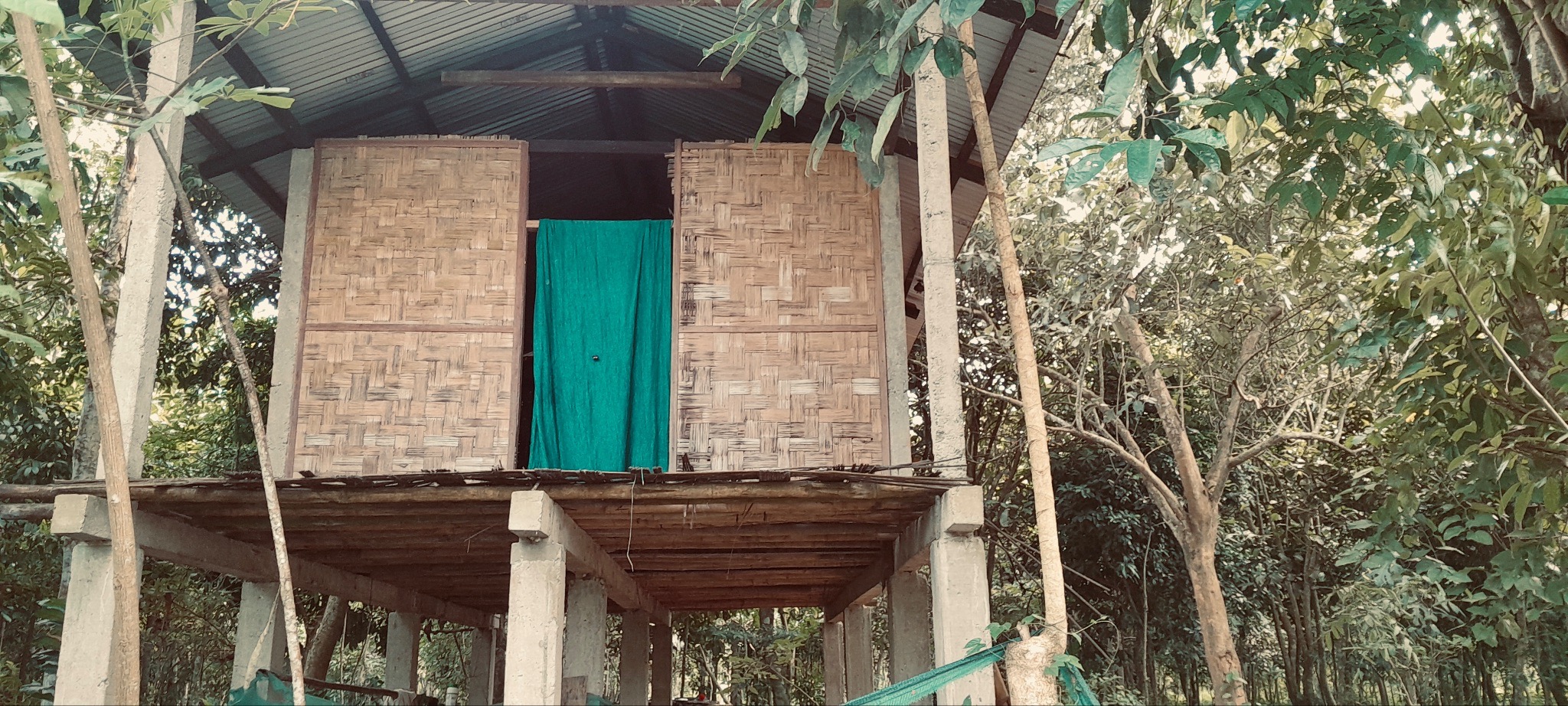
Further inland, other forms of commons are a critical part of Sadiya’s local economy and culture. Lands and wetlands host over 200 species of fish. In Kachijan, some 40 km from the banks of the Lohit River, the 25-hectare forest draped around low hills preserves 100-feet-tall Hollong trees and is home to hornbills, gibbons and other life forms.
“These forests hold the soil together so that they don’t get washed away in the rains. The trees provide a safe home to rare bird species and we are even seeing a revival in the population of gibbons,” said Rudul Moran, President of the Kachijan Joint Forest Management Committee (JFMC) which manages the forests.
The perils of the Palm tree expansion
In such a diverse landscape, large-scale, rapid palm oil cultivation has ignited fears of severe ecological change. Mature oil palm trees can require up to 300 litres of water per day; and require large-scale pesticides and intensive fertiliser use. Conversion of forest commons can threaten populations of capped langurs, and fragment habitats for greater adjutant storks, rhinos and other species.
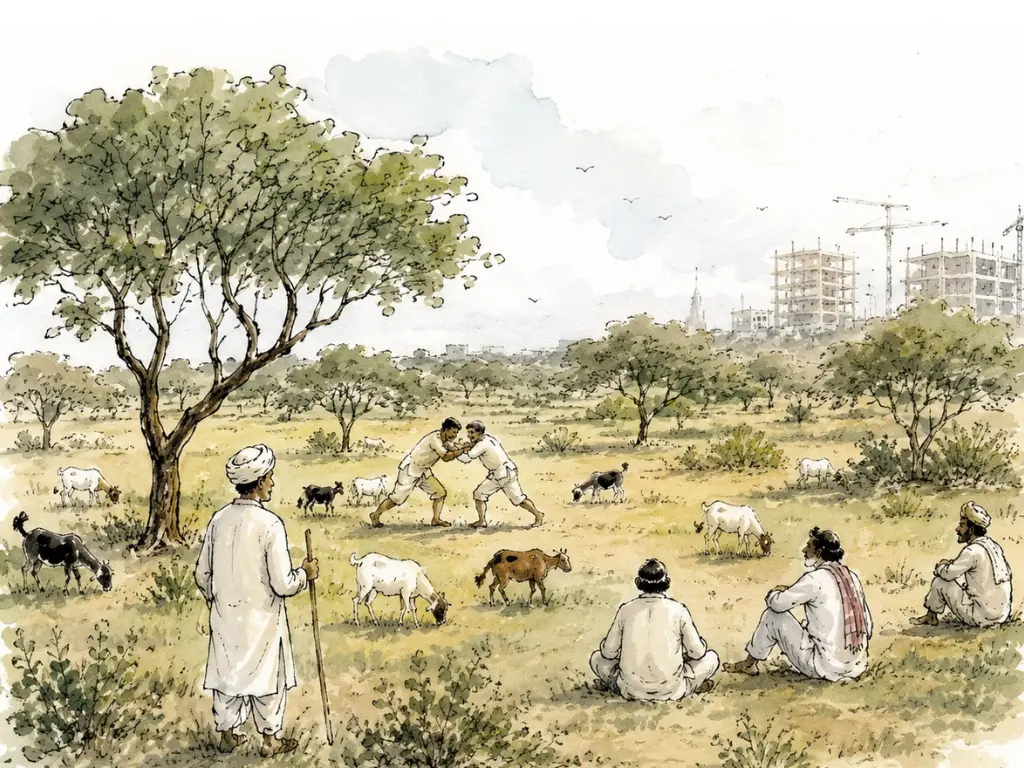
Since 2023, when the project was launched in the region, common grazing and riverine lands have been diverted for the project. In February 2025, the proposed Mohongpathar Reserve Forest, spread over 466 hectares, was ostensibly denotified to make way for palm oil cultivation.
In Sisini Gaon and adjacent villages, communities resisted the diversion of 82.65 acres of grazing land to oil palm cultivation. Members of the Gram Panchayat said that after months of protest, local government officials agreed to a compromise: 66 acres would be preserved as grazing land, while the remaining 16.5 acres would be used for palm cultivation through a local contractor.
Apart from this, there is fear that the quantum of subsidies and incentives under the National Palm Oil Policy would lure farmers away from traditional crops towards this extractive cash crop.
Farmers are promised up to Rs. 29,000 per hectare for saplings; Rs. 42,000 per year for the first four years when young palm trees do not give fruit; and Rs. 250 per plant for uprooting and replacing older plants. It is these incentives that have seen widespread adoption of palm trees in the North-East.
Dependence as resistance
But, this expansion is also bringing in stories and cautionary tales of farmers’ experiences in Mizoram and elsewhere in the North-East. Farmers are struggling with declining soil health and lower profits despite subsidies.
Since 2023, grassroots organisations and farmers’ unions have conducted village-level awareness meetings to highlight the risks of palm oil monoculture, particularly its high water demand and threat to the fertile but flood-prone riverbank commons.
A local Farmer Producer Company, a cooperative of around 80 farmers, resolved not to convert their farms to palm oil cultivation. “We’d never risk our soil and biodiversity for short-term gains. We have told all members that palm trees could harm the land our families have depended on for generations,” said a member who requested anonymity.
These organisations have also focused on increasing incomes of farmers on these commons. The hope is that keeping these commons visibly productive and actively used would strengthen the community’s resolve against acquisition for palm oil.
“We are encouraging farmers to grow potatoes, vegetables, and other crops that suit the sandy riverbank soil. But the transition is not easy. There is no support from governments in terms of credit or subsidies to shift from cash crops to vegetables,” said Tiken Das, the local farm leader from the Assam Kisan Sabha.
Over 200 families cultivate on the fields near the riverbanks, and farmers - including Suman Das - have shifted solely from traditional cash crops to multi-cropping tomatoes, eggplants, and chillies alongside fishing.
“We realised that the riverbank soil might not remain ours for long,” said Suman Das. “So we changed our practice. We used to depend on one or two big crops. Now we grow vegetables that give us quicker returns and fish during the monsoon,” he added. He believed his income has gone up by 20% since the shift.
Samir Bordoloi, from the Spread NE organisation that promotes organic techniques for sustainable agriculture, now runs hands-on workshops on bio-intensive raised beds, seed saving and homestead food-forest systems. “These models deliberately fill the shared leased riverbank and forest commons with diverse, multi-layered crops. When the land is occupied with diversity, there will be no space left for monoculture projects like palm oil,” he said.
Protecting forests from further harm
This reasoning - that diversity and dependence can prevent diversion for palm oil - is being replicated in forest commons across the region.
In Kakopathar, the Kachijan Joint Forest Management Committee (JFMC) had begun protecting and regenerating 25 hectares of degraded forest commons with firewood plantations along with several indigenous tree species. After the launch of the palm oil project, they expanded the initiative by intercropping ginger and other cash crops with trees. This shift generates up to Rs. 2 lakh per hectare of forest commons.
“Very little of the original forest remains and we were worried that even this will be handed over for palm oil cultivation. But, if the forest gives economic benefits to our community, it will become difficult to convert this land,” said Rudul Moran, President of the JFMC.
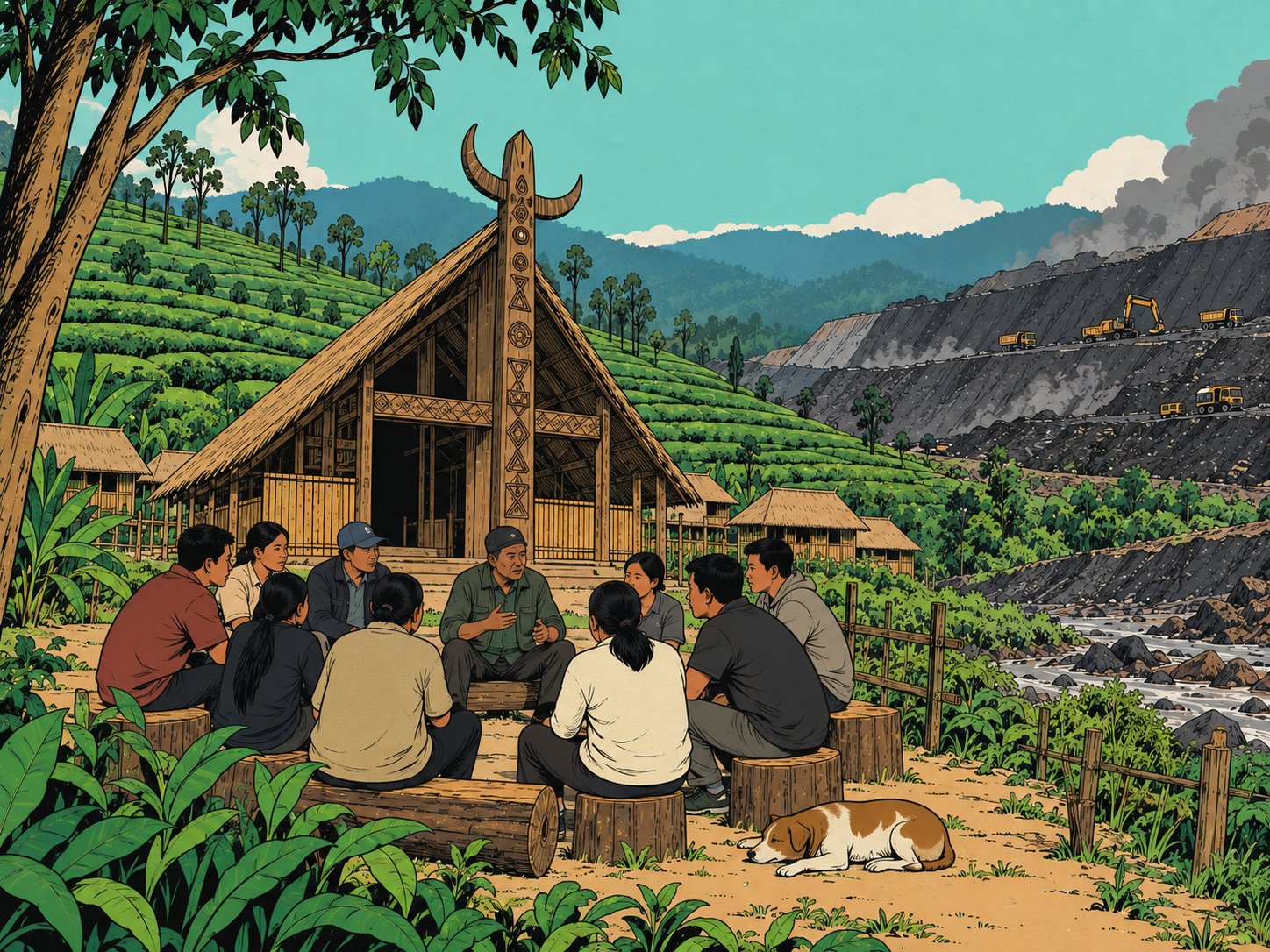
Among those benefiting from the inter-cropping is Muleswar Moran, 62. His Chang ghar, the traditional stilt-house indigenous to the Moran and diverse communities in Assam, abuts the forests. “We get the wild forest honey and ginger now from these forests. This is a steady livelihood for us, and keeps the land alive for our children,” he said.