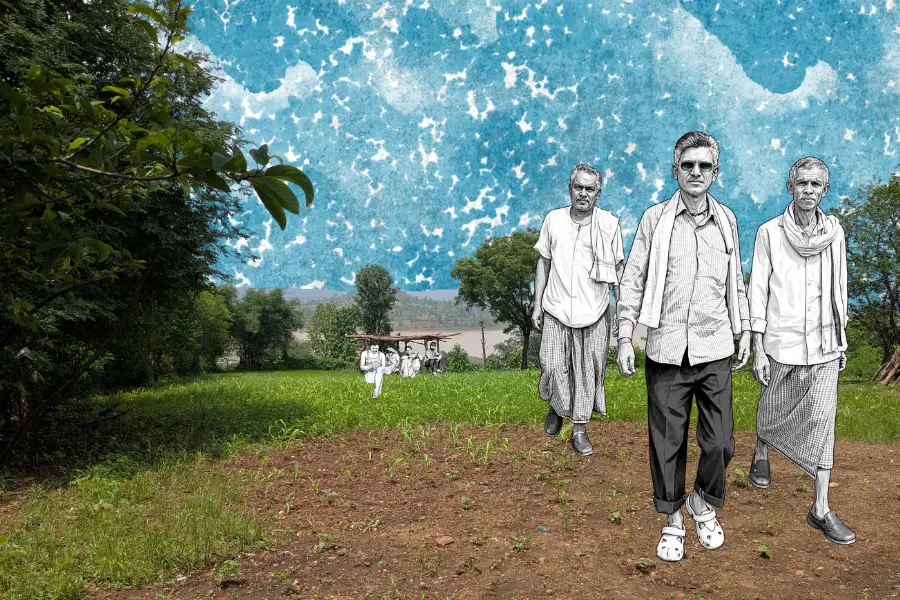
Qazigund, Kashmir: On a sunlit Saturday in early July, Abdul Salaam Wani is keenly inspecting the village spring. As the head of the Village Welfare Committee (VWC) in Panzath, a sleepy village 80 km from the summer capital Srinagar, it is Wani’s responsibility to gauge the quality of the natural waterbody. “Some weeds and muck have accumulated again,” he concludes. “I will announce the second round of Rohanposh to all the people here through the public address system of the Jama Masjid. We need to do it once again this year.”
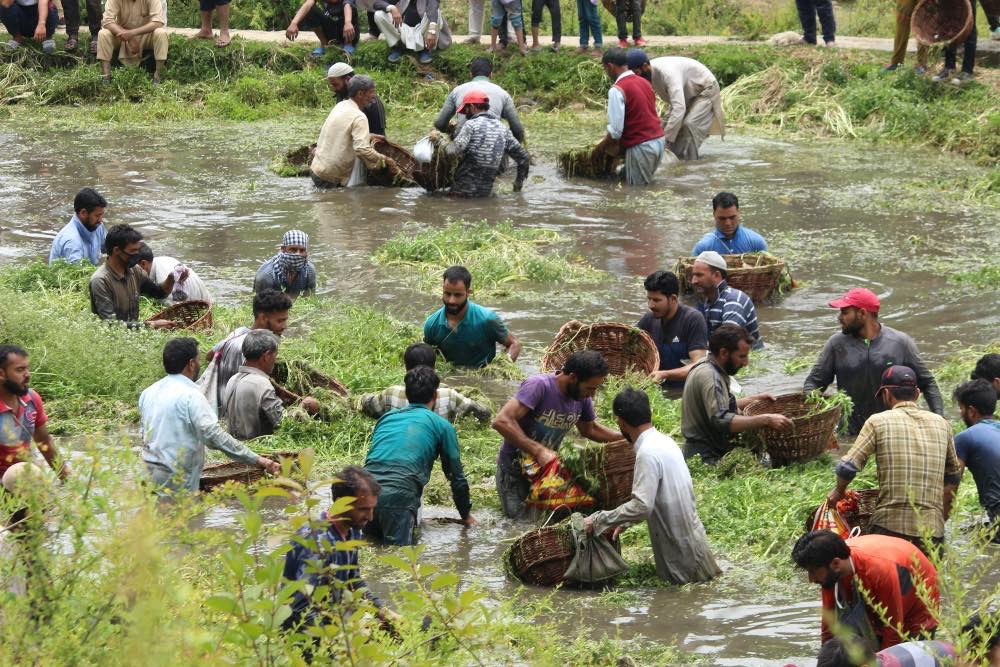
Rohanposh, Wani explains, is the centuries-old festival the village is renowned for. “We call it Halshiri in local parlance. We assemble at a particular spot to clean our common resources – ponds, springs, wells, canals and other water bodies.” Pointing to the crystal clear waters of the springs and ponds nearby, he adds proudly, “That is our achievement.”
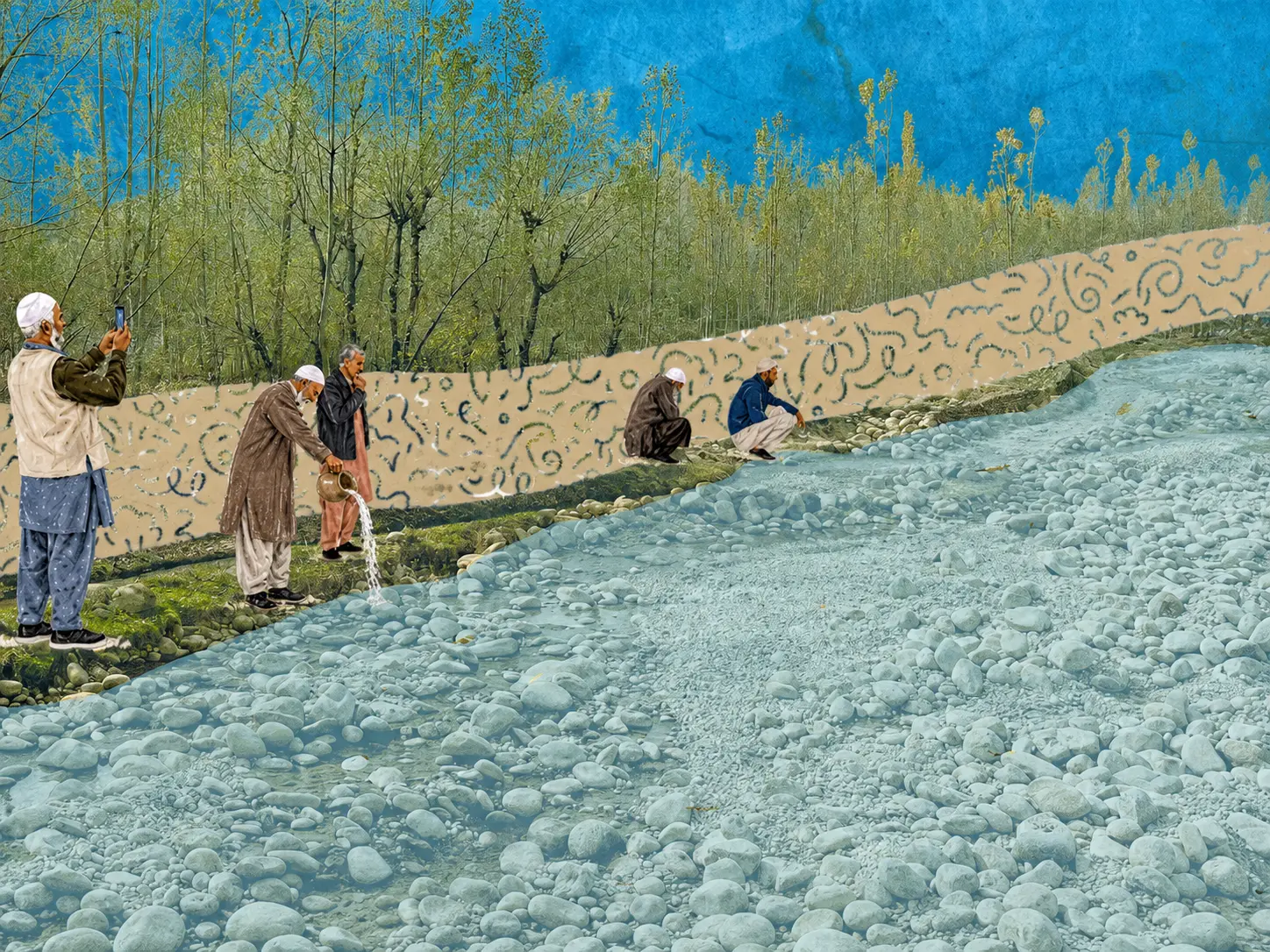
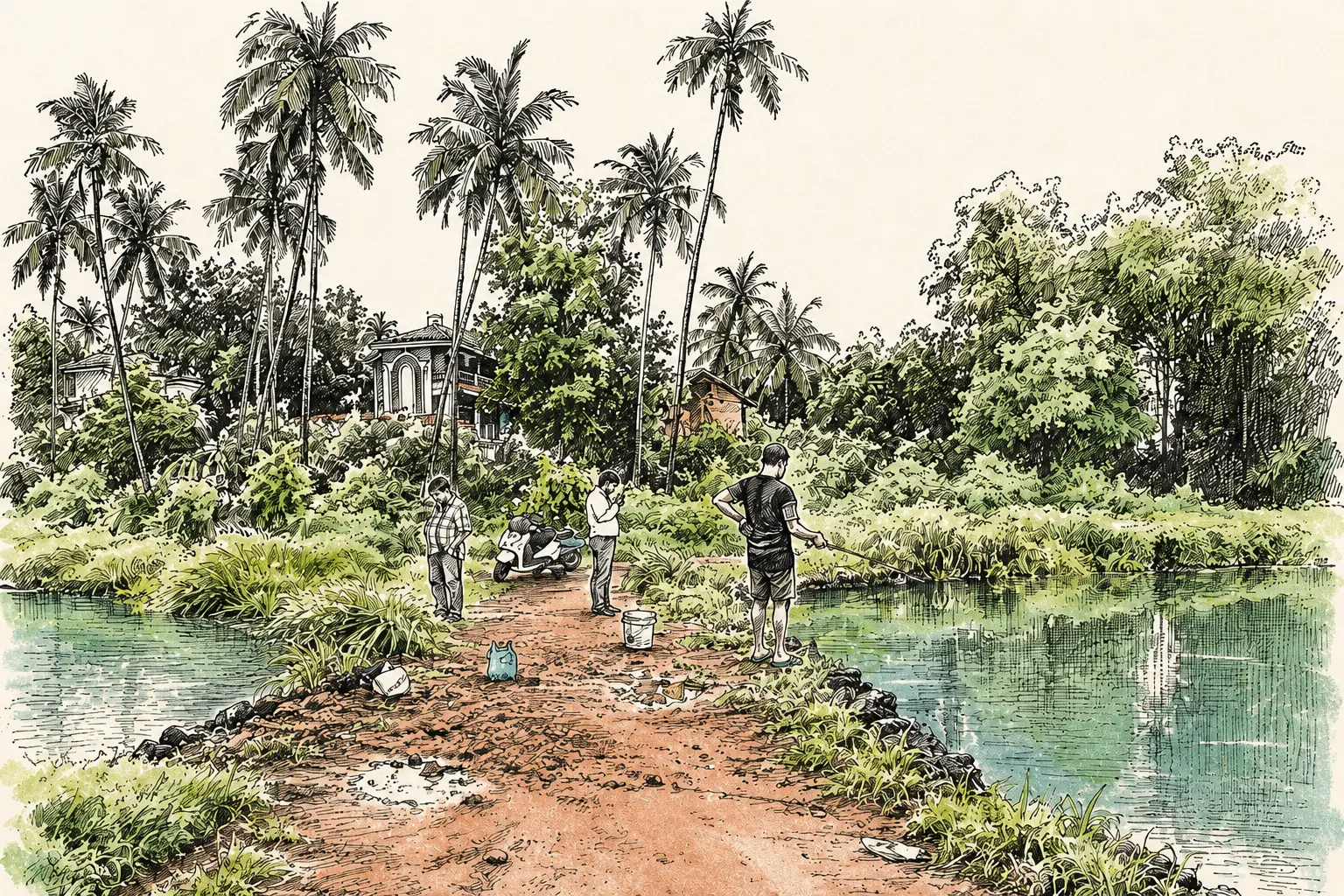
For several centuries now, Panzath has – without a government order, a court ruling or a conservation grant – maintained a single shared resource: a cluster of freshwater springs that locals say once numbered several hundreds, and which even today provide drinking water and irrigation to dozens of villages scattered across the Qazigund belt. Once a year, on a Sunday in mid-May, the village empties itself into the spring. Weeds are plucked by hand; silt is dug out from the channels; plastic bottles, polythene, and other debris are hauled out onto the banks. Once the water runs clear, the fishing rods come out.
In an age when the Himalayan springs are drying up faster than hydrologists can predict, Panzath is a perfect case study of a commons that has outlasted the institutions built to protect it, because the community never stopped treating it as its own responsibility.
Five hundred springs, one name
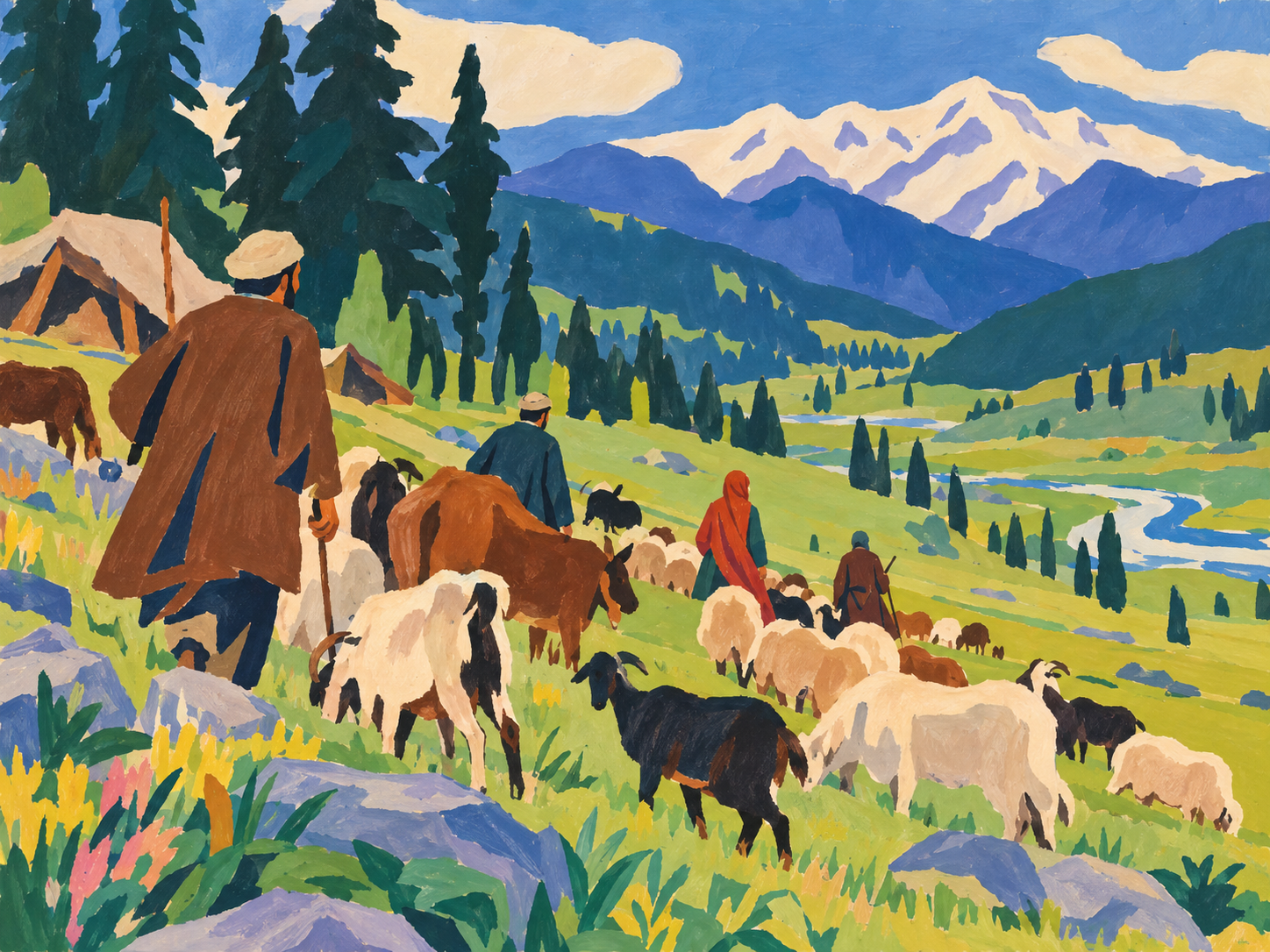
The name, Panzath itself, is significant. Locals trace Panzath to the Kashmiri words for five and hundred — paanch and hath — a reference to the 500-odd springs believed to have once dotted the landscape around the village, which is spread across a square mile at the base of the Pir Panjal range. Many of those ponds have since merged, dried or been built over, but the aquifer beneath still surfaces as a network of streams and pools that the village folks collectively call Panzath Nag.
Wani says the springs are documented in Kashmiri chronicles, including the Nilamata Purana and Kalhana’s Rajatarangini, texts that historians of the region consult for accounts of the valley’s sacred waterbodies. However, no one in the village claims to know the exact year Rohanposh began. It is simply accepted as something inherited, not founded.
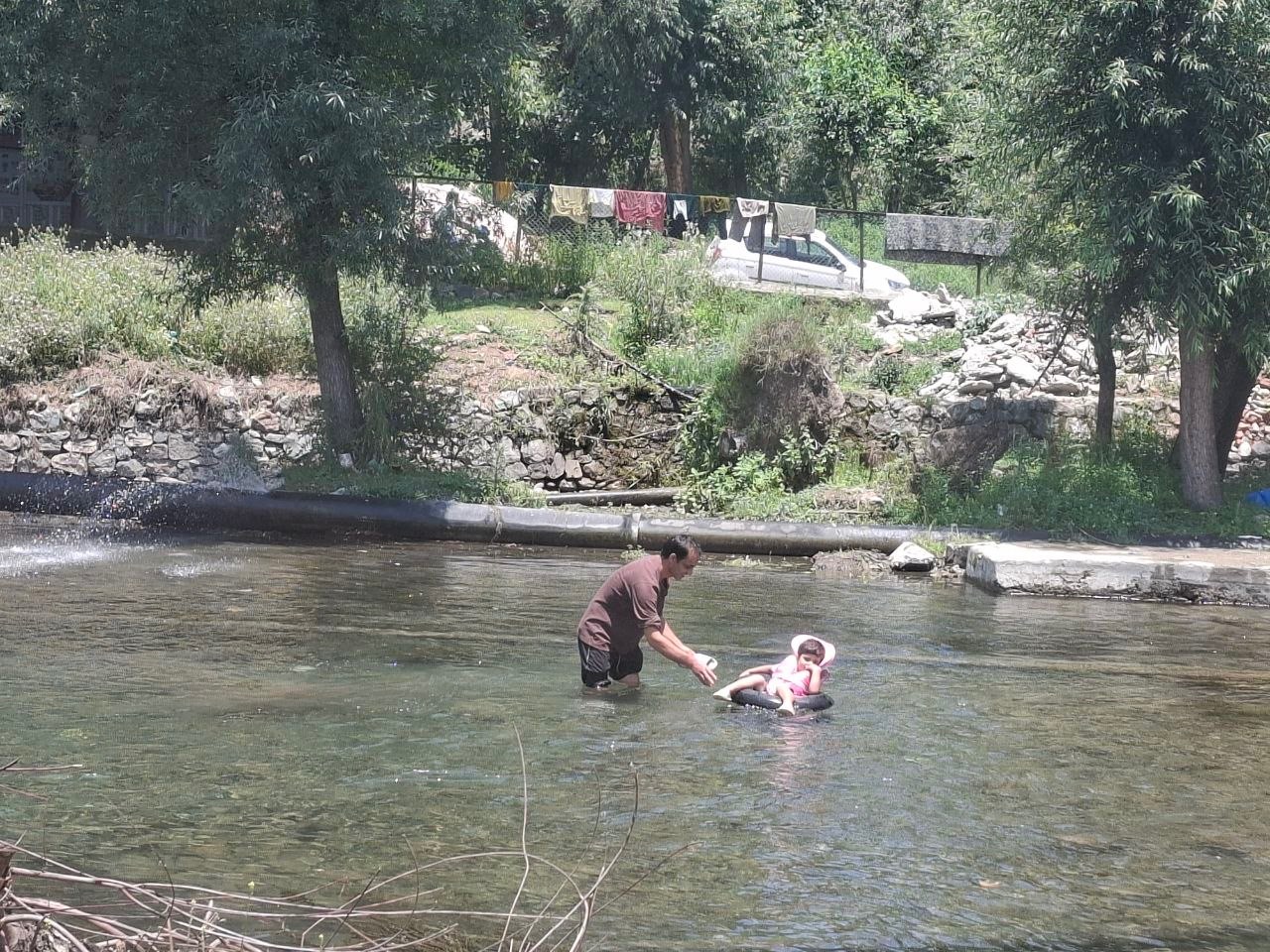
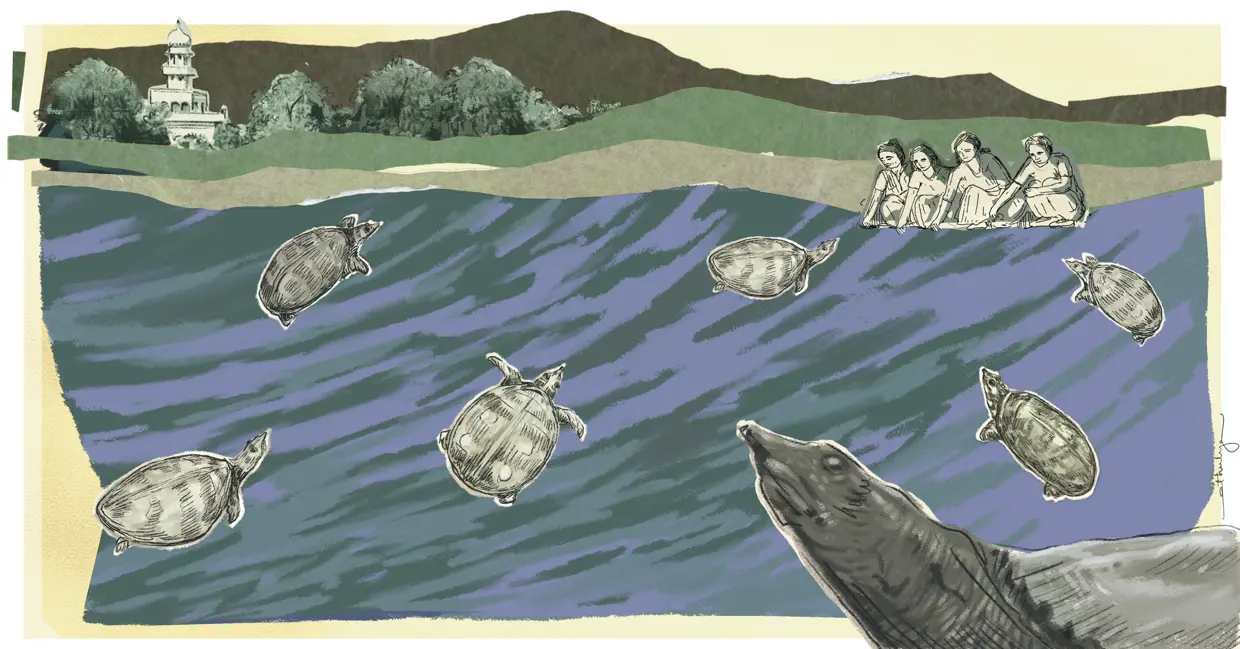
What is undisputed is the shared advantages of the springs today. Panzath Nag supplies drinking water and irrigation to 25 to 45 villages across the Qazigund tehsil — Vessu, Nussu, Bonigam, Babapora, Newa, Wanpora, among them — feeding paddy fields through the season, and downstream to a government-run trout hatchery that produces several lakh fish seedlings a year, generating real income for the local economy.
Rules of the water
The village has a rigid set of rules for the preservation of its resources. Fishing is permitted only once a year, on the festival day, and only within a defined radius of a kilometre of the spring, according to local accounts. For the remaining 51 weeks of the year, fishing in Panzath Nag is banned. Even on the festival day, the gear used is restricted to wicker baskets (hand-woven from the willow), and pieces of nylon netting. Rods, nets built for volume, and commercial equipment are banned.
Bashir Ahmad Rather, 70, secretary of the VWC, has been visiting the spring since he was 10 years old. “We prepare our families for the day, the way we prepare ourselves for the festival of Eid,” he says, underlining its importance.
He still remembers, as a teenager, the discipline followed on that day — waking up before the rest of the household, and with basket in hand, walking down to the water alongside men who are now long dead. Rather is quick to correct a common misconception among first-time visitors to this festival. They come thinking it is a fishing carnival and miss what is actually unfolding in the water. The intent was, and still remains, restoring and preserving the flow of water that the village and its neighbours depend on for the rest of the year.
Weeds and aquatic growth choke the spring’s channels during the warmer months as water levels fall. Sediment builds along the bed and drainage lines get blocked by household refuse that washes in right through the year. The communal cleaning, done entirely by hand, reopens the channels before the irrigation season peaks.
Not everyone wades into the water. Many residents, especially the elders who no longer want to stand for hours in the cold water, line the banks, calling out words of encouragement, tracking the catch, and ready to share in the day’s haul regardless of who has caught it. “The atmosphere,” says Bilal Ahmad, a local politician who actively participates in the festival, “resembles a village fair rather than a labour drive, which may be precisely why the labour gets done every single year without anyone being paid or compelled to show up.”
Graveyard shift
At sundown, the mood in Panzath changes. Families, who spent the morning in the water, walk towards the village graveyard, carrying flowers, rice or water in small cups. This is Rohan Posh — also transliterated locally as Roohan Poush — a fruit-blossom remembrance observed the same day as the spring cleaning. Children scatter flowers on family graves and elders offer prayers for the departed. Home-baked bread is distributed to the young ones gathered around them.
The pairing of the two rituals is a statement. The occasion is not a clean-up drive dressed in tradition, but a day on which the community renews its relationship with its inheritance – both water and ancestors. The physical cleansing of the spring in the morning and the remembrance of the dead at dusk are treated, by those who grew up with the custom, as two halves of one obligation passed down to generations.
Cracks in the commons
For all its resilience, Panzath Nag is not untouched by the pressures reshaping waters across the Himalayas. Mohammad Jeelani, 30, who travels from the neighbouring village of Badwani to take part in the ritual, has observed a visible decline in the resource. “The fresh waters of the Panzath have lost their shine,” he says, as he guides visitors on a tour through the hamlet.
He attributes the change to pollution and to encroachment on the spring’s edge, making the collective cleaning all the more crucial, as regular de-weeding through the rest of the year does not take place. “Plastic and polythene have damaged us like never before. It is a silent pandemic,” he adds.
Jeelani is not alone in his assessment. Scientists and environmentalists, who have studied the site, describe a broader regional pattern where springs across Kashmir have disappeared or have degenerated by unchecked construction and waste, making Panzath’s surviving cluster an increasingly rare example.
Renown through Mann Ki Baat
The festival’s reputation has, in recent years, travelled beyond Kulgam and Anantnag districts. In 2023, Prime Minister Narendra Modi cited the Panzath tradition on his radio programme Mann Ki Baat, holding it up as an example of citizens taking the initiative to maintain their own water resources — a framing that Jammu and Kashmir’s rural sanitation mission has since folded into its own messaging around the Swachh Bharat campaign. It presents Panzath as evidence that durable environmental outcomes are best built on community ownership rather than one-off government schemes.
The national attention has been a mixed blessing for a village that, for most of its existence, cleaned its spring without expecting appreciation. It has brought visibility, and with it, occasional promises of support. “It has not fundamentally changed who does the work,” says politician Bilal, adding, “But we have received a lot of media attention since then.”
The Panzath Takeaways
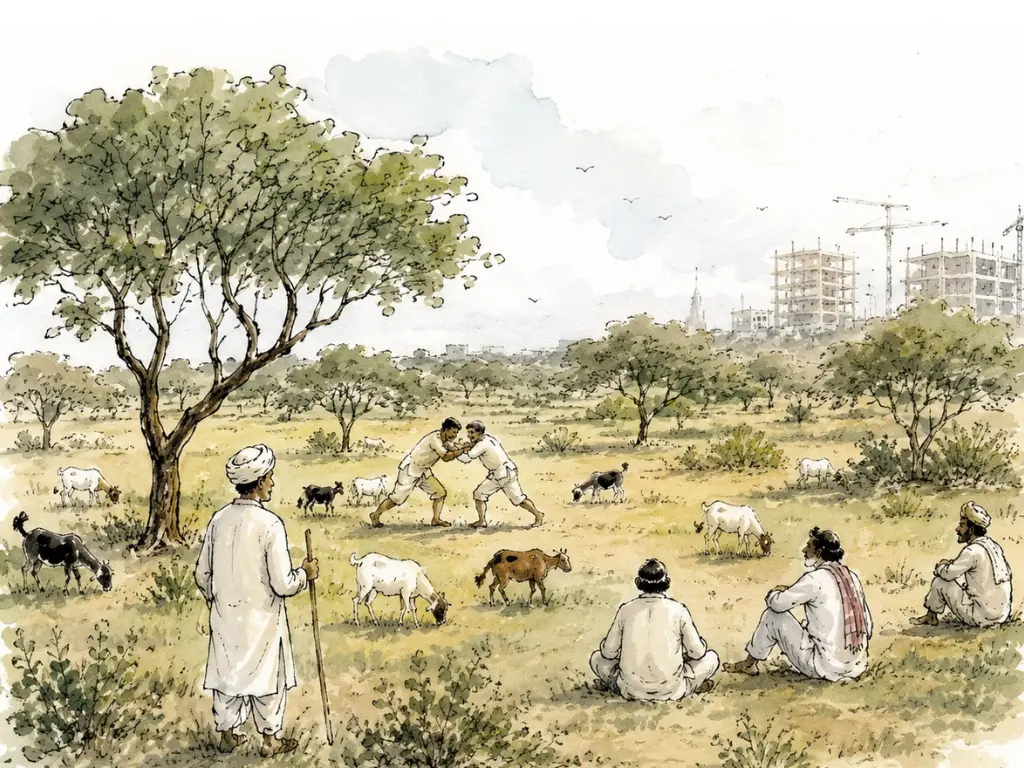
If we strip away the festival atmosphere — the baskets, the trout, the graveyard flowers — what remains at Panzath is a working example of common-property governance: a resource nobody individually owns; that no one is paid to maintain, but sustained by a norm that says every one in a cluster of villages has an obligation to show up once a year and undertake the unglamorous work of keeping it alive. The annual labour is the entry fee for year-round access. Elders like Wani and Rather pass the technique and the obligation to children who will, in turn, teach their own - an unwritten promise that is repeated every spring.