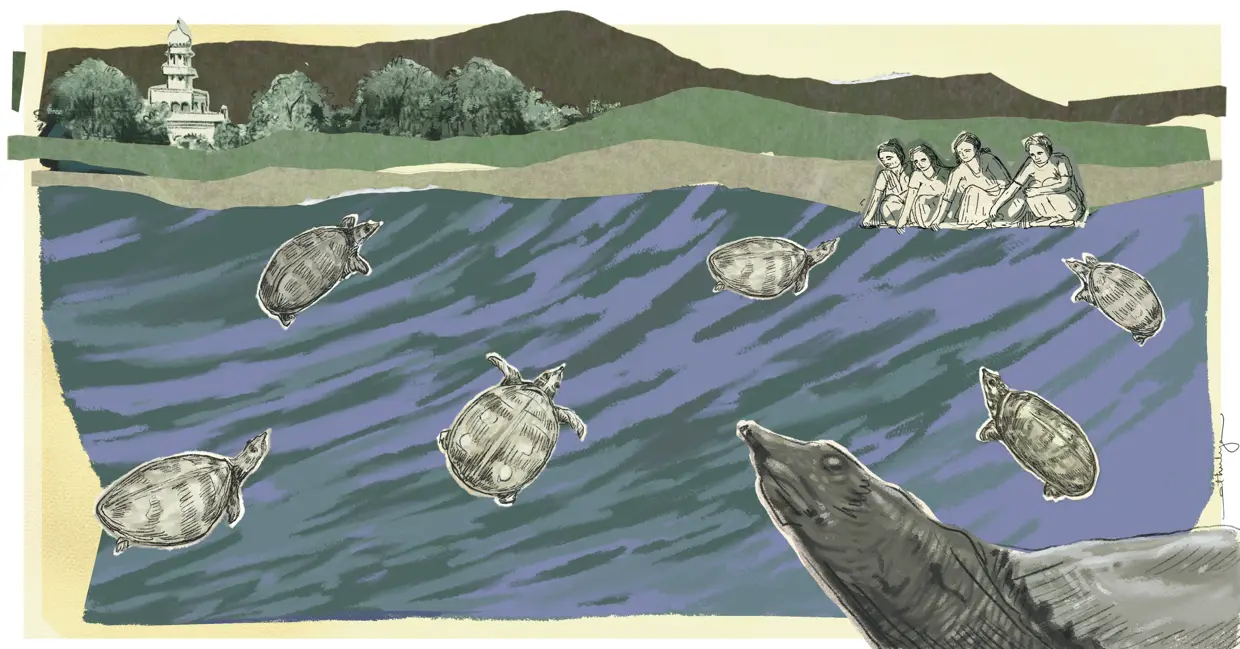
Fatehabad, Haryana: A typical morning unfolds in Kajalheri, a dusty village in Haryana’s Fatehabad district. Farmers are bent in their fields harvesting paddy and women have gathered near a Gorakhnath temple with broken rotis and a handful of grains in steel plates. Cows shuffle toward the pond that shimmers on the village outskirts. As the first temple bell rings, ripples break across the pond. A couple of ancient turtles emerge from underneath the water, their dark shells, weathered and glistening in the pale morning sunlight.
.jpeg)
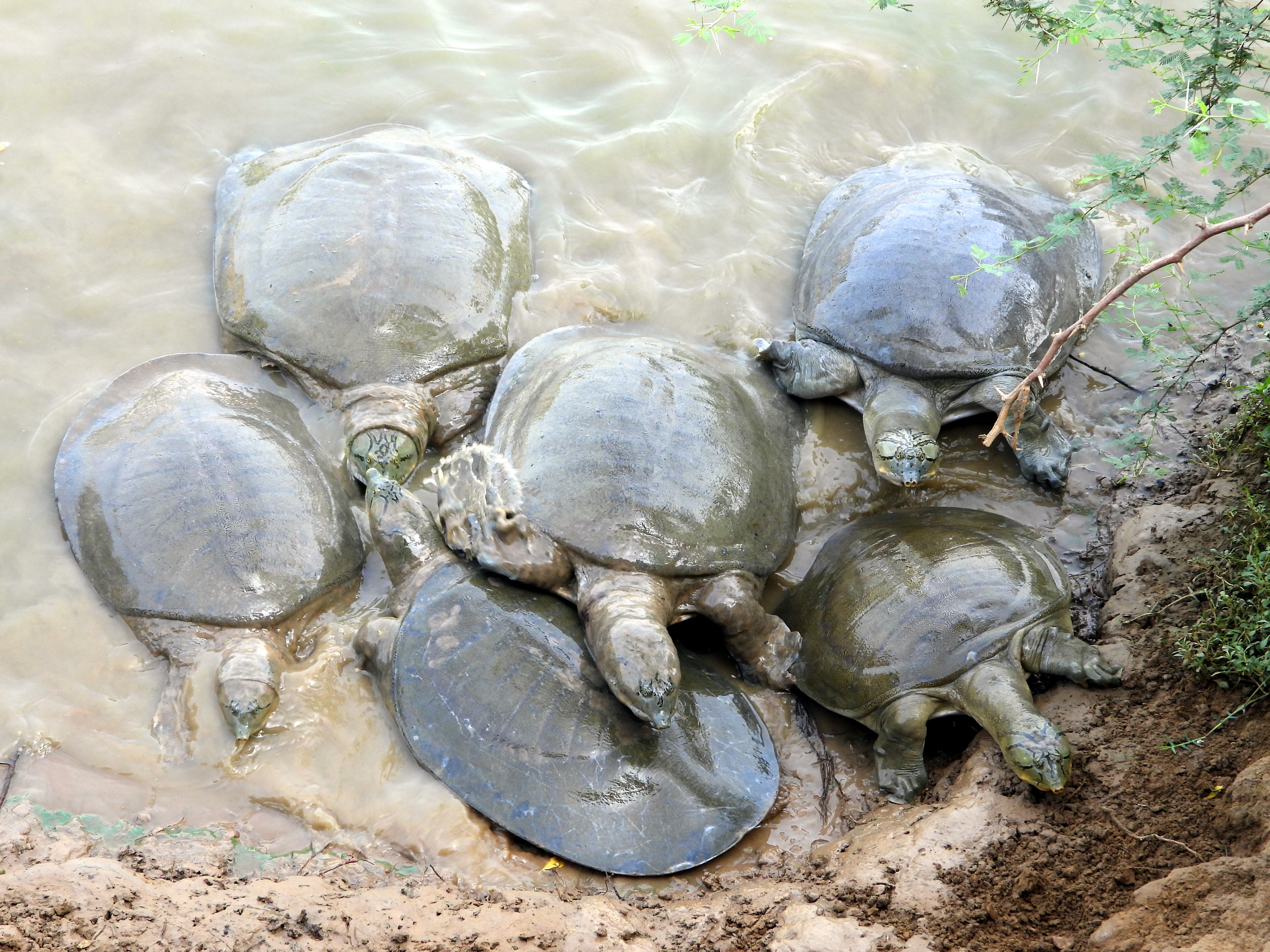
"Look, this turtle is more than 100 years old,” says Rammurti Bishnoi, farmer from Kajalheri village, pointing towards one of the turtles, his voice tinged with pride. Children squeal with excitement as the turtles stretch their necks to catch the food. Observing this daily ritual are two young men sitting cross-legged behind the crowd. They are the guards appointed by the village to keep vigil to ensure that outsiders do not harm the village’s precious reptiles. These reptiles are Indian softshell turtles, also called Ganges softshell turtles. These endangered species fall under Schedule I of the Wildlife (Protection) Act, 1972. Poaching and possession of these turtles can lead to imprisonment. Often found in freshwater, the primary threats to this species of turtle are poaching for the illegal wildlife trade and habitat loss.

For the residents of Kajalheri, the pond is not merely a water body. It is their heritage, pride, and responsibility. In a state where most village ponds have dried up or turned into dumping grounds, Kajalheri has preserved its commons for more than 200 years, led not by government schemes or non-profit organisations, but by the collective will of its people.
The villagers pool in money for pond repairs, patrol against turtle poaching, and socially boycott those who don’t follow the pond preservation rules. Natural calamities and climate change is also a real challenge for the villagers, to which they derive collective solutions rooted in the Bishnoi ethics of conservation.
A lively pond then becomes the common resource that binds the social and economic fabric of the village. It dilutes caste lines, brings additional income to the village and improves the social well-being of its people.
Reclaiming the Commons
Commons are shared lands such as forests, pastures, water bodies and mangroves, which cover 205 million acres, or one fourth of India, and form the lifeline for over 350 million people, including marginalised groups like Scheduled Castes, Scheduled Tribes and women. Communities across India have traditionally protected, restored and managed these commons through customary self-governance practices. These customary rights and practices, however, haven’t been formally recognised or recorded in many parts of the country.
Pressure over resources, caste and class hierarchies and environmental degradation has curtailed communities’ access to commons, leading to over-exploitation of commons and exposing them to climate vulnerabilities and rural distress.
Despite these challenges, communities across India are showcasing that reclaiming, restoring and managing commons through customary self-governance practices plays a crucial role in their ecological, social and economic upliftment.
This story from Kajalheri village is one such example where through collective governance, the Bishnoi community has been preserving its common pond and its ancient turtles for over 200 years.
The Bishnoi Ethic
Kajalheri’s pond, locally called a johad, spreads across five acres of Panchayat land. It lies on the edge of the village, beside the village’s Gorakhnath temple. What makes it unique is its turtle population. Locals claim that there are more than 200 turtles in the pond, some of whom are more than a century old. The oral history of the village traces how the turtles became part of the village: the village ancestors brought the turtles from the Gangetic plains nearly two centuries ago, making them part of the village’s spiritual landscape.
These turtles are not farmed, sold, or exploited. Instead, they are revered. Feeding them is considered a ritual of blessing, performed daily by villagers and especially on Saturdays and festivals.
“I go to deliver milk every morning, and then feed the turtles. Our ancestors did the same,” says Kamla Devi, 52, a resident of Kajalheri. “For us, it is responsibility as much as devotion,” she adds.
This deep intertwining of ecology and faith has kept the pond alive. Kajalheri is a Bishnoi-dominated village. The Bishnoi community, spread across Rajasthan and Haryana, is known worldwide as one of the earliest environmentalist communities. Their faith, rooted in the teachings of Guru Jambheshwar, commands them to protect all forms of life, inspiring India’s later Chipko movement.
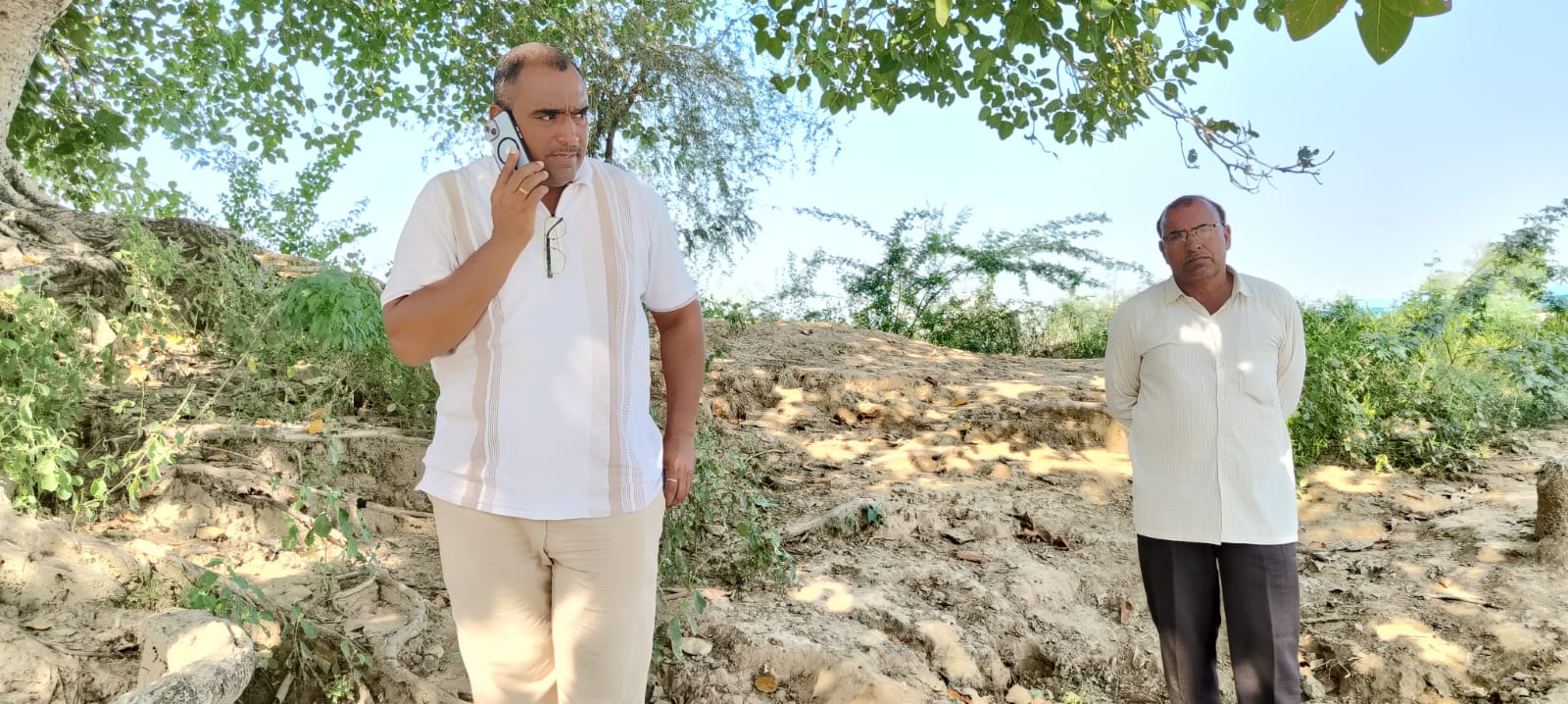
In Kajalheri, this ethic translates into the protection of turtles and in turn preservation of water commons. The community considers harming turtles a grave sin. “For us, this is not just a pond; it is our identity. If the turtles are safe, the village is safe,” says Devilal Bishnoi, farmer and resident of the village who often helps with pond vigilance.
This moral framework has done what laws and schemes often fail to achieve: continuous, voluntary conservation spanning generations.
Guardians of the Night
As dusk settles over Kajalheri, the pond turns still. But the village stays alert. The villagers are well aware of the threats that the turtles face. Poachers target them for meat, shells, traditional medicine, or the exotic pet trade. To counter this, groups of young men from the village take turns patrolling the pond at night with torches and sticks.
“We don’t see the turtles as reptiles,” says Vinod Karwasara, social activist, Kajalheri. “They are our ancestors’ blessings. If they vanish, a part of our village’s soul will disappear too,” he adds.
Kajalheri’s devotion to its pond is decades old. Besides protecting the turtles against poaching, the village has stood united and derived solutions to natural calamities and climate change which affected the pond and the turtles.
In the late 1970s, when the pond started drying during a severe drought, the villagers pooled money to deepen it. Years later, when outsiders tried to capture turtles, they confronted them directly and enforced social boycotts to ensure that no one dares to harm the turtles.
During the monsoon, when the water in the pond rises, the turtles sometimes escape the pond and wander in the fields nearby. The villagers spot them and bring them back to the pond. This act of protection has become a quiet tradition of coexistence. For Kajalheri, guarding the turtles is a devotion.
Commons in Crisis Elsewhere
Across Haryana, the story is starkly different. Rapid urbanisation, declining groundwater, and encroachments have caused thousands of ponds to vanish or turn into waste pits. According to the Haryana Pond Authority
(2023-24), over 14,000 ponds in the state require rejuvenation. Yet, despite crores spent on pond rejuvenation schemes, only a fraction are functional.
“Many village ponds have turned into garbage pits now. But we have kept our pond sacred,” says Karwasara, from the neighbouring Badopal village.
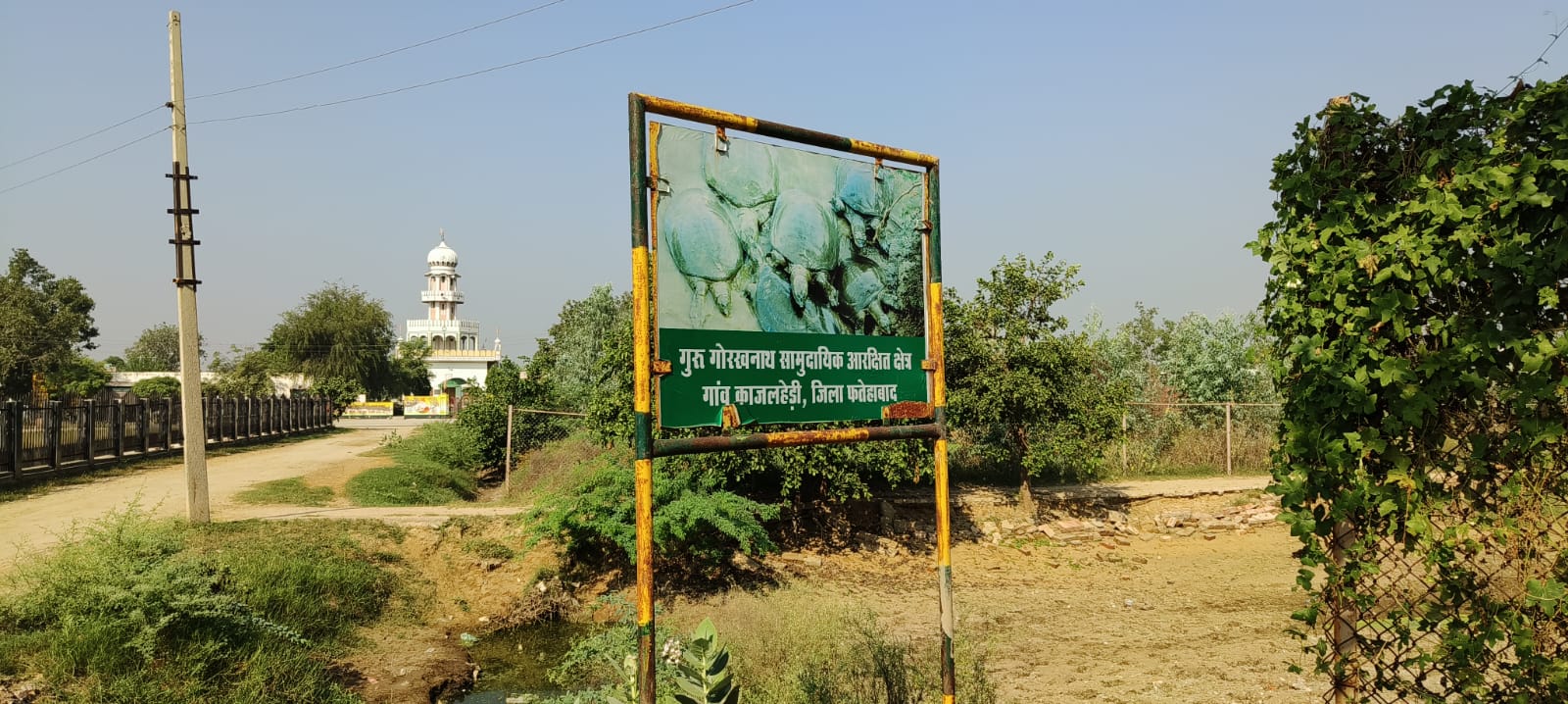
In this bleak landscape, Kajalheri shines. It is a living example of what the government calls community-led rejuvenation. Kajalheri looked after its pond as a sacred heritage without external funding.
In administrative records, the pond is Panchayat land. The Haryana Pond Authority provides legal backing for water body rejuvenation, while the Wildlife Protection Act, 1972, protects turtles from being captured. Yet, in practice, it is a customary Bishnoi law that drives protection. Harming turtles is taboo, punishable not by courts but by social boycott.
“Government laws exist, but our law says that no one can touch the turtles,” says Rajesh Kumar, 60, a resident of Kajalheri.
This fusion of formal and informal governance keeps the commons safe. Officials occasionally visit, but villagers insist that daily stewardship remains with the villagers.
Social Glue of a Village
The pond is more than an ecological site; it is a social commons. During rituals, caste boundaries dissolve. “At the pond there is no caste discrimination. Everyone comes together as equals,” says Sita Ram, 63, priest of the Gorakhnath temple.
Women sustain the daily rituals of feeding turtles, while youth guard against poaching. This intergenerational continuity ensures that conservation is not a project with a start or end date but a way of life. Children grow up seeing turtles as part of family tradition, not just wildlife.
“Since childhood, I have come here with my mother to feed turtles. Now I bring my children,” says Meena Devi, 34 “This tradition keeps the village together,” she adds.
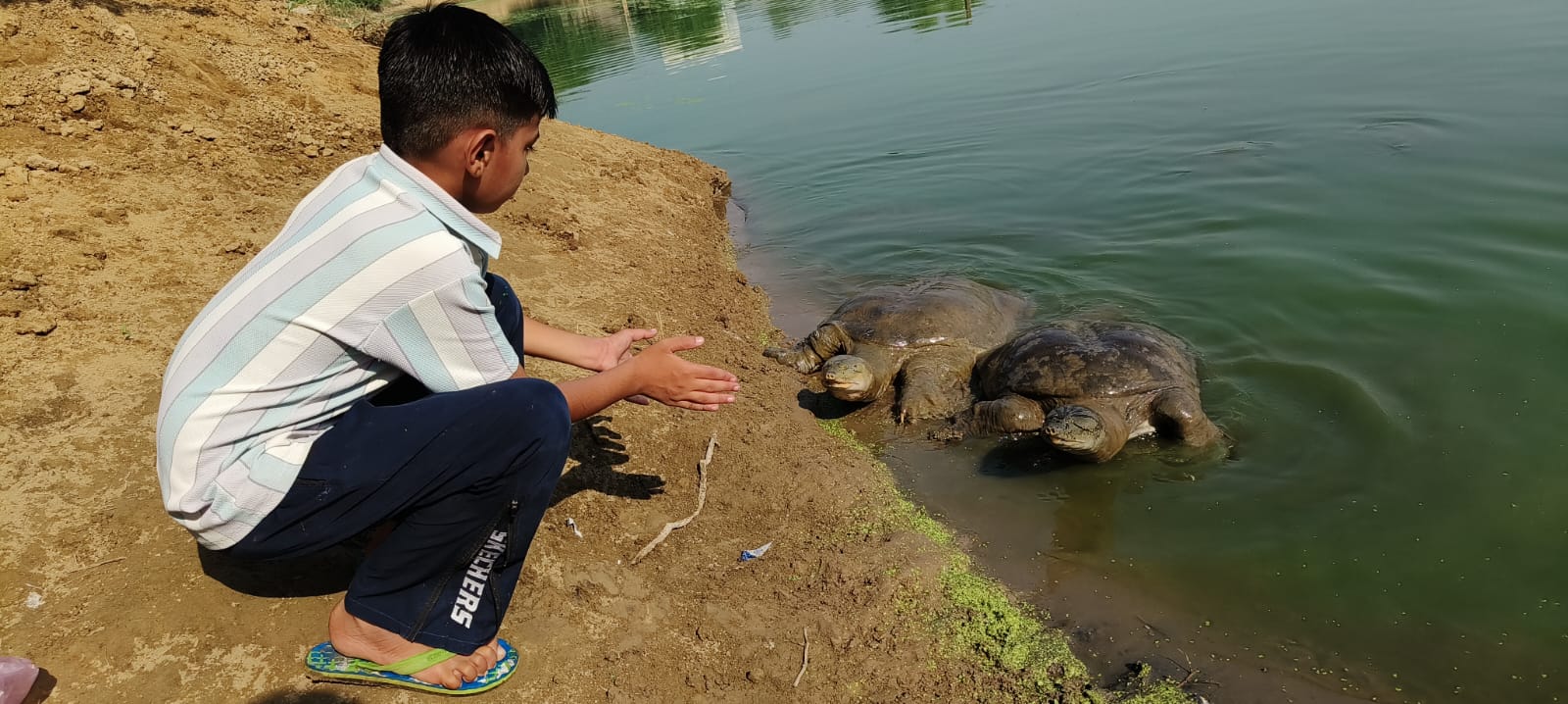
Kajalheri’s pond does not generate any income. But its economic value is real. Several hundred cattle drink water from it daily. If tanker water were to be purchased, villagers estimate that their household expenditure would double.
“If our cattle didn’t get pond water, we would have to call tankers daily,” says Satpal Bishnoi, 48, who owns seven buffaloes.
The pond also reduces dependence on diesel-run tubewells during drought, saving fuel costs. On weekends and festivals, visitors drawn by the turtles make small donations at the temple or buy milk and snacks locally, creating minor but steady cash flows. More importantly, the pond raises the village’s reputation, indirectly boosting land values and social status.
Administrative support awaited
However, it is a constant struggle to keep the pond clean. The locals rue that though residents try their best to preserve the turtle pond, village wastewater sometimes flows directly into the pond, which may affect the health of the turtles.
"We have complained to the district authorities to find a way out to separate waste water accumulation elsewhere, but to no avail," says Rajesh Bishnoi, resident of the village.
Meanwhile, Anurag Dhalia, Additional Deputy Commissioner, Fatehabad district, said that he visited the pond in Kajalheri village along with his team after the villagers complained of water pollution and had redirected the wastewater towards a five-pond setup in the village.
“If the problem persists, we will look into it again,” said Dhalia.
A five-pond setup in a village is a natural way of treating wastewater where dirty water from homes is routed through a series of ponds. This recycled water can then be used for irrigation instead of draining it into canals or fields.
Despite the promise, the villagers are awaiting action by the authorities.
Why It Matters Nationally
India is struggling with disappearing commons, vanishing ponds, and biodiversity loss. Despite large budgets, many schemes fail because they overlook the cultural roots of conservation.
Amidst a despairing status of water bodies nationally, Kajalheri demonstrates how conservation can thrive when tied to identity and rituals. It provides lessons for policy: involve communities not as beneficiaries but as custodians, respect cultural practices, and align schemes with local values.
The village’s cultural connect and reverence towards wildlife and nature have helped in wildlife conservation in the hinterland, says Radheysham Sihag, conservationist in Fatehabad district.
“Often, government departments get caught in red tape and end up with zero delivery of results on the ground when it comes to conservation. Their cultural connection is missing and biodiversity takes a hit,” says Sihag.
Kajalheri’s impressive conservation effort has caught the attention of the state’s forest department as well.
Subhash Yadav, Chief Conservator of Forest, Gurugram, who is also in charge of Fatehabad district, has offered the support of his department in better management of the turtle pond. But the enthusiasm soon fizzled out and the pond management was back with the villagers.
As the sun rises over Kajalheri, Vinod, an eight-year-old boy, is standing among the village women, scattering grains into the pond. Watching the turtles surface, he says shyly, “When I grow up, I’ll be their protector,” he says.
His words capture the essence of Kajalheri — a village where the future of conservation is not dependent on government action, but in the hands of the village’s children who see turtles not as wildlife, but as family.

.jpg)







.webp)
.webp)

.avif)
.webp)


.webp)