Rameswaram, Tamil Nadu: A beautiful emerald-green landscape unravels while crossing the Pamban Bridge to Rameswaram in Tamil Nadu. The view is so captivating that one may miss the cluster of women, bent double, collecting seashells from the shore below.
Around 400 to 500 women residents of Chinnapalam village, in Rameswaram, spread out across the mud flats at low tide, to gather a variety of shells burrowed in the soft, water-soaked sediments.
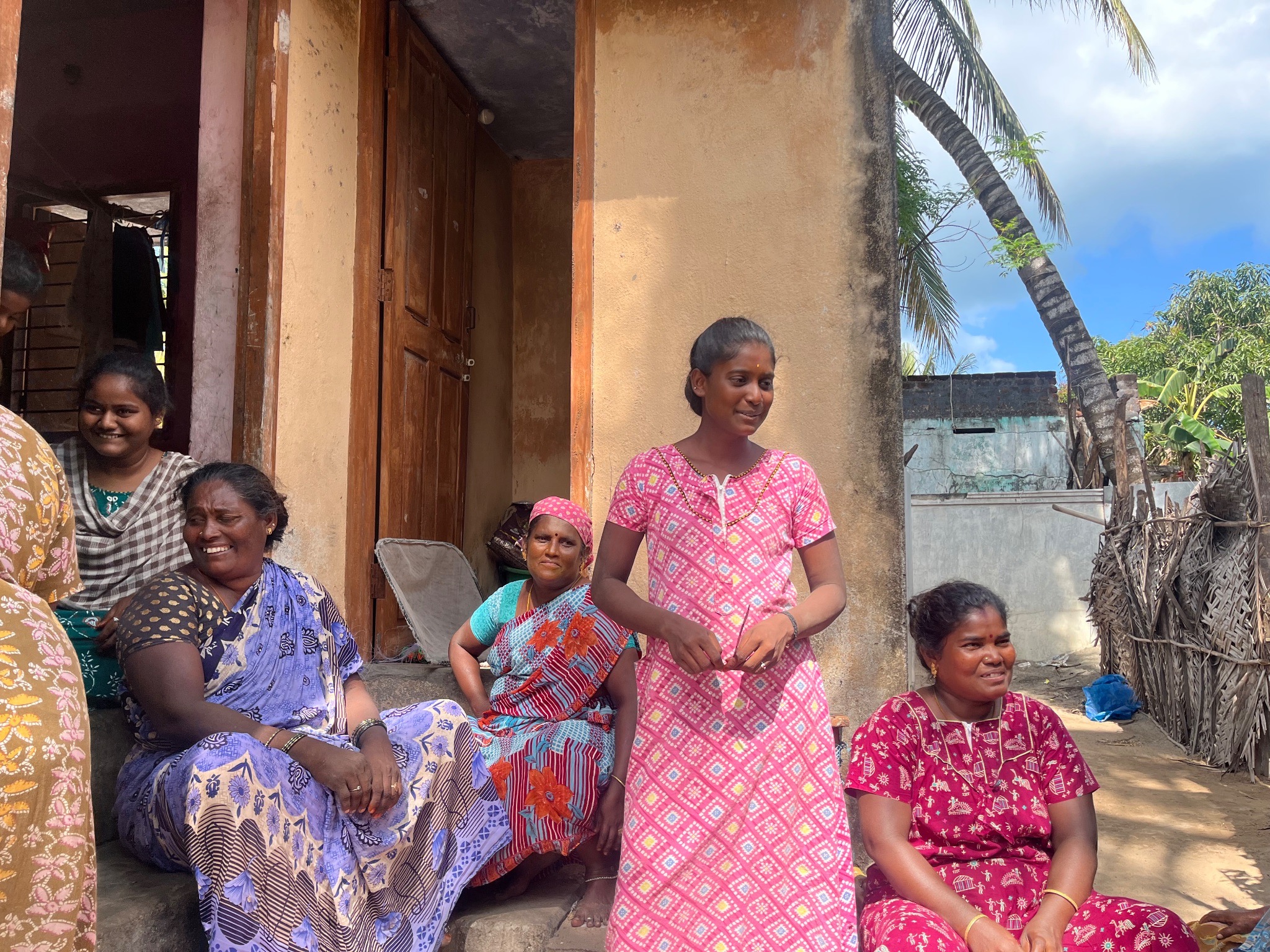
“Almost every woman here works, as we don’t like to sit idle. We collect the shells from the seabed behind our village and make garlands out of it. It is a steady income for us,” said 47-year-old Nambu Nagajothi from the village.
Rameswaram is known for the sacred Ramanathaswamy Temple, from where Lord Rama is believed to have made his way to Sri Lanka to rescue his wife Sita. Pilgrims who flock here are attracted by the shell craft displayed resplendently all along the route to the temple.
Transforming shells into jewellery is not the only work the women do here. They dive into the waters to collect wild seaweed, gather crabs and peel shrimp at processing plants to augment their livelihood. What the women find vexing is that their men, traditional crab fishers, spend much of what they earn on alcohol.
The womenfolk, predominantly Hindus, belonging to the Mutharaiyar Community (categorised as ‘Most Backward Caste’), are custodians of crucial knowledge about marine life, and are engaged in activities that do not disturb the fragile ecosystem around them.
“Seaweed earns us additional income. But when we found out that one type of seaweed, called kappa, was invasive and killed coral reefs, we stopped cultivating it to protect the fish that harbour in the reefs,” said Nambu.
These intertidal zones, where the seashells are found, are Commons – shared lands like forests, pastures, and mangroves – which cover 205 million acres, or one fourth of India, and is the lifeline of over 350 million people, which includes marginalised groups such as the Scheduled Castes, Scheduled Tribes and women.
Communities across India have long protected, restored, and managed common resources through customary systems of self-governance. Yet, in many parts of the country, these rights and practices remain outside formal recognition.
Chinnapalam village is a sterling example of interdependency between the communities and the coastal common land. The women collect just enough shells to sustain livelihoods.
Economic Empowerment Through Coastal Commons
The shell craft that the women excel in was not handed down from generation to generation. In fact, for over 60 to 70 years, the women in the village had been collecting seashells and selling them to middlemen, who would then make the jewellery to trade in the market. One mug of seashells used to fetch them just Rs 5 to Rs 10.
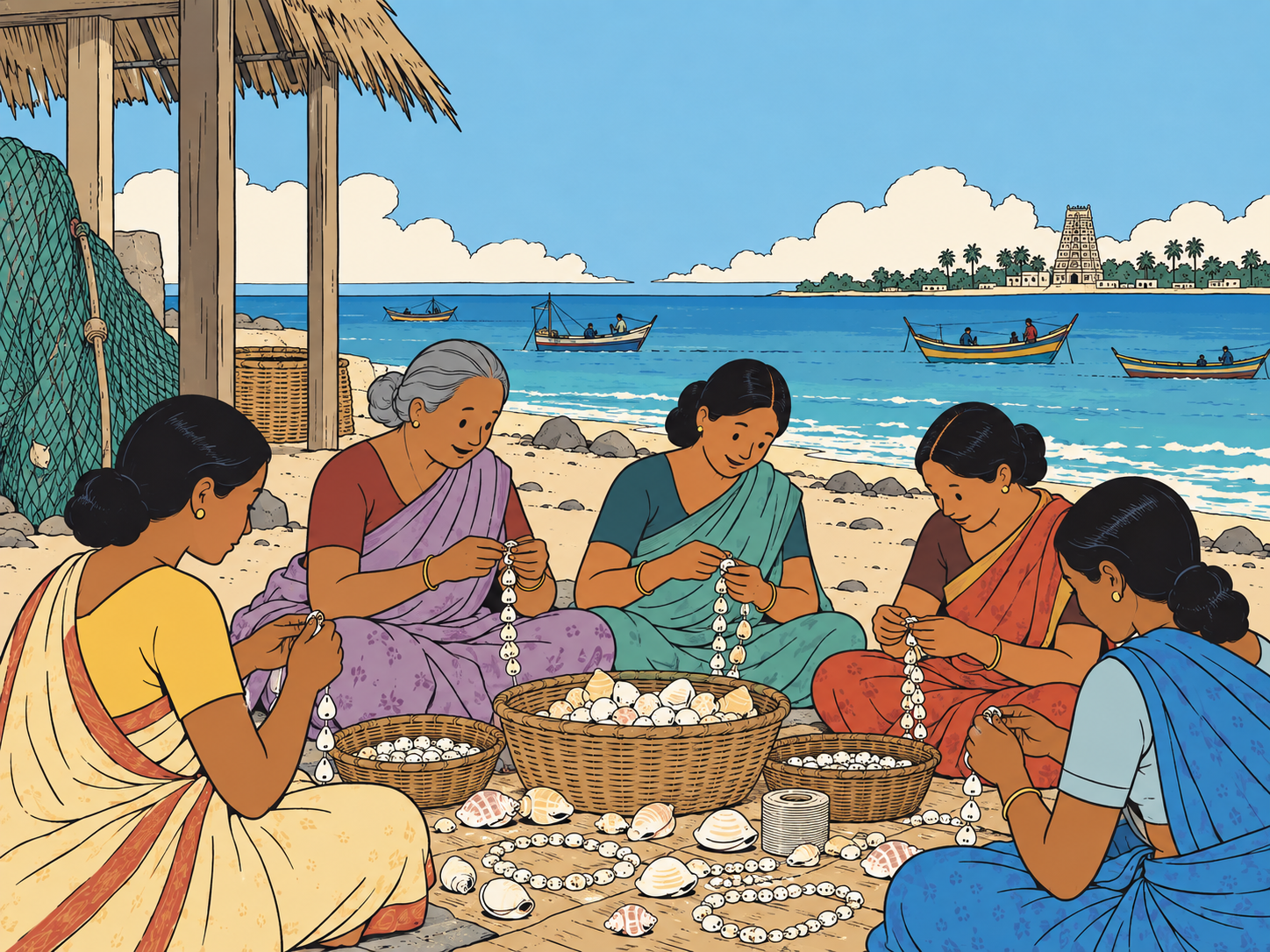
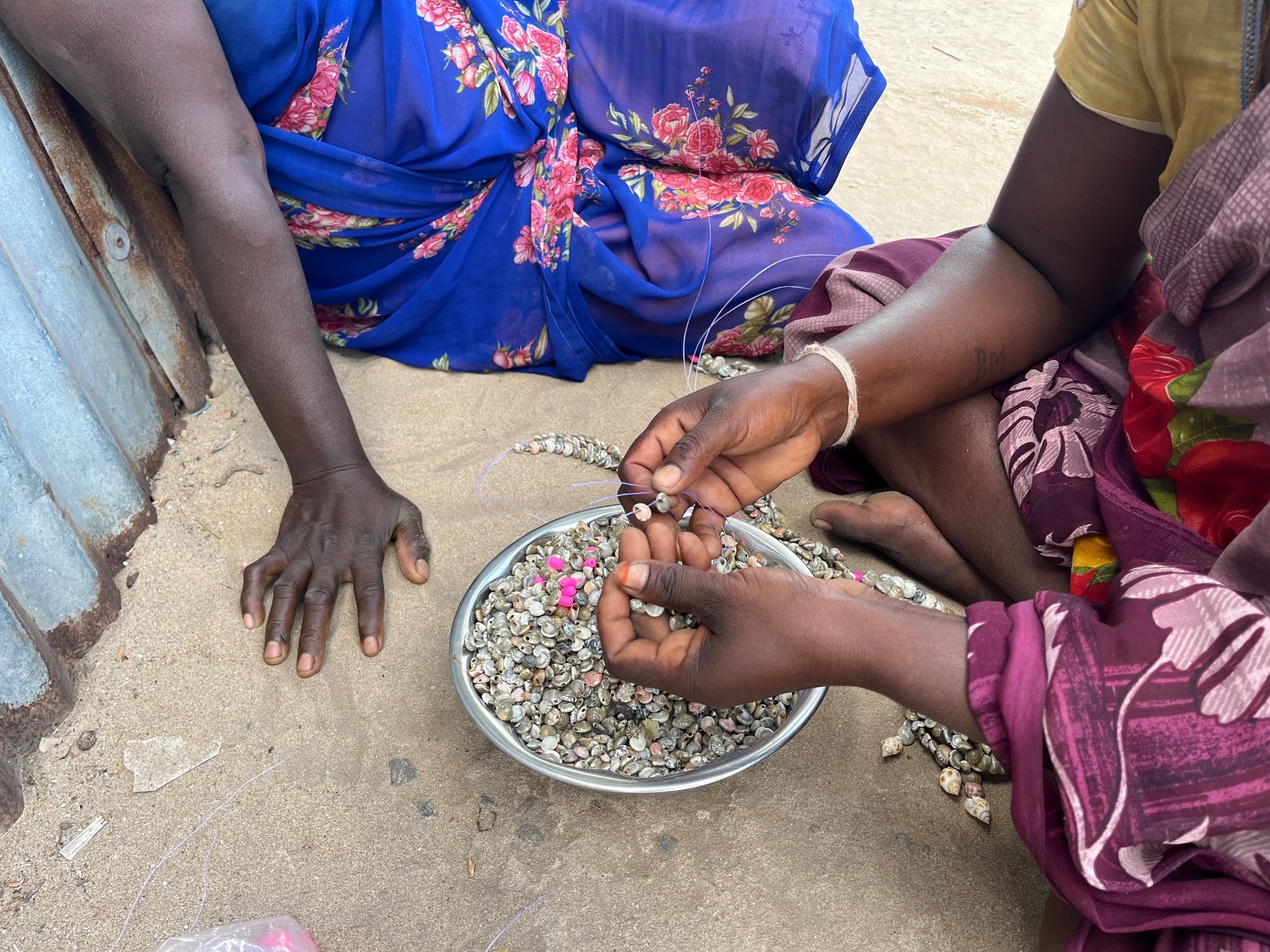
“About 20 years ago, we started making the garlands ourselves as the number of shells declined. Today, a dozen garlands earn us an income of Rs 120 to Rs 130 a day. However, the art of ornament-making is generational. Youth learn from the elders,” she said. They are able to sell 30 dozen garlands a week, earning them about Rs 3,000 to Rs 4,000 a week.
Alternatively, selling seaweed earns them Rs 200 to Rs 300 a day. Much has already been reported about the women in these villages diving to collect wild seaweed, unlike in other regions where seaweed is cultivated.
What sets them apart is their practice of limiting extraction, allowing the seaweed to regenerate even in the face of intense market demand, and using only their hands, and not sharp tools, to extract them. However, this business has slowed drastically due to a slack in buyers.
Additionally, the women clean fishing nets, removing sponges, seagrass, and gastropods (snails and slugs) that get entangled in the net, and this fetches them Rs 600 to Rs 1,000 a day.
Put together, their average monthly income is around Rs 15,000. The men, on the other hand, earn Rs 500 to Rs 1,000 a day in crab fishing, but many are known to spend all their earnings on alcohol.
Seventy-five-year-old Nagavalli, who helps her granddaughters make garlands, said, “While men go fishing, women put in equal effort into earning an income for their families. They are equal to men as they dive to collect wild seaweed, and can even handle boats alone.”
When the tides recede at 5.30 am, the women venture a few metres into the sea, use a big scoop to collect the shells, and then separate clams and smaller shells from the mud with sieves. They return home by 8 am.
While the younger generation is involved in collection, the older lot process the shells for the market. Bleaching powder is procured from big shell factories for the purpose.
Abisha C, programme associate with Dakshin Foundation, a non-governmental organisation committed to environmental sustainability and social justice, who worked in the area, explained, “Shells, particularly clams, are boiled to remove the flesh and are then soaked in bleaching powder for a day to make them uniformly white as they come in a range of colours.”
Tightly sealed Sovi or cowrie shells are buried in the sand for 15 to 20 days for the flesh to rot, after which they are washed and dried, she added. While a regular shell necklace can cost Rs 120 per dozen, a cowrie necklace sells for Rs 130. During December to January, when religious tourism picks up, their value increases to Rs 150 a dozen.
Nagavalli, as with many other women in the village, has a grouse. “The biggest problem here is the liquor store in the village. The men head there when their work is done. The shop is right near the school, and even young boys are picking up the habit. Our homes run on the sole income of women, whether it be shell work or seaweed.”
Peaceful co-existence
While shell-making is unique to the Chinnapalam village because of its proximity to the sea and is essential to livelihood, the residents do not lay claim to the shoreline resources.
Nagavalli’s teenage granddaughter, Nageshwari, said, “Every year, about 20 people from other coastal villages come here to pick worms, which are popular fish bait. They stay in Mandapan, a town situated 30 minutes away for a month, and we don’t bother them.”
Even shell collection by other village people is not restricted, as the marshy land is not considered to belong exclusively to their village, added Nageshwari.
The way the community uses and manages this space reflects a shared, non-exclusive relationship with the land – one that stands in contrast to conventional norms of private property.
Abisha C describes this as an example of a commons-based system, where access and use are governed collectively rather than through individual ownership. The coastal stretch serves multiple purposes. Fishermen anchor their small traditional boats, and women and young boys engage in activities such as crab hunting and shrimp picking.
Nageshwari follows in her mother’s footsteps, learning the art of shell-making, and absorbing all the knowledge passed down from generation to generation about the sea and what it offers.
“In my mother’s generation, women studied only till 10 or 12th standard. Now young women are going to college, but since private jobs do not generate enough income, we are taking up the same work as them," she said.
In this way, the women of Chinnapalam village sustain themselves even while protecting and nurturing the shoreline, as true custodians of a cherished resource.
.webp)
.webp)
.webp)
.avif)
.webp)

.webp)