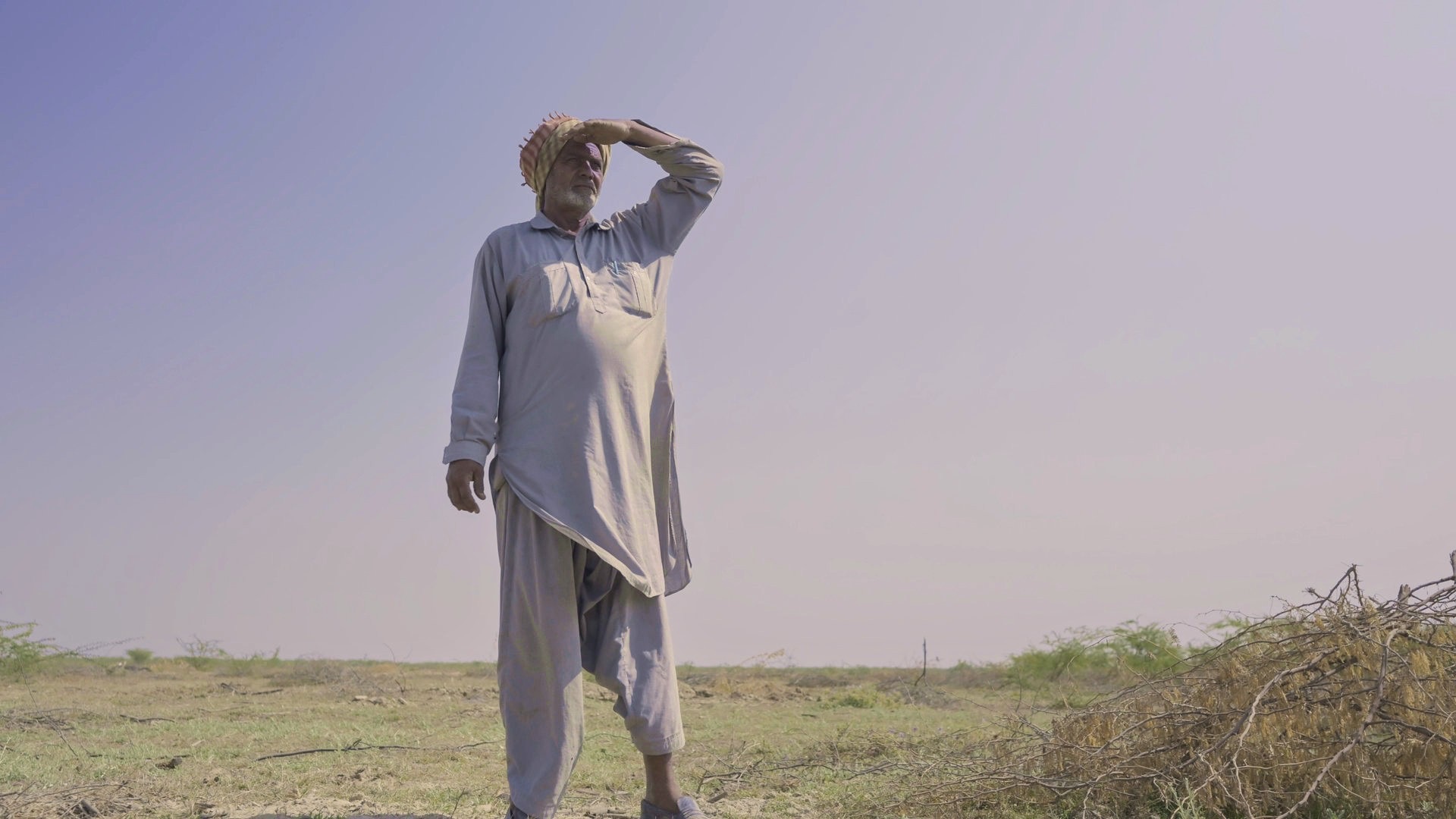
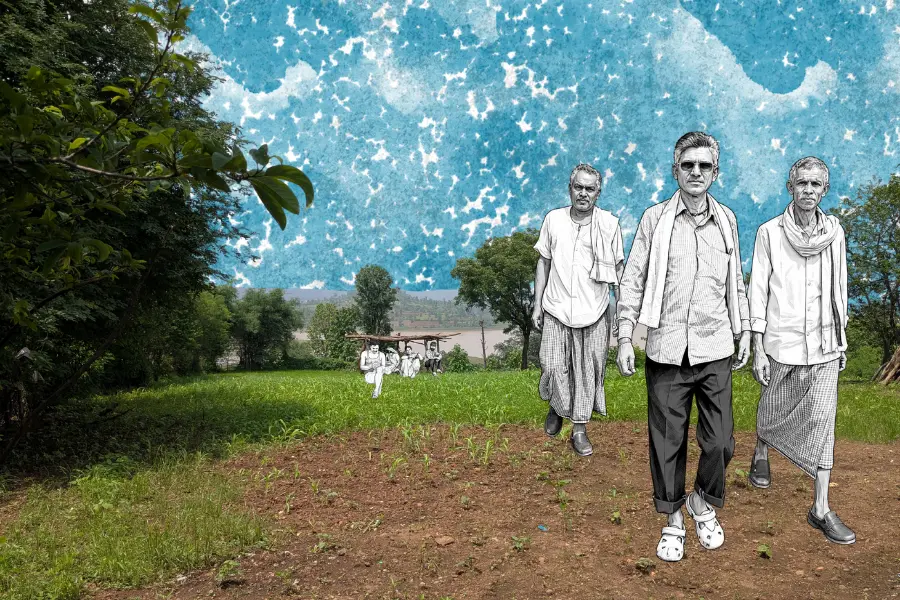
Kutch, Gujarat: Ramzan Hussain Noude tapped the driver with some urgency, whispered in Kutchi, and got off the vehicle in a huff. He walked towards two men who sat in the shade of a parked pick-up van. Ramzan, in his faded blue long kurta and beige turban, towered over the men. His frenetic gesticulations made it clear he was frustrated.
When he returned, he ranted, “How many times do we have to tell these boys that they can’t cut trees wherever they like? There is land nearby allotted for cutting the trees.”
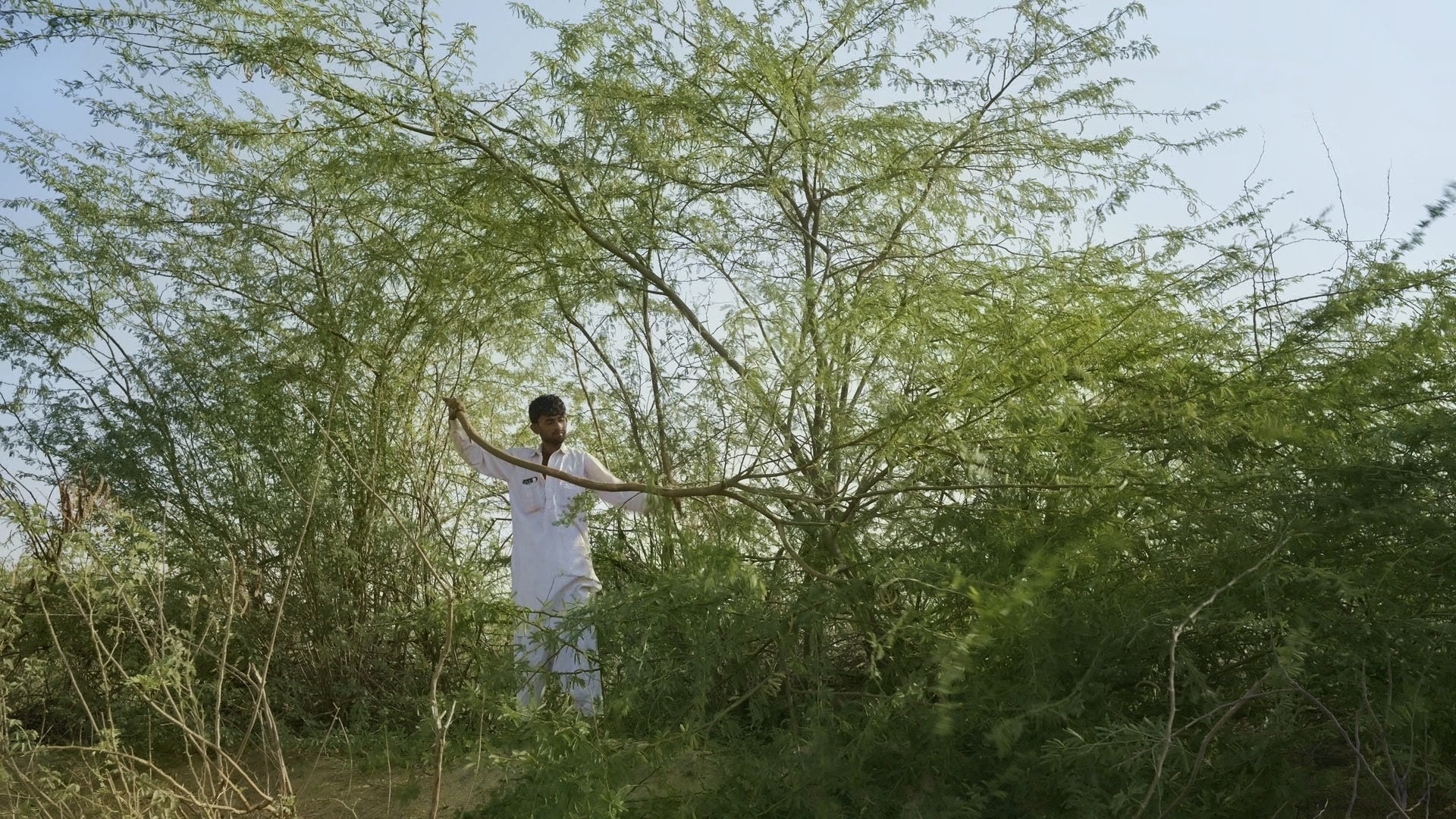
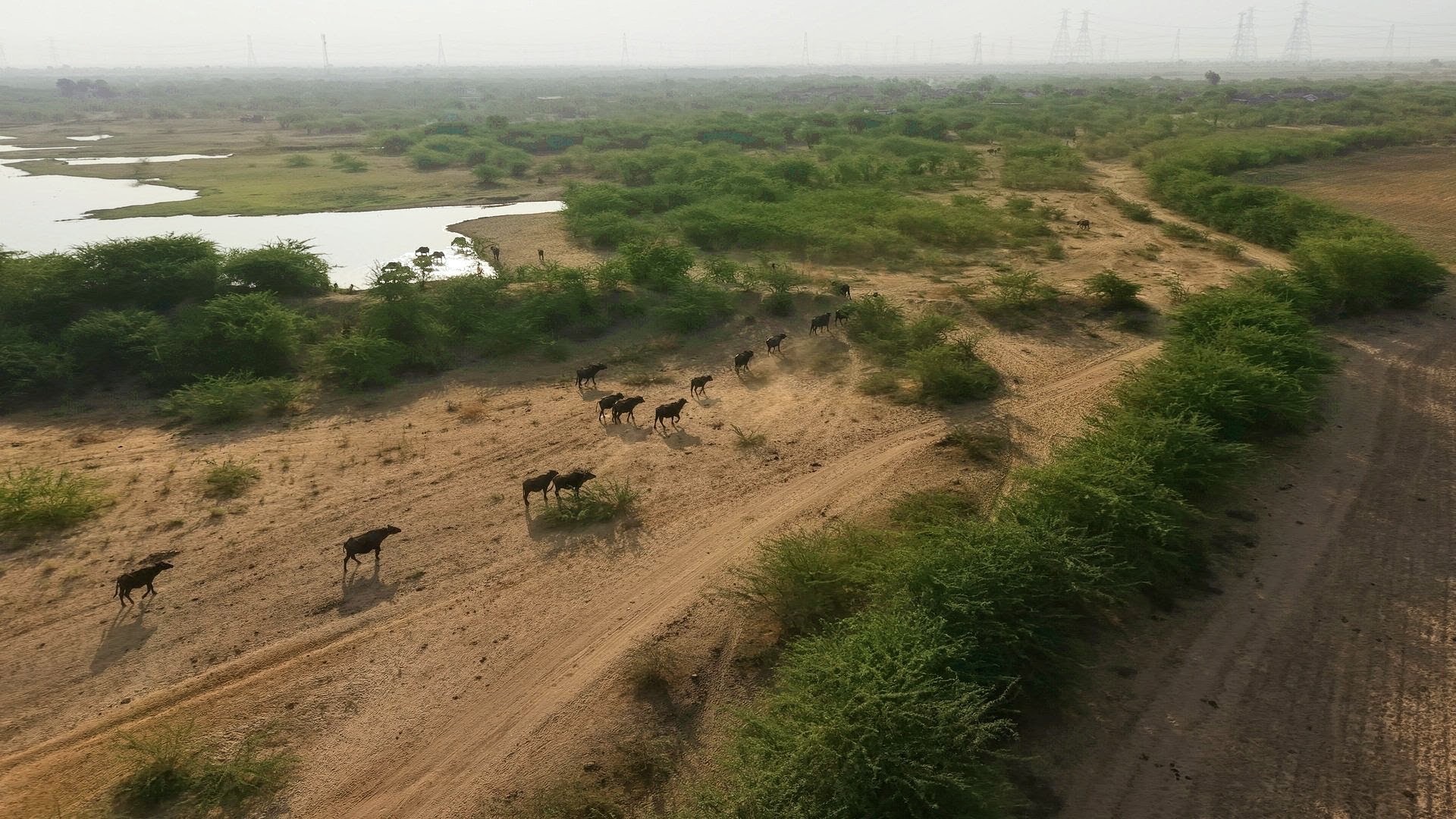
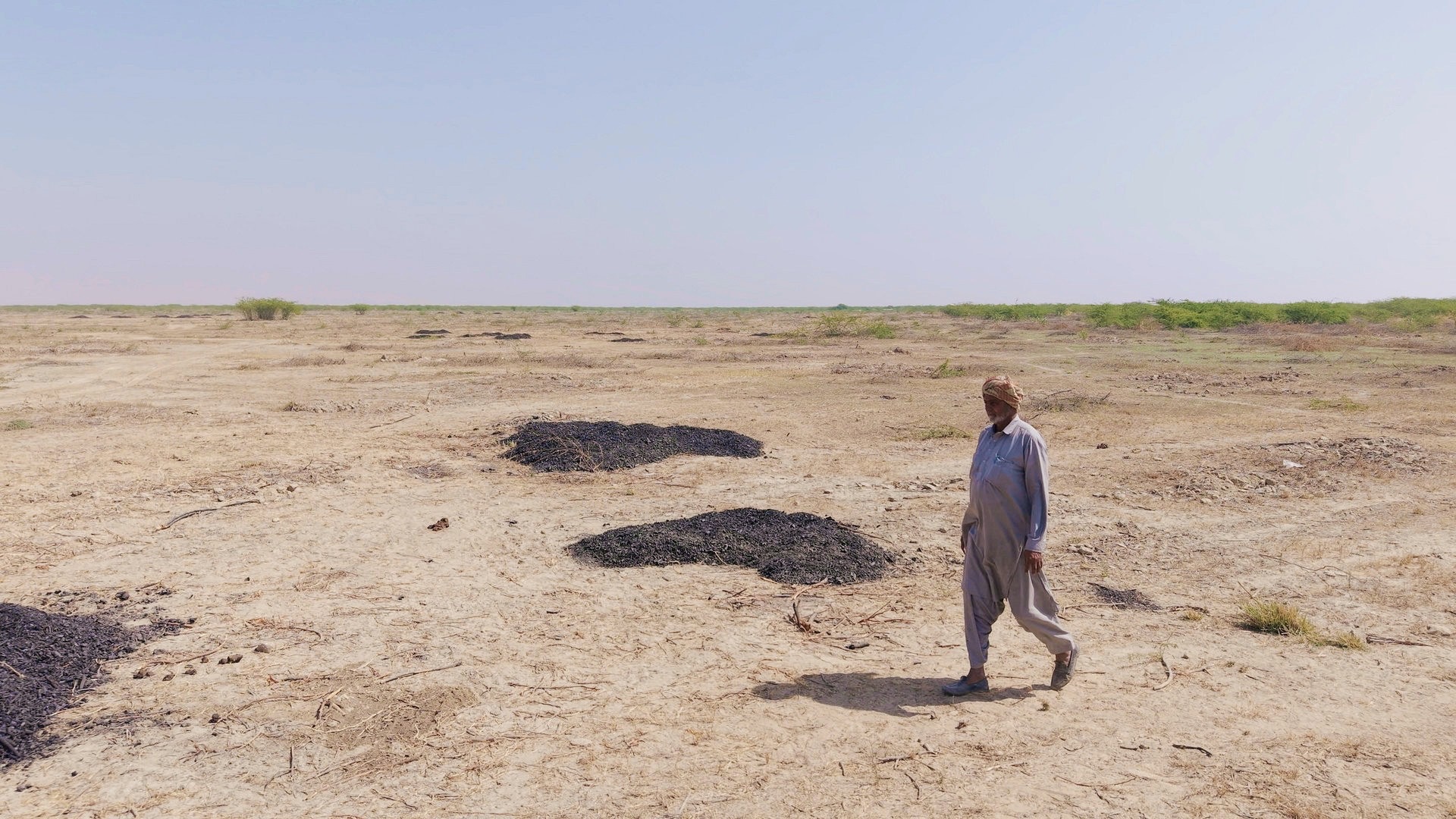
There are no signs, houses or even signs of human habitation along the makeshift pathways that snake through Banni, a 2,500 sq.km. tropical grasslands reserve in Kutch, in the westernmost point of India. Instead, all one can see are large swathes of Neltuma juliflora (or more commonly known by its old scientific name, Prosopis Juliflora).
The local Maldhari pastoral community calls the invasive tree, Gando Baval or the Mad Tree. “Whatever you do, it just won’t die. That’s why it is important to keep them away from little patches of land we can control, rather than cut haphazardly anywhere else,” said Ramzan.
Looking out at Banni, it seemed like the Maldharis were in a losing battle. The ‘Mad Tree’ dominates the landscape until the horizon. “If the grasslands are not there, our village, the people who stay here and their livestock will be destroyed,” said Ramzan wistfully.
Witnesses to an invasion
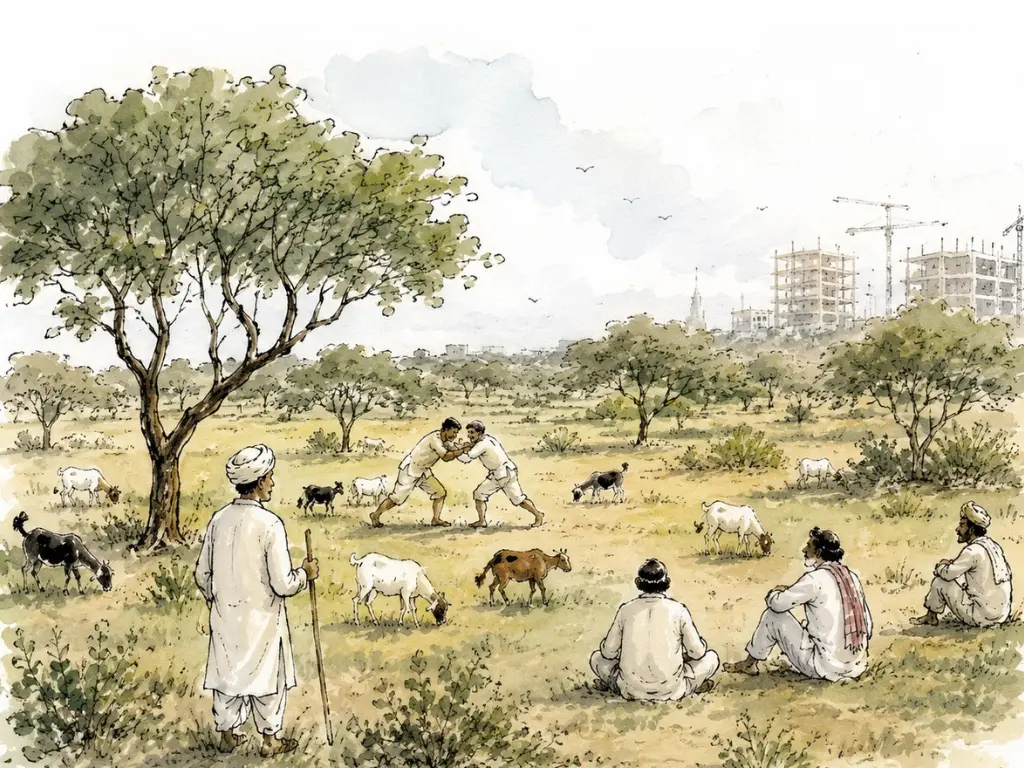
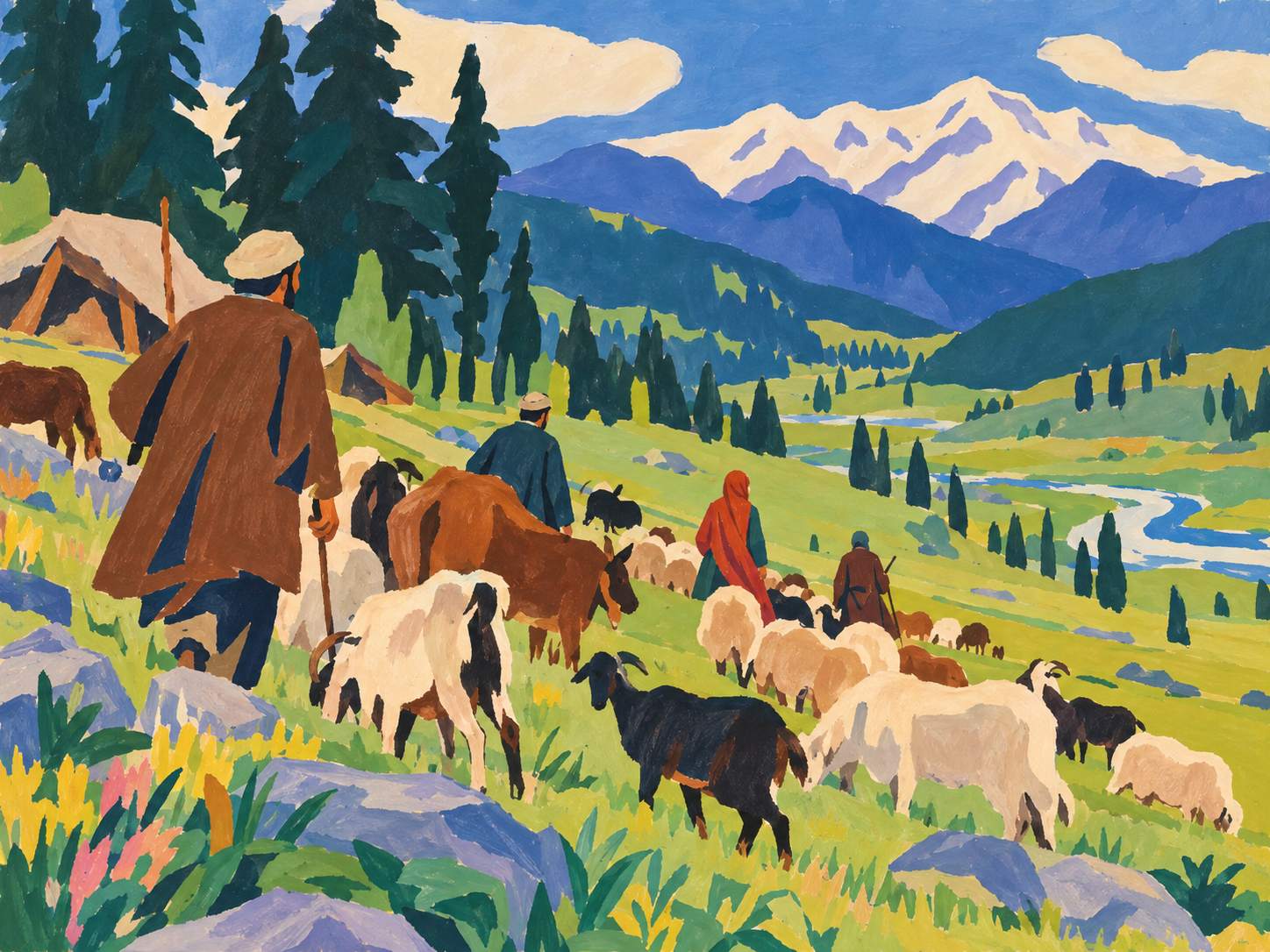
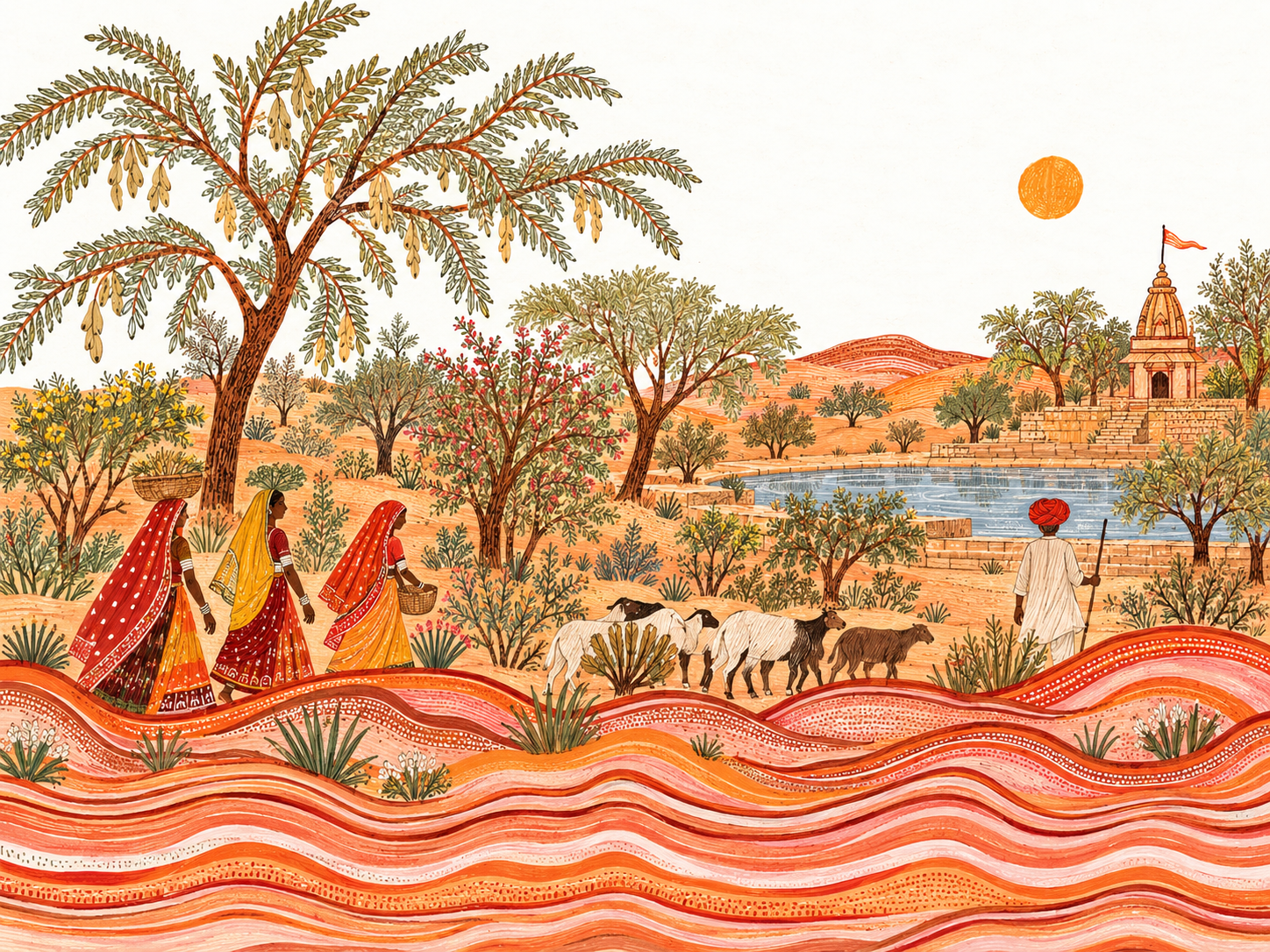
Maldharis are the pastoral communities of Hindus and Muslims in Kutch. They are a semi-nomadic community that once traversed vast distances rearing and breeding cattle. With no farmlands of their own, the Maldharis depend entirely on their livestock.
The Banni Grasslands form the lifeblood of their economy. The livestock graze on its grounds, producing nearly 1 lakh litre of milk daily.
However, in the past four decades, this lifeline has been withering. Nearly 50% of the grasslands have been invaded by Prosopis. The tree has led to an 85% decrease in the quantity of grasses available, and this has threatened the commons and the Maldhari’s milk-based economy.
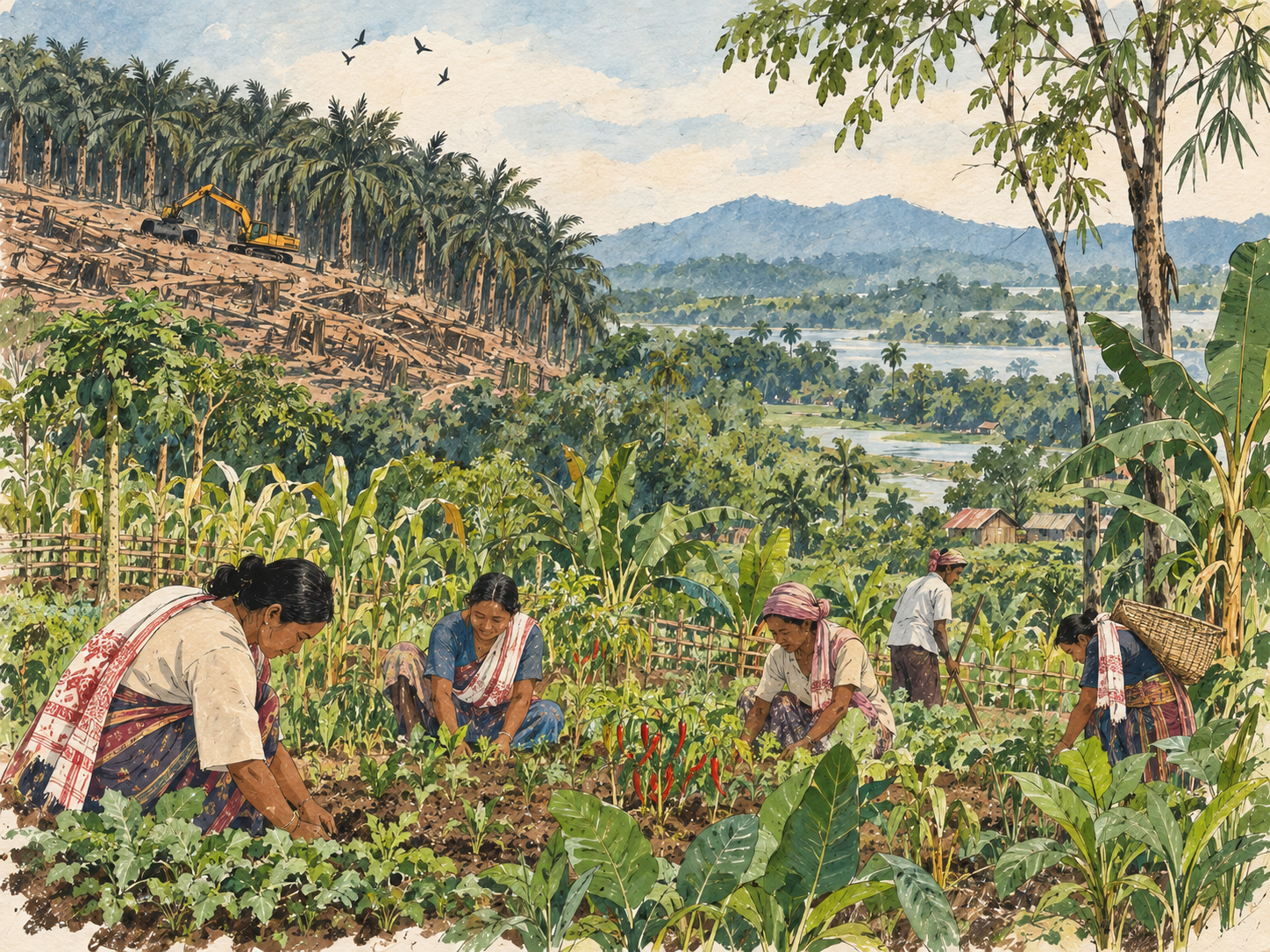
Commons—shared lands such as forests, pastures, water bodies and mangroves— cover 205 million acres or one fourth of India and form the lifeline for over 350 million people, including marginalised groups like Scheduled Castes, Scheduled Tribes and women.
Communities across India have traditionally protected, restored and managed these commons through customary self-governance practices. Despite centuries of dependence on the grasslands, the Maldhari communities have not been given formal rights over it.
The protection of the grasslands commons has continued despite competing demands over resources, lack of formal aid or policy recognition, environmental degradation and climate vulnerabilities. The Maldharis have adapted their traditional practices to counter the invasion of the Gando Bawal. They have put in place informal rules for cutting wood and removing saplings to ensure that some portion of the land can be restored as grasslands. Village forest committees have become important voices in the protection of the grasslands: from piloting experiments to taking legal action against projects that harm the Banni.
Prosopis wrecks the landscape
Prosopis, which is native to South and Central America, was introduced in the Banni grasslands in the 1960s for two reasons: to counter desertification from the Thar Desert to the north of Banni; and to control salinity ingression where salt was seeping from the aquifer into the topsoil.
Prosopis was chosen because it is hardy, drought-resistant and can thrive in saline soils. It is these strengths that have made it an all-conquering invasive. In four decades, it edged out the more than 55 species of highly nutritious grasses in fertile areas of the grasslands.
“Its roots grow quickly, doubling every fortnight. It sucks up nutrients and water. For 7-8 meters around the tree, you won’t find a single blade of native grass,” said Ramzan.
With declining grass availability, cattle began feeding instead on the pods of the Ganda Bawal. “The seeds are hard and cows, bulls, goats and sheep can’t digest them. It causes diseases in the jaw and lumps in their stomachs. Cattle eventually stop producing milk or die,” said Ramzan.
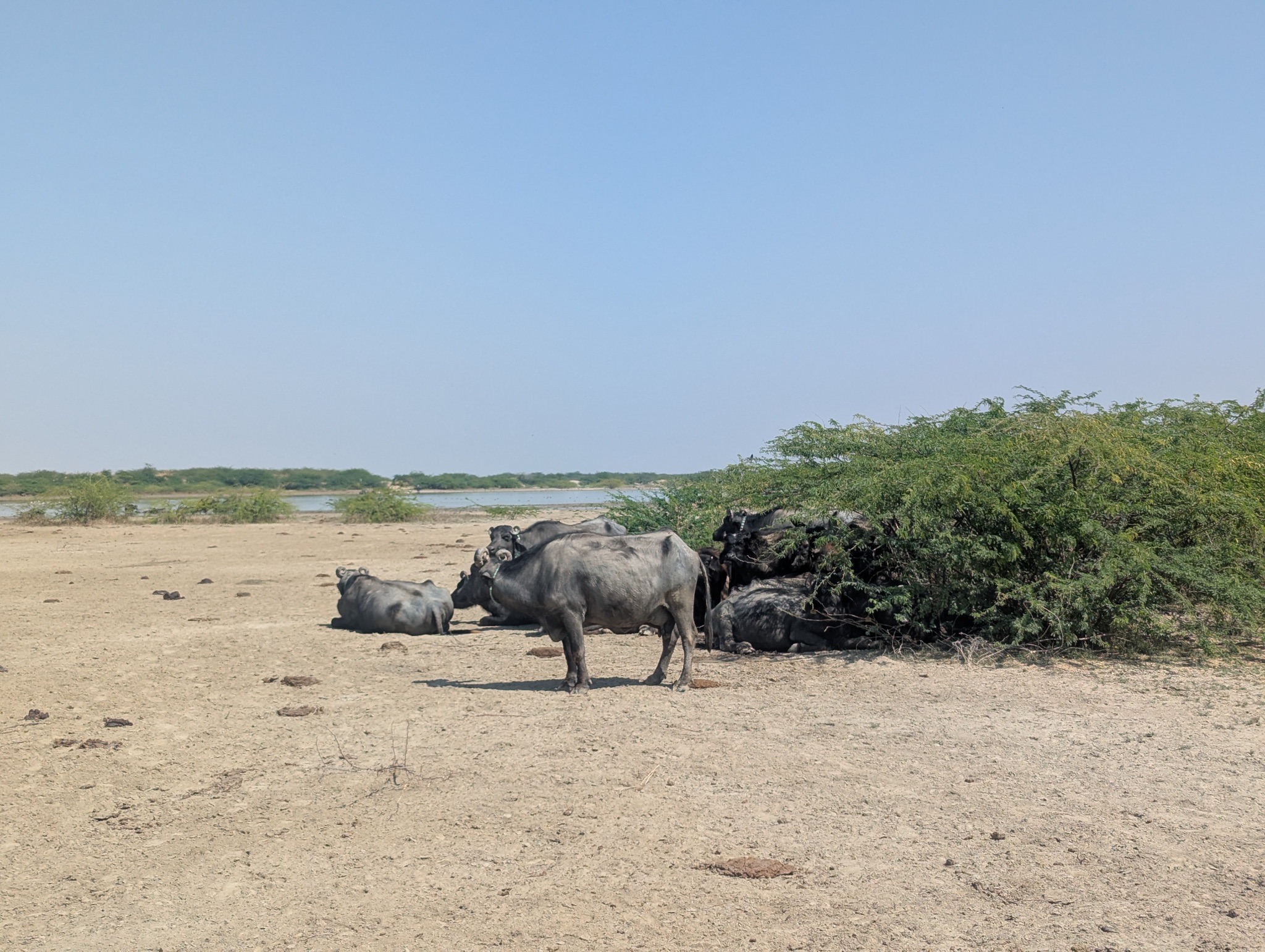
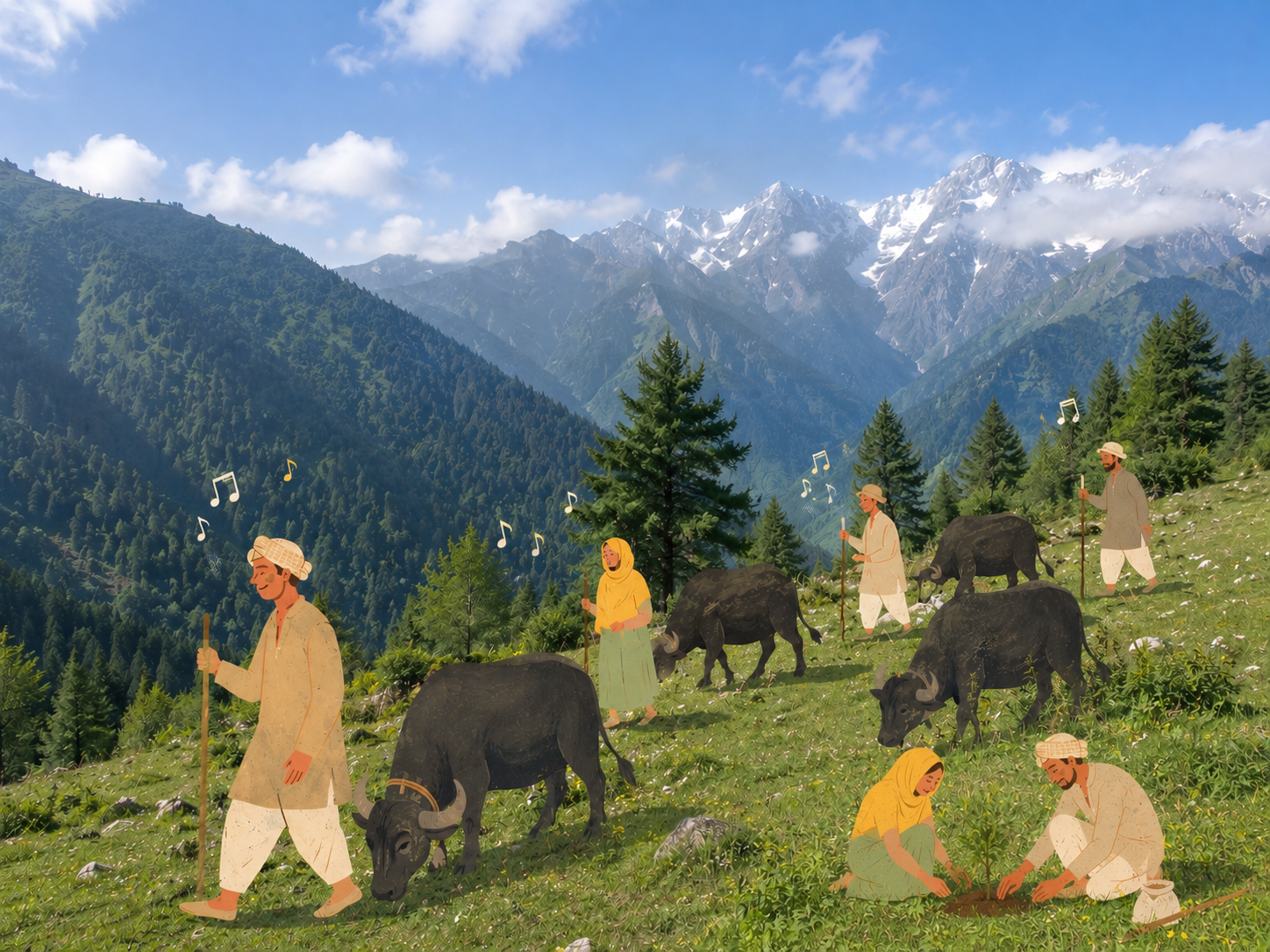
The Maldharis instead focused on the indigenous Banni Buffalo, which is immune to the effects of Prosopis pods. Since the introduction of Prosopis, the population of Banni buffalo has increased sixfold compared to cattle; while, the rearing of sheep and goat has almost disappeared.
Adapting to the invasion
Banni’s pastoral community are masters at adaptation. For centuries, they were known as breeders of buffalo and cattle, and when this occupation became unviable at the turn of the millennium, they became large-scale producers of milk.
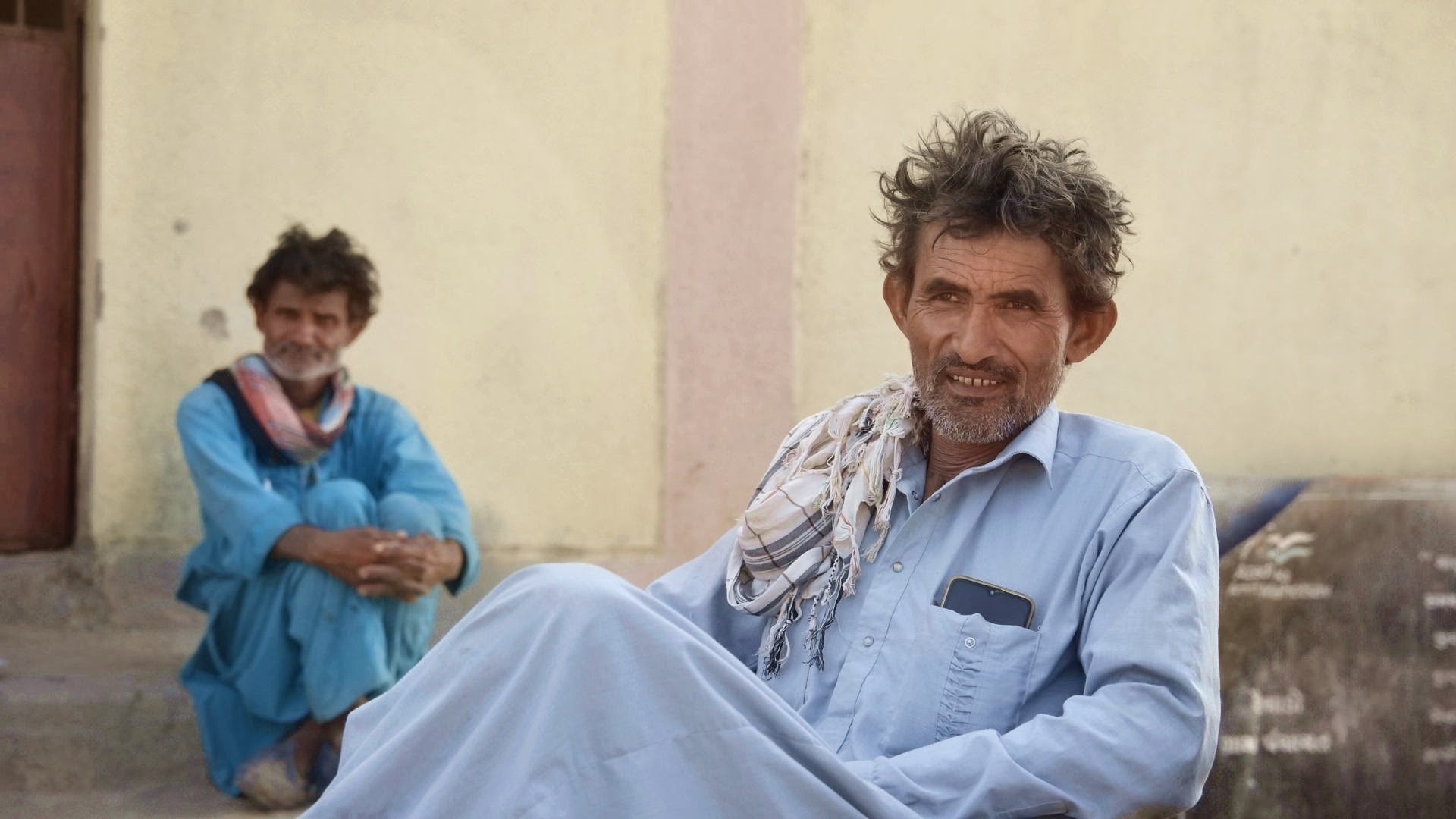
“Hunger teaches us many lessons,” said Huzair Jakariya, whose family has 50 buffaloes in the village. One immediate lesson was to find a livelihood in the tree.
Around 20 years ago, a series of drought-years and low milk production pushed the community to the edge. “We went to the city, but there was little work to be found. At a hotel, the owner told us that they use a lot of wood and coal in their kitchens. If we can procure it, we could get paid for it. That’s when we got the idea to use the Gando Bawal,” he said.
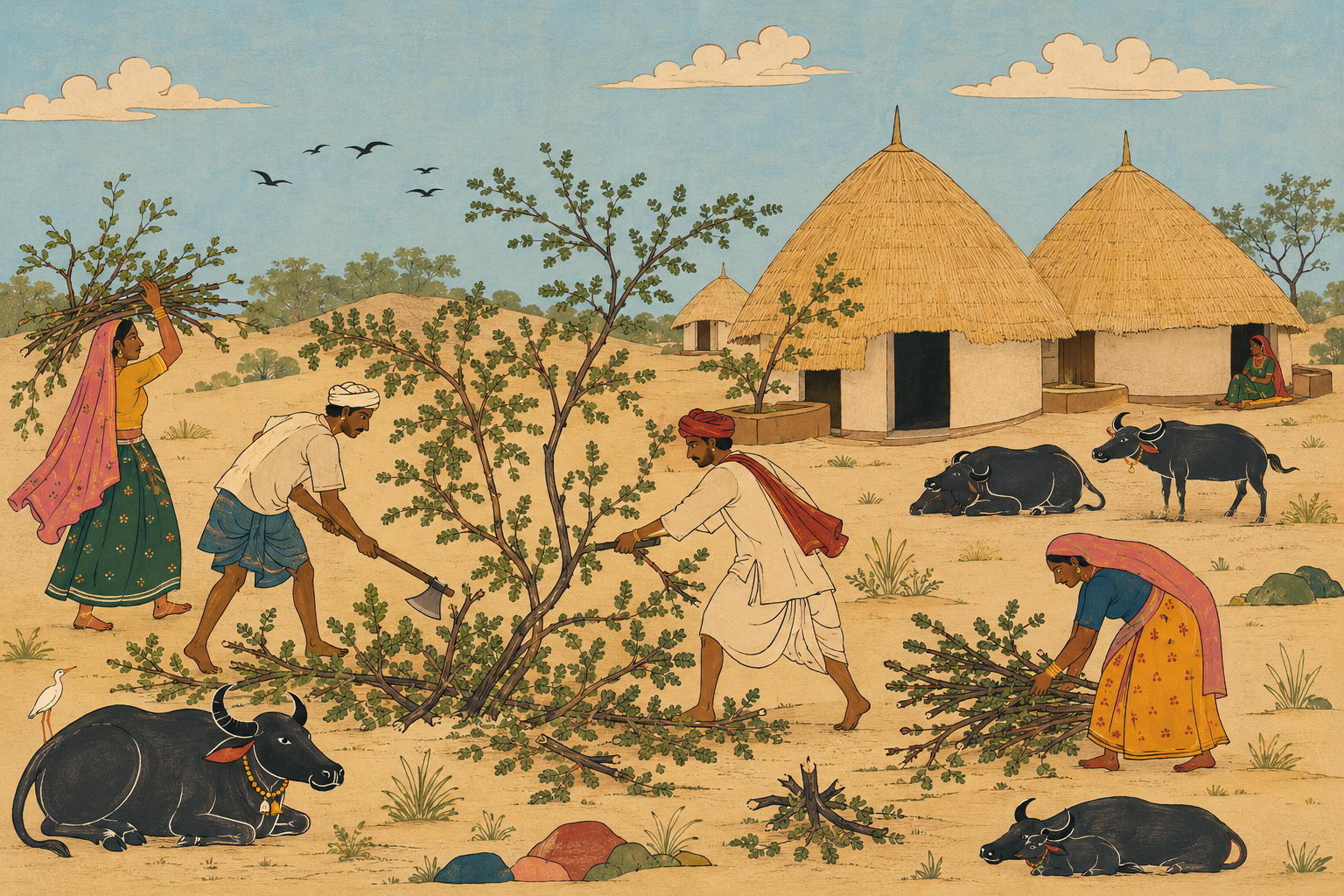
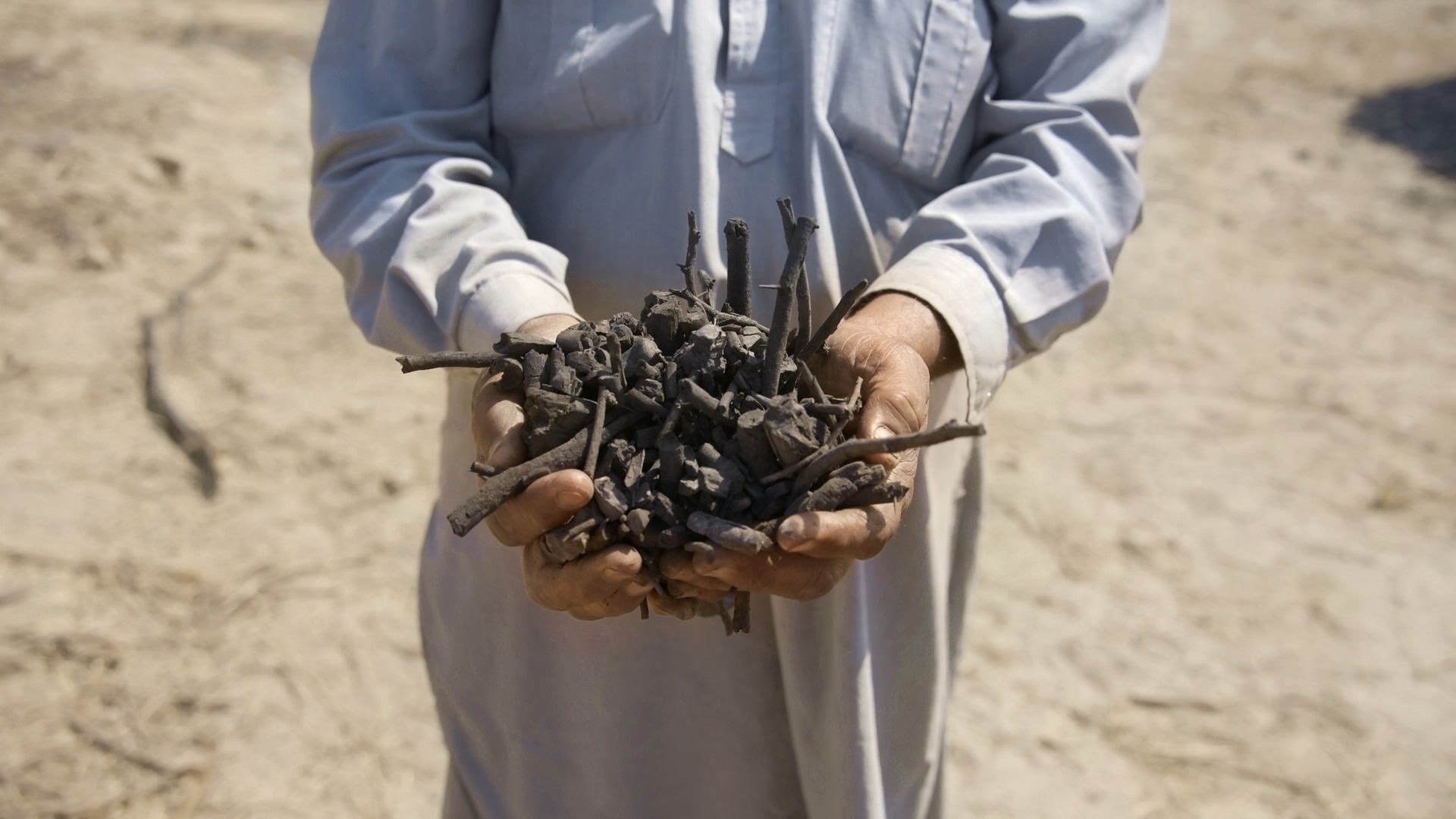
To make charcoal, villagers cut the tree into bits and burn it in small, makeshift mud-kilns. In this low-oxygen environment, the wood burns into charcoal. For each bori (40 kg), villagers were paid Rs.35. “For all the damage the tree has done, it has helped us gain a livelihood,” he said.
Nearly one in three people now depend on charcoal or collection of raw wood (which is sold to factories as fuelwood) as a livelihood in Banni. From Raiyada alone, villagers estimate that 50 truck-loads of wood are cut daily.
However, the process has done little to control Prosopis. In fact, done haphazardly, it may end up contributing to its spread. “The more you cut it, the more it grows. When it is cut at the trunk, its roots are there, and its seeds are still in the soil. After a rain, the trees come back bigger and stronger,” said Huzair.
Picking and choosing the battle
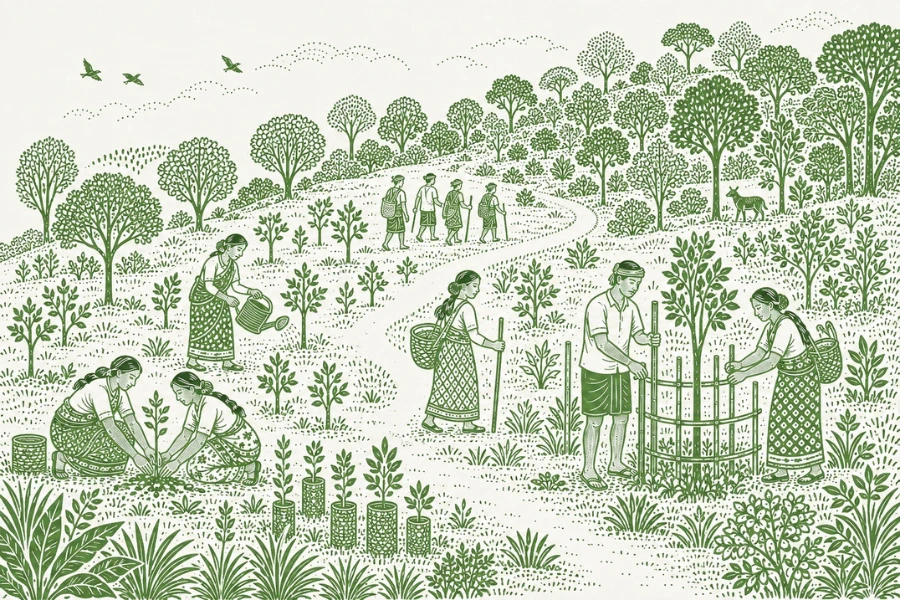
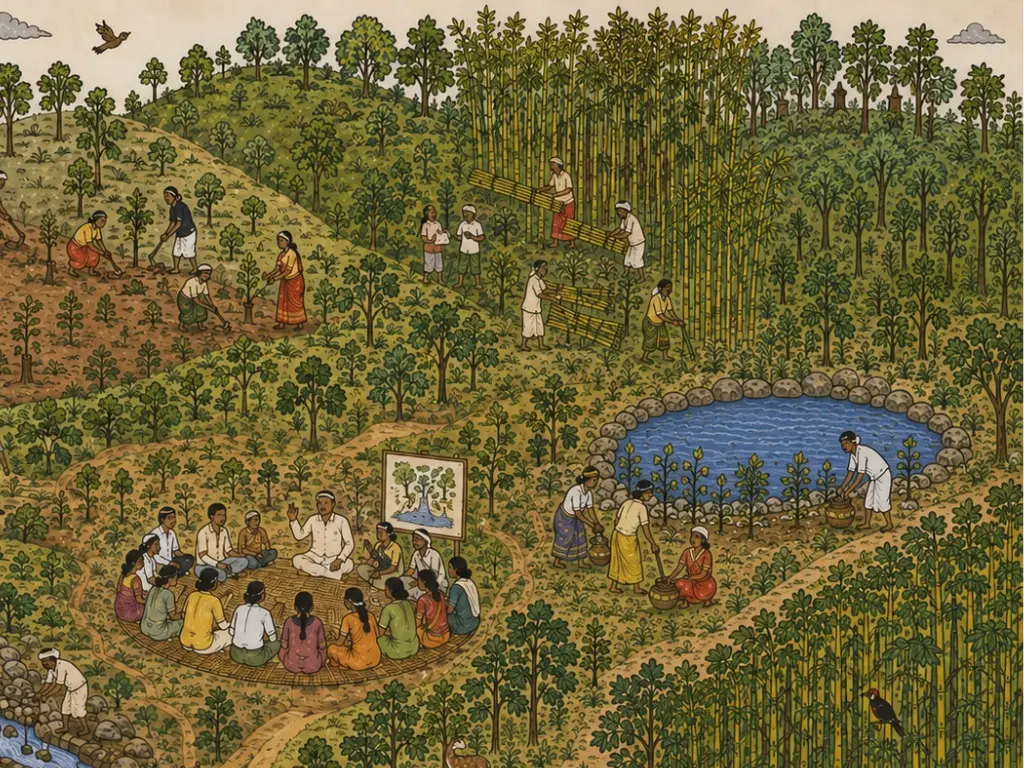
Prosopis is most effectively removed by uprooting. But, this can be a costly affair. “It costs Rs. 1,000 per day to hire earthmovers that can uproot the trees. So, instead, we focus on a small area to uproot the trees or to cut trees for charcoal. And then, we ensure the tree doesn’t grow back. Grazers there pluck out any Prosopis sapling they see,” said Ramzan, who is the head of Raiyada’s village forest management committee (VFMC), which is governing the informal rules of managing this restoration attempt.
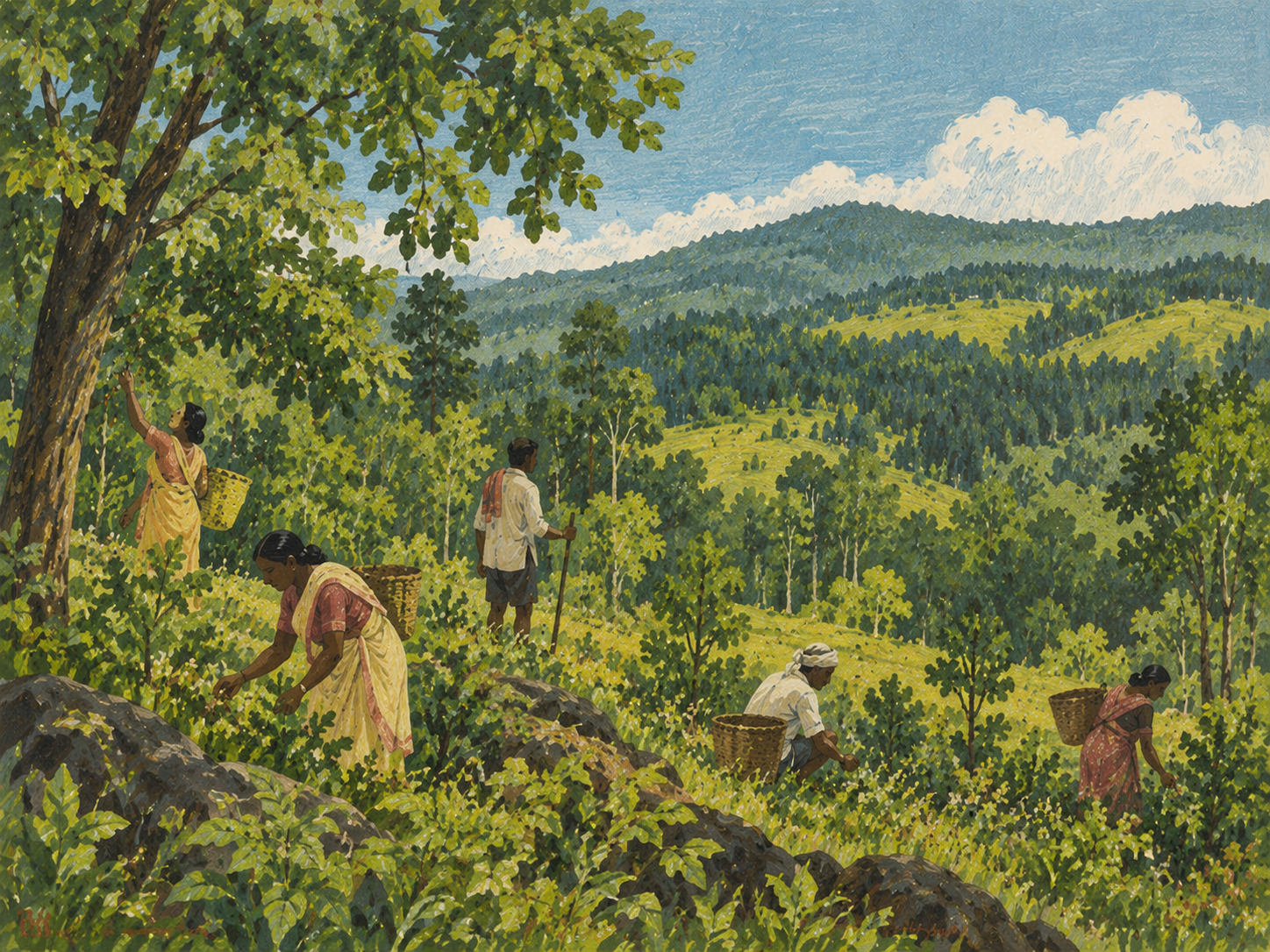
Village elders like him pick patches where the soil is fertile and native grasses have the best chance for survival. For charcoal, they prioritise areas where the thorny Prosopis has blocked off traditional grazing paths. This has led to some success, and patches have recovered around the village.
The VFMC also became a way for Sahjeevan, an organisation that has worked in Kutch for over 30 years, to pilot experiments in removal of Prosopis. Since 2023, they have linked the Maldhari community to the international carbon credit market through the creation of biochar.
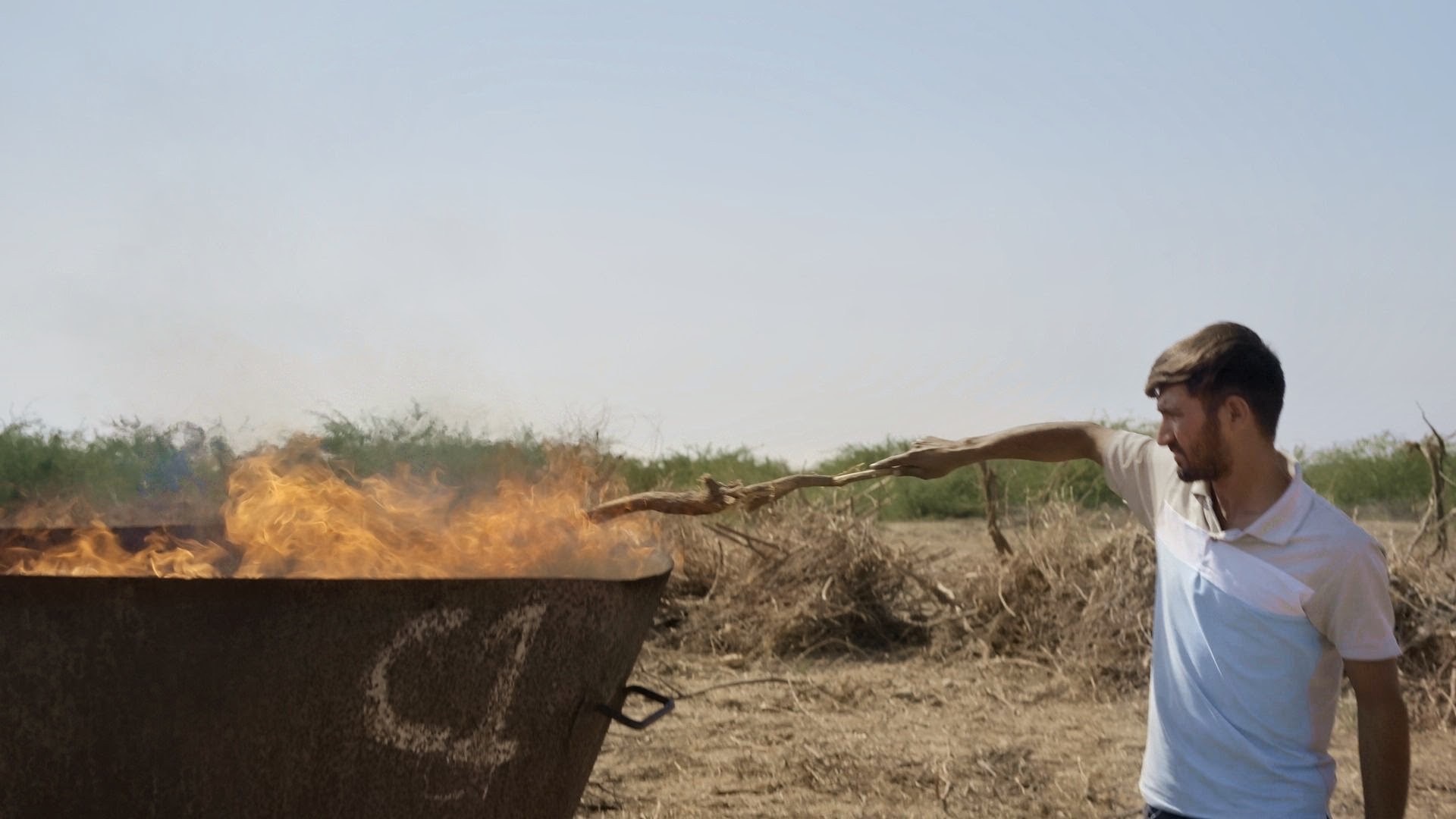
For biochar, the entire Prosopis tree is uprooted and cut into bits. Once dried, it is burnt in specialised cone-shaped Kon-tiki containers. The embers are doused in water to produce biochar. Unlike charcoal which is burnt in polluting factories and releases the carbon back to the atmosphere, this biochar is mixed with cow dung and incorporated into the soil. Money is obtained through the carbon market for every tonne of carbon sequestered in the soil.
“So far, we’ve cleared about 40 hectares near Raiyada. The VFMC is critical to choose the land that needs to be restored, and they engage labourers and machines,” said Bharti Nanjar, Programme Coordinator for Sahjeevan. For every kilogramme of biochar created, the VFMC gets a profit of Rs. 1. “This can be used to maintain the grassland for three years to ensure Prosopis is fully abated,” she said.
But, the carbon credit market can be fickle. The VFMC is hoping to create a local demand that could sustain the costs of uprooting the trees. Biochar, however, has few takers among farmers in the region. “Farmers are apprehensive of putting any product from Gando Bawal in their soil. We have managed to convince one farmer to trial it. Hopefully, if he gets a good result, other farmers will ask for biochar,” said Ramzan.
Gearing up for another battle
All across Banni are examples of small-scale programmes, schemes and attempts to reclaim the grasslands from the invasive tree. The Maldharis have been doing this despite a lack of state recognition.
In 2012, 47 villages of Banni collectively applied for Community Forest Rights (CFR) titles, under the Forest Rights Act. However, their claims have disappeared in the quicksand of bureaucracy. “Though Banni was declared a protected area in 1955, the land still belongs to the revenue department. And so, the CFR claims are not settled,” said Pankaj Joshi, an independent researcher who has worked in the region for nearly three decades. “For any conservation or restoration programme to work, the issue of land ownership for the Maldharis has to be sorted,” he said.
This hasn’t stopped the pastoral community from becoming the de facto custodians of the land. In 2021, Banni Breeders Association – a collective of over 1,800 persons from the Maldhari community – secured a landmark order from the National Green Tribunal that forced the district administration to remove encroachments and illegal farmlands from the grasslands. The NGT upheld the rights of the pastoralists, but CFR titles were yet to be given.
Now, Raiyada finds itself gearing up for another battle. Solar power plants have sprung across Kutch and many of these power lines traverse through Banni. South of the village, rows of tall metal towers rise over the landscape. Power lines have not been installed at the tower closest to Raiyada.
“We won’t let it be installed. The companies have tried to bribe us with promises, but these lines will affect our pastures, wildlife and birds,” said Julekhaben Adam, the Sarpanch of Raiyada. Villagers have donated Rs. 2 lakh to file a case with the Gujarat High Court. “We as a Gram Panchayat have resolved never to give permission to any project that affects the Banni,” she said, scripting another chapter in the collective struggle to protect the shared common lands of the Maldharis.
.webp)



.webp)
.webp)
.avif)
.webp)

.webp)