.webp)
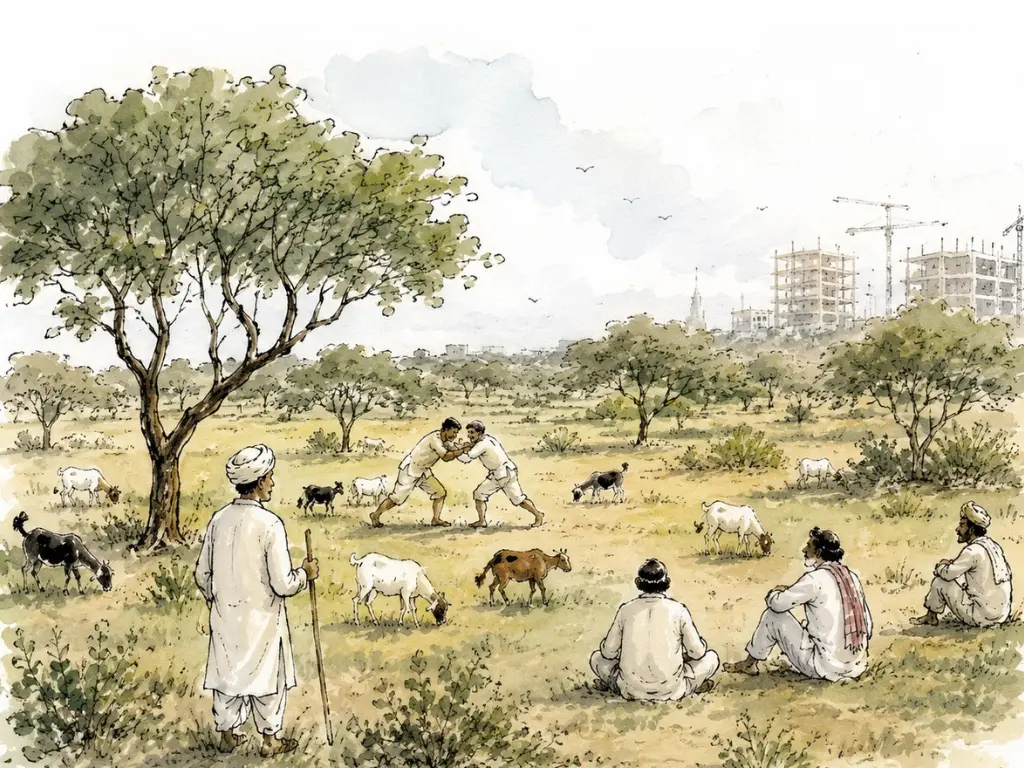
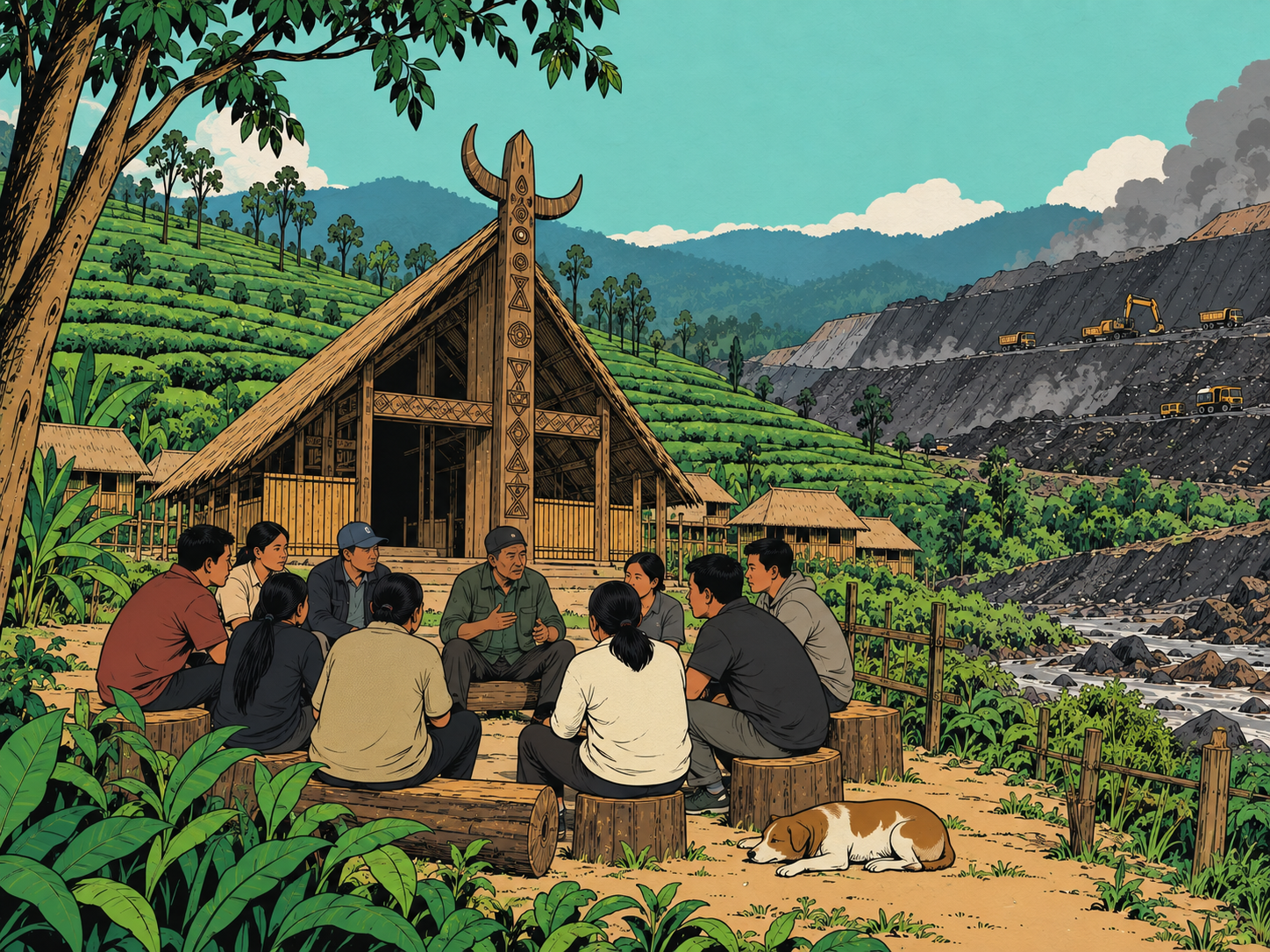
Koraput, Odisha: On a January morning, a group gathered underneath the old peepal tree at the sadar, a ground of old-growth trees that serves as the village meeting place.
55-year-old Komlu Sisa, wrapped in a shawl, took his place under the tree. He was the Nayak, the hereditary head of Surumi village, a cluster of mud-brick homes nestled among undulating hills in southern Odisha’s Koraput district.
“The price for Antri Dangar will be Rs. 9,000,” announced Sisa. A murmur rang out. Was the harvest at Antri Dangar, a 10-acre patch of forest in the hills that had 300 cashew trees, worth its base price?
The remaining rates were read out: Raogudi, with its 100 cashews clumped in 1 acre, was set at Rs 4,500; the 200 trees at Chendiya Dangar for Rs 10,000. There was a pause before the announcement of the last forest patch: the jewel of the hills, Kosai Dangar, with its 500 cashew trees across nearly 100 acres. “Kosai Dangar will be at Rs 60,000,” said the Nayak.
After a gap for deliberation, the bidding commenced. Some in the crowd raised their hands, others shouted out a number. The rates went higher. By afternoon, the annual ritual of cashew tendering had concluded.
The village had hoped to get Rs. 83,500 for its cashews. The auctions saw them earn Rs. 1.05 lakh.
Tenders for a common good
For Surumi, this tendering is more than a financial transaction. It’s an affirmation of collective responsibility over the forest commons.
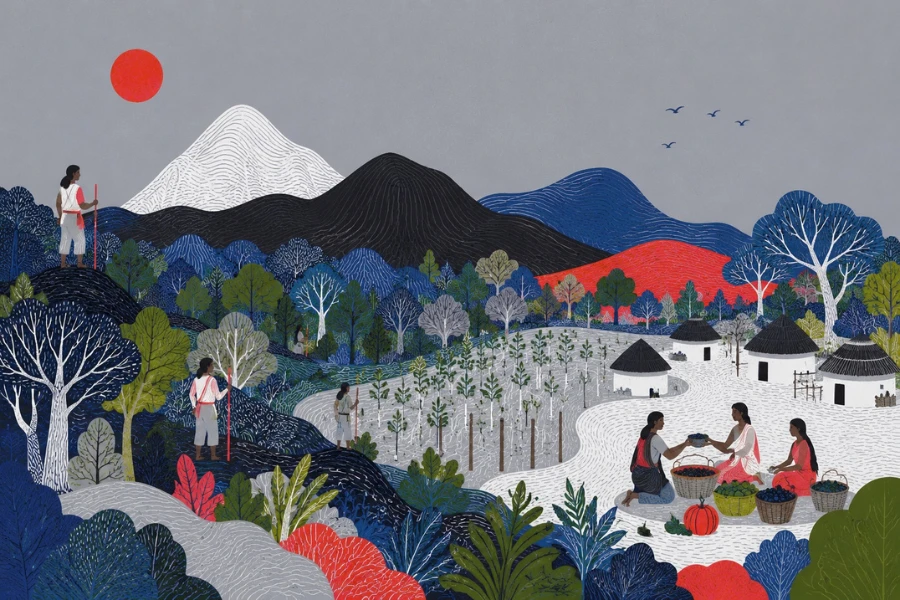
In the two hills that tower over the village are about 365 acres of forests; replete with four sacred groves, several species of medicinal herbs and deciduous forests of Kusum, Mahua and cashew trees.
For the 135 families that live here, the forest is where the symbiosis of the village’s culture and economy plays out. The sacred groves are the cultural heart that safeguard biodiversity and ancestral heritage, while tendered cashew plantations generate capital for festivals, education, and healthcare.
Commons—shared lands such as forests, pastures, water bodies and mangroves— cover 205 million acres or one fourth of India and form the lifeline for over 350 million people, including marginalised groups like Scheduled Castes, Scheduled Tribes and women. Communities across India have traditionally protected, restored and managed these commons through customary self-governance practices. These customary rights and practices, however, haven’t been formally recognised in many parts of the country.
The protection of commons has continued despite contesting demands over resources, lack of formal aid or policy recognition, environmental degradation and climate vulnerabilities.
Communities across India, like in Surumi who indigenously developed their cashew auction model through cooperation and discourse, are showcasing that reclaiming, restoring and managing commons through customary self-governance practices can play a crucial role in their ecological, social and economic upliftment. Land Conflict Watch, a Delhi-based research group, in collaboration with Common Ground Initiative, a collaborative working on the commons is documenting such case studies of successful collective action of communities around common from across the country.
Traditions rooted in groves
The spiritual connection to the forests is the thread that weaves the multi-community fabric of Surimi. Nearly half the households belong to the Parengi Porja community, who are recognised as a Particularly Vulnerable Tribal Group due to their socio-economic vulnerability. A third of the families are from the Damba community, a Scheduled Caste (SC) community, while the rest belong to Other Backward Classes (OBC) communities. The village’s groves are regarded as sacred by all.
A few meters from the site of the auction is Nishani, a fenced-off cluster of stones arranged beneath a peepal tree. Villagers believe this sacred grove was created by their ancestors centuries ago during the founding of the village. And some 20m away is the Karani Devta, a deity revered by the Parengi Porja community, where a peepal tree and a Kasam tree mark the sacred space.
There is a strong belief that cutting trees or disturbing the groves in any way angers the deities of the forest who bring misfortune to the village in the form of disease or rampaging tigers. For generations, villagers have followed these strict rules: no trees may be climbed or felled; while only fallen branches can be collected for firewood. Even the abundant bee hives that dot the trees can’t be touched.
“We worship nature, it protects us. And we make sure our protector is not hurt,” said Komlu Sisa, the Nayak or village head who comes from the Parengi Porja community.
The adherence is apparent. The areas surrounding the groves are full of old growth trees, whose dense canopy is alive with birdsong. “The peepal trees here are at least 100 years old. This is proof that our ancestors and us have been protecting nature for long.” said Sisa.
India is estimated to have at least 13,500 sacred groves, with Odisha having at least 2,166 sacred groves. Multiple studies have found that biodiversity is higher in traditionally-protected sacred groves compared to other areas.
The ‘cashew economy’
In Surumi, the village has found a way to fund and sustain the protection of their grove and culture through the cashew economy. The tendering process for this has evolved over time.
Many of these trees, particularly in areas like Antri Dangar, are estimated to be around 60 years old, having been planted at least three generations ago.
Elders recall that earlier households would collect cashews from forests and sell them individually in the markets. This led to some inequity: with some individuals and families ending up with disproportionately higher numbers of cashews and consequently, higher profits.
“Not everyone could collect cashews every day, some were busy farming or gathering from the forest. But some people took a lot more. We knew we had to fix the system, because the cashews belong to all of us,” said Sukuram, a 46-year-old tribal farmer who cultivates rice over seven acres in the village. Being one of the few educated persons in the village, he is often entrusted to handle community finances.
In the search for a formal way of collection, the village adopted a system where a few young persons were entrusted to collect cashews and sell them. Initially, this seemed to be a success. Profits of up to Rs. 50,000 were distributed equally, while a share was used for community work.
However, as concerns over pilferage of cashews and lack of oversight emerged, the system was changed. In 2005, the tendering system was officially adopted.
The tendering process is an annual event that typically occurs between January and February. The Nayak fixes tender amounts based on the health of cashew trees and expected produce; and the Barik, the village messenger or record-keeper, announces the meeting date to the village. A village-wide meeting is subsequently held at the sadar.
At the meeting, the individual or group that wins the tender pays the announced amount to a committee of the Nayak, Barik and village priest. The winner is responsible for collecting cashews, a process that can take three months. Cashew collection is labour-intensive, involving either from every member of the household or hired workers from the village.
There is profit, not just for the individual, but for the village. In 2025, Antri dangar went for Rs 10,000, Kosai for 80,000, Rawgudi for Rs 5,000, and Chendiya for Rs 10,000. In Kosai, the winner can expect to collect approximately one ton of cashews from the 500 trees there.
This money is then used to buy goats or chickens for village feats or decorations during the three major village festivals: Pus Parab (a winter festival in January honoring cattle); Thakurani Parab (a ritual in February–March for community protection); and Nuakhai (which marks the harvesting of the first rice grains).
Sukuram said that before the tendering process, individual households used to contribute around up to Rs 300 for these festivals. “Now, we get the profits of the cashews from the tendering process, and each family needs to contribute only Rs. 20 or so,” he said.
The leftover money provides an essential security cover to support medical and educational expenses in a village where access to formal lending is rare. “We’ve used this fund to help people pay for surgeries or helped students pay their admission or tuition fees. We can loan out up to Rs. 15,000 to villagers and they can repay it whenever they can,” said Sukuram.
In 2024, at least 12 villagers availed the loans.
Sustaining forest commons
Barely a third of the families in Surumi own land, while the rest cultivate on government land. There is limited earnings from these fields of rice and mandia (finger millet). Forest resources become a large part of household income.
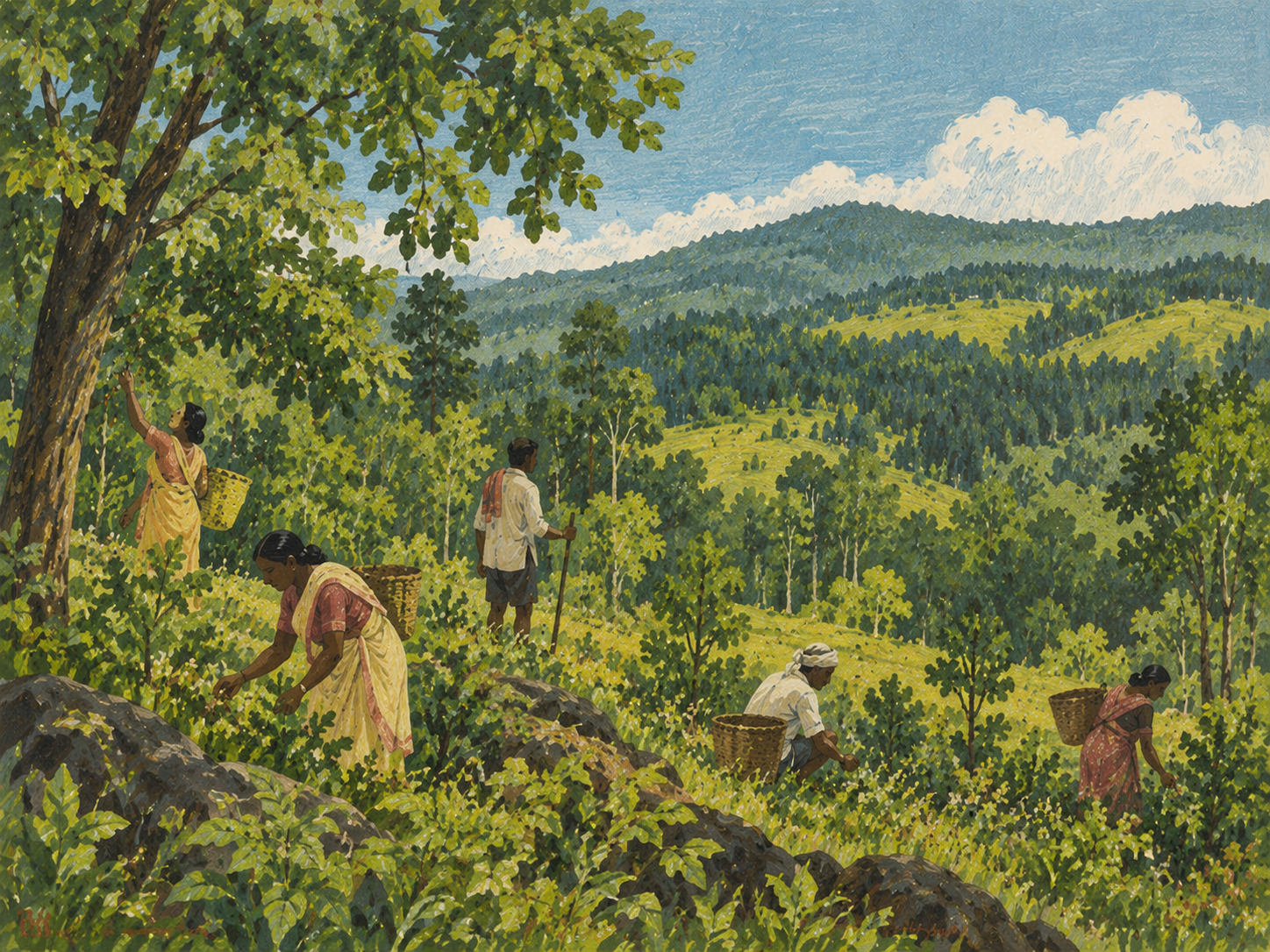
Unlike cashews, forest produce is free for all to extract and use. In Surumi, villagers gather tubers pitalu kanda (Dioscorea oppositifolia or Air potato) and Tarkai kanda (Dioscorea hamiltonii) for food. Oil is extracted from Kusum (Schleichera oleosa) and Mahua trees; while, medicinal plants such as Patalgodou, Keukonda (used for stomach ailments), Harida (for natural hair color and healing), and Indian gooseberry (Amla for nutrition) are aplenty.
The combination of the protection of sacred groves and formalisation of the cashew collection system has ensured that forest commons as a whole are protected. The extraction and use of these commons remains sustainable.
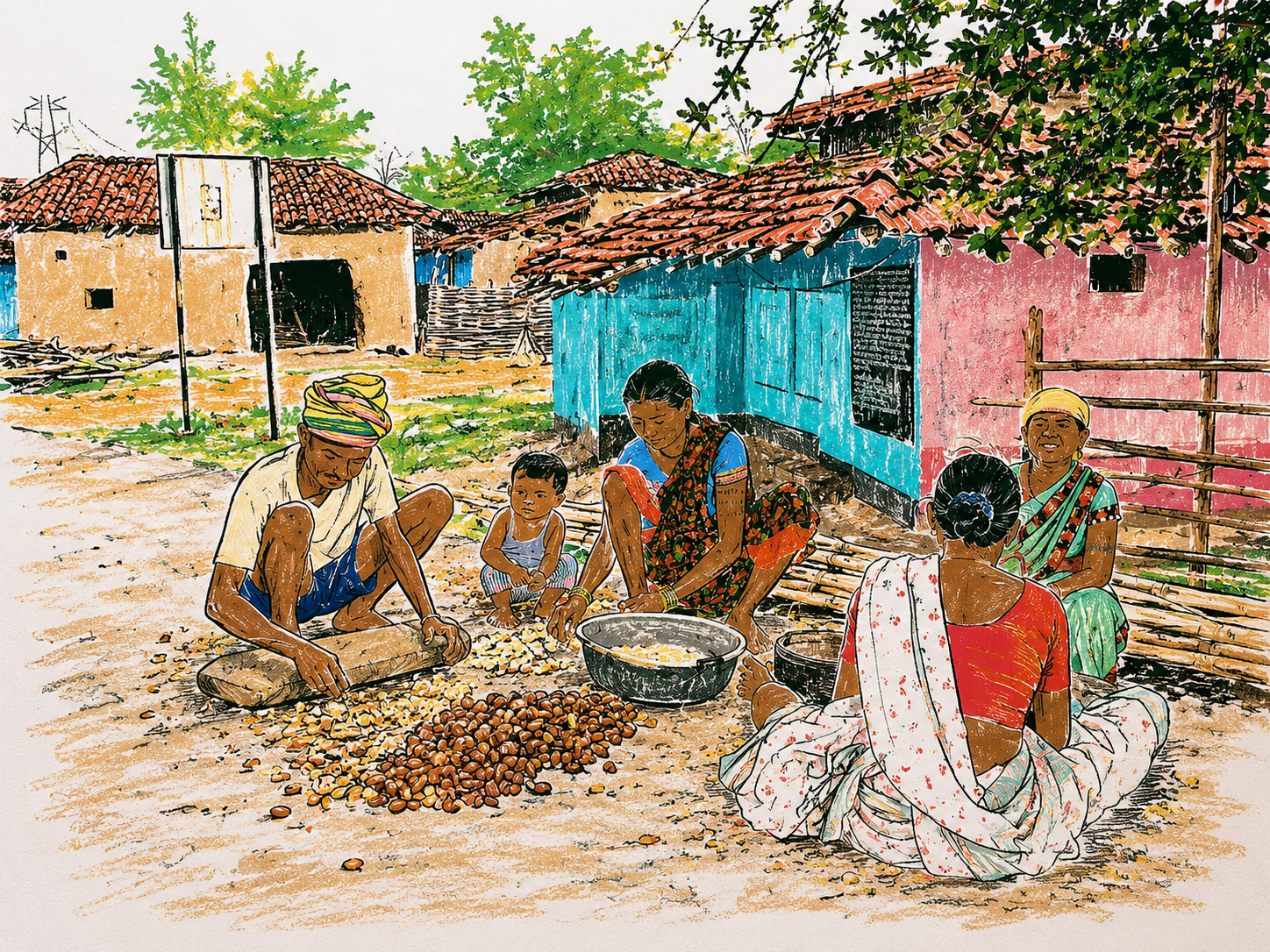
55-year-old Moti Sisa ventures into the forests to collect Charkoli (or, Cuddapah almond), an edible nut. She collects about 60kgs of the nuts from Surumi’s forests and sells them in the markets nearby. This earns her family around Rs. 10,000 a year. “Our village survives through a balance of farming and forest resources. Without the forest, which we call our mother, we would not survive. This dangar truly feeds us and sustains our lives,” she said.

.webp)
.webp)
.avif)
.webp)

.webp)