.avif)
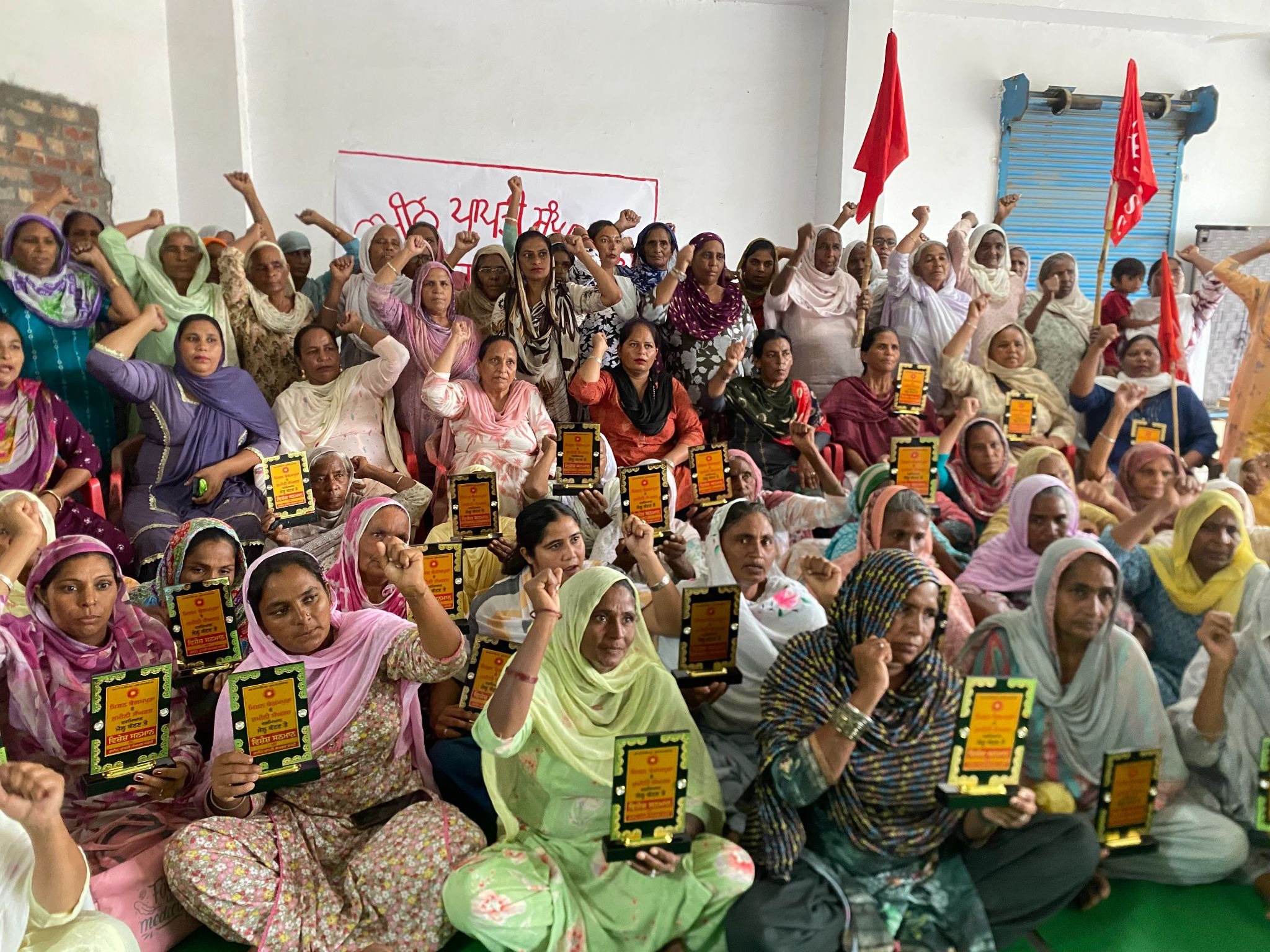
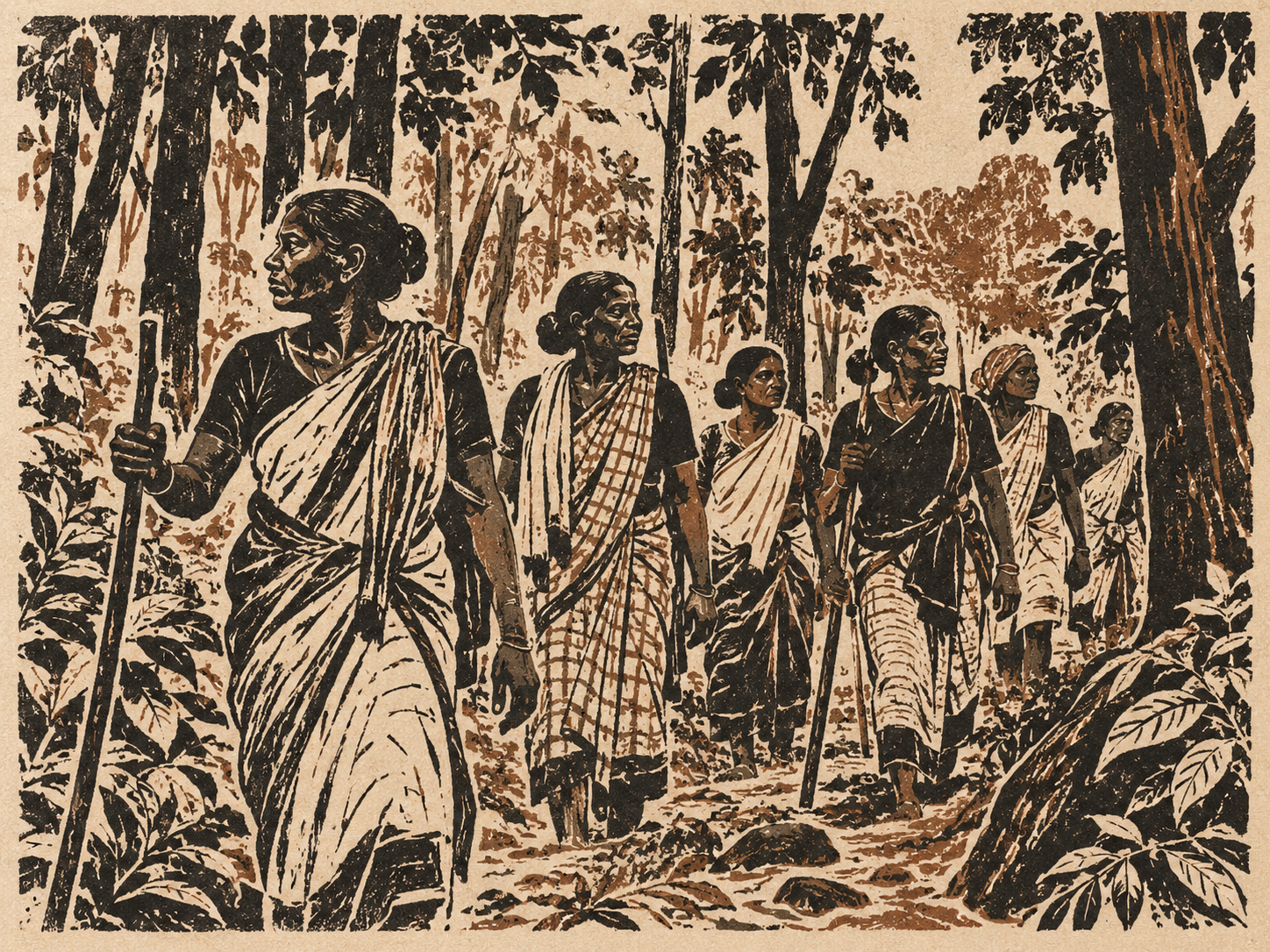
Sangrur, Punjab: On a rainy Thursday morning in July 2025, around 100 women gathered at the Guru Ravidas Gurudwara in Bhawanigarh, Punjab. Some had infants wrapped in their arms. Many had travelled outside their village for the first time. The men who accompanied them waited by the courtyard.
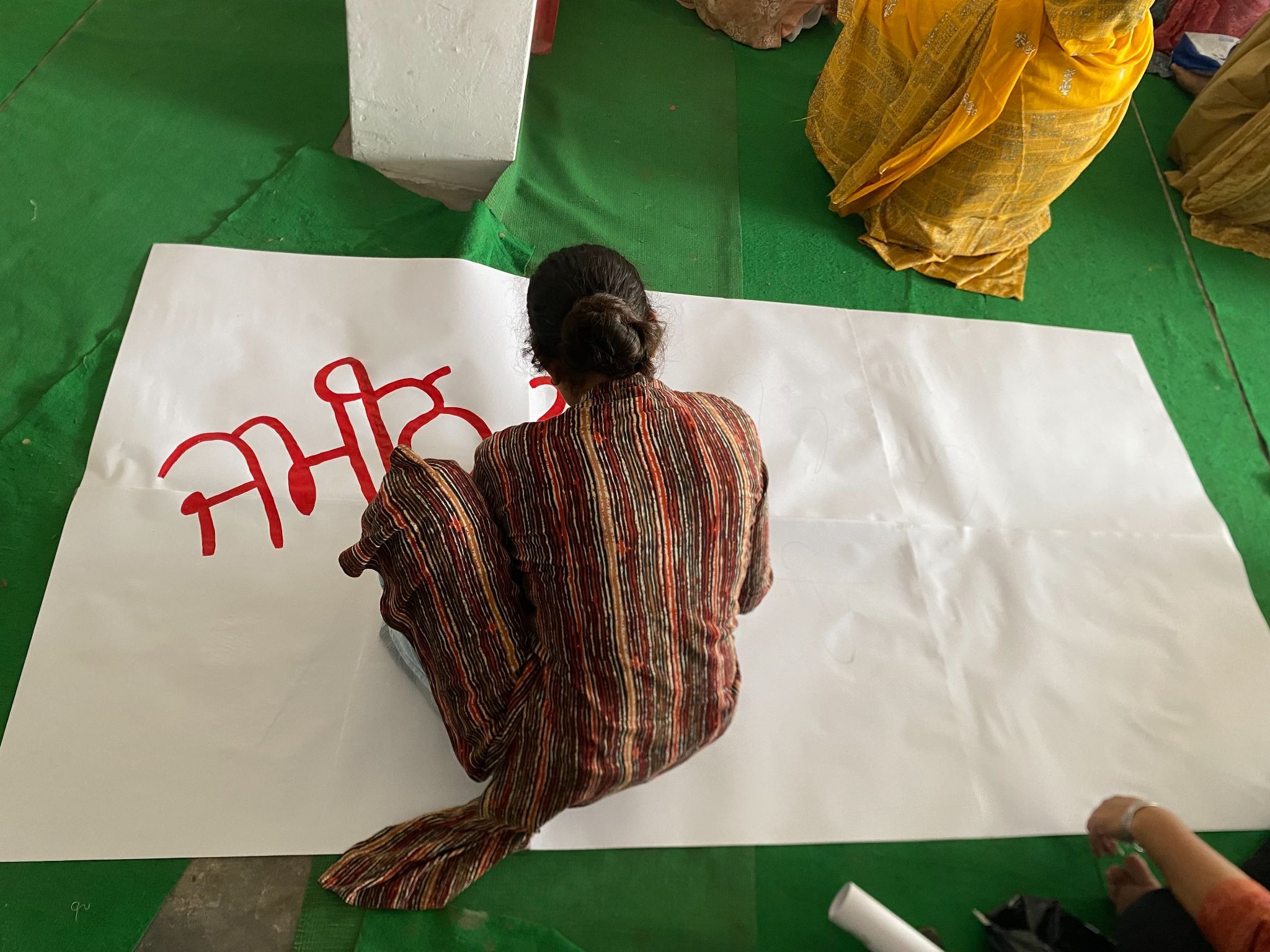
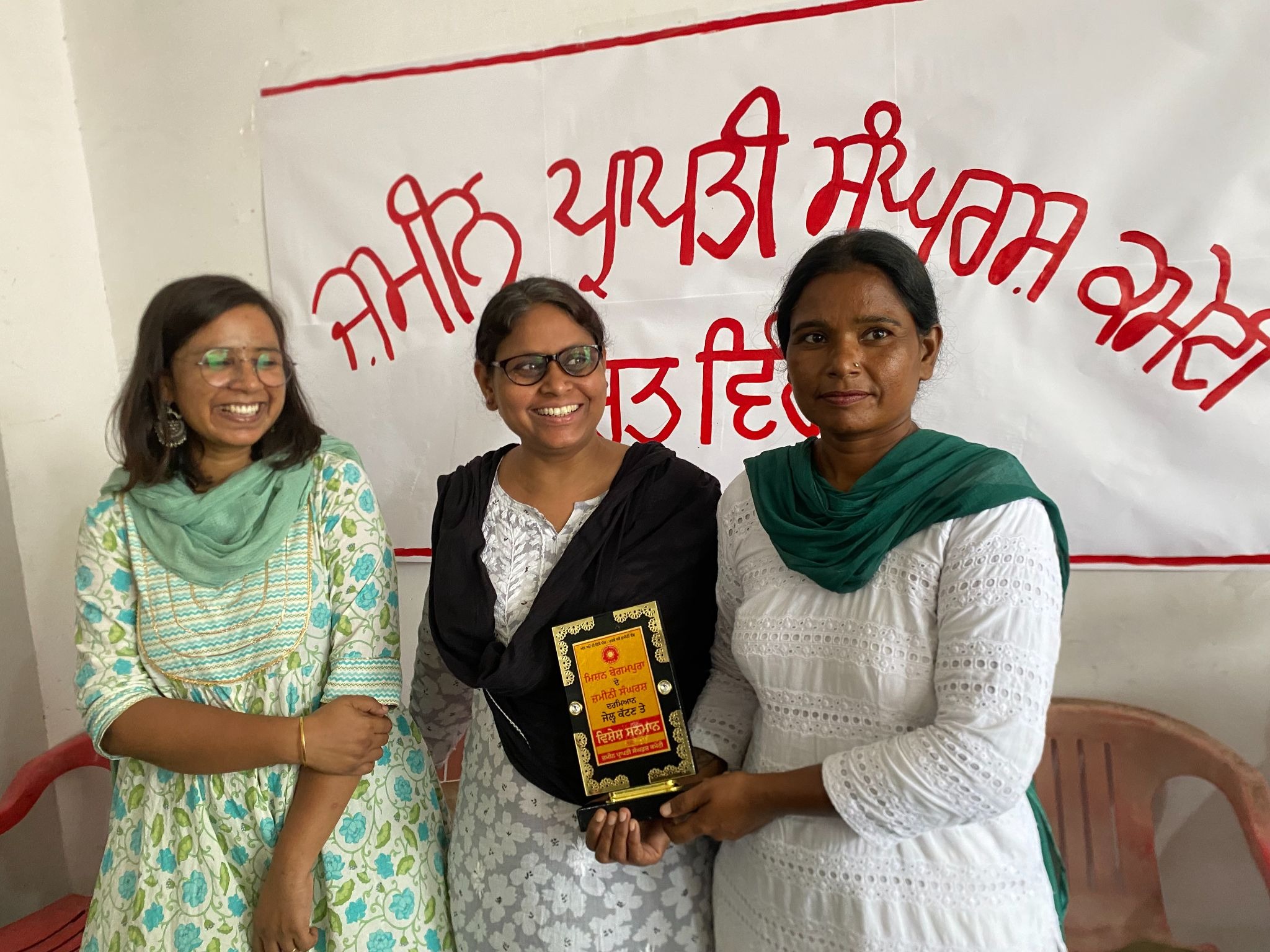
23-year-old Kamal Deep Kaur, the youngest among the women gathered, walked through the crowd and put up a banner she had painted. It read, “Zameen Prapti Sangharsh Committee, Aurat Wing.” (Committee for struggle over land attainment, women’s wing). The women sloganeered: “Jo zameen Sarkari hai voh zameen hamari hai,” (What is the government’s land is our land).
“This gathering has been called to raise awareness amongst Dalit women about their rights over common lands in Punjab,” Amanpreet Kaur Deol, a member of ZPSC and an organiser of the meeting, said.
ZPSC was started in 2014, but this was the first meeting establishing their women's wing. “The struggle for equitable access to commons was always led by women, but their entitlements were not recognised,” said Amanpreet.
From margins to land custodians
Common lands in Punjab or ‘Shamlat’ lands are owned by the village Panchayat and allocated to farmers through an annual auction. The Panchayat Department allocates this land to farmers for cultivation through an annual open auction. Punjab has over 1.70 lakh acres of land across 8,000 villages, according to the Rural Development and Panchayat Department. One-third of this common land (56,677 acres) is reserved to be distributed among Dalits according to rule 6(1)(a) of The Punjab Village Common Lands (Regulation) Rules, 1964.
In practice, however, reserved lands rarely benefitted the Dalit community. Instead, upper-caste farmers sent ‘proxy’ or ‘dummy’ Dalit bidders on their behalf at the open auctions, and once the land was allotted, they took it over from Dalit farmers. This practice has continued for years and has been well documented. But a women-led movement is now helping Dalit farmers to access and utilise agricultural commons through innovative approaches to bypass caste and patriarchy.
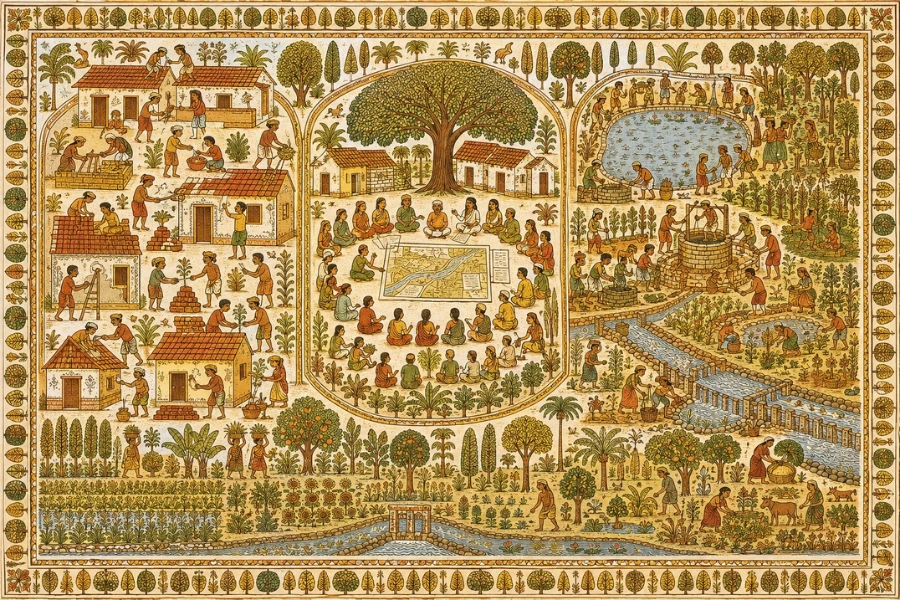
Dalit women farmers across villages in Punjab are helping the community organise ‘joint biddings’ or ‘Sanjhi boli’, wherein a collective of both female and male farmers from a village contribute resources and bid together for a piece of land in an auction. As part of the collective, the farmers can pool money and bid a higher amount so they can lease out land reserved for them. By collectivising, they play a role in countering ‘dummy auctions’ in their village through protest and monitoring.
According to the ZPSC, the movement was active in 55 villages by 2020. Once the land is acquired, the villagers protect it and use it through a ‘collective farming model.’ Under this model, residents collectively ensure smooth governance of the acquired common land for the benefit of the village. Decisions related to how much money will be contributed, the crops that will be grown and how a conflict will be resolved are taken by committees formed under the collective farming model.
Amandeep Kaur Deol and many other women across villages in Punjab are leading this movement. “Women have come forward in Punjab and said we can take leadership,” she said.
Reclaiming the Commons
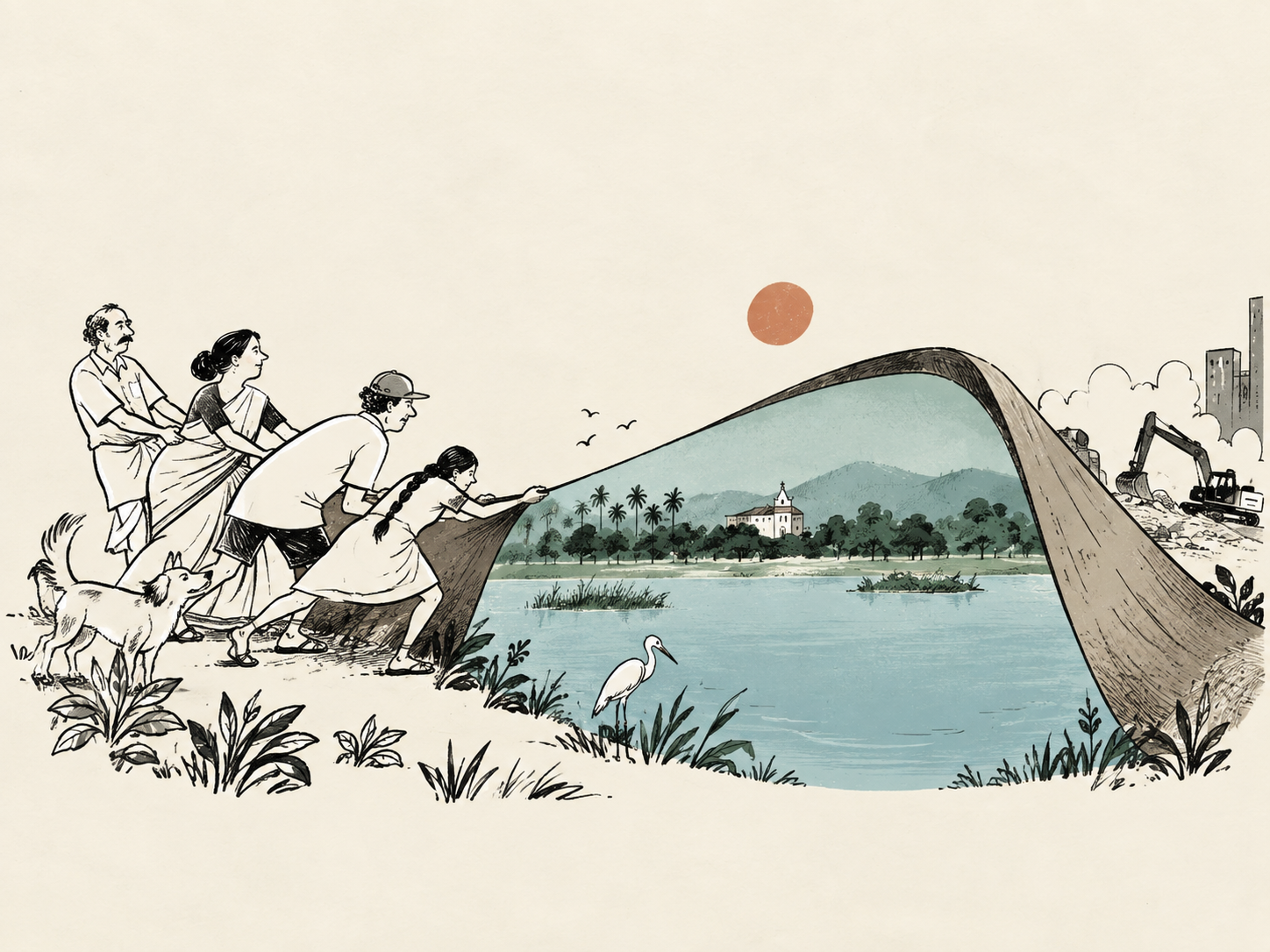
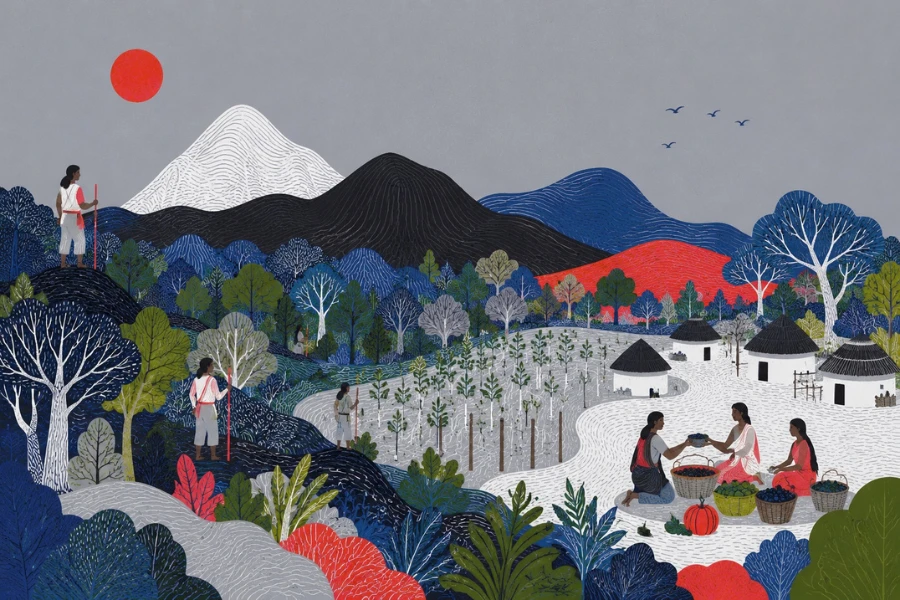
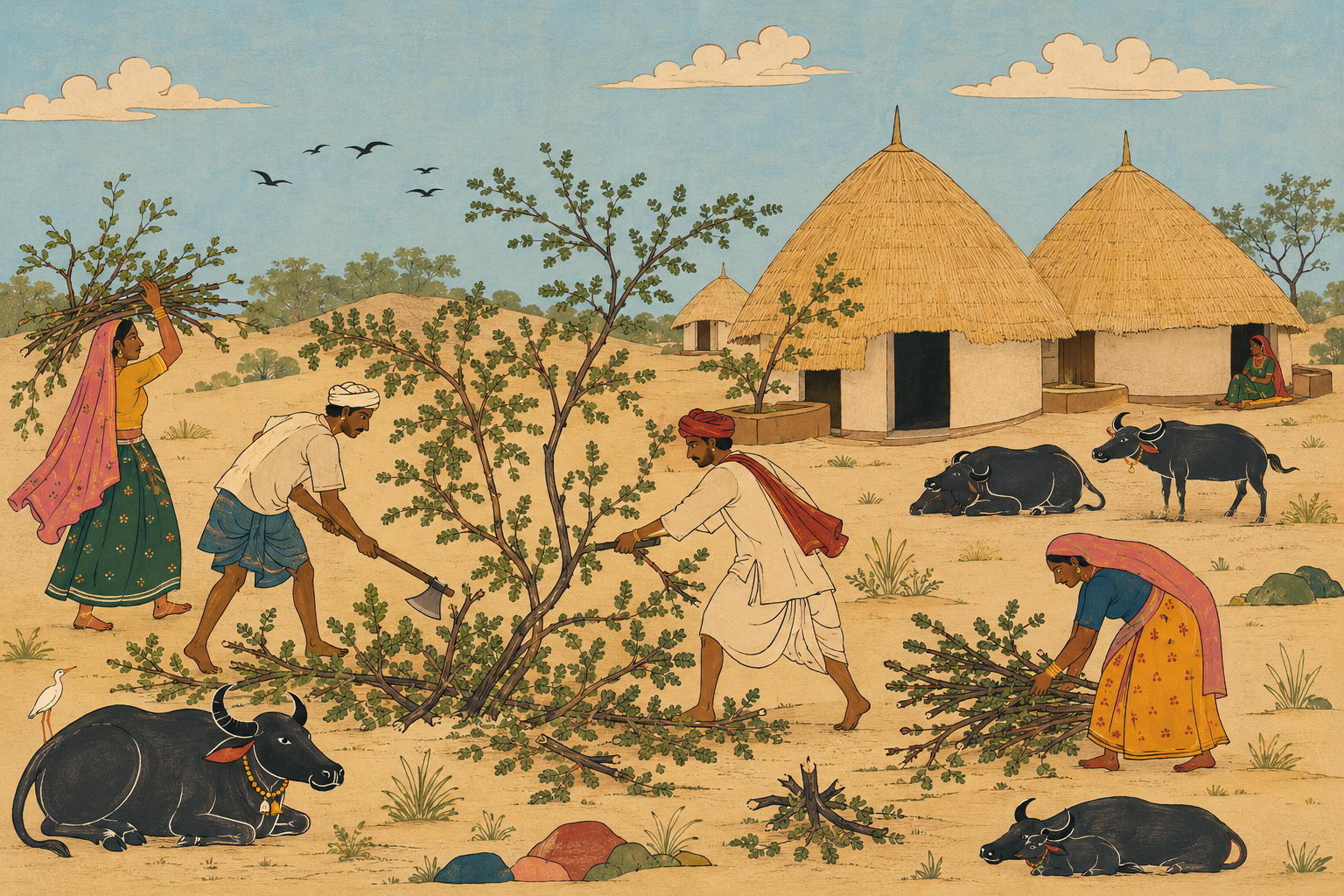
Commons—shared lands such as forests, pastures, water bodies and mangroves— cover 205 million acres or one fourth of India and form the lifeline for over 350 million people, including marginalised groups like Scheduled Castes, Scheduled Tribes and women. Communities across India have traditionally protected, restored and managed these commons through customary self-governance practices. These customary rights and practices however haven’t been formally recognised or recorded in many parts of the country.
This, coupled with contesting demands over resources, caste and class hierarchies and environmental degradation has curtailed communities’ access to commons, leading to their over exploitation, climate vulnerabilities and rural distress. Marginalised groups such as Dalits and women have been disproportionately affected due to long-standing social exclusion and gendered labour burdens.
Despite these challenges, communities across India are showcasing that reclaiming, restoring and managing commons through customary self-governance practices can play a crucial role in their ecological, social and economic upliftment.
The women-led movement of Dalit farmers is one such example where, through collective farming and equitable sharing of produce, the marginalised farmers are securing land rights long denied to them, paving the way for dignity, autonomy, and community-centered agriculture.
Exclusion by design
Various instances of dummy auctions have been reported over the years for Dalit-resreved land in Punjab. In 2020, Members of the Dalit community in Punjab’s Barnala district protested against dummy auctions taking place for at least 14.5 acres of shamlat land that is reserved for them. In 2018, Dalit residents in Kaidupur village, Patiala, had also raised their voices against the wrongful auction of agricultural land reserved for them. The residents claimed that during the auction, the land was allotted to two fake bidders who were proxies for upper-caste men.
The members of ZPSC, who have been fighting against dummy auctions since 2014, allege that while only a few instances are highlighted, they occur regularly across villages in Punjab. While women always led the struggle in ZPSC, Amandeep reflects on how women never had their entitlements recognised.
“Dalit women don’t even know that there is common land in Punjab reserved for them,” Amandeep shared.
Changing the script
Jasveer Kaur, a 41-year-old farmer, has been working in Punjab's Herike village for the past 25 years. Her main income came from growing fodder for cattle on the one acre of land that she leased from Upper-caste farmers in her village for ₹20,000. Managing the land alone gave her no security, and she often faced caste based discrimination. In 2020, she joined the ZPSC.
When she joined, Jasveer Kaur and other villagers protested a ‘dummy auction’ for the first time. “We didn’t let the man who organised the dummy bidding get a hold of the land,” she said. As a part of the protest Jasveer Kaur along with the villagers cultivated fodder on the allocated land to prevent it from being auctioned to upper-caste farmers through dummy bidding. Despite the efforts, dummy bidding repeated every year. The villagers continued their protest for five years and, eventually, were able to lease out that land.
But ‘dummy biddings’ haven’t stopped in Jasveer Kaur’s village. After successfully leasing out land in 2025, members of the Dalit community, Herike, have formed a committee to continue joint bidding and protect and maintain the land leased. The committee, which has 7-8 members, holds monthly meetings, pools money for the auctions, tracks auctions for dummy bidding, and participates in the auctions based on feasibility to lease the reserved Shamlat lands. The committee also monitors for any dummy bidding in auctions in neighbouring villages, protesting every auction where there is a dummy boli.
Joint model makes cultivation affordable
The joint bidding model has enabled Dalit farmers to not only compete with proxy candidates funded by upper-caste farmers, but also manage their own expenditure on the land. “If farmers practise individually, everybody will have to buy individual resources,” said Jasveer Kaur. “For instance, a single farmer will have to hire a tractor for only 1 acre of produce, but together we can pitch in to buy a trolley for all farmers to reduce expenses,” she added.
Currently, the committee looks after 8.5 acres of land jointly leased by 15 families in the village, according to Jasveer Kaur. Each family contributes between ₹5000 and ₹7000 for the auctions. For each joint bidding, the committee decides on the amount of money that will be contributed by each family in the village. “If everyone contributes the same amount, the land is distributed equally. Sometimes, a household doesn't want the land but instead want the fodder or grains cultivated on it. This family also contributes money to the bidding and their share of the cultivation is given to them,” said Jasveer Kaur.
The contributions are used to pay the daily wages of the farmers, to buy farm inputs. Profits are distributed proportionally, while some amount is saved by the committee for future use. Most of the land is acquired for short periods of one year, and is either used for growing fodder (chaara) to feed the cattle or to grow seasonal crops like rice and grains. If a land is leased for a longer period of five years, farmers are also able to grow other crops like corn or moong crops.
Breaking barriers
The Dalit farmers' committee does not seek any help from the Panchayat. Rather, the panchayat is actively opposed to the committee and the demands of the Dalit community, said Jasveer Kaur. “They are afraid of our large numbers and unity. They would rather have us work on their lands, than on our own,” she said.
Her work as a farm leader also attracts taunts and criticism from those with power within the village. But she brushes it off. “I don’t care what people think about my work. Our situation has forced us to struggle. We don’t care about going to jail or the police,” Jasveer said.
“Even amongst the Dalit farmers, women spend more time and labour in the fields than the men. Women also have to look after the kids, the cattle and protect the farms,” said Jasveer Kaur. “Ours is a patriarchal country. Women understand the needs of women well, which is why we spread awareness among women across villages and make them understand the work ZPSC has been doing,” she added.
Women at the centre of change
Similar success stories are being written in other villages, too.
At Badrukhan, 25 km south of Herike, 41-year-old Raj Kaur leads a group of 35 Dalit families that jointly own five acres of land. They call themselves “‘Punjab Parivar”, where the committee is represented by women from each of the households.
The women attend all auctions and land rights-related programs. The ‘Punjab Parivar’ maintains funds that can be used for the joint bid. An equal amount is collected from each family, and a record of the amount collected is maintained, said Raj Kaur.
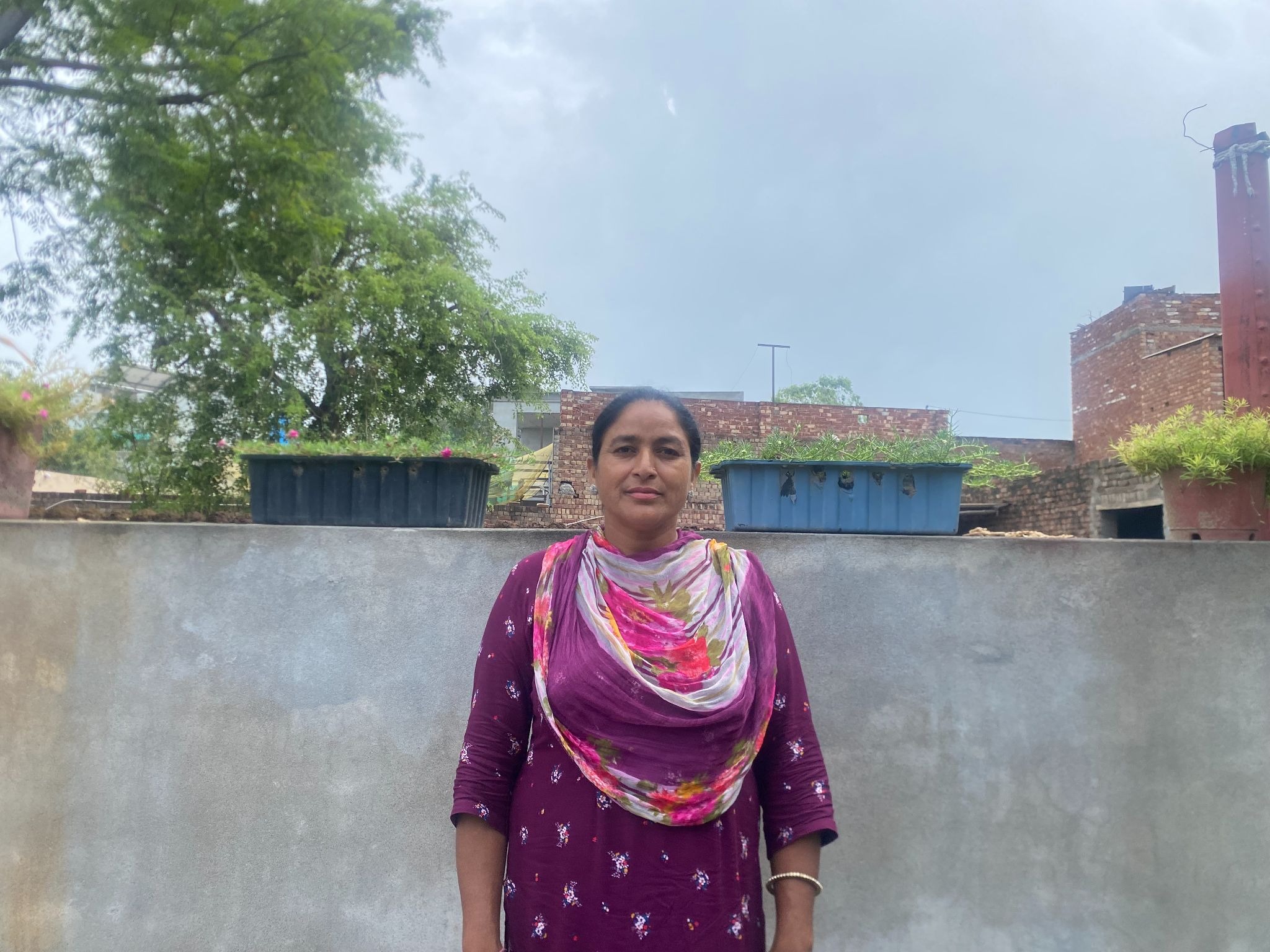
When the first auction was held in Badrukhan in 2018, only 15 families participated. Since then, the number of families has more than doubled. At the centre of this is Raj Kaur, who plays the important role of mediation if conflicts arise within Punjab Parivar. “If there are money conflicts between families related to land maintenance, I give money from the joint fund to sort it out,” she said.
“A lot of people work for money, but for me, when a community of women is standing with me, money doesn’t matter,” said Raj. For her, the community of women who have shown trust over the years during this movement is the most significant result of the collective farming model. Raj shares how women, who cover a large percentage of the labour on the farm, are not only fighting for autonomy, but also for the safe space it offers them. “Women working on farms face sexual abuse regularly,” Raj said.
A movement gathers speed
Jasveer Kaur and Raj Kaur are both present at the gathering on Thursday. They share their experience - of struggle and achievement - hoping to inspire more women to start and helm collectives.
23-year-old Kamaljeet Kaur, whose hand-painted banner hangs at the front of the gathering, asks the audience to remember the contributions of Savitribai Phule and Fatima Sheikh toward the liberation of the Dalit community.
Jasveer Kaur is announced as the President of the ‘women’s wing’ of the ZPSC, and the hope is that her experiences in Hireke will ring the clarion call of Dalit solidarity across the common lands of Punjab.

.webp)
.webp)
.webp)

.webp)