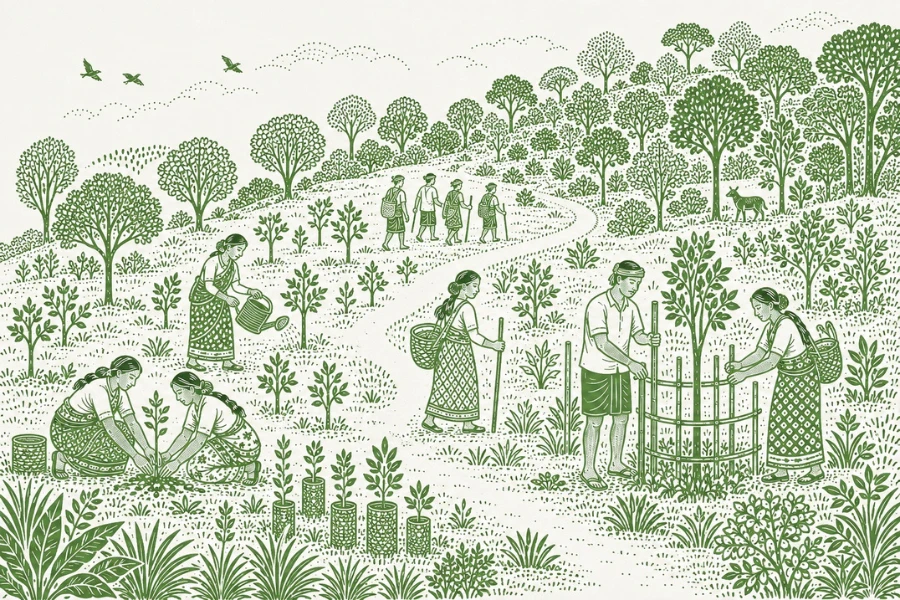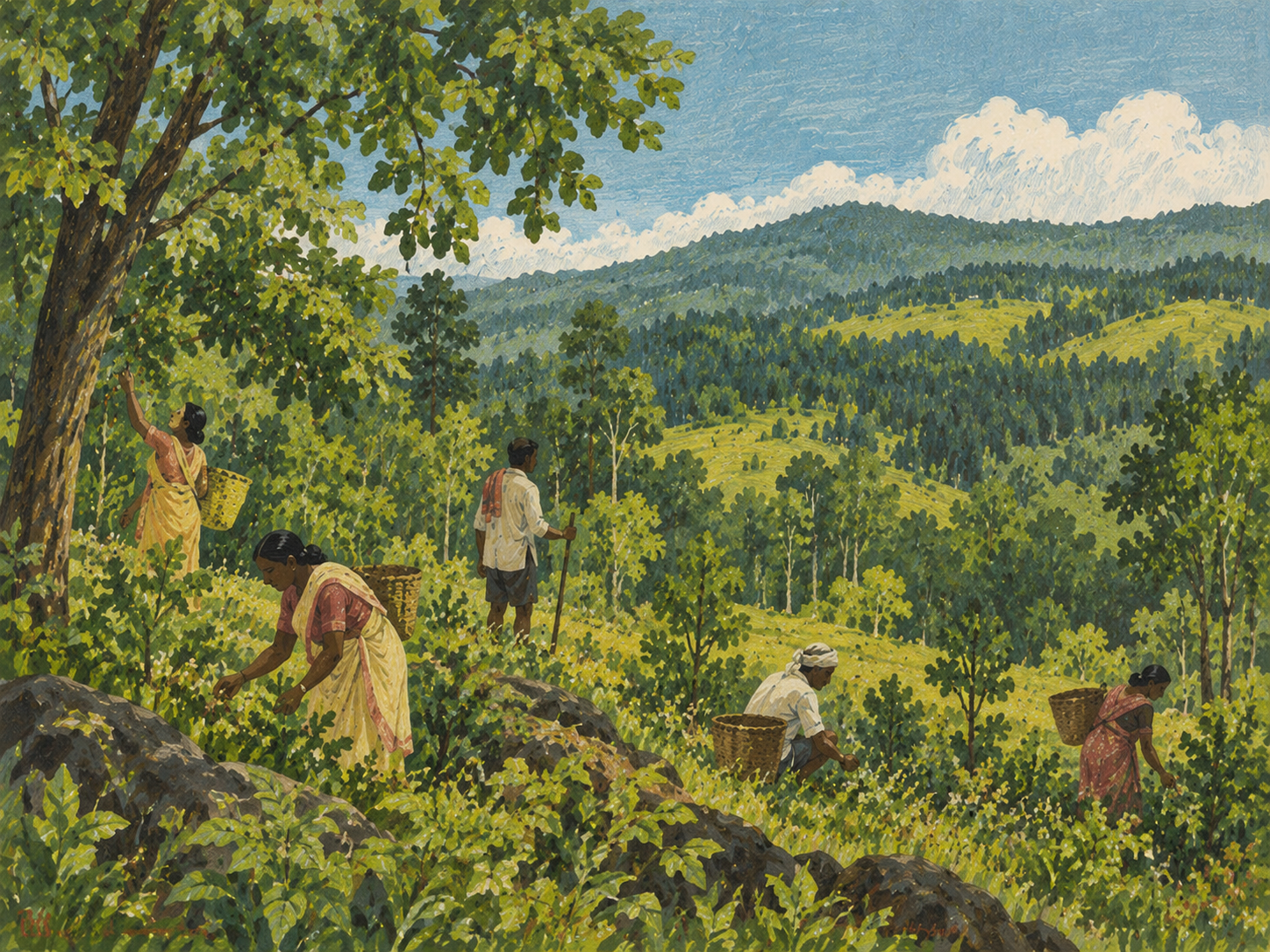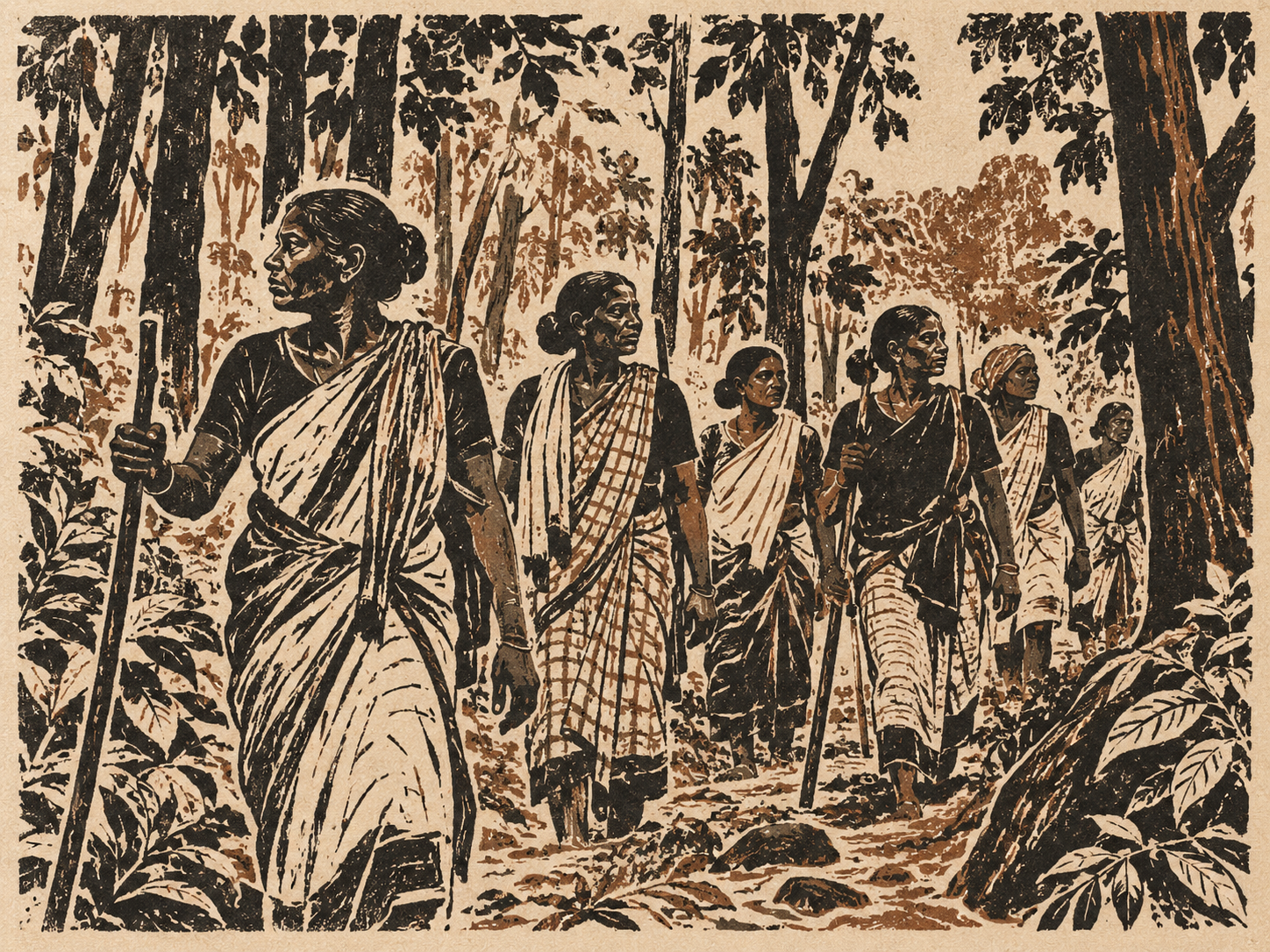
Ranchi, Jharkhand: The forest path is narrow and uneven, threading through sal and mahua trees whose canopies filter in wisps of the pale morning light. Rekha Munda walks with the ease of someone who has memorised every root, stone and slope of the pathway. After all, this has been her routine for the past 1.5 years.
She stops at a clearing where she can spot fallen beedies. She leans in close to ensure the embers are not burning within them. She observes fresh axe marks on branches. She tallies the damage. She notes the possible direction of their entry and exit. Then she moves on.
Rekha is among the ten women from Pahan Toli (Toli, means hamlet) who patrol this stretch of Koijam's community forest each morning. After her shift, ten more women arrive from Manjil Tola. After that, ten more from Titri Tola. Together, they form the three-tola patrol system that this village, about 50km from Ranchi in Jharkhand, built to protect their forest.
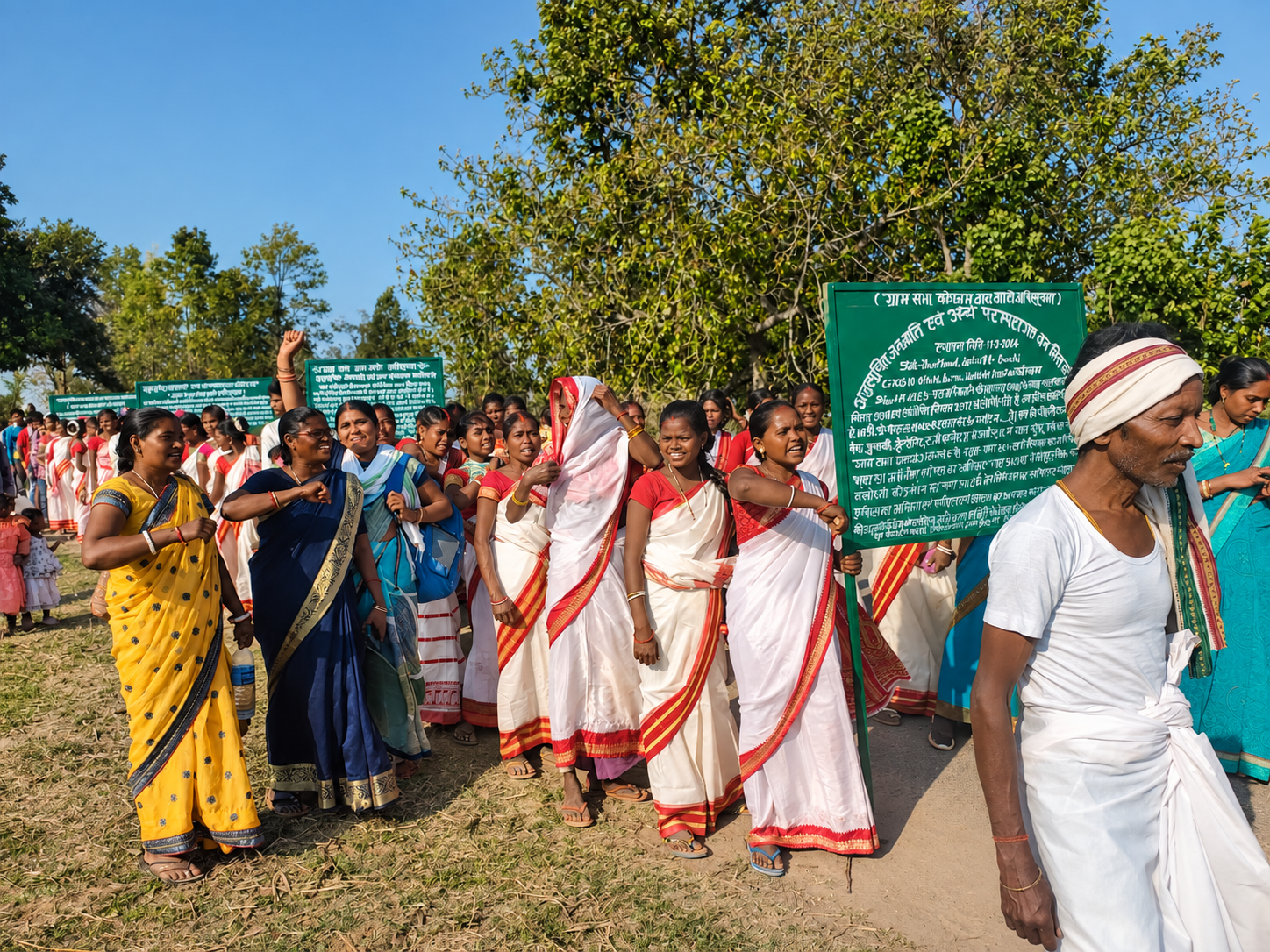
"All my life I had been afraid to even be seen near the forest with an axe," Rekha says. Through her adult life she was told that the forest belonged to the government. Her community, the Munda adivasi community, had no right to be there. "But now, I walk in the forest and tell others what they can and can’t do.”
The all-women daytime patrol began when the community decided, in 2022, to assert their claims over the forests that had sustained their ancestors. This was the land they depended on, but had no rights over; even as they witnessed illegal tree feeling within forests and man-made forest fires that charred the lands.
The gram sabha had made the decision to claim their rights over their common forest lands. But questions remained: how do you enforce this decision when you do not have the backing of the police or other government bodies, when you do not have resources or even formal recognition over the land?
The women of Koijam delivered the answers by showing up every morning to surveille the forests.
Reasserting their rights without recognition
Across India, commons—shared lands such as forests, pastures, water bodies and mangroves— cover 205 million acres or one fourth of the country and form the lifeline for over 350 million people, including marginalised groups like Scheduled Castes, Scheduled Tribes and women.
Communities have traditionally protected, restored and managed these commons through customary self-governance practices. These customary rights and practices, however, haven’t been formally recognised in many parts of the country.
Though India passed the Scheduled Tribes and Other Traditional Forest Dwellers Act, 2006 - which recognised the pre-existing rights of tribal communities over their forest common as individuals and as a community - its implementation has been slow. Many communities, including the tribals of Koijam, never learnt of the law or received their rights for decades after the legislation.
But, in 2022, Koijam did hear about the law and the rights for the tribal community enshrined in it. Rights that had been denied so far. Almost immediately, they formed gram sabhas — or, village assemblies — that have the authority to govern, protect and manage their customary forest resources. Despite the forest department delaying granting of rights under the law, the gram sabha set about implementing a series of provisions, including patrols, to curb further degrading of their forests.
Land Conflict Watch, a Delhi-based research group, in collaboration with Common Ground Initiative, a collaborative working on the commons, is documenting stories of successful collective action. These stories show that communities across India are reclaiming, restoring and managing commons through customary self-governance practices that can play a crucial role in their ecological, social and economic upliftment.
The first steps to become custodians of their forests
52-year-old Sushila Munda has lived her whole life on the edge of the forest in Koijam.
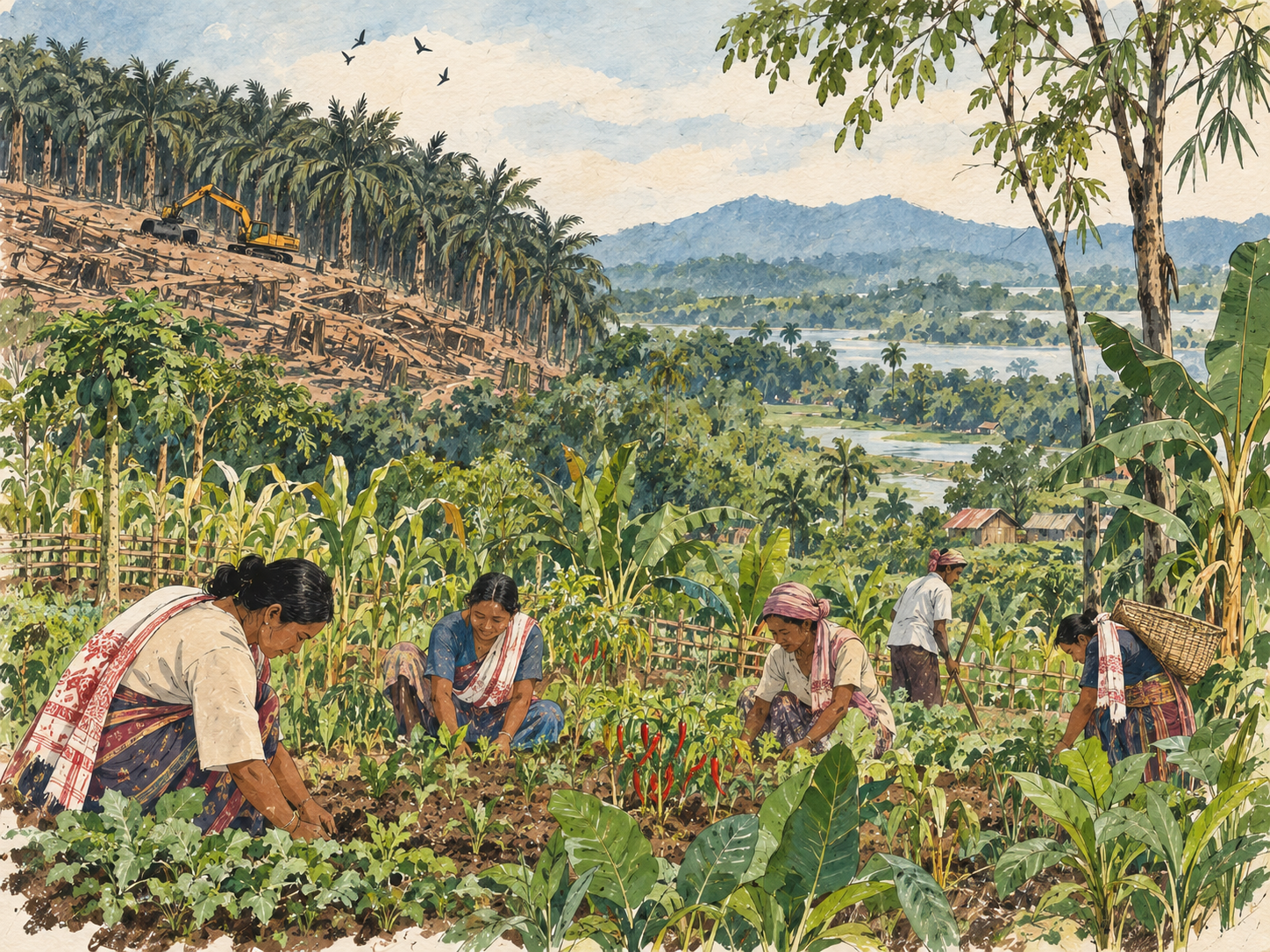
The soul of the 40 Sarna Munda families of Koijam is intertwined with the tropical deciduous forests that flank the village. Villagers harvested sal leaves, wild mango, jackfruit and mahua flowers or grazed their cattle along its paths. The shrubs and small plants were their pharmacy, providing pastes and juices for their ailments. They even buried their dead near its roots for generations; while sal leaves were a critical part of their religious ceremonies.
But, for most of those years she treated the trees the way a tenant would treat a landlord's property: carefully from a distance, never taking more than she hoped would go unnoticed. Sushila, a compact woman with calloused hands, was always told that this land belonged to the government who could file cases against the tribal community for trespassing.
"We would not cut even dry wood for fear of the Forest Department," she says sitting outside her mud-walled home in Pahan Toli, one of Koijam's three neighbourhood clusters. "But people from neighbouring villages came and took timber freely. We didn't know we had any rights."
This uneasy fear of their own lands continued until 2022, when members of the Jharkhand Jungle Bachao Andolan (JJBA), a forest rights advocacy organisation, first arrived in Koijam to create awareness of rights under the Forest Rights Act. Right away, gram sabhas - or village councils - were formed and through meetings over months, individual and community rights under the law were explained to the nearly 525 persons who reside there.
"We always thought the forest was not ours to protect," says Sohan Munda, 38, a farmer who attended most of those early meetings. "When we understood the law, we understood our responsibility."
Creating a women’s patrol system
Even as the village set about collating documents needed to claim their rights under the Forest Rights Act, they decided to protect the land from further harm.
The forests around Koijam were easily accessible to those from neighbouring villages and those who lived in the plains. This had led to illegal logging for commercial use, indiscriminate cutting of trees for firewood, and frequent forest fires due to discarded beedies, matches or bonfires.
By late 2023, Koijam's gram sabha voted to regulate access and to stop tree-felling and exploiting of forest resources. Under the Forest Rights Act, Gram Sabhas had the authority to manage and protect their forests even when their claims are under process.
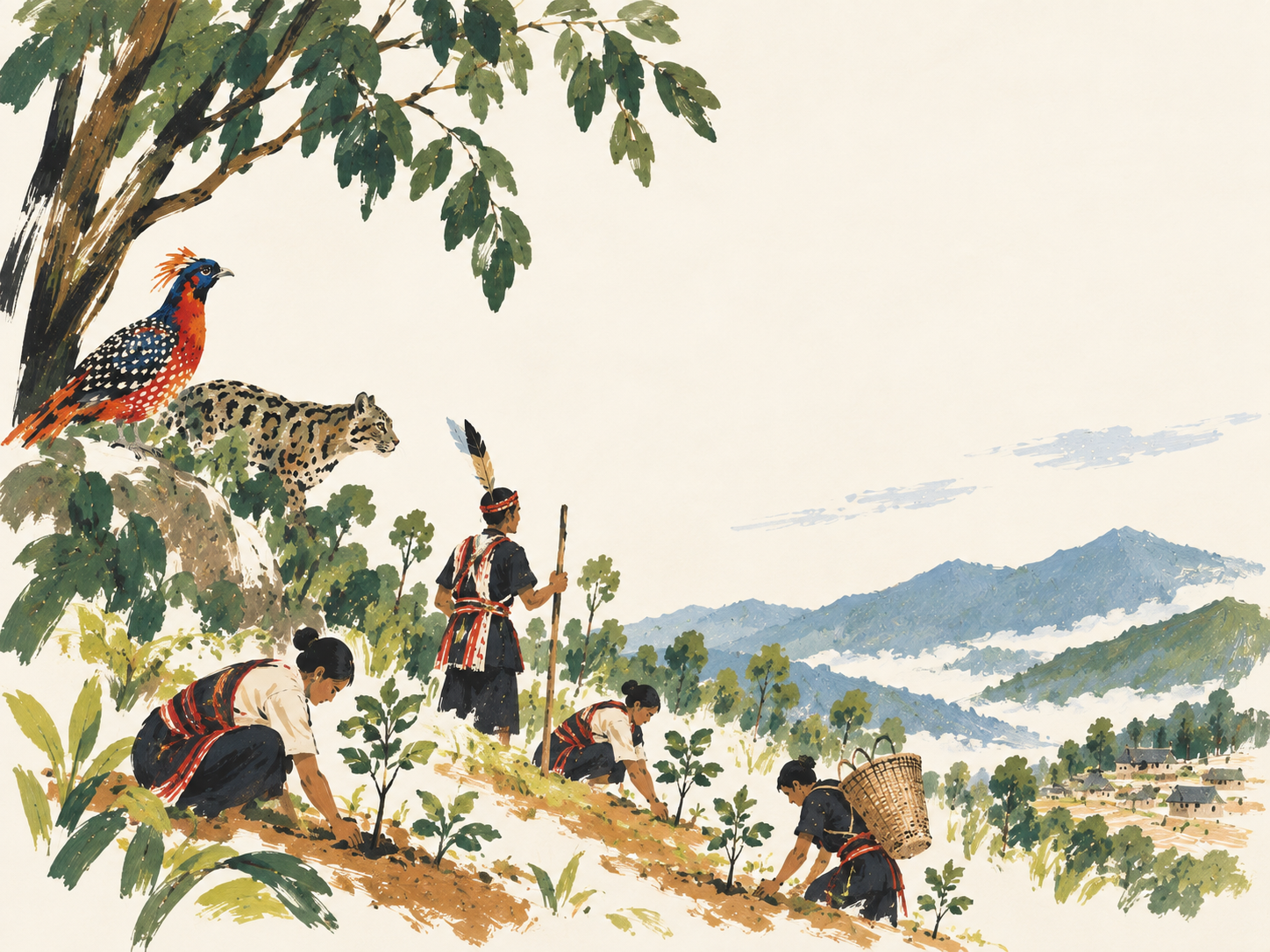
Koijam decided to do this by forming a three-tola patrol system, where each of the three neighbourhood clusters assigned members to watch the forest in rotating shifts. Daytime patrols are led by women: ten women from each tola walk designated routes through the forest, watching for signs of illegal felling or outsider encroachment. Night patrols are handled by men.
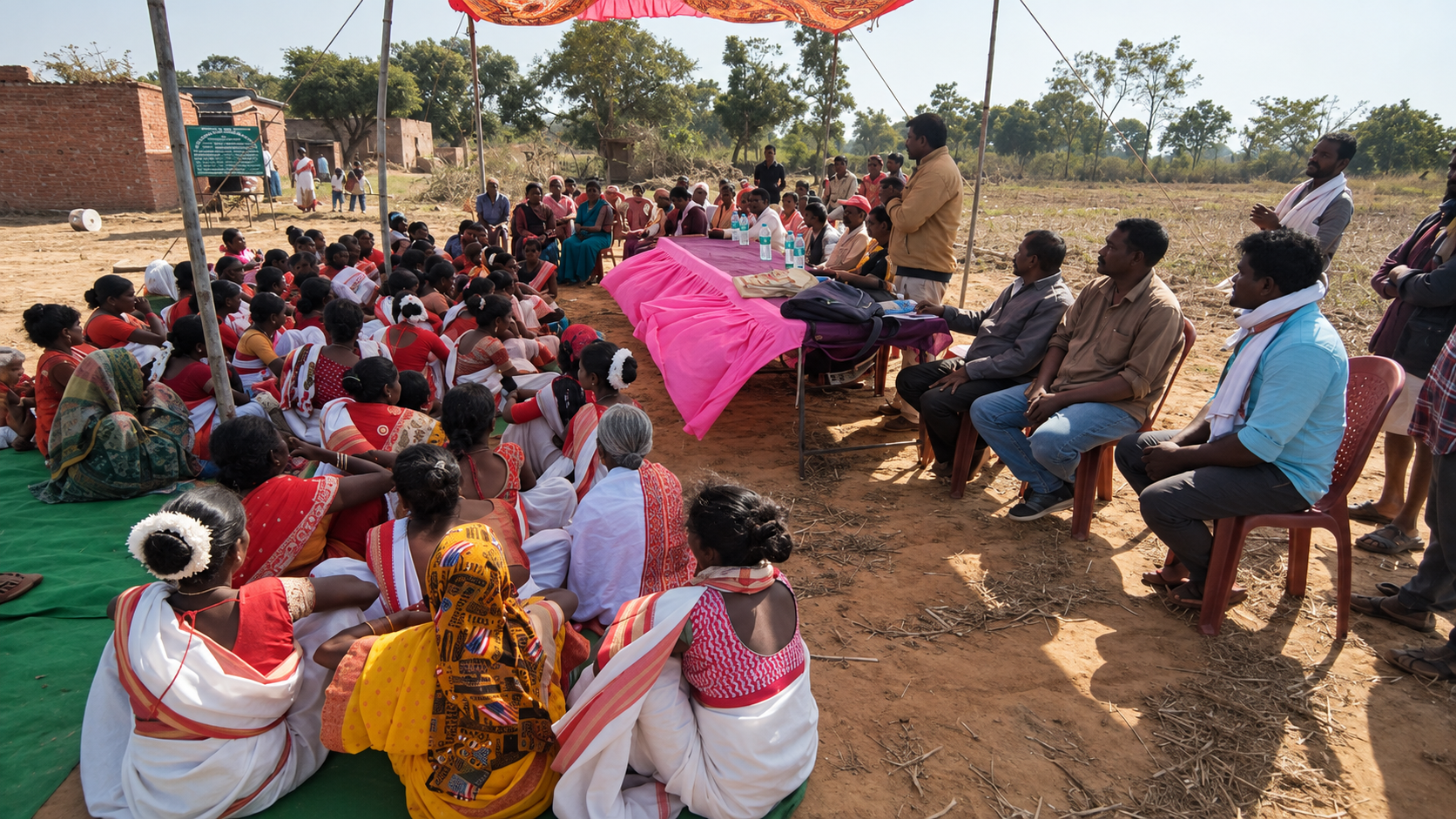
The decision to have women lead the patrols was deliberate. It was to break an unwritten tradition that left forest governance to males. Though women were present at Gram Sabha meetings, they were rarely heard. "We were always told the forest belonged to men," says Champa Munda, 44, a Pahan Toli patroller and mother of three. "That it was their thing to worry about."
The Forest Rights Act mandates that a third of the Gram Sabha must be women; and, JJBA encouraged for this spirit of the law to be followed in Koijam. It was at a gram sabha meeting that the community decided to institute all-women daytime patrol to ensure governance of their commons was equitable.
The early patrols were tense. People from neighbouring areas who had long used Koijam's forests unhindered reacted with confusion and, in some cases, hostility. Some confronted the patrollers. Others simply walked past them without heeding the warnings. "We stood our ground," says Champa. The women stood hand in hand, often carrying sticks. "We told them: this is our gram sabha's decision. You need permission to take anything from the forests."
The board at the centre of a stand-off
In February 2024, the gram sabha formally filed a Community Forest Resource (CFR) claim for 1,311 acres with the Sub-Divisional Level Committee (SDLC), a committee comprising revenue, forest officials as well as Panchayat and tribal representatives.
The claim had taken months to prepare: community members walked the forest's traditional boundaries together, identified usage areas, and ratified the documentation in a formal gram sabha resolution.
“It was comprehensive,” says JJBA field organiser Ratan Birua, 34, who is a resident of Koijam. “We had even prepared our own surveys and maps. We had ensured that there was no gap in the application.”
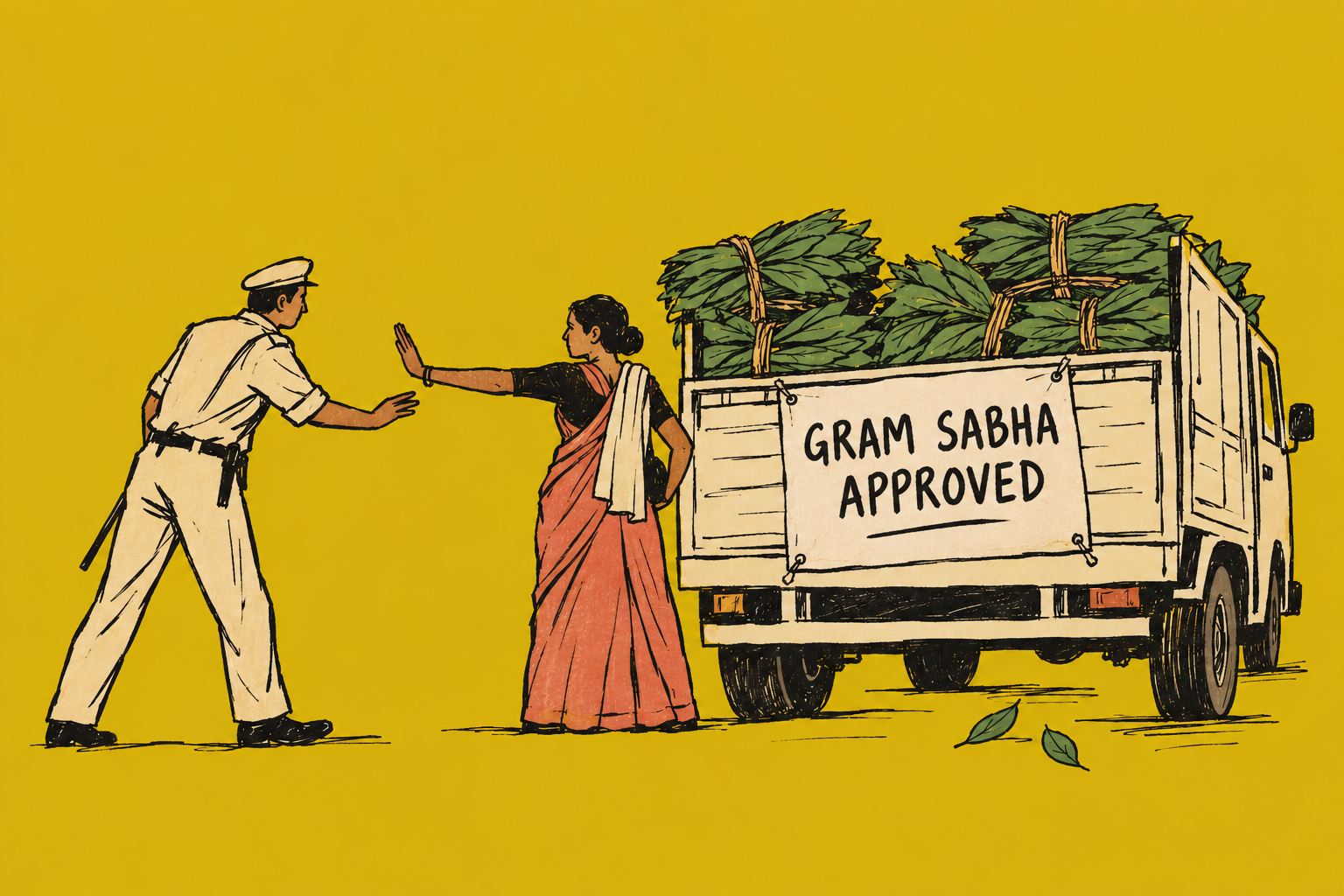
In March 2024, the village decided to install a Board Gadi, a large wooden signboard, at the main entryway to the forest. The board, now weathered but still firmly planted at the boundary of the forest, displays the key provisions of the FRA, enumerates the gram sabha's powers, and states plainly that unauthorised access or extraction is prohibited. The Board is a continuation of the Pathalgadi movement, a protest movement popular in Jharkhand from 2016 where villages installed stones that displayed key aspects of the law to protect their village lands against government takeover.
"The board tells the forest department, tells our neighbours, tells anyone who comes here, that this forest has a management structure," says Birua. "It is not just a sign. It is a legal statement."
However, within weeks, officials filed cases under the Indian Forest Act for trespassing against members of the gram sabha. "They sent us notices and in return, we sent them back copies of the Forest Rights Act," says Sohan Munda. "We won’t take down the board until our claims are processed.”
The cases are still being heard in court, and Koijam’s CFR claims are still pending at the SDLC. The board remains where it was installed, and without the legal backing of a CFR claim, the all-women patrol continues to operate in a legal grey zone.
The forest breathes again
The three-tola patrol system has protected the forest to a large extent. Villagers report a significant reduction in illegal felling.
Among the best examples of this was the response of the village when a fire broke out in the forests. Smoke rose from the eastern edge of the forest during Sarhul, an important festival observed by the tribal community in April.
The forest floor was covered in dry leaves and the fire could have consumed acres. However, the patrol spotted it early. Men and women rushed into the forests and broke still-green branches from neighbouring trees. They beat the flames back with their bare hands and the branches and threw sand at the fire's advancing edge. The fire eventually abated.
But as importantly, the patrols, the gram sabha and the boards have brought back a sense of ownership over their revered forests. “We walk in there now as if it belongs to us,,” says Siljan Munda, an elderly resident of the village.