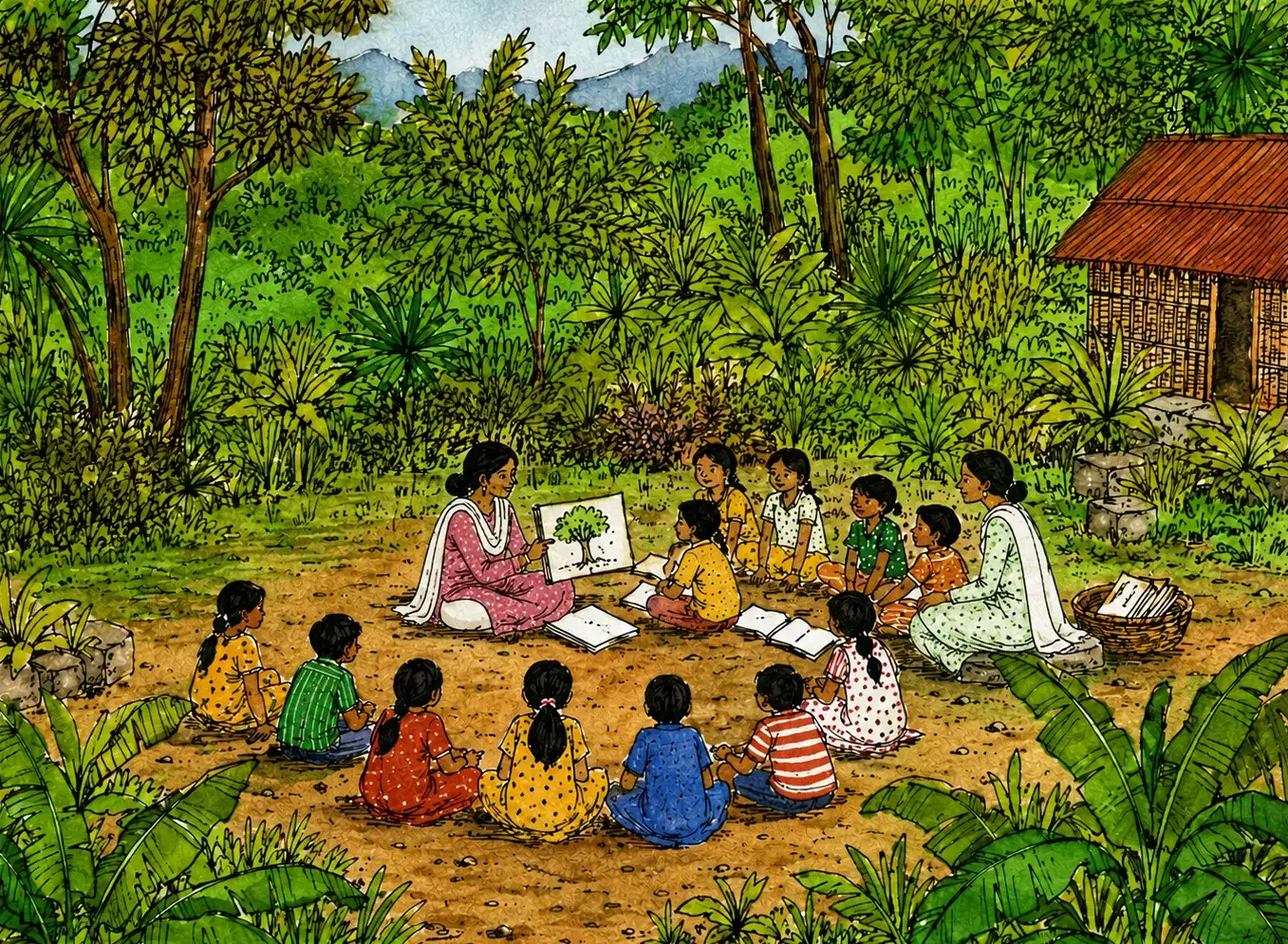
Dooars, West Bengal: Every week, Jantri Rabha and Kaushalya Rabha finish their household tasks early and cover a 10-minute walk to teach children at a community learning centre. Located at the edge of the forest near their village, Andu Basti, the women explain forest ecosystems to children and share stories about how the villagers benefit from the forest resources.
This has been their routine for the past four years, since the village - located within a forest - established its first community learning centre in 2022.
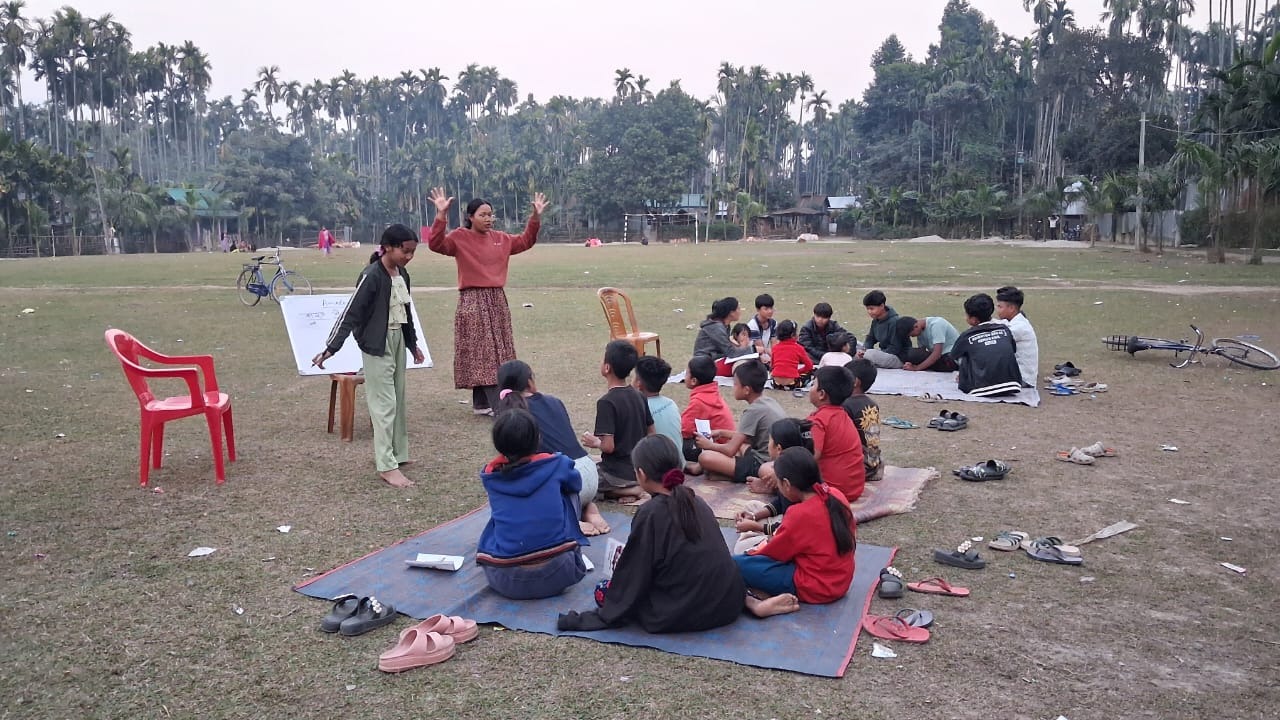
“This is a centre where women from the village educate children and youth about indigenous practices on how to restore forest commons sustainably,” says Jyoti Oraon, a community organiser with the Uttar Banga Ban-Jan Shromojibi Manch (North Bengal Forum of Forest People and Forest Workers), an informal federation of forest-based communities in the region, which advocates for forest and tribal rights and has helped set up the centre.
Andu Basti village is in the remote regions of north Bengal and is inhabited by the Koch Rabha community, a Tibeto-Burman ethnic tribal group reliant on agriculture and forest-based livelihoods. It falls under Dooars region, which is surrounded by dense Chilapata forest, renowned for its rich biodiversity and wildlife.
In this traditionally matrilineal society, women play prominent roles at home, within the community, and in social and economic decision-making. They have traditionally also played a central role in religious rituals, agriculture and fishing, and contribute substantially towards household food security.
However, globalisation and increased interaction with other communities has seen a gradual shift towards a more patrilineal structure within the community.
High migration to cities for work and children’s formal education lacking traditional practices of forest-dwelling communities led to a disruption in the cultural heritage of the community. Increased tourism and depletion of forest cover led to a slow erosion of their way of life, which is intertwined with the forests, and their cultural heritage stopped being passed on to the new generations. The community learning centre, hence, became a necessity.
The women took the lead in preserving their conservation practices and restoring forest commons. Besides the community learning centre, they revived the village’s Gram Sabhas, formed women-led groups, made key decisions on land-use, crop selection, crop harvesting and learnt how to manage the income from forest produce.
The villagers claim that their collective efforts made once-fallow common lands productive again, restored soil health, and created new income avenues for the women — all while ensuring food security for their families.
Women warriors
The women of the community have traditionally upheld the principles of collective well-being and group solidarity, whereby the well-being of one individual is linked to the well-being of the tribe. This approach is reflected in Howli pratha (practice), where all members of the community offer their collective labour to accomplish tasks of the families of the village.
“There is a deep sense of interdependence amongst our community members at all times. For example, during the harvest season, we work together to ensure that the agricultural outputs are shared with all community members, especially those who may have experienced low yields,” says Sayani Rabha, member of one of the groups.
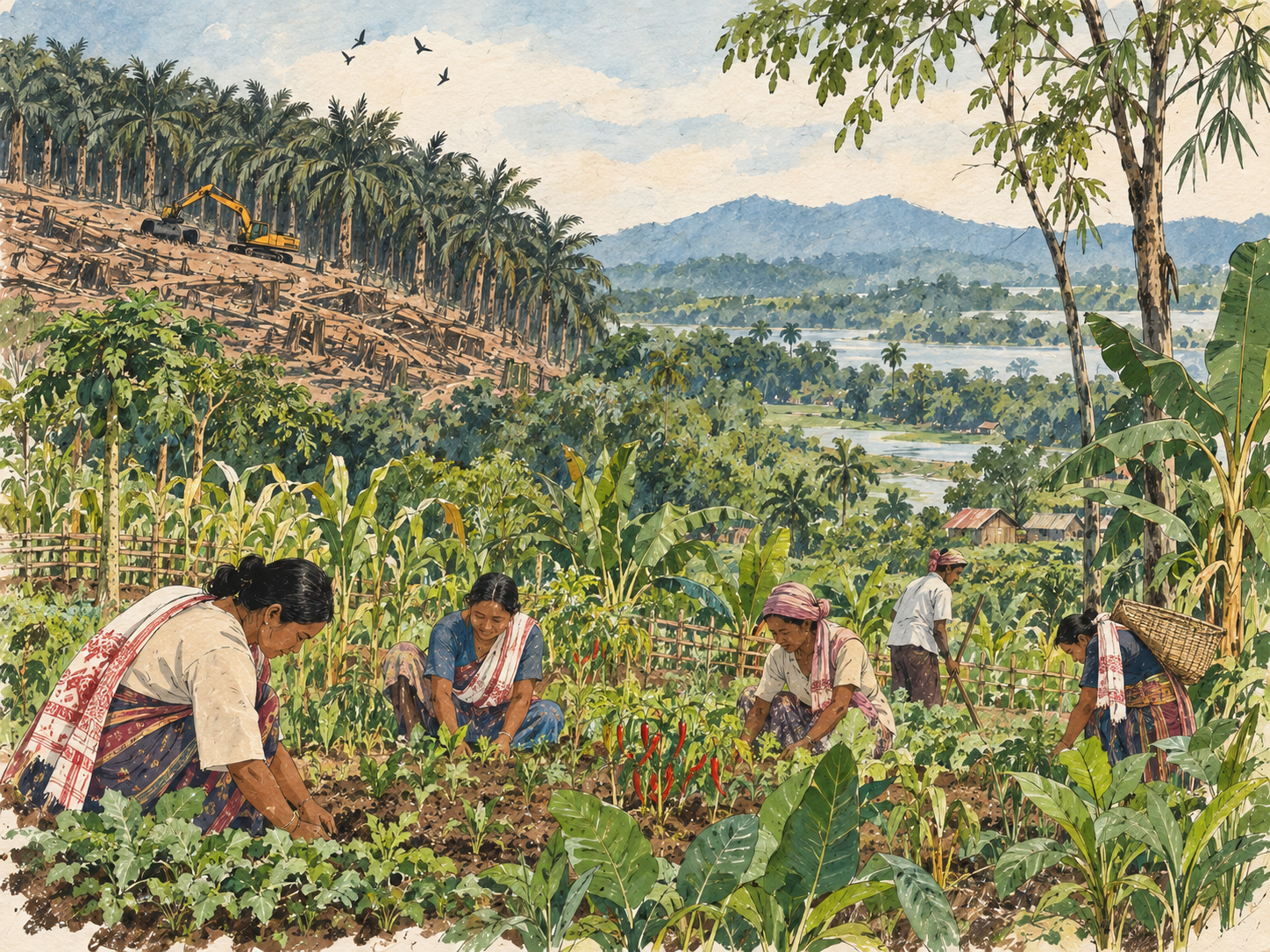
However, large-scale deforestation and unregulated tourism in Chilapata forest range over the last decade rendered traditional livelihoods unsustainable. Many villagers are being forced to migrate to cities in search of labour work. This migration of the tribal community led to a social and cultural disruption and deterioration of their long-standing relationship with its shared resources.
Reclaiming the Commons
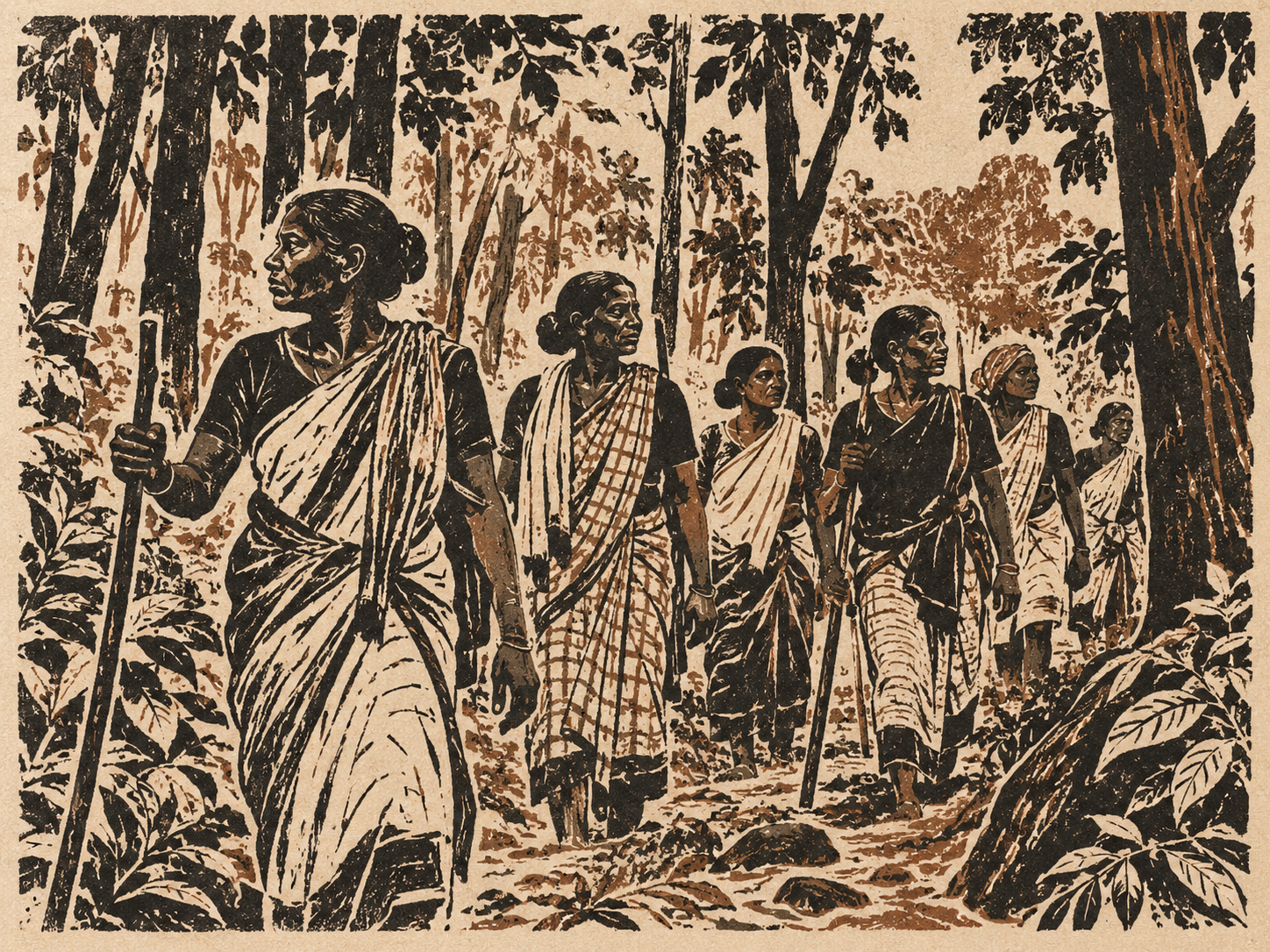
Faced with this disruption, the Rabha women decided to come together to revive the community spaces and reclaim the commons.
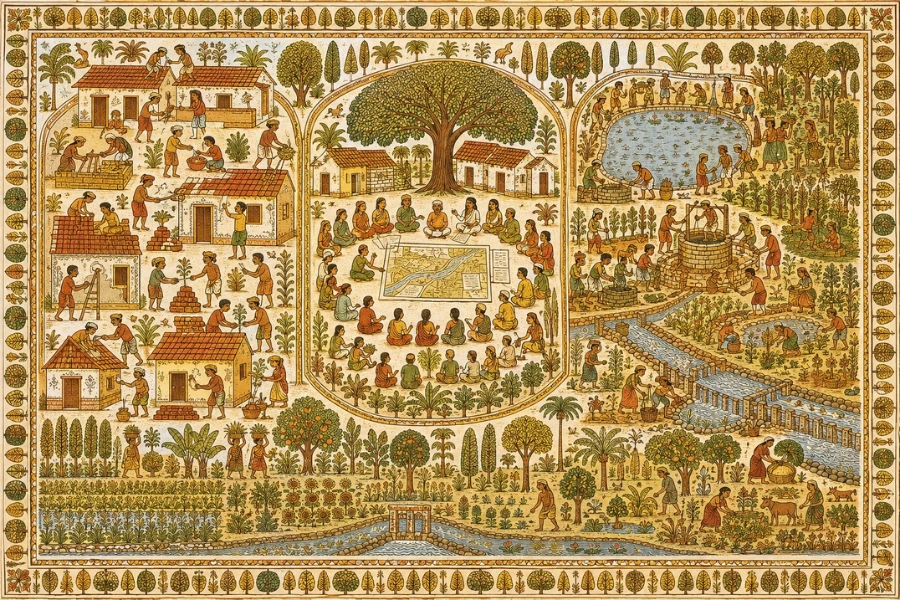
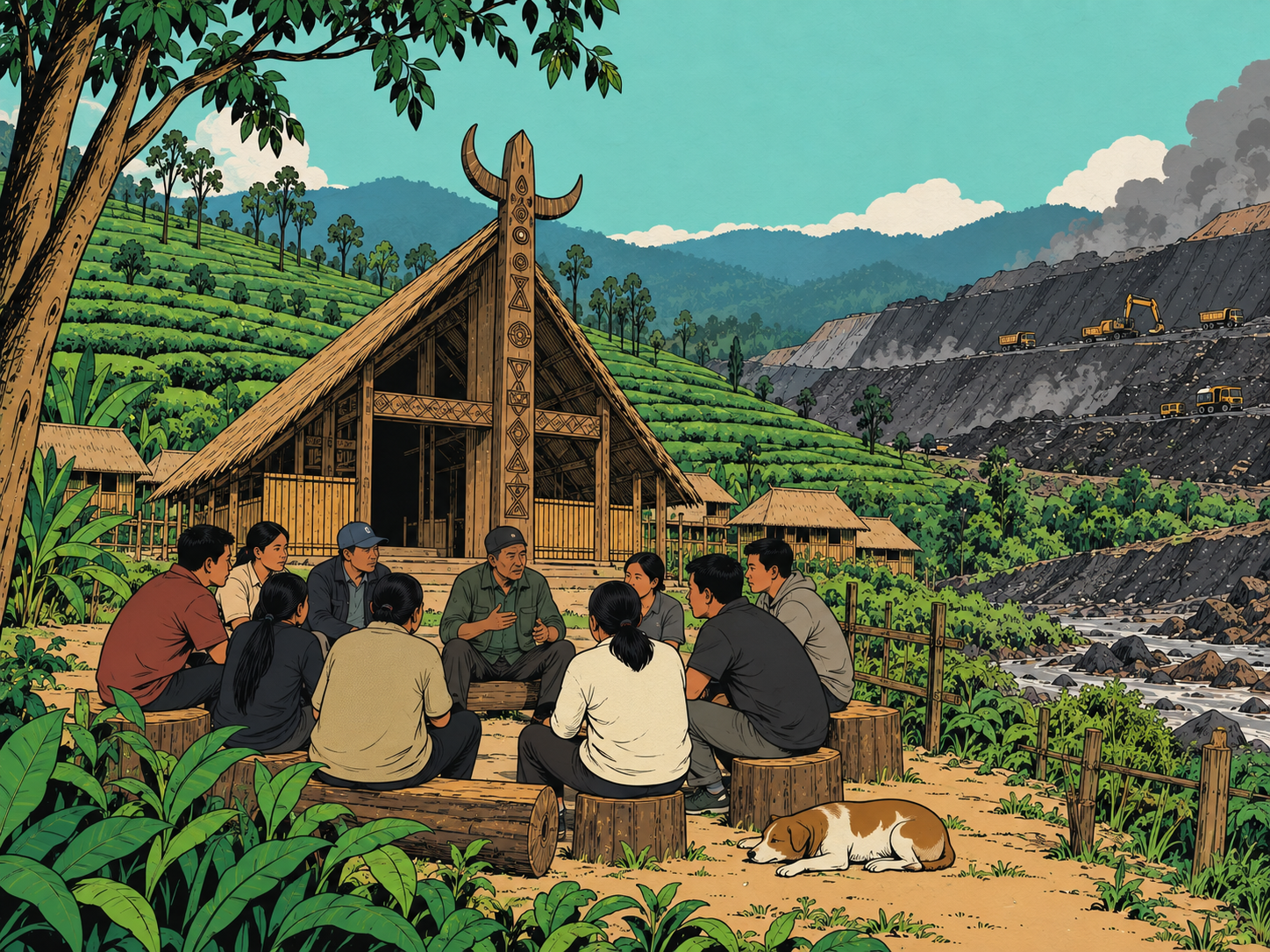
Commons are shared lands such as forests, pastures, water bodies, and mangroves, which cover 205 million acres, or one-fourth of India. They also form the lifeline for over 350 million people, including marginalised groups like Scheduled Castes, Scheduled Tribes and women. Communities across India have traditionally protected, restored and managed these commons through customary self-governance practices. However, they face challenges of resource crunch, environmental degradation and caste and class hierarchies which curtail their access to the Commons. Their customary rights and practices haven’t been formally recognised or recorded in many parts of the country. Despite these challenges, communities across India are reclaiming, restoring and managing its Commons through self-governance practices.
This story from Dooars region shows how, through collective governance, the Rabha tribe has been preserving its forest commons and has institutionalised the intergenerational knowledge transfer for the last four years.
Back to basics
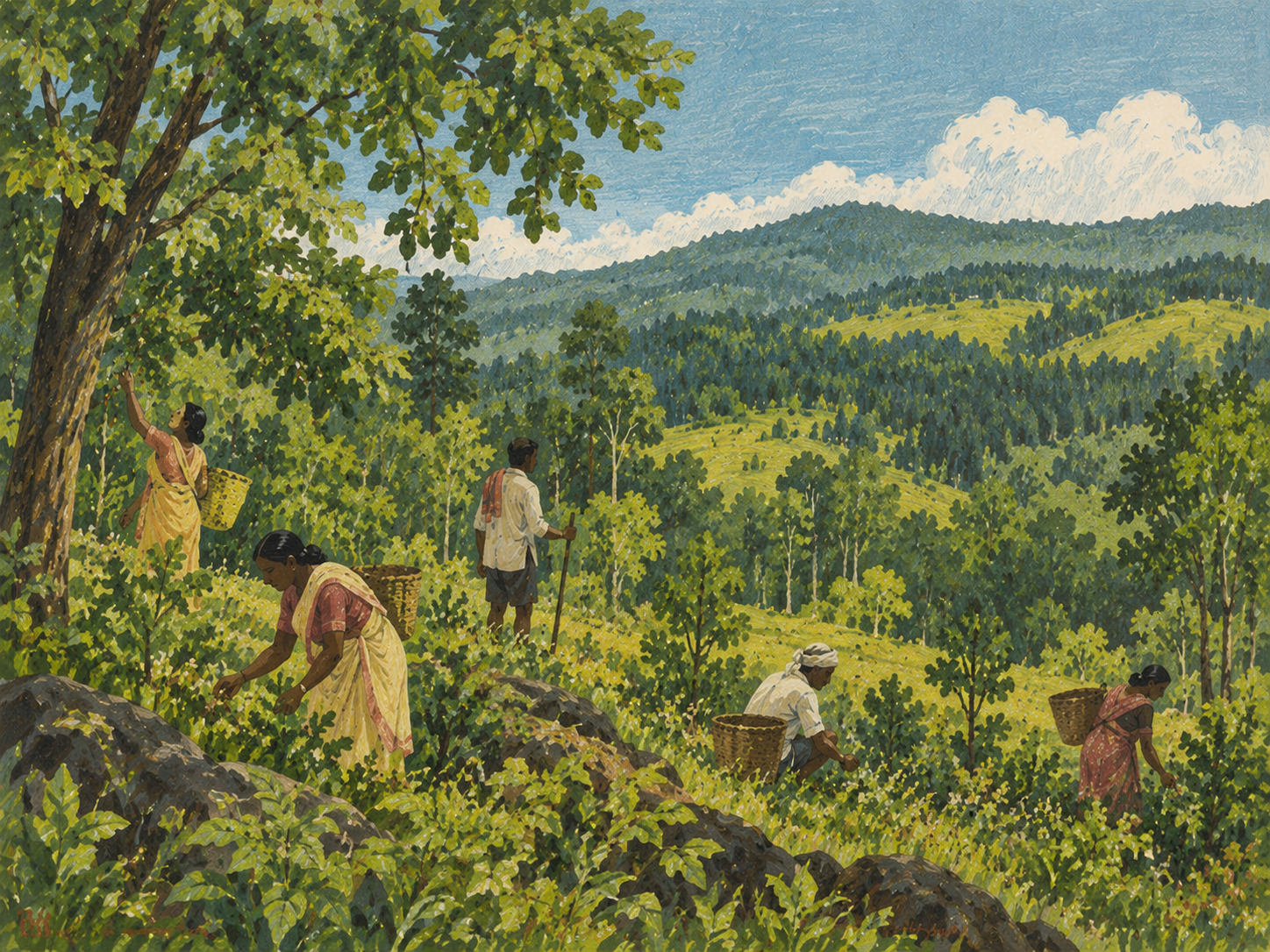
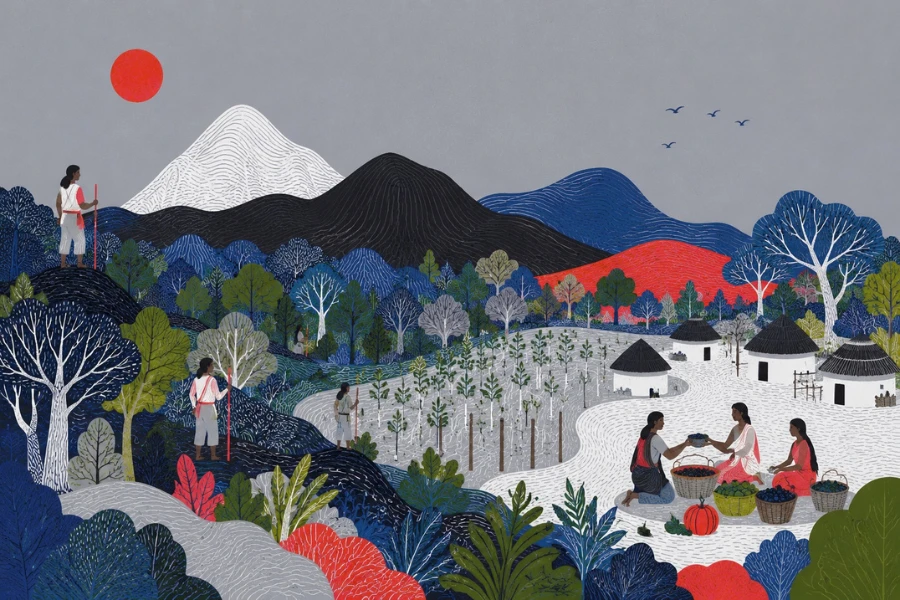
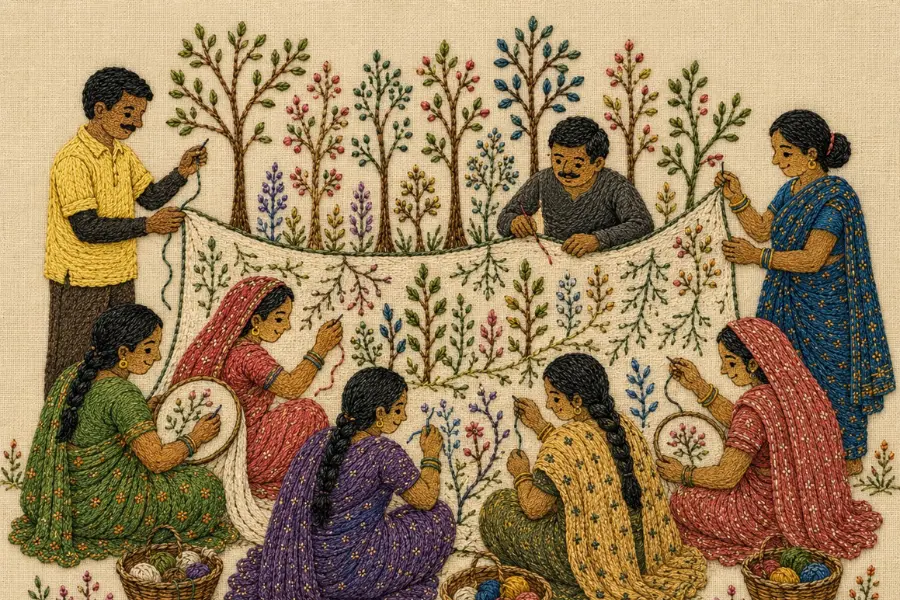
In 2021, 10 women from Andu Basti decided to collectively farm on the fallow community forest lands using traditional methods. They reached out to the village women to participate in the Gram Sabha meetings and discussed how to use uncultivated common and private lands for collective farming.
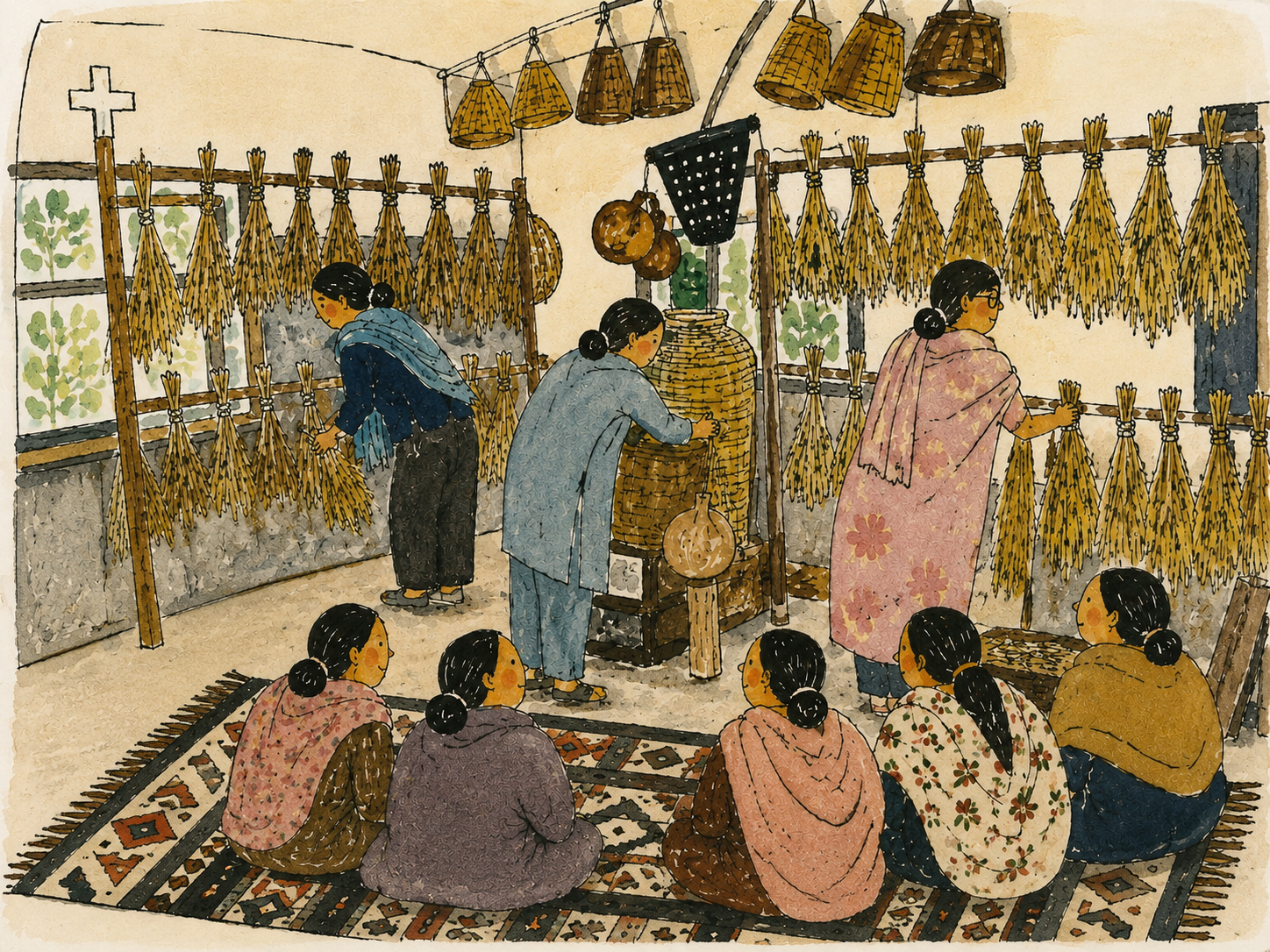
The women relied on the age-old ecological wisdom of mixed cropping and crop rotation to grow betel leaf, betel nut, turmeric, sesame, ginger, and kochu (root vegetable).
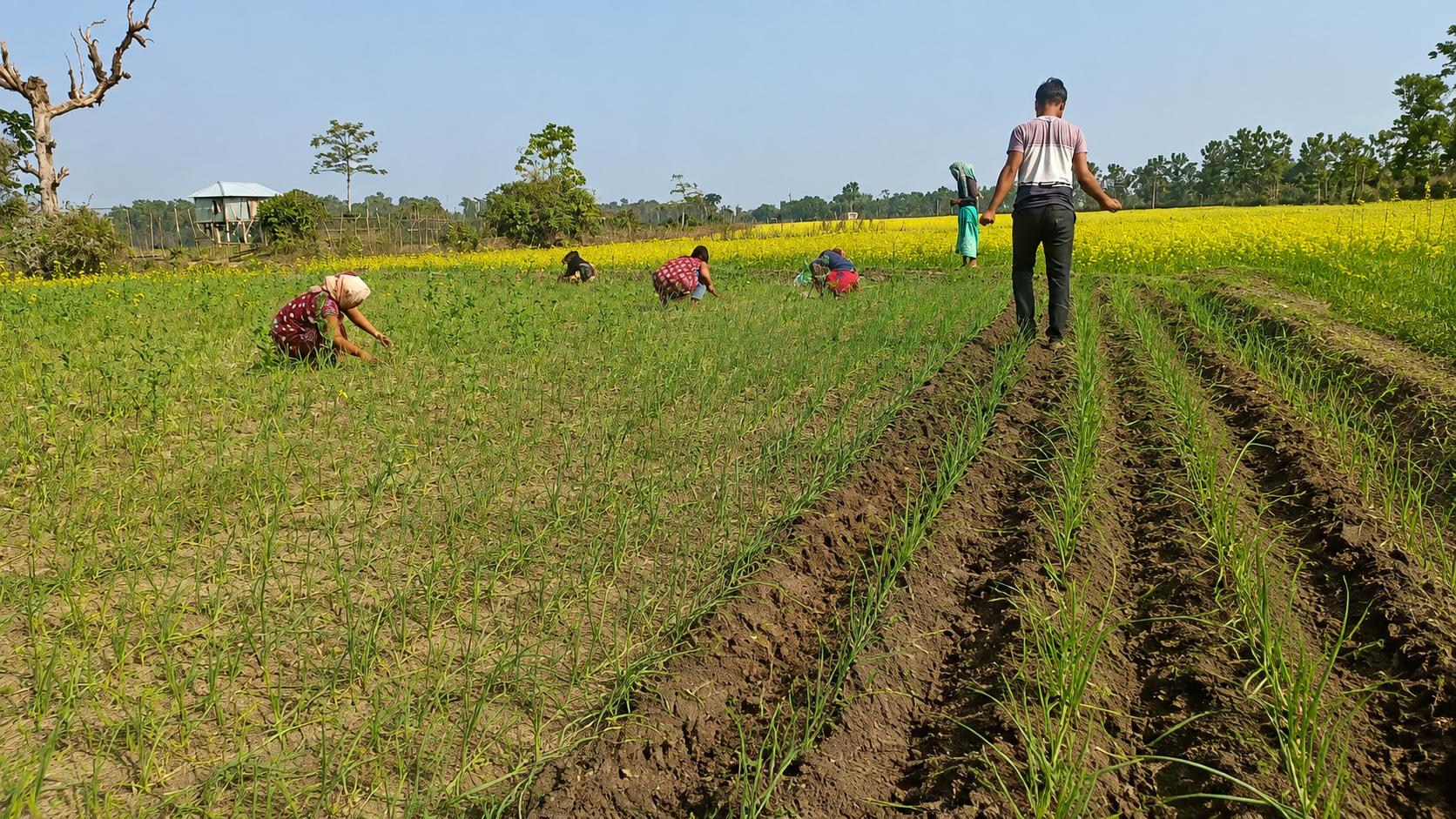
The hard work and persistence of women showed results over time. They grew enough food to sustain their households’ requirements and sold the surplus produce in the market. The soil health of the land on which they cultivated has improved, they claim, as they get a higher yield now.
“The techniques used in the last three years have really helped produce healthy harvests, replenish soil nutrients naturally, and enhance the fertility of the soil, which otherwise was invaded by weeds and had become unfit for cultivation,” says Jamuna Rabha, a member of a women’s group.
Sharing the benefits
The women shared multiple benefits from their efforts equally among themselves. A portion of the profit earned from selling betel nut was divided amongst the members of the group, and the remaining profit was used to lease private land to grow rice and mustard. The women also stored the seeds for the next cropping season. The turmeric, sesame and ginger produced in the last few years were primarily used for self-consumption, while some of the best and mature seeds were stored. The women’s groups also decide about crop selection and land use during the Gram Sabha meetings.
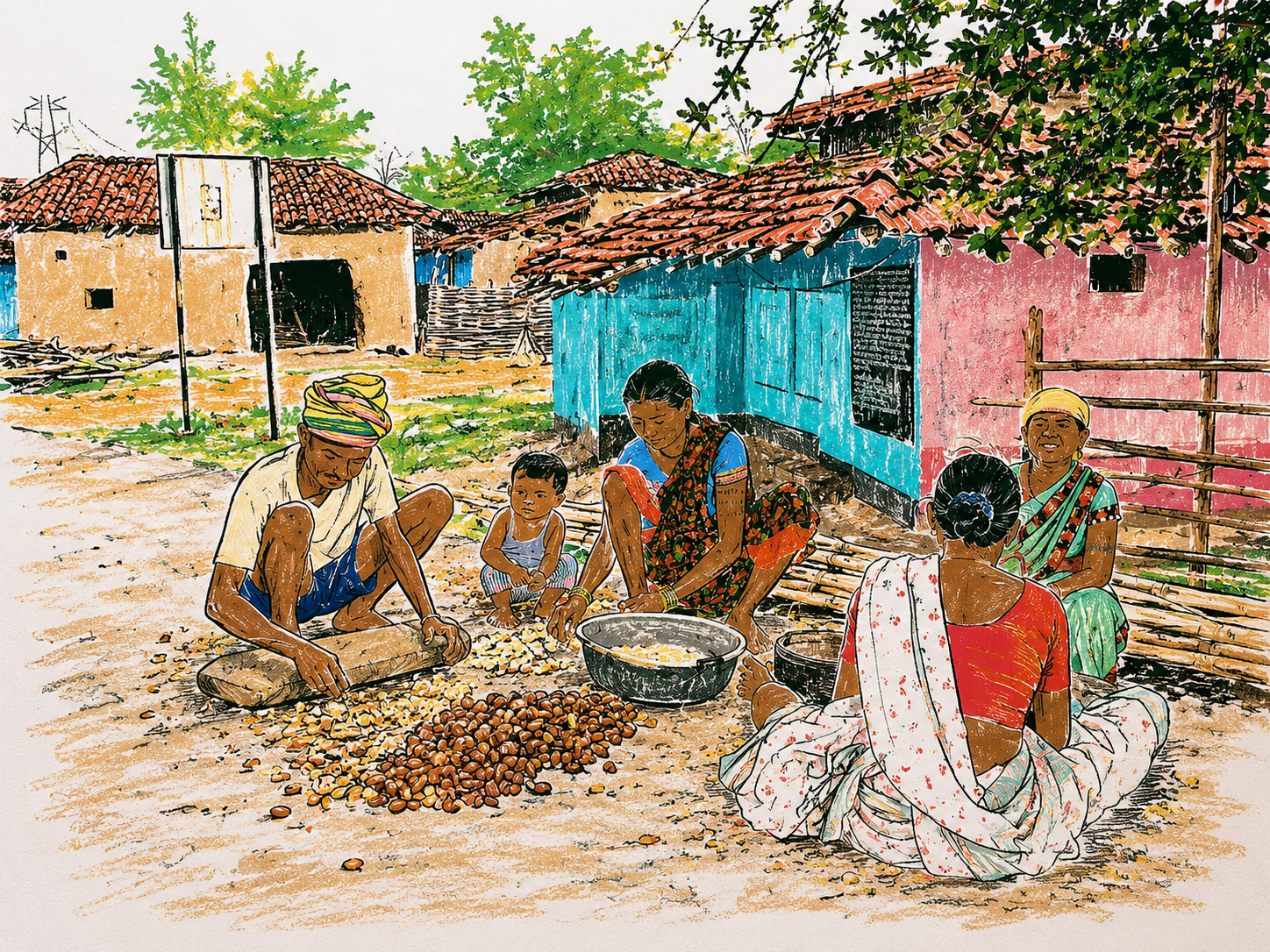
“Each group carefully chooses crops they want to cultivate for the next cropping season based on their needs,” says Basanti Rabha, another member of a women’s group. “The harvest is also shared with other villagers through community kitchens,” she adds.
Community kitchens are gatherings where women assemble after a long day's work to cook and eat together.
“These traditional tribal feasts have strengthened community space and community bonds, which are crucial to reclaiming and restoring Commons,” says Jyoti.
The idea was to implement community-based farming and aquaculture by pooling in their labour, supporting each other, and most importantly, reviving the community space intrinsic to reclaiming Commons.
Reversing the gender gaze
What began as informal discussions with a handful of women has now grown into a large-scale reclamation and restoration initiative spanning several villages.
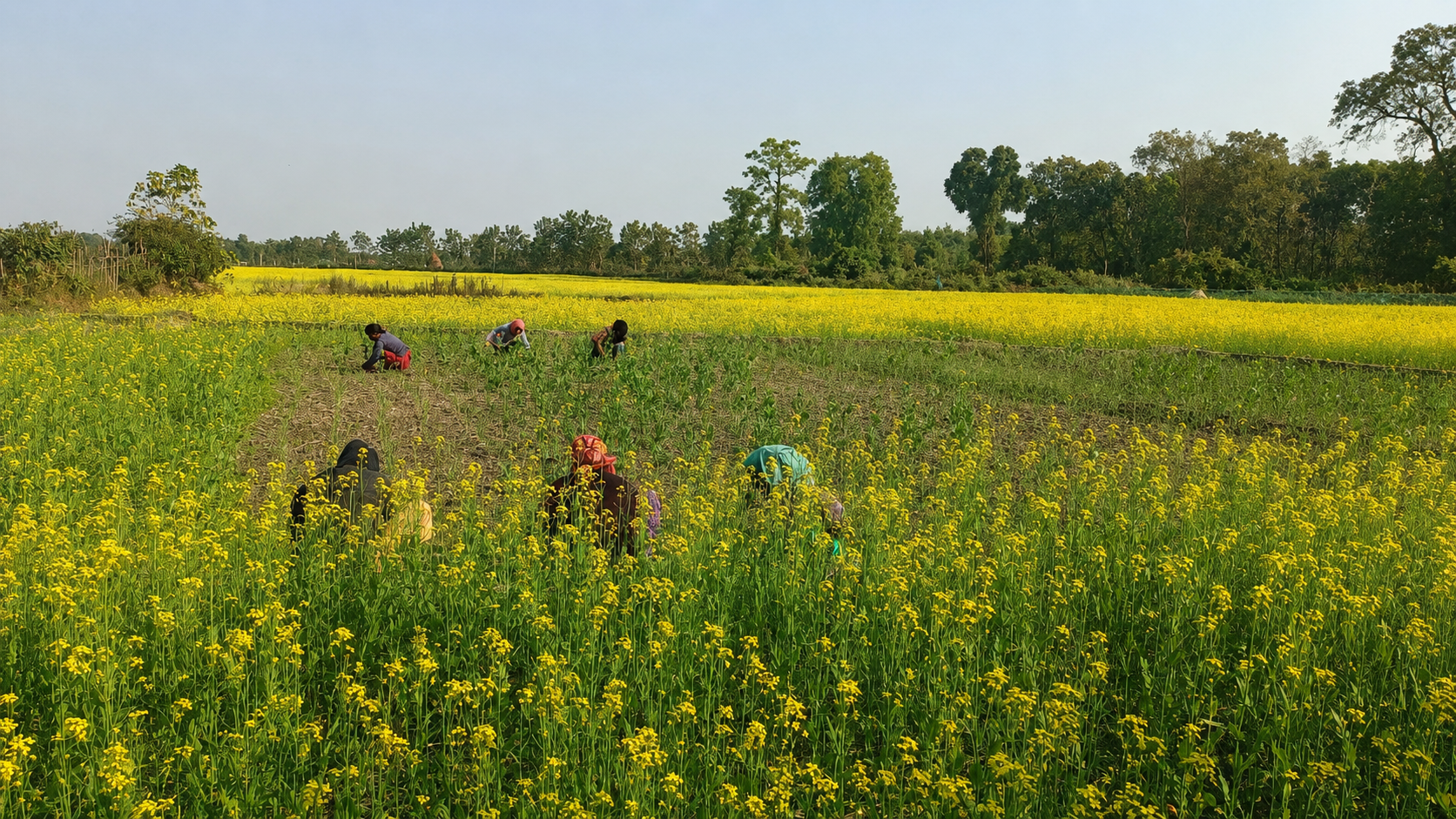
“When we started visiting homes and encouraging women to participate in the process, we were met with resistance. Men would object to our ideas and make sarcastic remarks,” says Jantri, 30, who is also one of the founding members of the women-led group.
Deep-rooted traditional gender roles had restricted women from shouldering responsibilities outside the household, limiting their visibility and participation in community affairs.
“Men expect their wives to cook, clean, and take care of their children. Hence, only a few women agreed to participate initially in collective farming. That is why the initiative was implemented in small areas first,” says Jamuna Rabha.
“When they saw the difference, more women followed suit,” she adds.
As their work started showing results, more and more women joined the network. Currently, 10 women-led groups operate in the village, each consisting of five-to-six women who actively participate in crop production and decision-making.
Asserting rights over forest
Meanwhile, the women continued to face challenges from forest officials for using forest resources, which they have had access to traditionally. Despite filing for Community Forest Rights (CFR), the claims have not been given to any village in north Bengal.
CFRs are rights of forest-dwelling communities under the Scheduled Tribes and Other Traditional Forest Dwellers (Recognition of Forest Rights) Act, 2006 (FRA). Under this, the gram sabhas are given the legal authority to manage, conserve, and regulate access and use of forest resources as per the local customs and sustainable practices. With CFR, the communities can continue their traditional practices of collecting minor forest produce, grazing livestock, and accessing water bodies inside the forest.
By using Section 4(1) of the FRA, the Gram Sabhas of several villages in the Chilapata Range of the Alipurduar forest division, including Andu Basti, declared their CFRs in 2010. Section 4(1) states that the Central Government has already ‘recognized and vested’ all forest rights in forest dwellers. Relying on this, the community members started exercising their rights and extended control over their forests even while the processes of verification and vesting of rights were ongoing.
The villagers placed signboards of the CFR, notifying that the forests would be under the control of the villages under the FRA. Hence, felling, poaching, and other forest-based activities that threaten biodiversity would not be carried out in the CFR zone without the permission of the gram sabhas.
Despite these efforts, the Rabha community continues to face harassment and intimidation for using the forest and community forest resources. Rabha women were often prevented from farming in the forest by the state Forest Department.
“We refused to give up. We started with what we had – collective will and collective care to reclaim and restore our common forest resources,” says Sayani.
Wisdom talks
Several tribal communities in the region, including Rabhas, are grappling with migration as many villagers are drawn to the allure of cities, leaving behind traditional practices and knowledge.
“Youth have been moving out of the village for more lucrative jobs. Children prioritise their school education and no longer seem interested in the forest. As a result, we are unable to pass on our traditional knowledge about forests to them, and this knowledge is at risk of getting lost,” says Mungu Rabha, an elderly resident of the village.
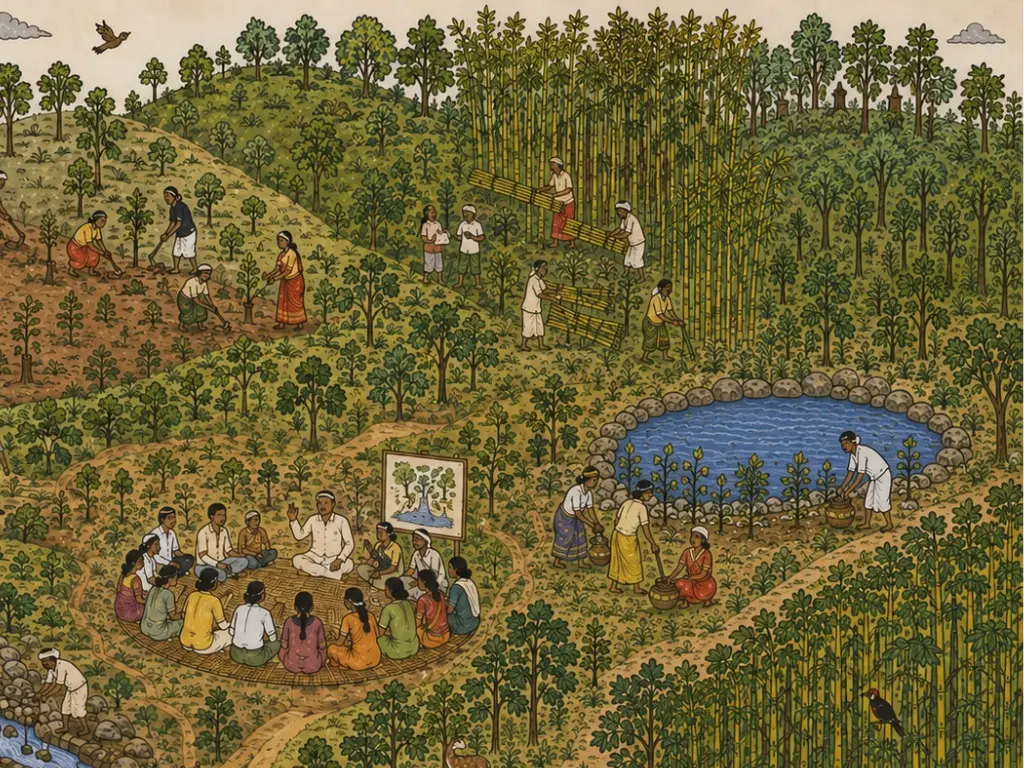
To strengthen cultural preservation efforts, Rabha women introduced learning initiatives at a community learning centre in 2021. They incorporated traditional history, history of resistance to preserve natural resources, indigenous languages, and folklore. Together, these initiatives foster a greater sense of awareness about forests, Commons, and a deeper understanding of traditional heritage among tribal children and youth.
“Children are being made familiar with different species of animals and plants, including medicinal plants – their uses, and how to identify them,” says Jantri.
The women use storytelling sessions to teach children about dependence on common forest resources in everyday life, importance of keeping the forest healthy, and tribal rituals that honour nature.
The young adults are being educated on their rights as forest-dwellers, the impact of deforestation on tribal lives, and tribal wisdom for addressing human-animal conflict.
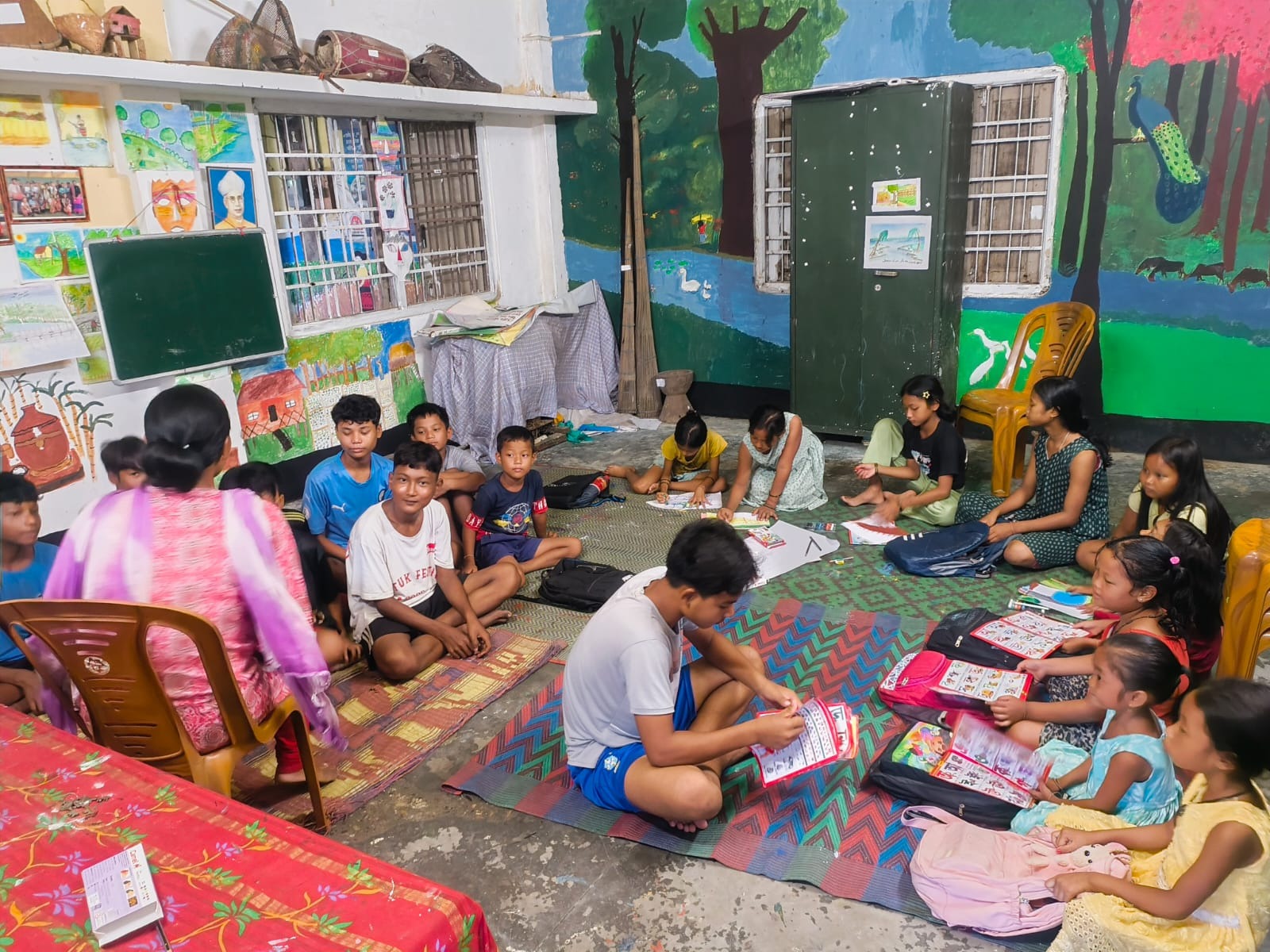
“The children have started writing poems and short stories in their native language on how they feel about forest ecosystems,” says Kaushalya, 22.
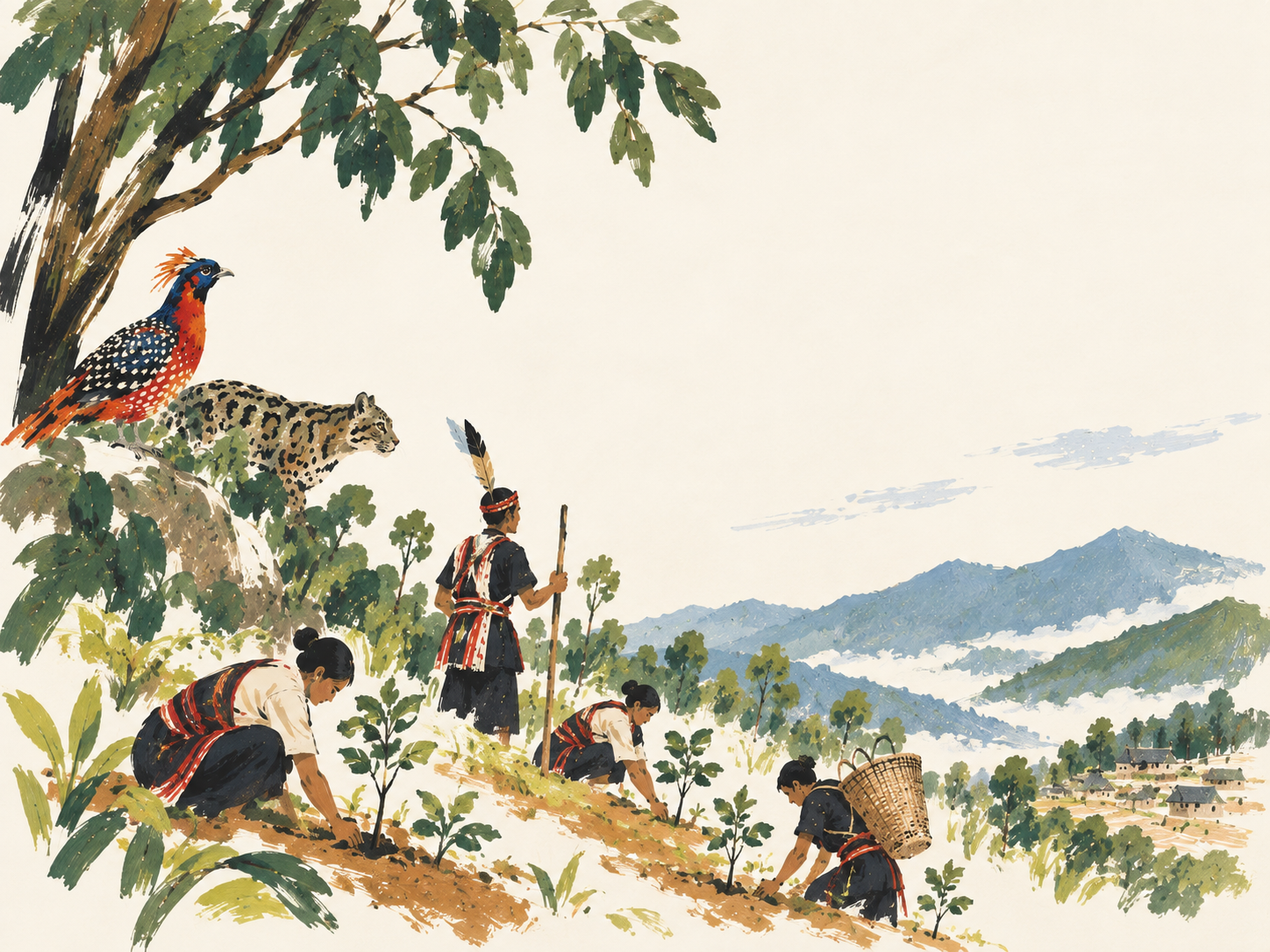
They combine outdoor activities with classroom lessons on forest life to make children better understand their surroundings, while nurturing their curiosity about the forest. The teachers are encouraging them to plant trees and restore the forest from an early age.
“Using the tree samples collected from the forest, we encourage children to identify trees by examining flowers, leaves, fruits and tree bark,” she adds.
Between 2024 and 2025, a few Gram Sabhas from neighbouring villages came together to stage plays that demonstrate the community’s symbiotic relationship with the forest and highlight migration challenges faced by the tribal community in the region.
The exercises have also created a space for dialogue amongst children, the youth, and the larger community about their traditional role as custodians of the forests and in preserving Commons through traditional knowledge systems that are in harmony with nature.
“We want to educate children and young adults about how forest commons are an inherent part of our lives and help them to discover its rich biodiversity, so that they can preserve the forest after us,” says Jantri.
Since the community learning initiative started, 25 children regularly attend classes and are very enthusiastic about learning about the forest, say the teachers.
Raising hope
Although the restoration-related initiatives are at a very nascent stage and the women are yet to fetch a greater economic benefit of this evolving model, they have been able to harness collective strength.
“Earlier, these women were shy; now they have become more confident while advocating for the community's needs. They are willing to take ownership in forest rights struggles and restoration efforts,” says Jyoti.
The women have started initiating discussions at the Gram Sabha meetings, she adds.
The collective efforts of the women have inspired tribal communities from around 30 villages to embrace similar initiatives, recognise the role of traditional agricultural practices, strong community spaces and intergenerational knowledge transfer. Rabha women’s story is a testament to what happens when young women lead from the front.

.jpg)
.webp)
.webp)
.avif)
.webp)

.webp)