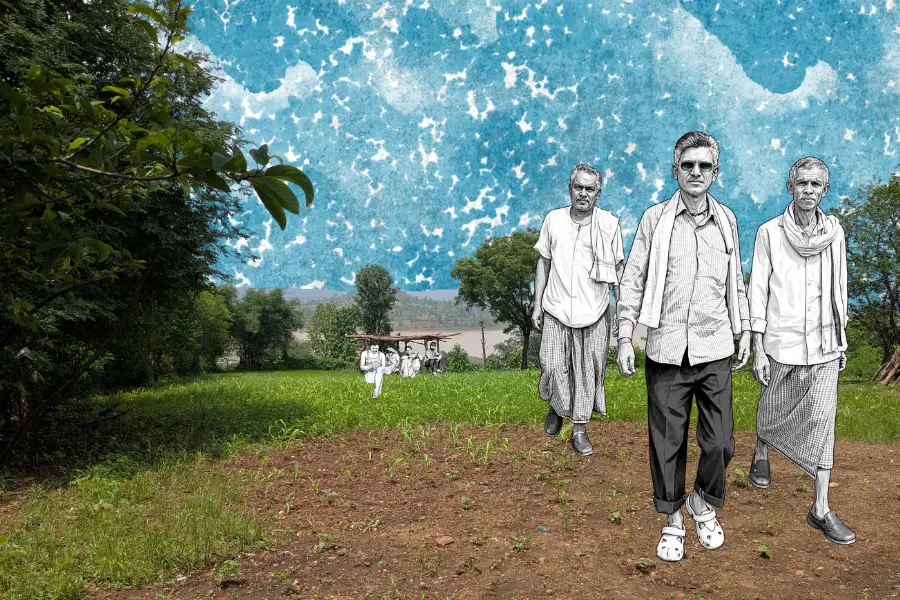
Korba, Chhattisgarh: Budho Pando, a frail elder from Tendutikhra village in Chhattisgarh, recalls getting separated from the group at New Delhi railway station in 2008 during his first visit to the capital. He had joined a jan yatra (people’s movement) demanding rights over the forestland his community has lived on for generations. With no money for travel, Budho began walking along the railway tracks, surviving on food strangers offered him. It took him more than six months to finally make it back to his village.
Like the others in Tendutikhra village, Budho belongs to the Pando tribe, classified as a Particularly Vulnerable Tribal Group (PVTG), considered among the most marginalised communities within the Scheduled Tribes.
Inspired by Gandhian values, Budho, a passionate advocate of self-reliance and peaceful resistance, steered his village to adopt a path of resilience and sacrifice.
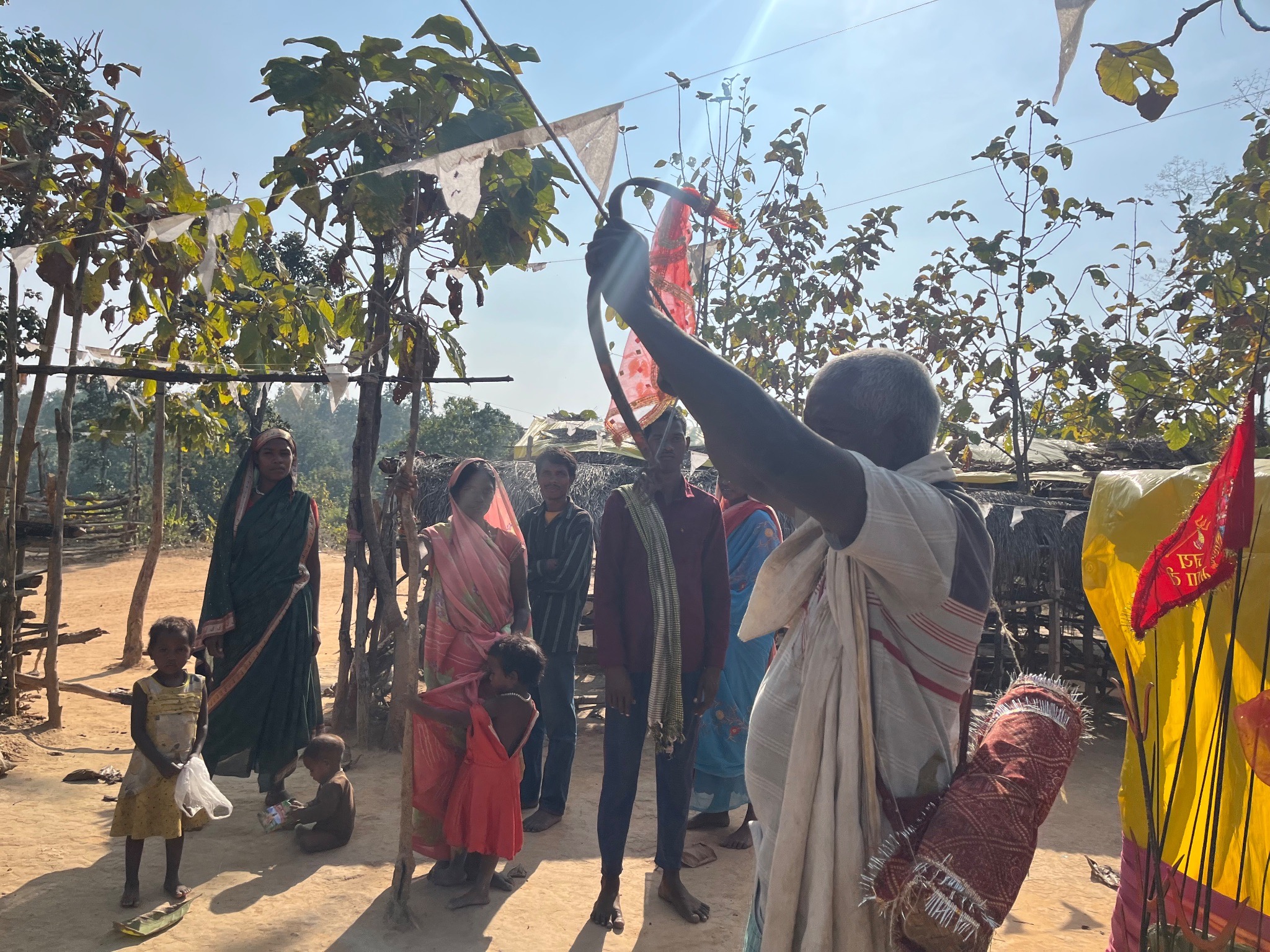
“My father had an active involvement in Ekta Parishad (a social movement) since the 1980s. The government's ignorance of our existence and our rights made him organise the villagers under Ekta Parishad. I followed his footsteps,” said Budho.
Ekta Parishad is a major non-violent, Gandhian people's movement in India founded in 1989 by activist Rajagopal PV to secure land, forest, and water rights for the poor. It has a presence in 12,000 villages through many grassroots leaders. Budho is carrying forward the movement to assert their rights collectively.
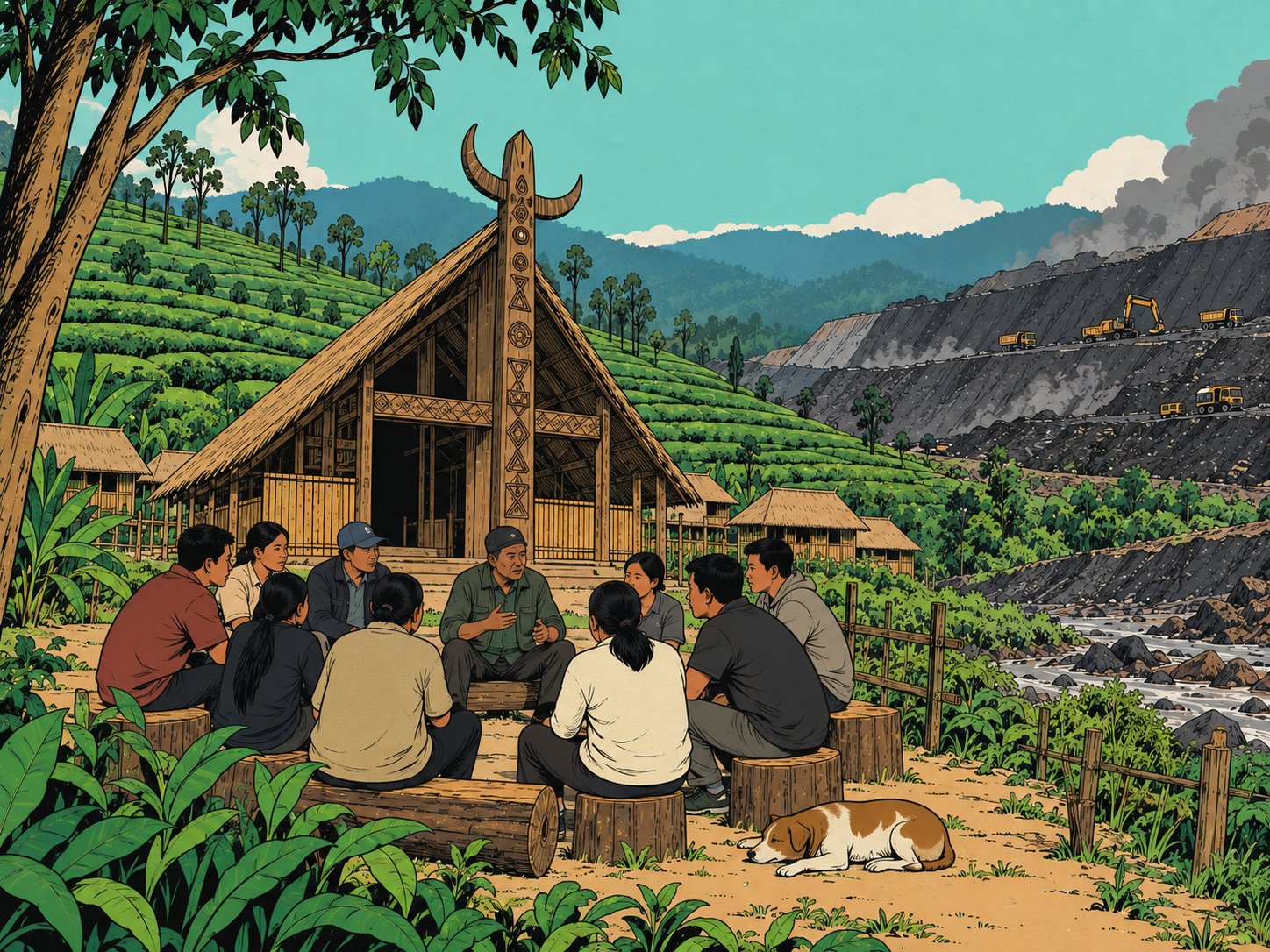
He generously donated nearly six acres of his titled land to the village for drinking water and an irrigation pond, a community building named Pando Bhawan, and a hut called Gandhi Kuti (hut), which serves as the village’s official meeting place.
Despite the patchy implementation of forest rights and welfare schemes such as Mahatma Gandhi National Rural Employment Guarantee Act (MREGA), which promises 100 days of wage work to each rural household, the community has not held back. They pooled their collective labour to build their own ponds, roads, and common gathering spaces, and lifted themselves out of poverty.
Collective labour for collective good
Even though the community has lived and used forest resources for generations, of the 74 families in the village, only 32 have been granted Individual Forest Rights (IFR) titles, that is, the right to hold and live on forest land for habitation and self-cultivation for livelihood needs, under the Forest Rights Act, 2006. The Act recognises the rights of forest dwellers over their land and forest resources.
The villagers received IFR titles in two phases, in 2008 and 2017. However, it was not reflective of their actual occupation of land.
“These rights seem performative. We were not given our actual entitlement. Some got six acres, and some got less than one acre. Despite filing an appeal, there was no response,” said Mohan Pando, 70, a farmer.
The forest department officials, the villagers allege, would beat them when they were spotted in the forest collecting firewood for household use. Decades of alleged ill-treatment by the officials taught the villagers to organise and resist non-violently.
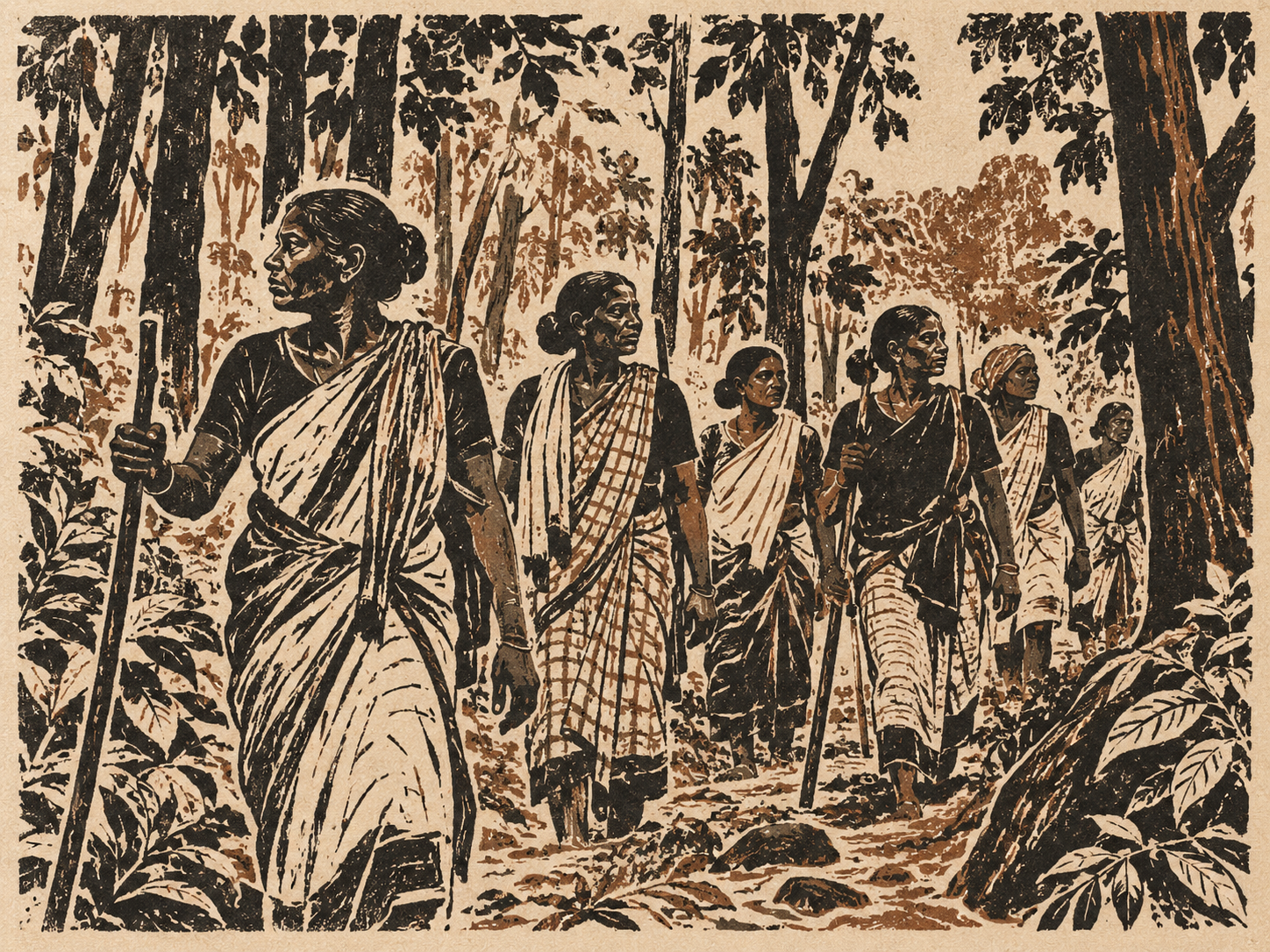
“That was the moment we realised that we had to band together. From then on, we always went in large groups to collect forest resources,” said Mohan.
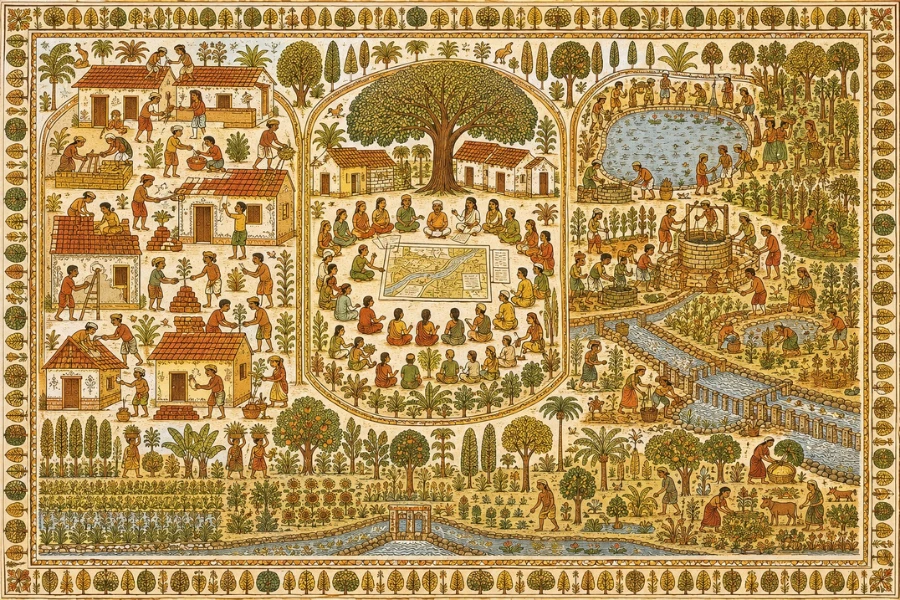
The forest department beatings and the learnings from Ekta Parishad led them to initiate shramdaan - donation of their labour for the collective good - where all villagers built each other’s houses in 1994-95.
While some households received temporary leasehold land that was regularised under the state government law (C.G. Land Revenue Code, 1959), they could not use government programmes, like MNREGA, for common village works such as pond building and land tilling. The villagers eventually built it all through shramdaan.
Between 2002 and 2006, when the national fight before and after the FRA legislation came into force, the villagers slowly transformed Tendutikhra as well. Inspired by the jan satyagraha (people’s resistance) for FRA, in which many villagers participated, they began building the village’s crucial infrastructure, which was either non-existent or in a dilapidated condition.
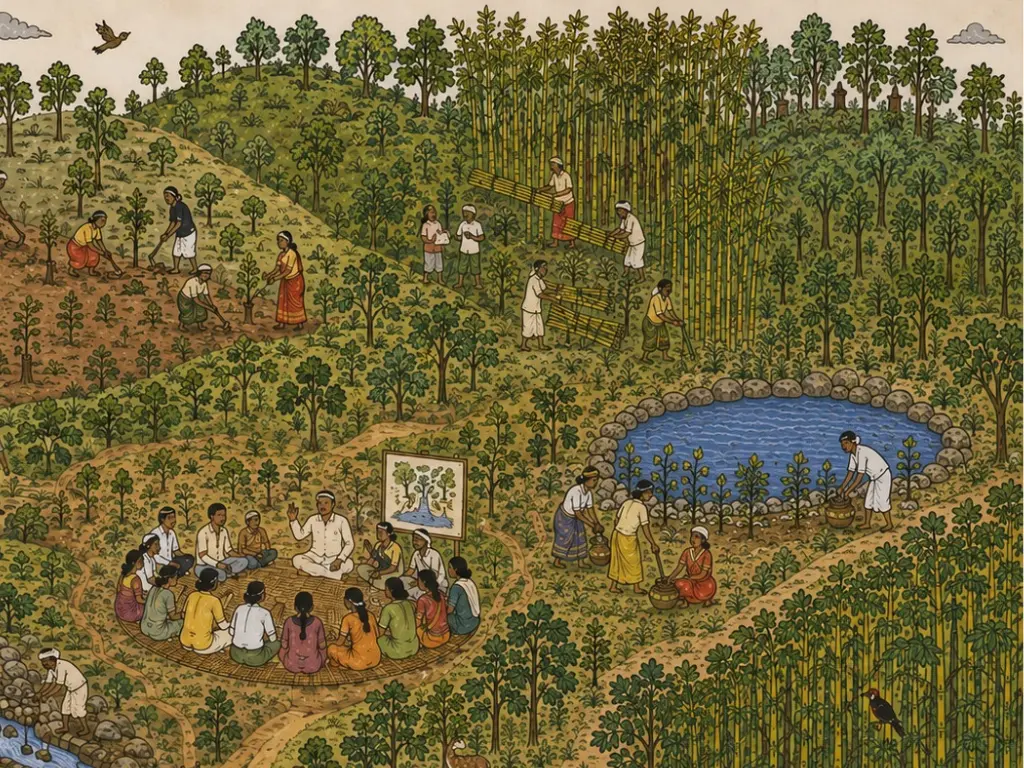
The villagers built their first pond in 2011 on the three-acre plot donated by Budho. In the next three years, they built two more ponds on one-and-a-half acres and two acres of land donated by villagers Buddhanbai and Sukhlal, respectively. These seepage ponds are filled by the water seeping from the water table into the excavated areas.
The three ponds are essential infrastructure for irrigation and livestock that the village needed, helping it move towards self-sustenance.
“Water availability was low and we couldn’t have waited for any government scheme. Our cows, goats and bulls needed water for drinking and we wanted it for irrigation,” said Budho, who later received an IFR title in 2008 over a two-and-a-half-acre land.
In 2002-03, the villagers also built two dhodi, a dug well for drinking and irrigation, and a road to their devasthan (where their Gods reside).
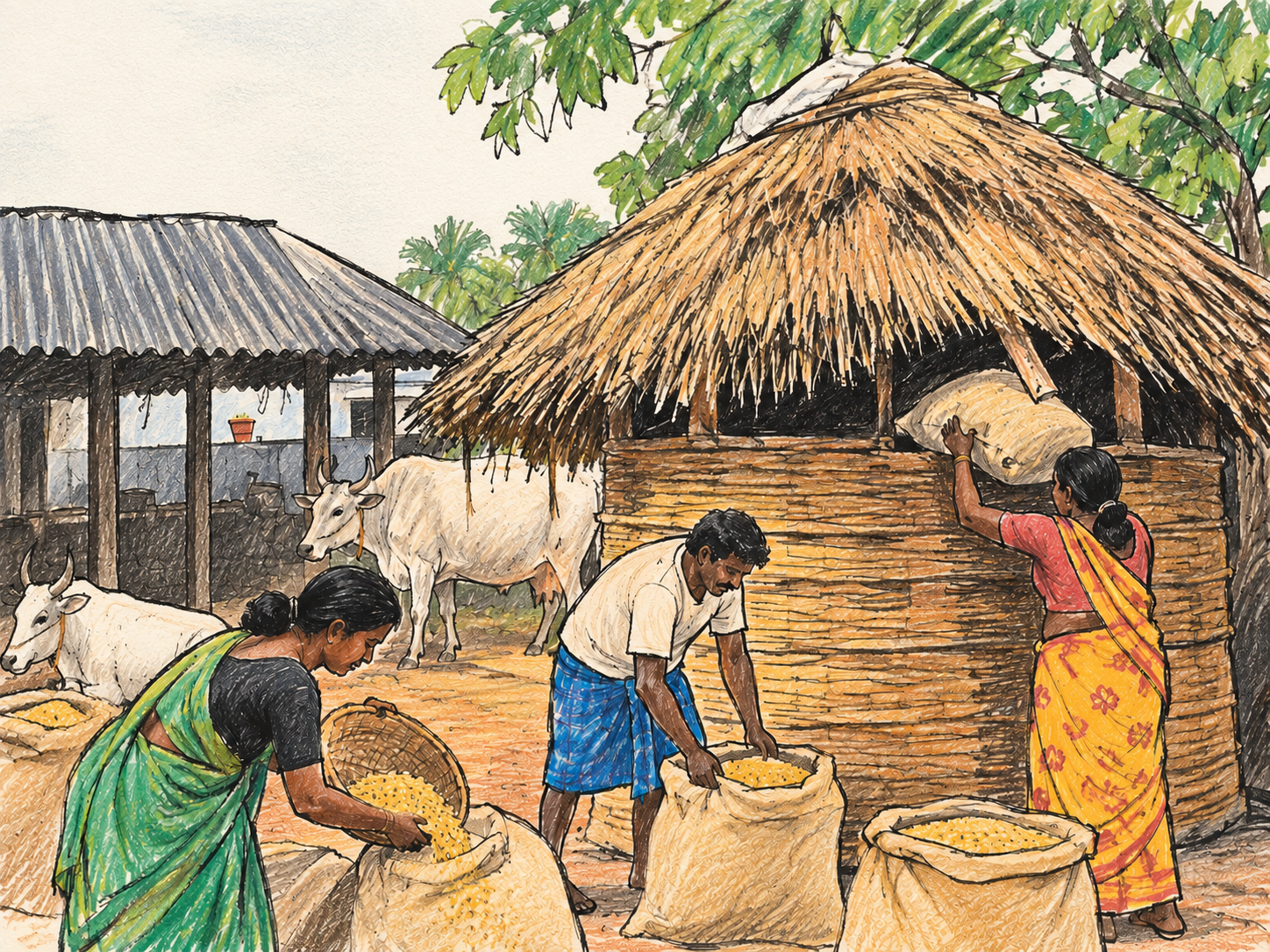
The Gram Sabha also maintained a Gram Kosh fund, a corpus of rice instead of money. Each villager donated a kilo of rice per month. The total collection, which amounted to up to three quintals over nine weeks, was used for consumption by the villagers while doing collective labour. The grains were also kept as a reserve that could be sold in the market in case of an emergency.
In 2018, the villagers also applied for the Community Forest Rights (CFR), which recognise the rights of forest-dwelling communities to protect, conserve, and manage their traditional forest resources, but these are still pending.
Reclaiming the Commos
Tendutikhra’s construction and management of village commons is an example of a much larger trend across India where communities are successfully self-governing their land, water, forests and shared spaces.
Commons cover 205 million acres, or one fourth of the land in India, which can be in the form of forests, pastures, water bodies and mangroves. These lands form the lifeline for over 350 million people, including marginalised groups like Scheduled Castes, Scheduled Tribes and women.
Communities across India are showcasing that reclaiming, restoring and managing commons through customary self-governance practices is crucial in their ecological, social and economic upliftment. In Tendutikhra, the grassroots-led governance has not only protected the commons but also made the community economically resilient.
Transformation
The water resources helped the villagers expand the variety of their agricultural produce. Their cultivation was earlier restricted to small quantities of paddy and millets like mejhari, sawa, kodo and balihari/bajra. The quantity of the produce was low and thus they had to seek wage labour outside the village.
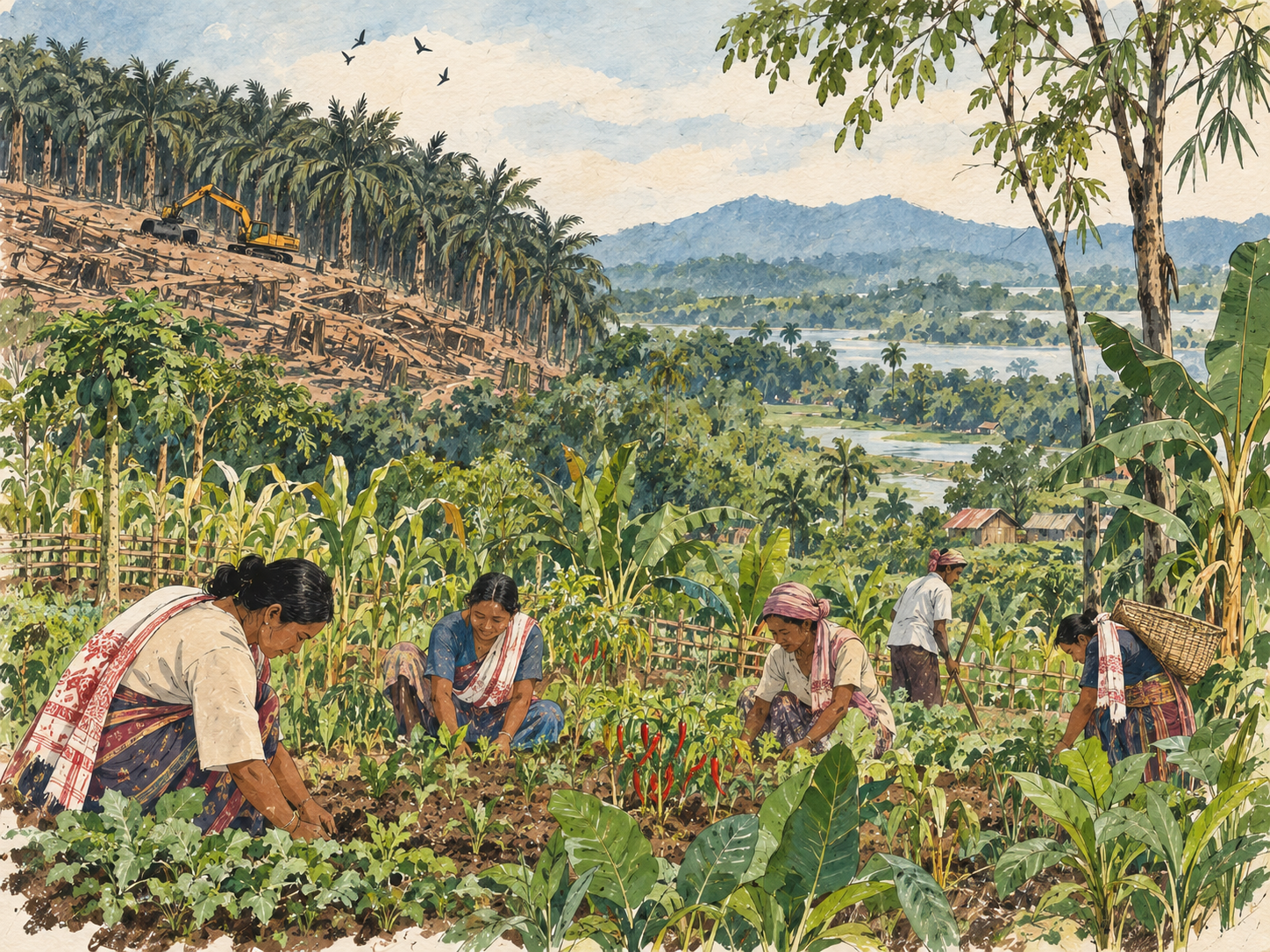
Abundant water now enables them to grow more paddy, maize and vegetables like tomatoes, brinjal, radish, potatoes, cauliflower and pulses (arhar, kulthi). They have also started growing wheat and sell the excess produce in the market.
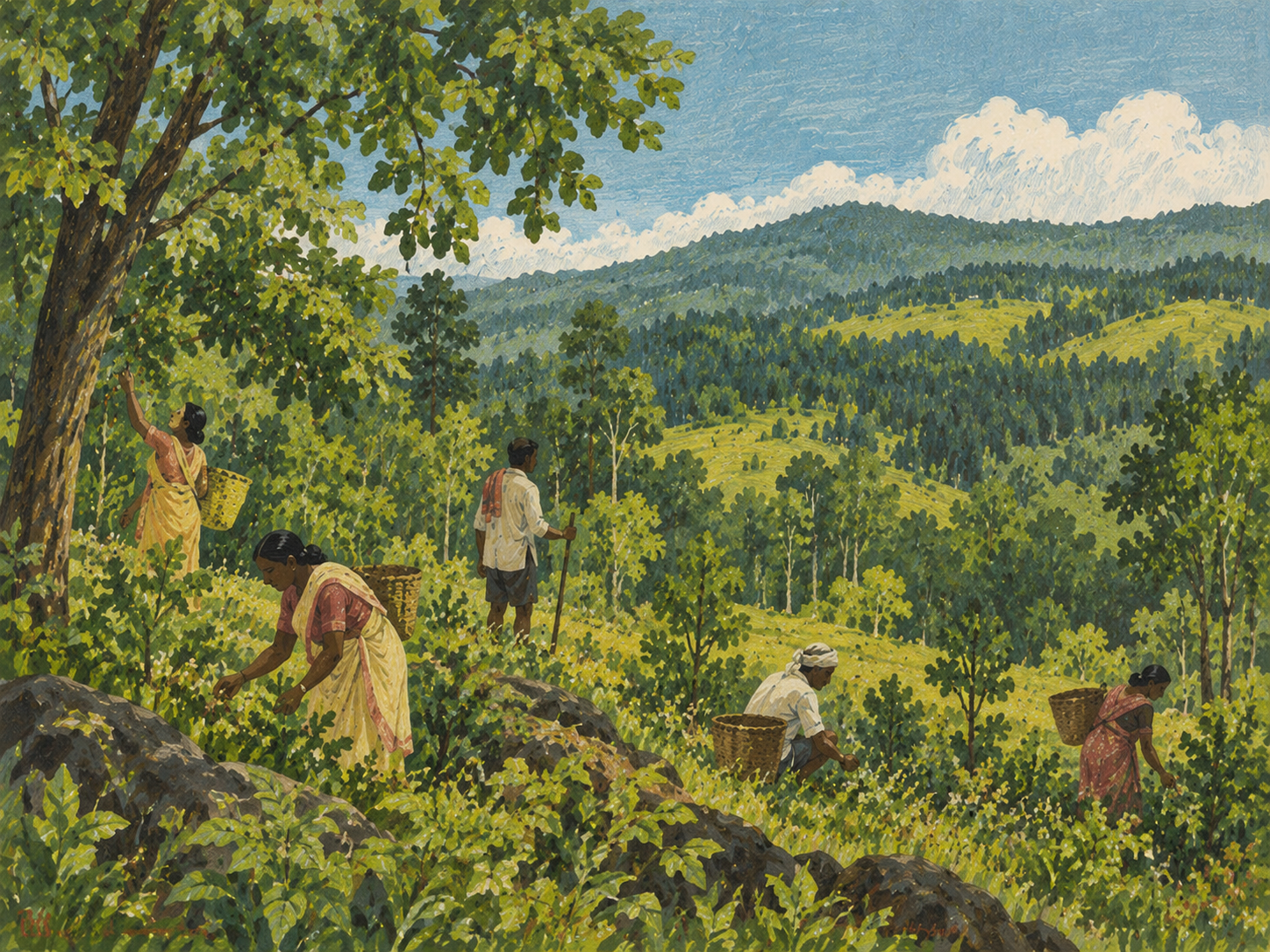
They collect a variety of herbs and forest produce which they use as medicine, teeth cleaning sticks, mouth freshener, natural scents or incense sticks from tree barks, flowers for condiments and vegetable curries, among other daily use items.
They sell some of the produce like tendu leaves used for wrapping local cigarettes, and medicinal goods like mahua, sarai/sal, bahera or behara, harra, char/chironji seeds.
Each household spends about Rs 5,000 to buy essentials that are not available in the forest. For the rest of their needs, they depend on indigenous knowledge of forest resources to live sustainably and resourcefully, explains Murli Das, regional coordinator, Ekta Parishad, who helped Tendutikhra village in filing claims.
The villagers use wood from the forest to build houses and they collect sand to sun-dry it and turn it into clay for laying roofs, and loose sand is used to paint walls and floors.
“The progress of the village unfolded in stages. It began with strengthening each other’s homes and replacing makeshift bush structures with sturdier clay houses. Then came the push for land rights, which led to the community receiving IFR titles. The final step was building self-sufficiency through reliable water resources,” said Das.
Women in Tendutikhra village were fighting another battle: alcoholism in men. It was pushing households into debt. The women in the village first passed a resolution in the gram sabha against alcohol in 2011-13.
“We imposed a fine on those found drunk in the village. We even had a culture of the groom’s family giving gifts of alcohol and goats to the bride’s family, which has now stopped completely. Since the last 10 to 12 years, no alcohol has been made or consumed in the village,” said Parmeshvari Bai Pando, who received an award from Kiran Bedi for her efforts in stopping liquor consumption.
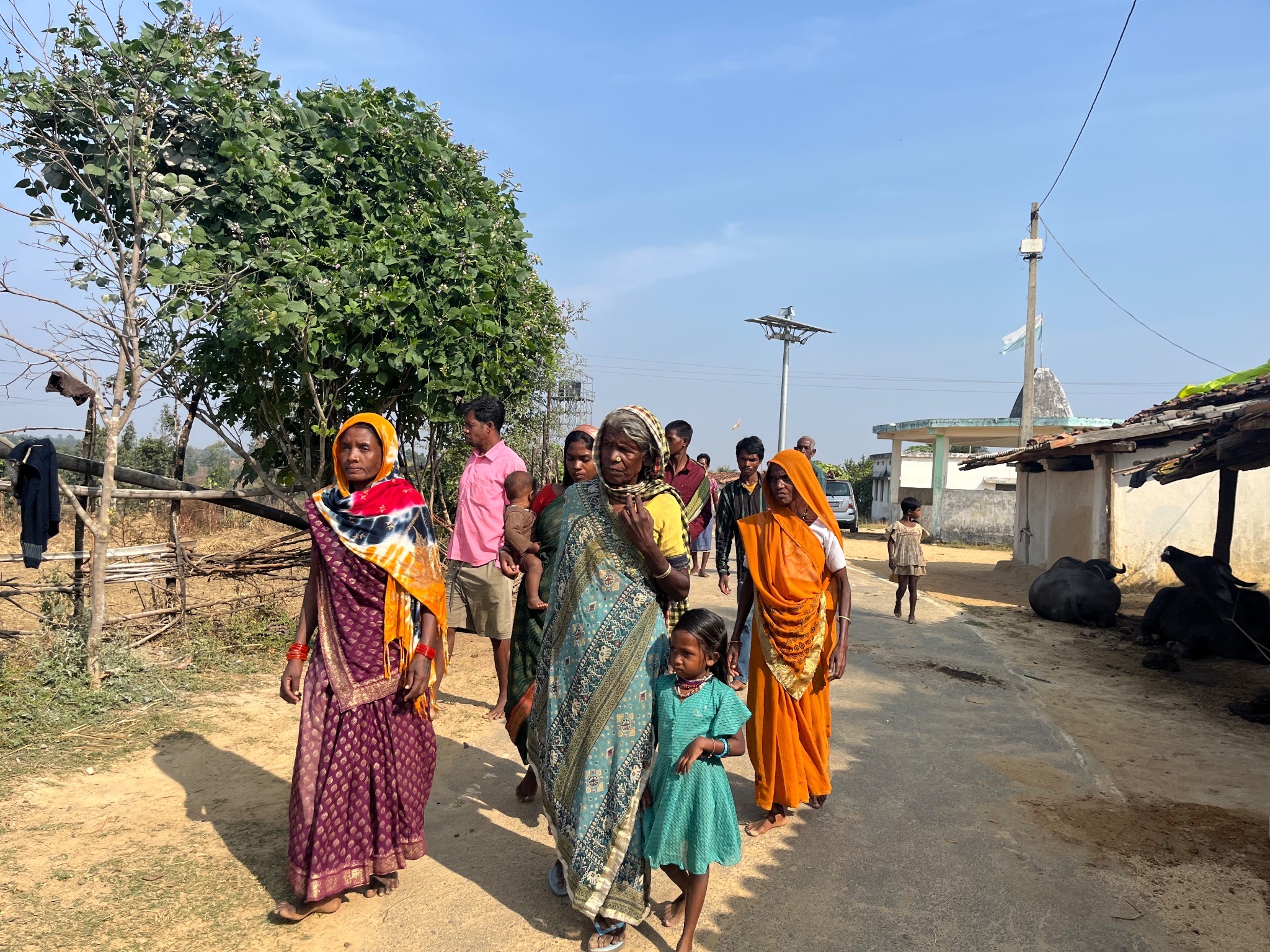
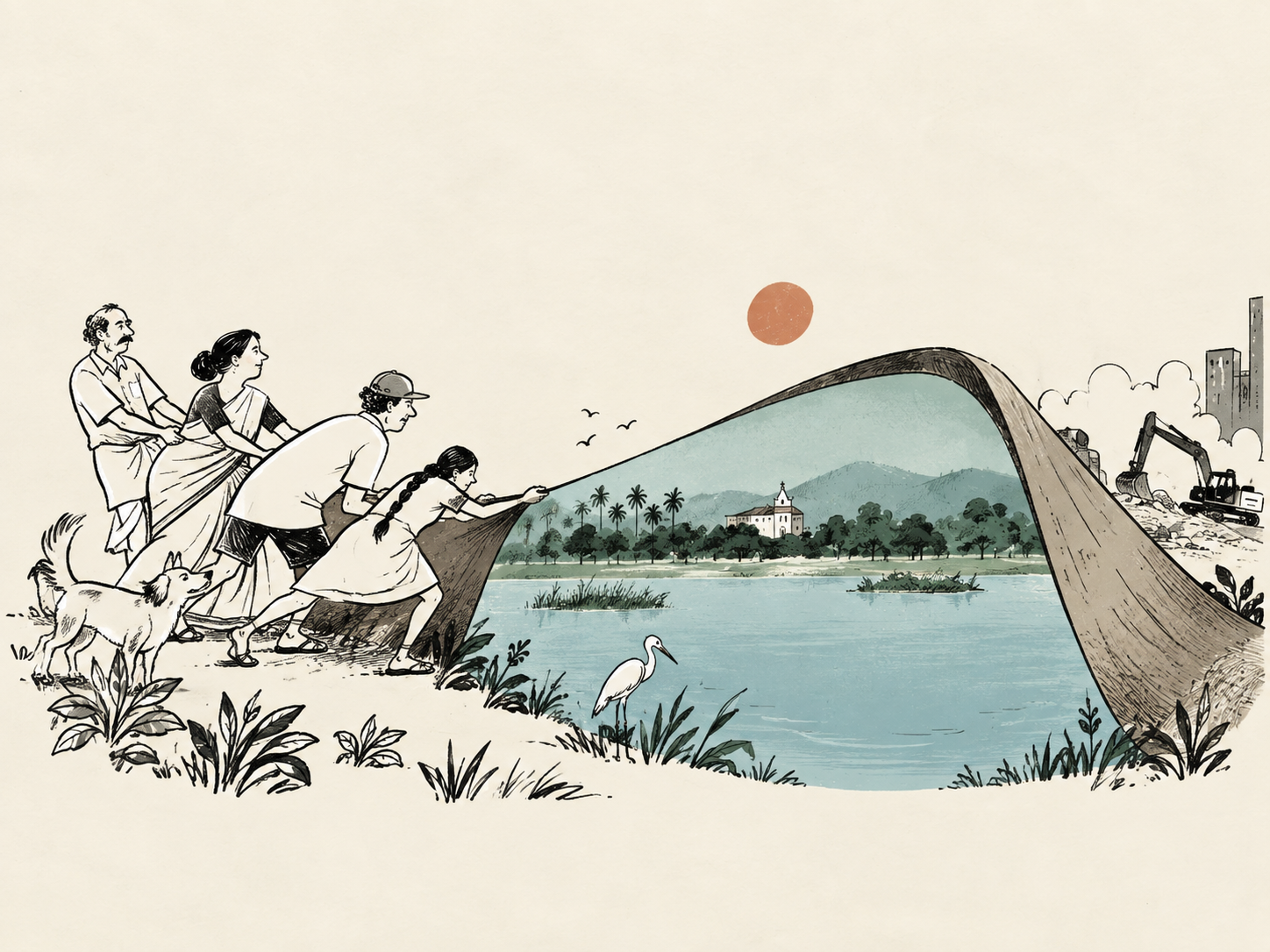
From once running away at the sight of well-dressed outsiders to confidently confronting them, the Pando community has come a long way. Today, they resist forced teak plantations by the forest department, arguing that teak is not native to their forests and often attracts elephant raids.
The community is now facing the threat of a coal mine that is proposed in their village by a Jharkhand-based Rungta Mines Limited. The villagers believe this to be the reason behind their not receiving IFR titles.
"The government and corporations are cutting mother earth’s heart, selling the resources outside and taking our lands. They don’t want Pandos to live in the forest. They don’t care where they will go or how they will be compensated and rehabilitated," said Brij Lal, activist from Amali Bahra village who helps villages in tehsil Podi Uparoda in filing FRA claims.
But the residents of Tendutikhra village are ready to face another challenge.
“Jo zameen sarkari hai, woh hamari, joh zammen ko jote boye, woh zameen ka malik hoye (The land labelled as government-owned is ours, whoever cultivates the land becomes its owner),” they chant.