Saguja, Chattisgarh: On paper and for all legal purposes, the Pando tribe residing in Bichalghati village in Northern Chattisgarh had no place to call their own.
For generations, the hill forests that surrounded the village sustained them as hunters and gatherers. They fished in streams, hunted small mammals, sold firewood in the markets, and foraged for medicinal plants, roots, tubers, fruit and wild vegetables. But these forests, which were gradually thinning to over-exploitation and vagaries of the climate, belonged to the forest department.
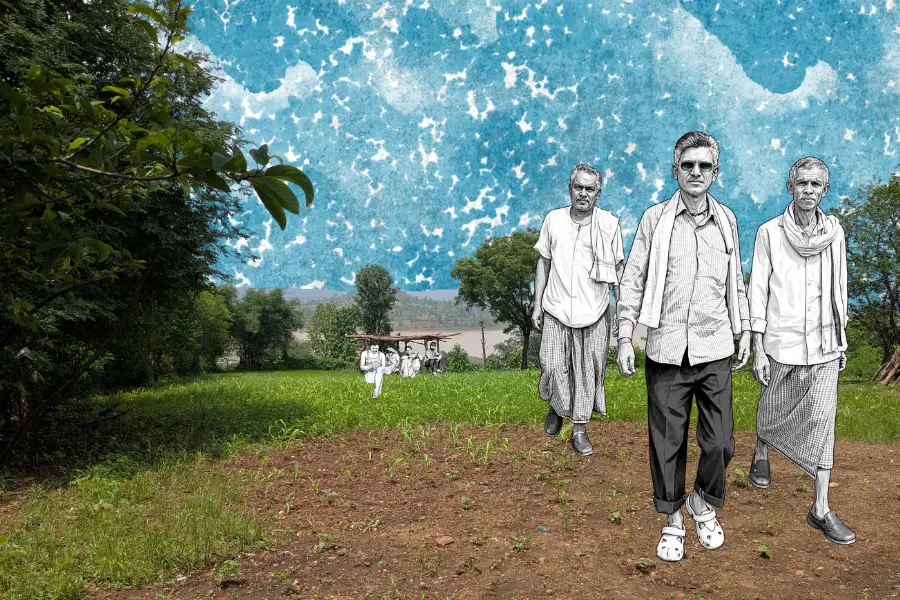
As forest resources dwindled and the village economy collapsed, the social fabric of the community was fraying. “People started to migrate out of the village for low paid work, while alcohol abuse soon spread among those who stayed,” said Gounturam Pando, the now-elderly pramukh (village head) of Bichalghati. He quickly realised that something needed to change.
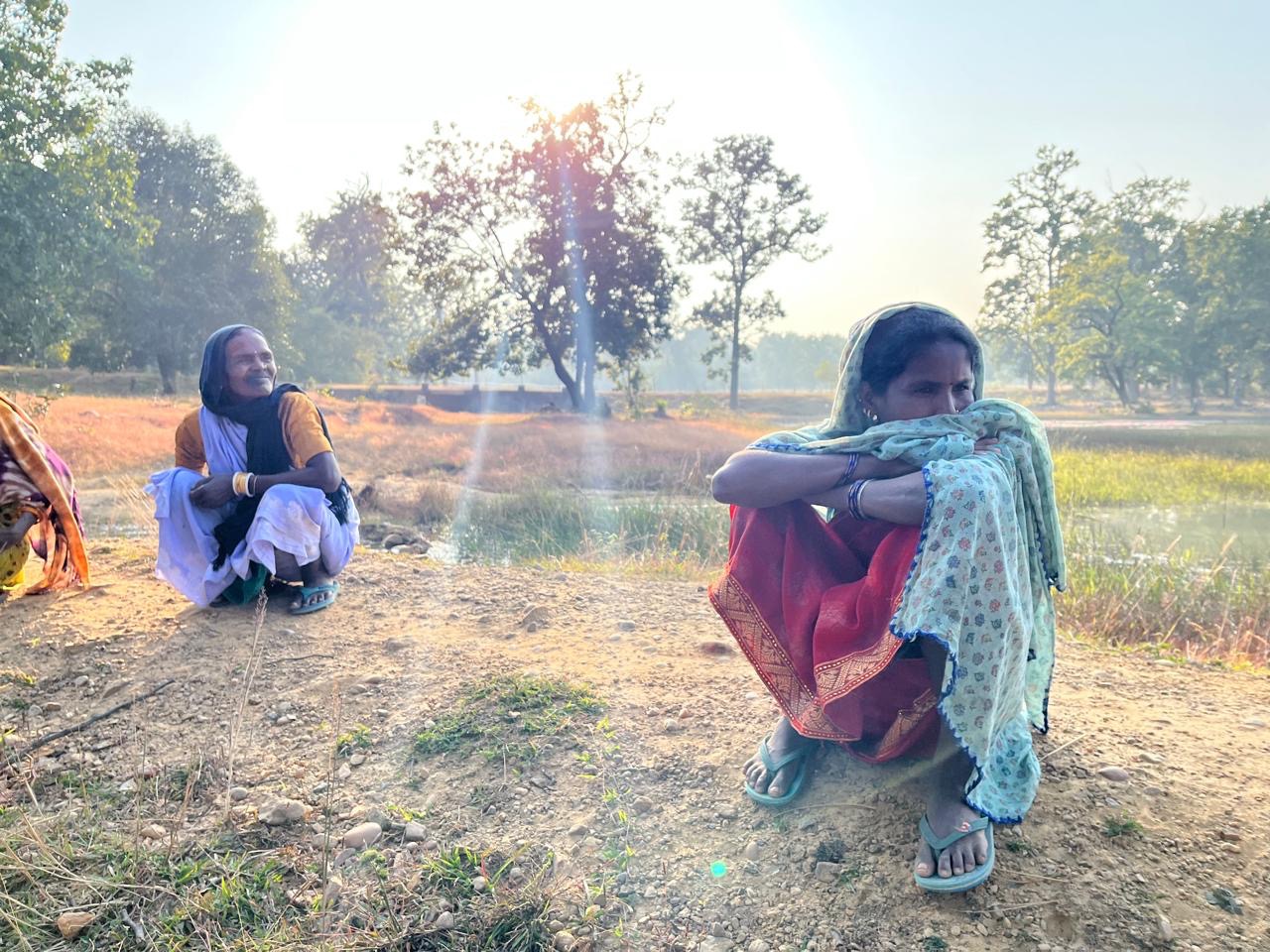
Women of Bichalghati village soaking in the sun | Captured by Sukriti
At the turn of the millennium, he heard members of Ekta Parishad, a movement for land rights in tribal heartlands, speak about land as being the tool for empowerment, self-reliance and collective change.
This convinced Gounturam to begin the movement for land rights within the village to secure rights over their forest commons. The forests had to be protected, and livelihoods needed to be built.
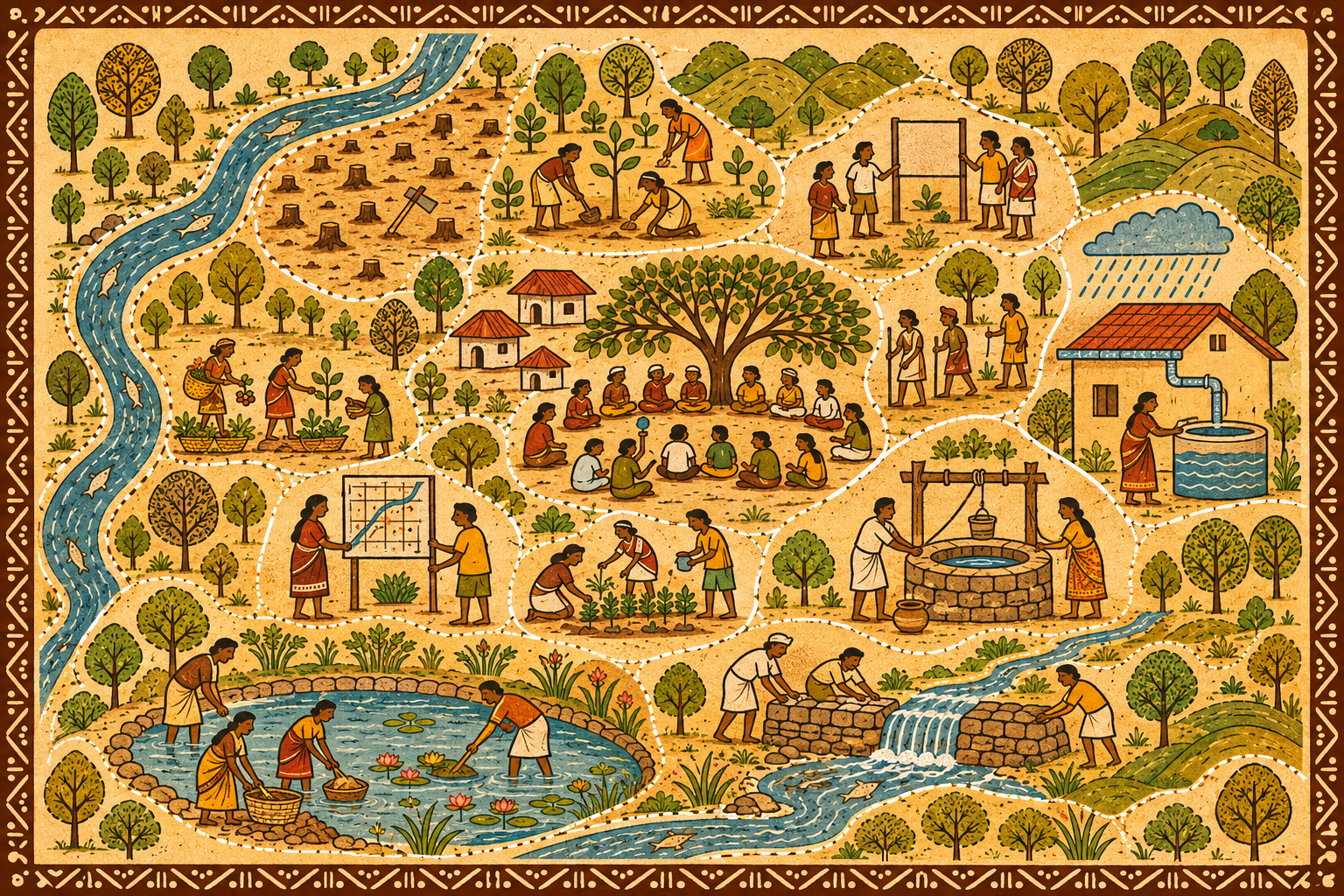
Within just two decades, the village was transformed. With land rights, villagers have built ponds and dug wells to protect their water resources; while, they have adopted agriculture as their primary income. Once dependent on hunting rabbits, squirrels and birds for sustenance, Bichalgati now sustains itself on its own produce.
Commons as means to independence
Across India, commons—shared lands such as forests, pastures, water bodies and mangroves— cover 205 million acres or one fourth of the country and form the lifeline for over 350 million people, particularly among the Scheduled Tribe community.
Communities have traditionally protected, restored and managed these commons through customary self-governance practices. These customary rights and practices, however, haven’t been formally recognised in many parts of the country. Among these communities are these tribal fisherfolk, like the Pando tribal community, who have traditionally identified and protected water sources.
Though India passed the Scheduled Tribes and Other Traditional Forest Dwellers Act, 2006 - commonly known as Forest Rights Act which recognises pre-existing rights of tribal communities over their forest common as individuals and as a community - its implementation has been slow. Many communities, including the Pando tribe in Bichalghati, never learned of the law or received their rights for decades after the legislation.
But once these rights are recognised, it opens up the possibility to use legislations, government programmes and schemes to benefit the community and the commons that sustains it. Bichalghati shows that rights lead to stewardship and ownership which can be powerfully transformative.
Individual Forest Rights for collective action
The Pando tribal community reside largely amid the undulating forests of Surguja district and neighbouring districts of northern Chattisgarh. The community, whose population is just around 40,000, is classified as a Particularly Vulnerable Tribal Group (PVTG), a category for tribal communities that are recognised to be among the most disadvantaged in terms of literacy, health, economic integration.
Most reside in small hamlets, much like Bichalghati. A few dozen houses with Khaprail (roofs made of baked clay shingles) clumped together amid forests. A small, uneven road connects them to the towns.
For most of the community, their way of life is intertwined in the forests. They survived on hunted meat and sabzi (vegetables) of mahua flowers, saal beej (seeds of sal tree) and sarauti (uncultivated leafy vegetable). A little bit of paddy or maize was the only thing that was grown on the margins of the forests.
Meanwhile, the community developed traditional ways to fish in the Rihand river (also known as Rer), located some 5km away. Hand-woven bamboo sheets are inserted across the river, like a porous dam. Fish are diverted on the side, into a section of the river that has been made shallow through sand and mud. A bamboo funnel is placed here to trap the diverted fish. The catch included mungri (Walking catfish), kotri (swamp barb variety of fishes), jhinga (prawns), and sirangi (Salmophasis Bacalia).
But fish catch is seasonal, and in the dry season, there is little water, let alone fish. To sustain their households, the community had limited either work in farms in other villages for low wages or extract firewood from forests to be sold in the markets. “This extraction of firewood caused our forests to deteriorate,” said Gounturam.
In 2011, members of Ekta Parishad arrived at their village and Gounturam found a solution that could help.“We learnt that if we own land, we could grow our own vegetables and earn an income,” he said.
He decided to encourage others in the village to apply for Individual Forest Rights (IFR), the rights granted to individuals/families to own and use forest land for habitation or cultivation under the Forest Rights Act. By 2018, 29 households received IFR titles, cultivating nearly 40 acres.
When having land was not enough
However, while land was allotted, villagers still had the issue of water accessibility. The area was perilously dependent on rain-fed agriculture. A failed rain could led to devastating losses.
Instead, relying on their traditional water knowledge and their know-how of the terrain, the village tapped into the Mahatma Gandhi National Rural Employment Guarantee Act, 2005 (MG-NREGA, which has been renamed and relaunched as the Viksit Bharat - Guarantee for Rozgar and Ajeevika Mission (Gramin)). The scheme guarantees at least 100 days of employment to rural households by creating village-level infrastructure.
Bichalgati used the scheme to excavate soil and built embankments around newly-created ponds.
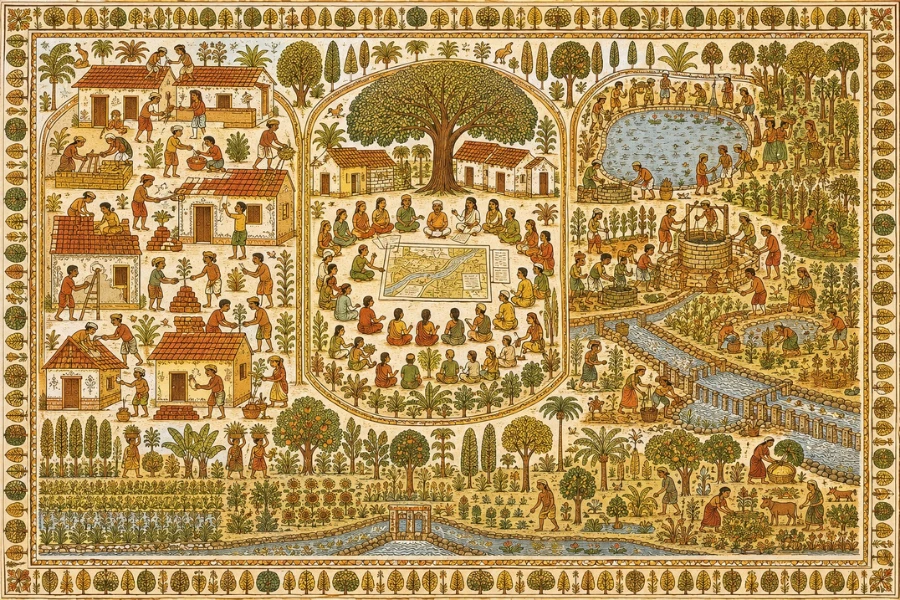
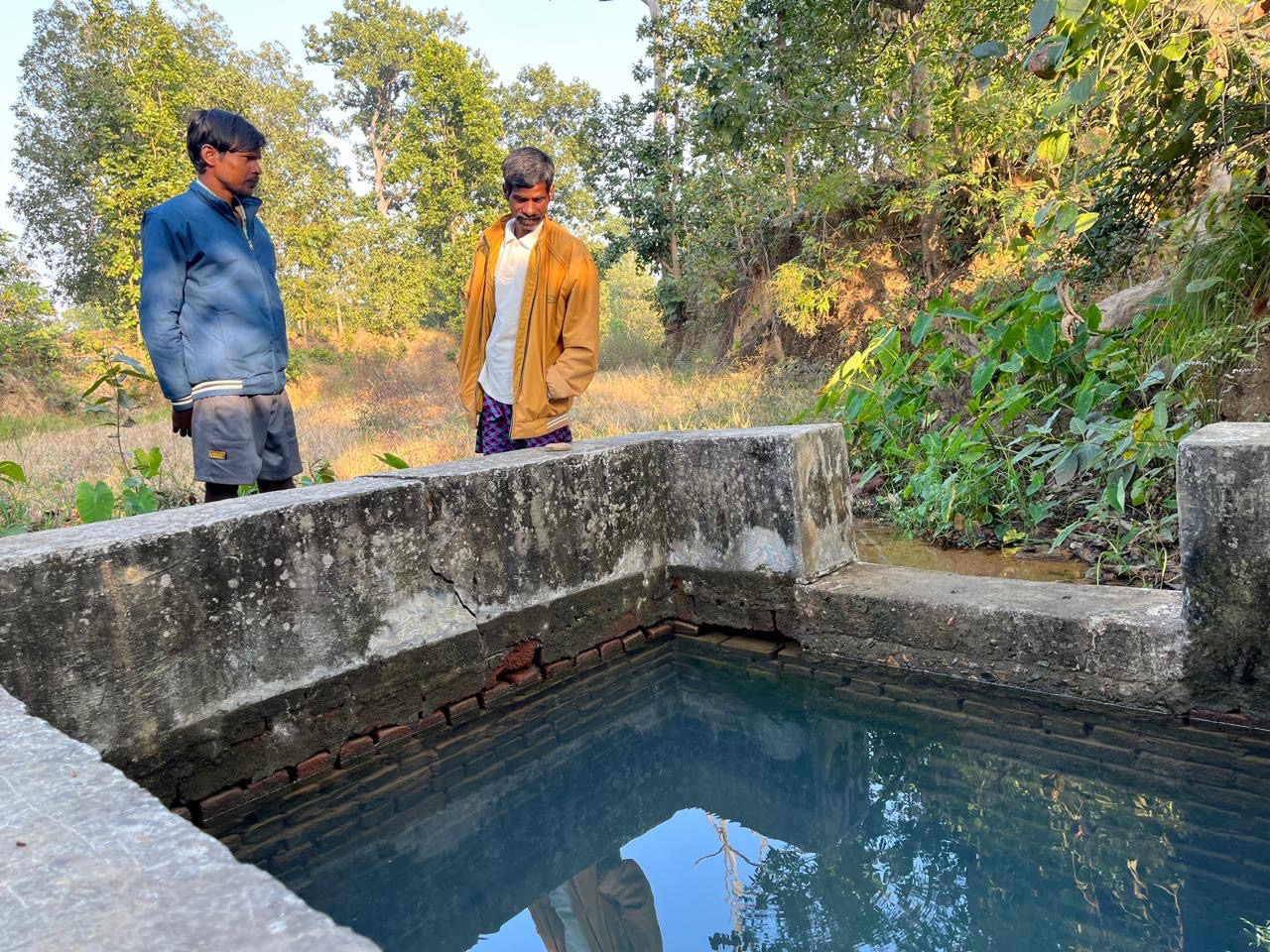
Dug wells and ponds were made, while medbandi (earthen embankments) ran across the agrarian landscape to direct the flow of water, slow its movement during spells of rains and increase soil moisture.
These helped with water retention and provided water for irrigation. Over the years, they have constructed nearly 15 small ponds across the village, with each participating worker earning roughly Rs. 1 lakh under the scheme.
When MNGREGA could not be used or if the funds were not enough, villagers volunteered their labour. Over the years, this effort became even more cemented as villagers started to observe tangible benefits.
“People started to realise that with just a few days of work, it would benefit all of us. Our labour would lead to profits for us,” Buddhelal, a farmer who has one acre of land on which he grows mustard, jatangi (Niger) oilseed and pulses.
In 2018, they constructed the largest dhodi, a large cylindrical hole in the ground much like a shallow well. By 2023, a 2 acre pond was dredged and rejuvenated. “Twenty men and women worked side by side for ten days straight, eating and resting in the same place,” said Gounturam.
Water security begets food security
The small and the large ponds can now serve another purpose. Villagers now plan to begin fish cultivation in the larger ponds, while several smaller ponds built in the village have already evolved into thriving fish habitats.
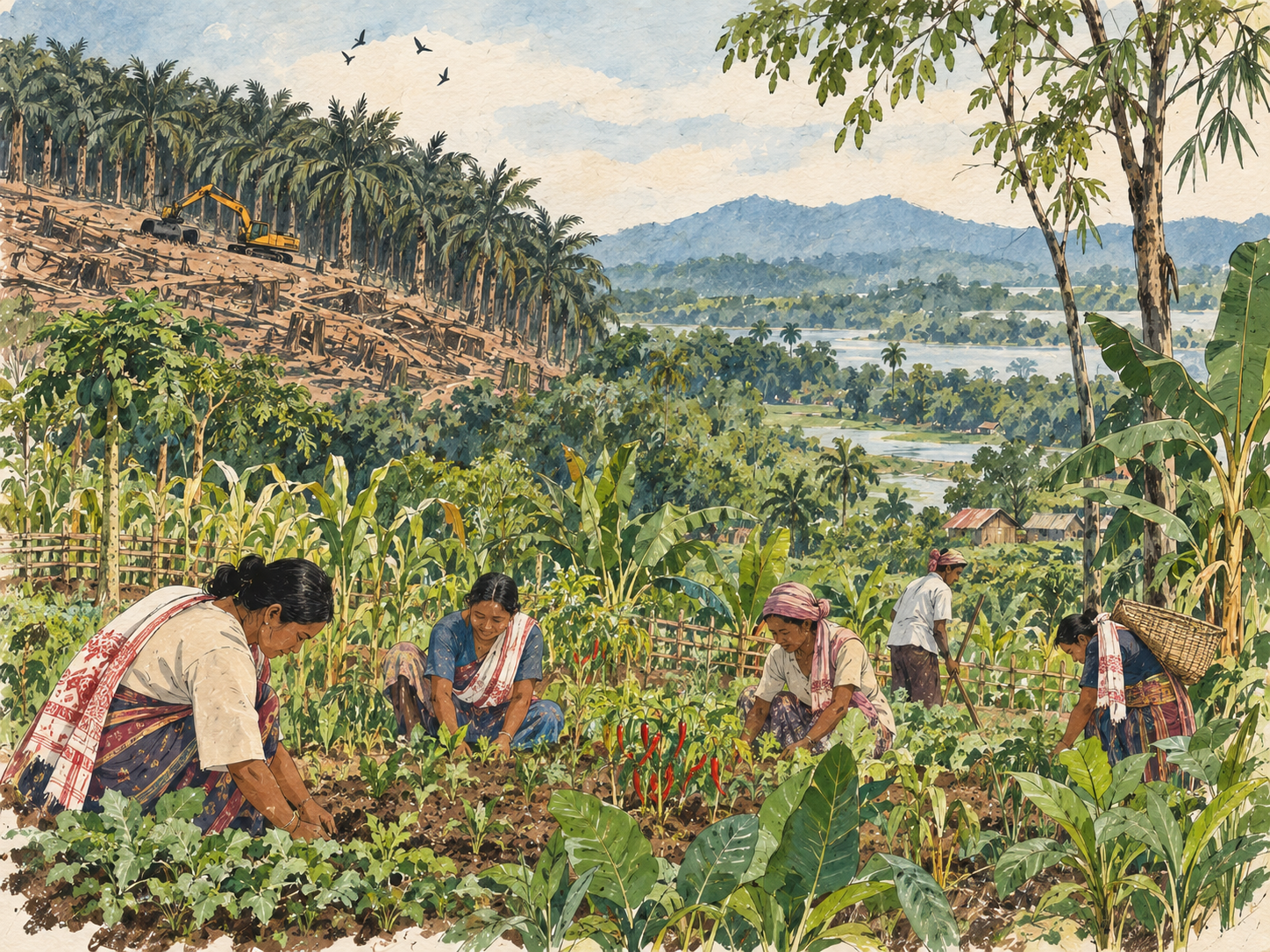
Meanwhile, the farmlands around are thriving, with villagers now cultivating a range of crops including potatoes, tomatoes, cauliflower, bottlegourd, ginger, sugarcane and a variety of pulses such as arhar, kulthi, urud. "What we eat has really improved. Earlier, we had to work as wage labourers to buy a few vegetables. Now we can grow a variety of vegetables ourselves. This is possible only because we now have water for it,” said Manmati, who received half an acre under IFR.
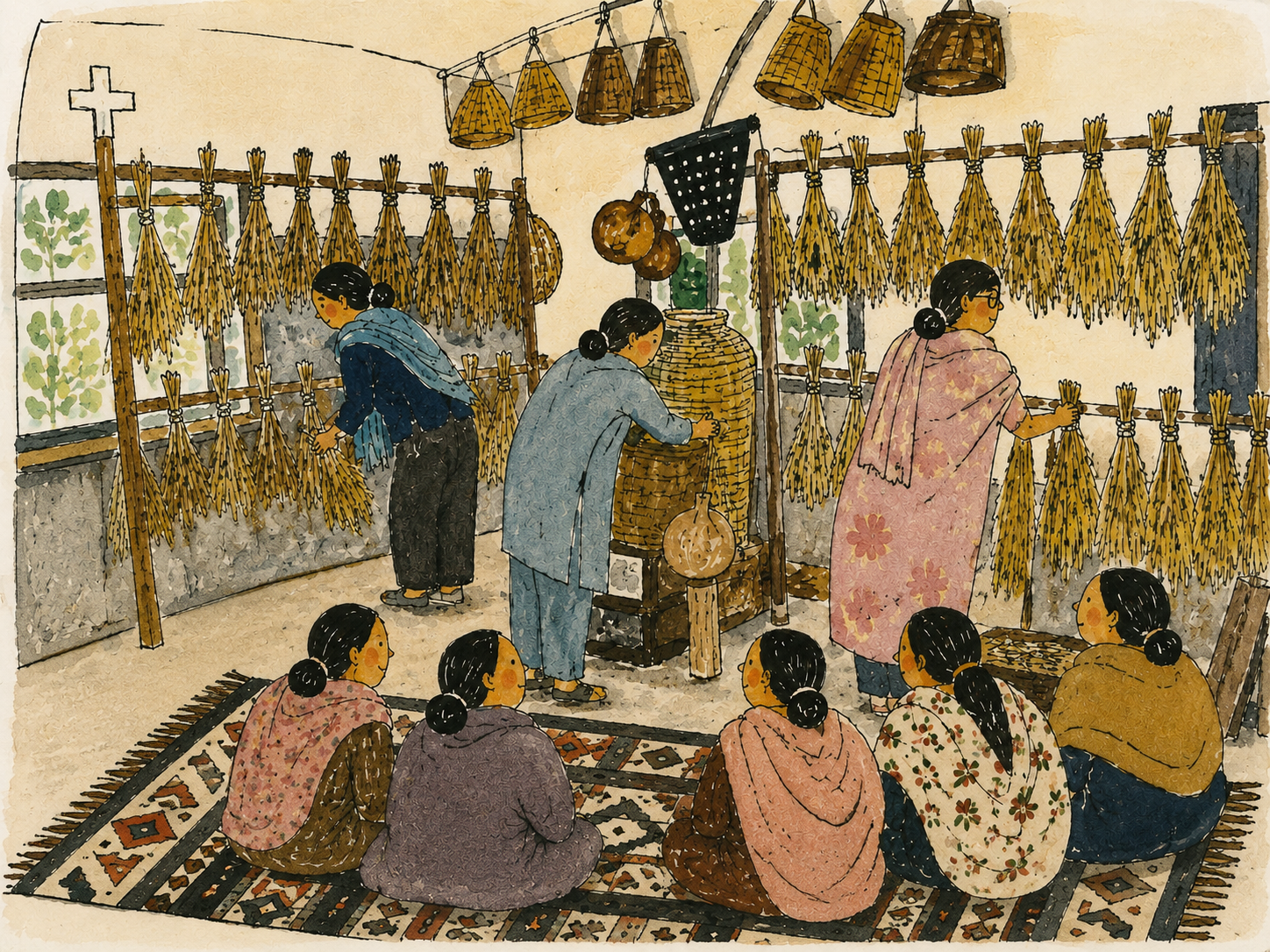
As part of the revival of agriculture in the village, many farmers have resolved to use only natural fertiliser made from livestock droppings and compost; and use indigenous seeds such as kodo (Paspalum scrobiculatum, a millet) and bajra (Pearl millet) and mullein seeds (from the Verbascum genus which are commonly used as a herbal remedy). These seeds are stored in a bucket woven out of paddy stalks.
A new confidence takes root
“Villagers have always distrusted hybrid seeds believing it was not good for cooking. Now, they have understood the importance of adopting sustainable practices and living synchronously with nature,” said Raghuveer Mahant, a member of Ekta Parishad working with the villagers.
He believed that the process of getting the forest right titles had increased awareness of rights among the villagers. “We can see this in how the village collectively approaches local government officials for implementation of a government scheme,” said Mahant.
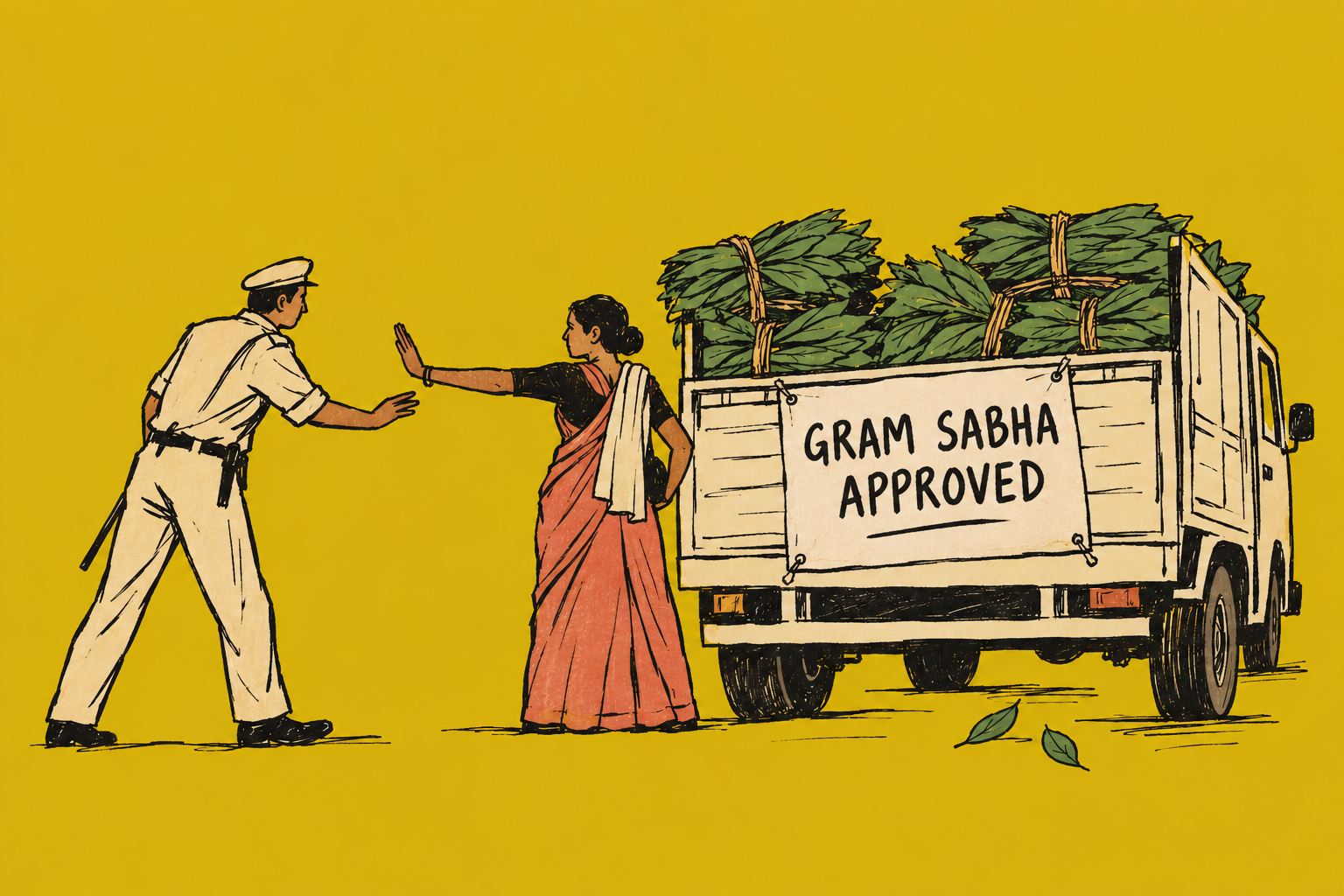
A key issue still pending for the village is the Community Forest Rights, which recognises a village’s collective authority to access, manage and protect its traditional forest resources. Currently, households earn about Rs 15,000 from selling mahua (Madhuca longifolia) and Rs. 1,200 from tendu (Diospyros melanoxylon) annually. Though the gram sabha submitted its CFR claims in 2018, the titles are still pending.
But those in Bichalgati feel that even the titles will be given soon. There is a feeling that hope is always on the horizon. The grass-thatched mud huts of the village have been replaced by concrete houses under government schemes pushed by the gram panchayat. The dug-wells, ponds and embankments are now complemented by solar-powered borewells.
Bichalgati, which was once struggling with unemployment and alcoholism, feels like a new chapter has begun.