.webp)
Solapur, Maharashtra: The reality of living in Solapur’s drought-affected Bhend village hit 21-year-old Aishwarya Mate in 2016, soon after her marriage. She had to walk two to three kilometres to her farm, carrying pots of drinking water on her head. Despite working tirelessly on their eight-acre land, she, along with her in-laws, produced barely enough to sell to the markets. Farming added just Rs 50,000 a year to her husband’s meagre salary of Rs 10,000 monthly from a private job.
Nearly every one of Bhend’s 1,400 farmers had the same story to tell. Exhausted by this, Aishwarya often insisted on moving to a city for a better life.
In 2018, Paani Foundation, a non-profit organisation founded by actor Amir Khan, offered to help the village restore groundwater levels. While official measurements show groundwater at 400 feet, villagers claim their borewells get water only at 600 feet.
Out of options and desperate for solutions, the 3,200 villagers unanimously agreed in a Gram Sabha to offer their voluntary labour for watershed management work, which, the foundation said, could help increase the water level.
“We did not know whether this work would give any positive results. But we worked three to four hours daily for four months in summer for two years without expecting any money in return. The villagers were more than happy to come together for a meaningful purpose,” says Usha Mate, 45-year-old farmer and a Gram Panchayat member.
For the next two years, residents pooled their labour, increased the groundwater levels and revived degraded common land into green woods. Consequently, farm yields increased, households generated more agricultural work, which reversed migration and increased overall incomes. Importantly, as the work had to be collective; which means rigid caste lines had to be blurred.
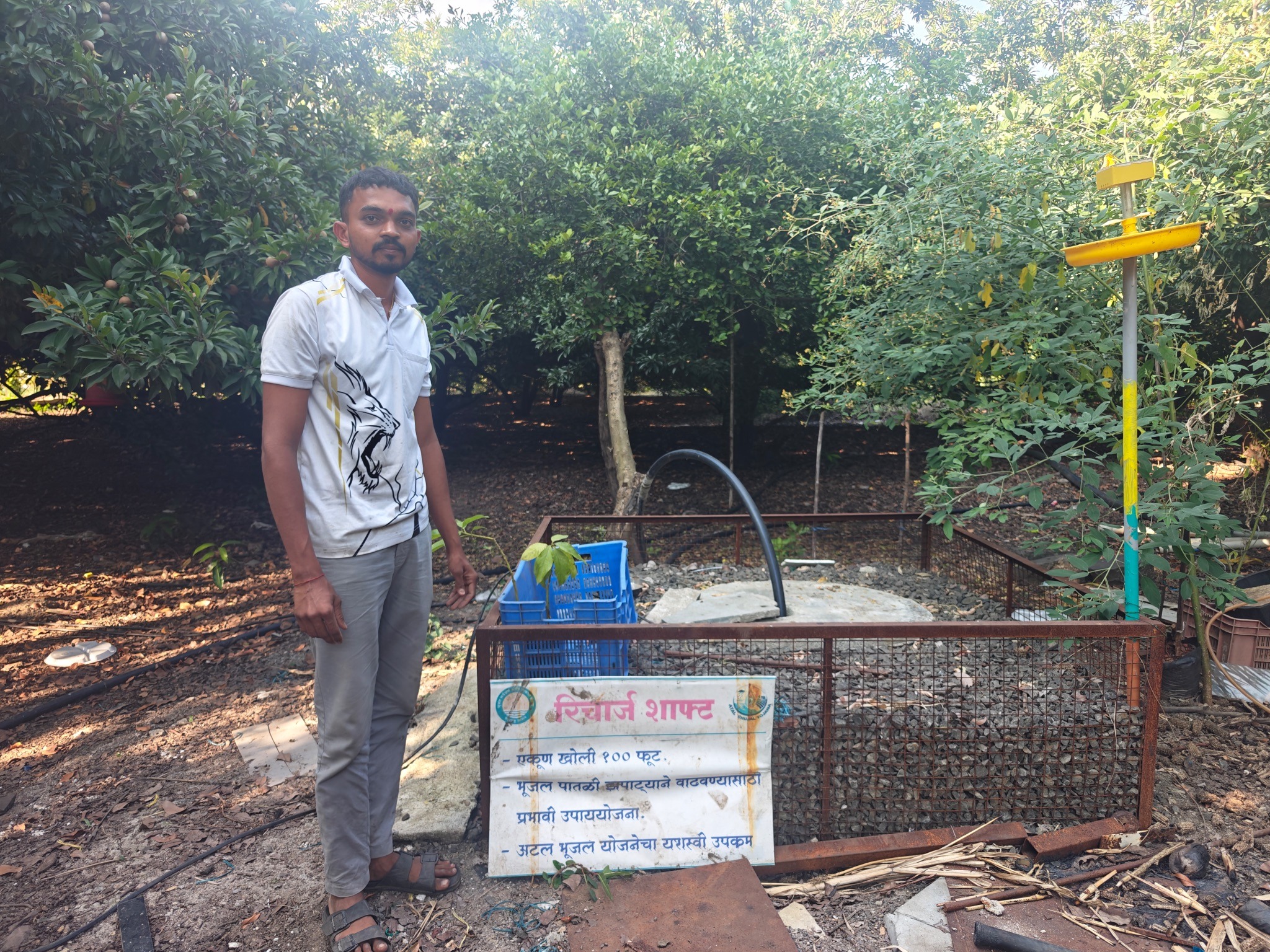
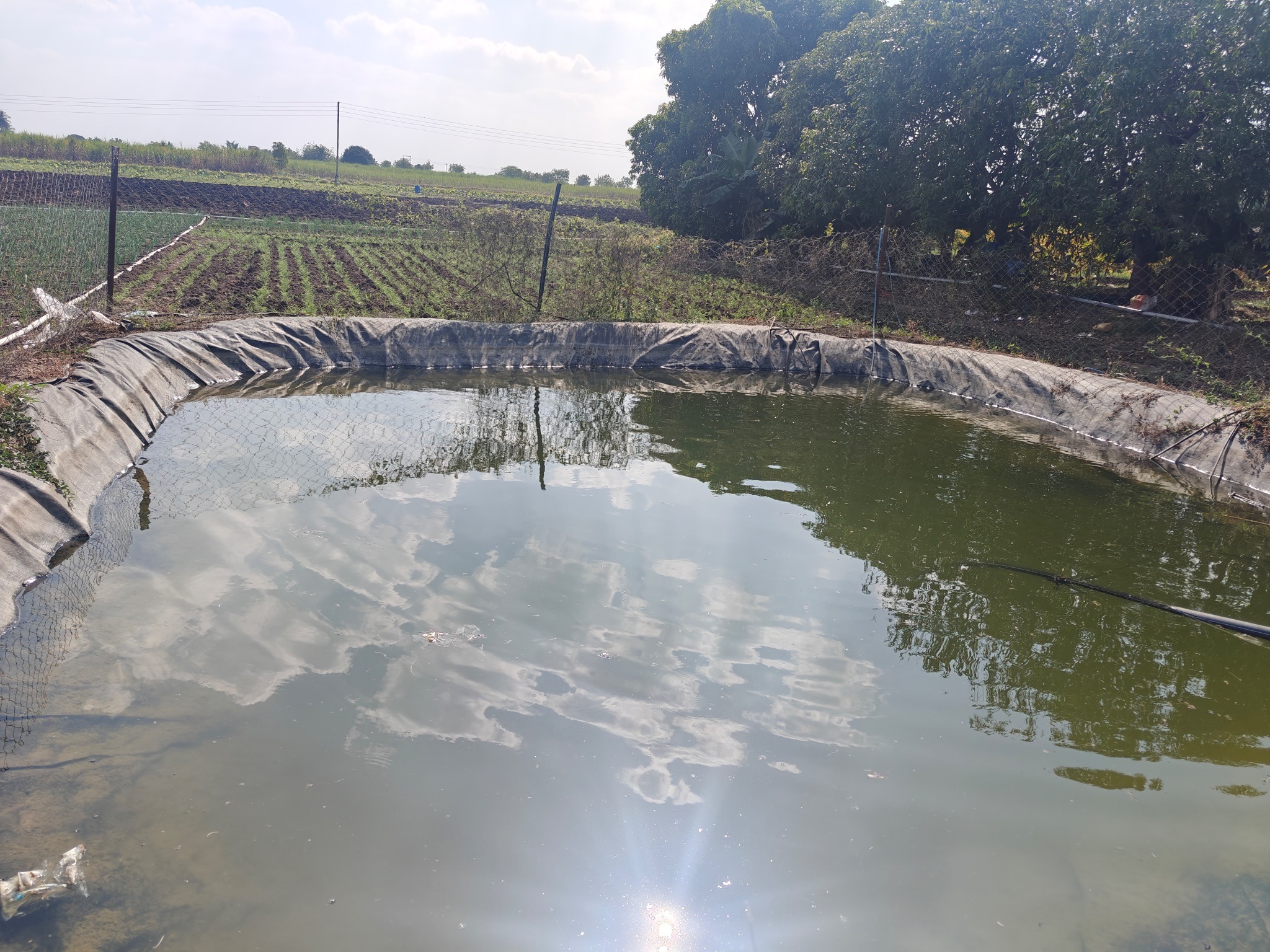
Seven years later, the village carries forward the legacy. Now, groundwater is at just 100 ft. The village’s 800 borewells, 240 wells, 35 farm ponds and seven check dams remain full of water throughout the year.
All this because, one fateful day, the village decided to restore the common resources that binds them together.
Protecting commons, protecting livelihoods
Commons are shared lands such as forests, pastures, water bodies and mangroves, which cover 205 million acres, or one-fourth of India, and form the lifeline for over 350 million people, including marginalised groups.
Communities across India, like Bhend, are showcasing that reclaiming, restoring and managing commons through customary self-governance practices plays a crucial role in their ecological, social and economic upliftment.
“Villagers were willing to work hard to change the situation for the better. Paani Foundation had proposed this work in many villages in drought-affected districts of Maharashtra. But the best results were in Bhend village because of the efforts of the villagers,” said Sushant Gaikwad, Division Co-ordinator, Paani Foundation.
Such is Bhend’s transformation that village youth have used social media platforms hoping to inspire others in the region. Their effort led to the village winning several awards for water management.
Falling Yield, Dropping Incomes
Solapur district, including Madha Taluka, where Bhend village is, drought-prone. Groundwater levels have plummeted due to poor, erratic rainfall and extensive extraction by farmers and industries, such as sugar mills, brick kilns and food processing units in the region.
Bhend had spent years sending pleas to the government to address their water woes. Various government schemes, such as Jal Yukta Shivar, have failed to raise groundwater.
“The (government) schemes could not reverse the (groundwater level) condition due to poor implementation,” said an official from the state Agriculture Department, who wished to be anonymous.
The cycle of failing farms and poor rains forced many to migrate for work.
Avinash Salukhe, 25, had to construct roads and dig wells in extreme heat of summers for a mere Rs. 200 to 300 daily wage because farming on his 1.5 acre land was unsustainable.
“I could only work at my farm in the monsoon months. In other months, I used to work as a labourer for seven to eight months since I was 17 years old,” says Salukhe.
But 2018 was a milestone year in the village. The raised groundwater changed work and life in Bhend village.
Rising Water Table, Increase Income
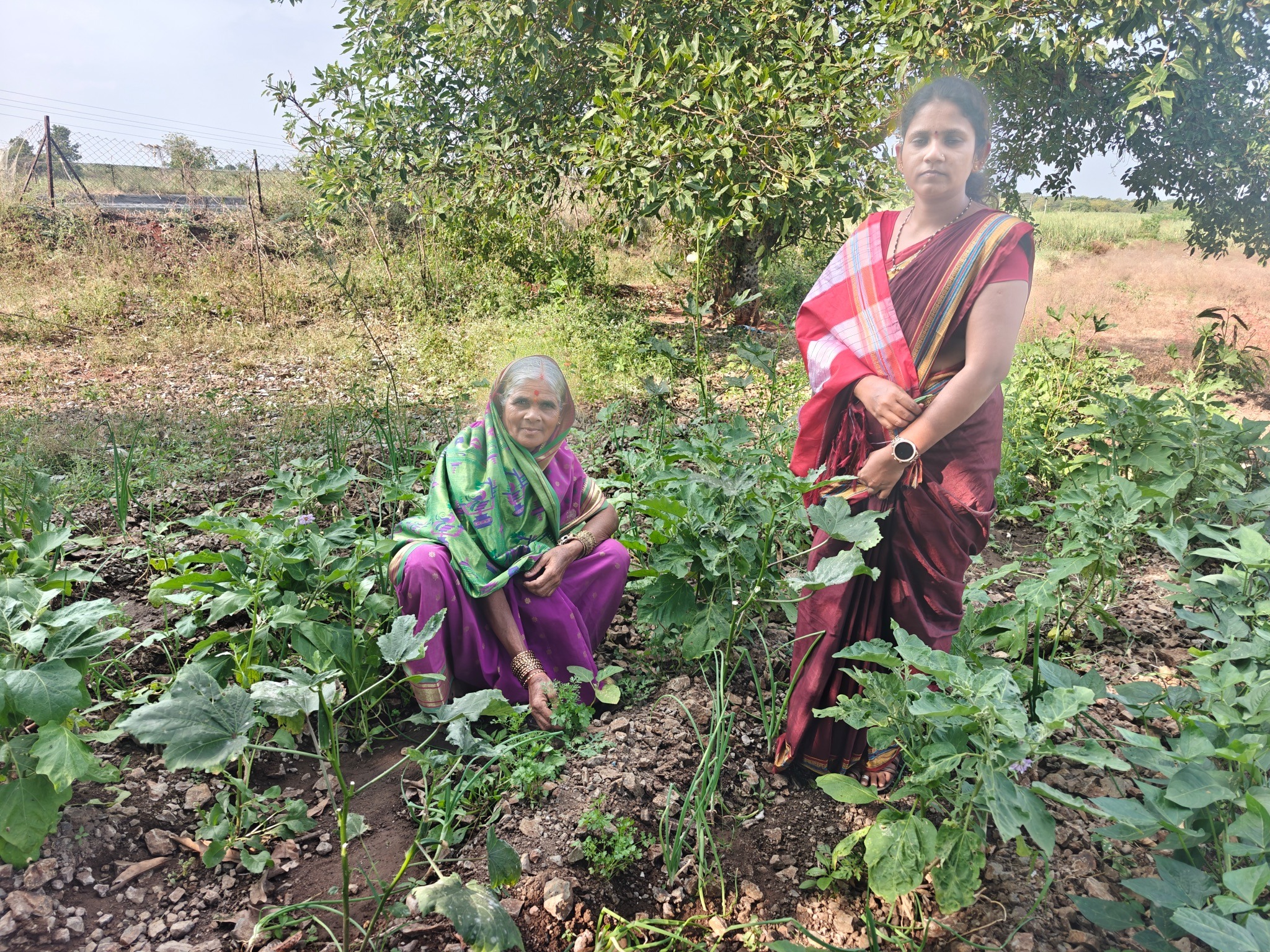
Fifty-year-old Mumtaz Mulani’s courtyard is busy with activity. An automatic chafe cutter is chopping fodder for the sheep. Her two grandchildren are playing in the open space, and a small distance away, her recently ploughed one-and-a-half-acre farmland is bordered by a vegetable plantation.
“I cultivate vegetables and earn more than Rs 10,000 per month. With the savings, I bought sheep and now with easy availability of water, I can also grow fodder on my field to feed them,” says Mulani.
Many families in the village, like Mulani’s, saw an immediate rise in incomes and changed work patterns as increased groundwater led to better farm produce.
Mulani’s husband, who used to work for Rs 200 daily wage, now works at the family farm instead. With her family’s savings, her two sons started alternate work as a chicken shop owner and as a driver, respectively.
The work in the village began with mapping the topography. Experts from Paani Foundation, the Agriculture Department and Water Resources Department, along with the villagers, marked slopes, land patterns, checkdams and lines to dig Continuous Counter Trenches (CCTs), and deep CCTs along the slopes so that rainwater could percolate to the ground.
Once the map was ready, the villagers got to work with their shovels and sickles. Over 500 to 600 villagers, including more than 200 women, across all communities - upper castes, Dalits, De-Notofied Tribes (DNT), and Other Backward Classes - would start work at 7 am to 11 am and resume it at 6 pm till 9 pm daily in the summer months of 2018 and 2019.
“We dug trenches of 1.5 to 2 feet and removed the silt in all seven check dams spread over 15-20 square kilometres,” said Santosh Dalvi, an ayurvedic doctor, who then the sarpanch of the village.
The villagers continue this practice every summer since then, he added.
“We would get tired in the summer heat sometimes by digging at rocky places or continuously taking out soil, carrying it on our heads and dumping it in nearby farms. But chitchat and laughing with each other made that physically demanding work easier,” recalls Usha Mate.
Mulani joined the village’s efforts to improve groundwater by preparing tea, breakfast and meals with 25 other women to serve the villagers who were doing the hard labour.
“We would attend meetings to learn the importance of watershed work, how it is done and the benefits we would get once the groundwater level increases. We were eager to volunteer in some or the other way, like serving food,” says Mulani.
With the collective effort, a total of 1.25 lakh square meters of trenches were created by voluntary labour participation in two years. Additionally, three lakh square meters of trenches were created using excavators donated by non-profit organisations based in Solapur, with funds for fuel provided by the state government.
“Voluntary labour and machines were used to desilt seven check dams that are 15 to 20 sq km big,” says Manisha Santosh Dalvi, village sarapanch and the spouse of former sarpanch, Santosh Dalvi.
The voluntary labour work, for which the whole village contributed, also led to dilution of caste boundaries.
Living on the fringes and socially excluded from the village, 55-year-old Chamu Maruti Kale is from the Paradhi tribe, one of the de-notified tribes. Historically, the tribe is labelled as habitual offenders and for doing menial work in the villages, such as hunting rats.
“In 2018, the sarapanch called my wife and me, along with other villagers, to carry out the watershed work. Our participation in the village's common work changed our relations with the other villagers. Though we never faced social boycott earlier, we were a little isolated,” says Kale.
He adds that his family is now often invited to family events and weddings of people belonging to other castes. Finding work at the village farms is also relatively easy for him. His involvement in the village meetings and regular flow of income also enabled him to benefit from a government housing scheme, buy cattle and sheep, and add a room to his existing one-room house.
The Fruit of Labour
With the availability of water across the village, many farmers have invested in cultivating cash crops like guava, banana, pomegranate, and dragon fruit, which give good returns and which were otherwise not possible to grow in a region with a low water table. The produce is sold in the markets in Pune and Mumbai, and each family generates an average income of above Rs 2 lakh per acre of produce.
An increasing number of farmers are also cultivating sugarcane and traditional crops like pulses, cereals, grains, and vegetables that also fetch a good rate in agricultural markets.
“With the work on the farm increased, I now have to hire one or two labourers for Rs 600 daily wage to till the land, or to look after drip irrigation. I even use their labour for harvesting bananas at the orchard that gives me an income of Rs 3 lakh or more every year,” says Salukhe.
The farmers receive additional help from the central government's Pradhan Mantri Krishi Sinchayee Yojana (PMKSY) subsidy where they have installed drip irrigation on their farmlands. The International Crops Research Institute for the Semi-Arid Tropics (ICRISAT) also regularly checks the soil health in the region and suggests which fertiliser to add to maintain soil health.
The availability of water has made the arid, dry village green with grass throughout the three seasons. With fodder and water, the villagers are increasingly investing in livestock and cattle, which adds another source to their income.
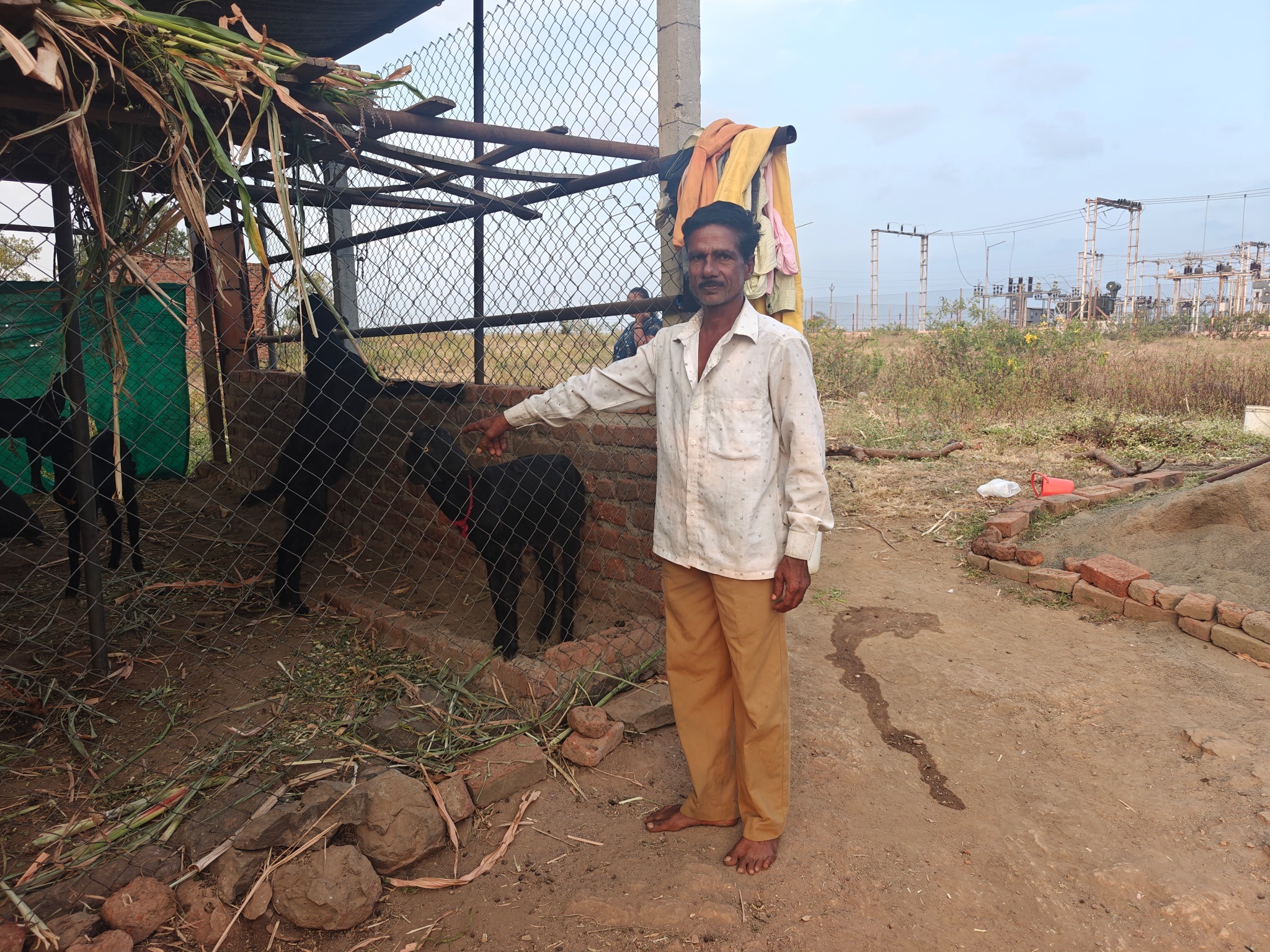
For Suraj Mulani, a landless youth from the village, his 10 sheep are his lifeline that give him income through milk and meat.
“Almost all families now have livestock totalling 1,800 jersey cows, 4,000 sheep, and 600 buffaloes that provide milk to four dairies in the village,” says Suraj Mulani, who volunteers to help the village by sharing knowledge about new trends in farming.
With a multi-fold increase in the farm work and income from the farmlands in Bhend village, it is now easier for the landless labourers and women to get agricultural labour work within the village itself. As the work increased, so did the wages.
“Our farmers employ 200 to 300 labourers from nearby villages on daily wages between Rs 500 and 600,” says Ajit Dalvi, a farmer and resident of the village.
Household savings in the village are also being invested in buying two-wheeler vehicles, tractors and harvesting machines, he adds.
Green Spaces
Village lands, which were barren a few years ago, are now lush spots. To retain the groundwater, the villagers took to planting trees as their next mission. They used common land, like 100 kilometres of forest land, 25 kilometres of grazing land, community centres like temples, Gram Panchayat office, schools, and even empty spaces near roads to plant trees.
The villagers also planted fruit trees in their courtyards to support the village’s common goal of creating green lungs.
“I had seen Oxygen Park in cities and wanted to develop a similar park for the village. We planted over 100 trees on the grazing land,” says Santosh Dalvi.
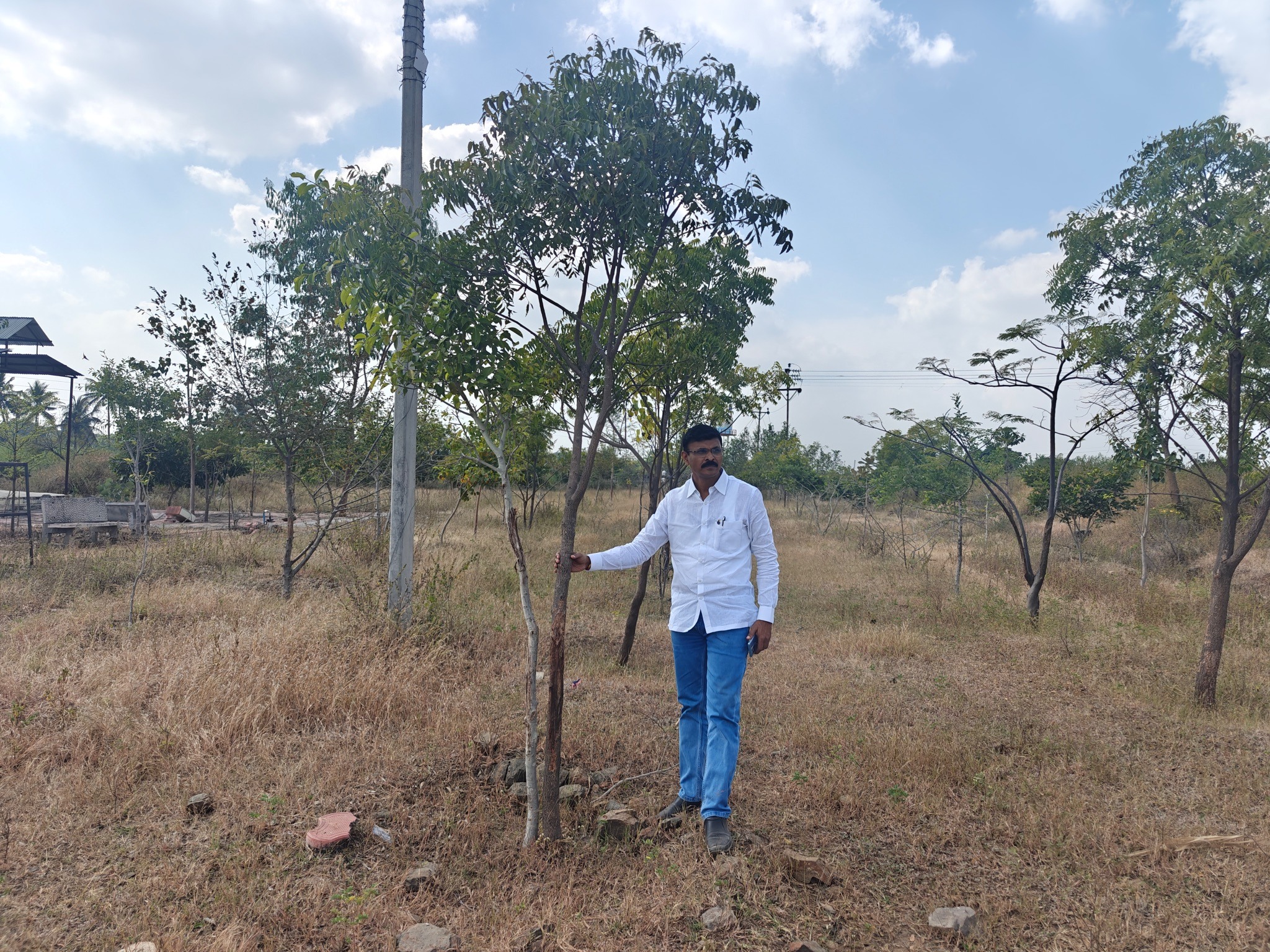
However, procuring over 25,000 saplings of indigenous trees like peepal, sacred fig and banyan, which the villagers wanted to grow, was a challenge. They could only source a fraction of saplings from the Agriculture Department, Forest Department and private nurseries.
With help from the Foundation experts, the villagers overcame this challenge as well. They learnt the technique to create saplings from cuttings at a local nursery.
“We bought seeds, treated them and tested them for germination quality. We also used cutting method, like taking a stem of a grown plant, for tree plantation,” said Vikas Dalvi, a village youth, who volunteered for the initiative.
Vikas, with a team of 10 young men and women from the village, also created social media accounts on X and Instagram to spread the success stories of the village. The team shares how the village increased groundwater level, and how families generated alternate sources of income once its water troubles were over.
“We created social media accounts because it is a trend everywhere now,” he says.
Pride and Recognition
Bhend village has received accolades for its water conservation work. It won the R.R. (Aba) Patil Sundar Gaon Puraskar Yojana (Beautiful Village Award Scheme) by Maharashtra government for clean, developed and smart village in 2020-21 and Satyameva Jayate Water Cup, given by Paani Foundation, in 2018-19.
“Paani Foundation carried out work for only 45 days in two years. But Bhend village continued their work, added tree plantation and converted it into money,” said Gaikwad.
The villagers believe that the watershed management work united them, and they understood how working together for a common cause can benefit all the households.
“Voluntary work and our regular meetings to discuss progress and challenges we face brought all of us together,” says Mulani.
The village regularly receives teams from other villages that want to replicate their model of watershed management. Various social organisations have also expressed interest in studying the village’s success story.
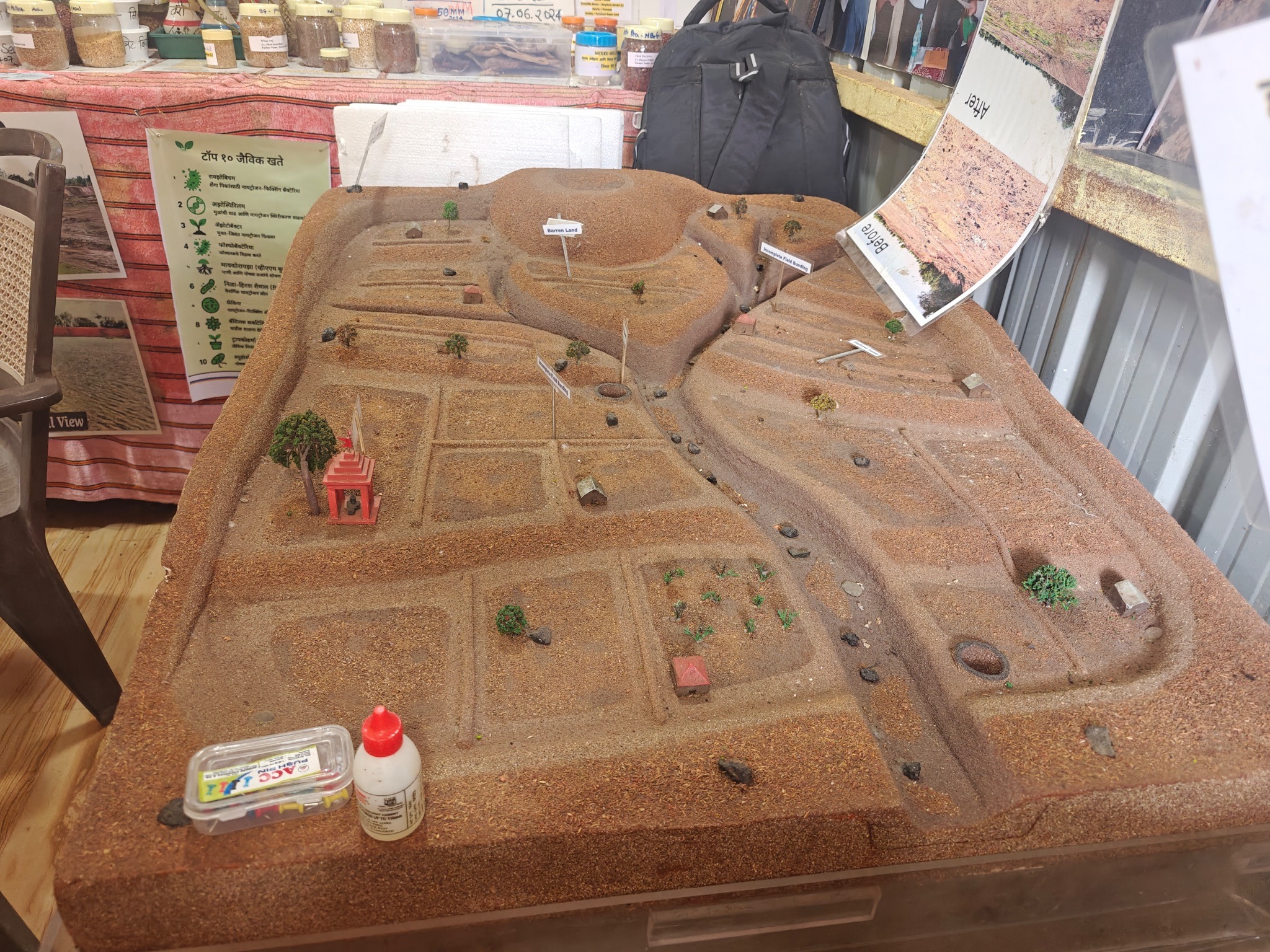
“The work done at Bhend is commendable,” says Ashwini Jagtap, agricultural officer, under whose jurisdiction Bhend village lies.
Meanwhile, Aishwarya Mate’s life has mirrored the transformation of Bhend. She completed her graduation. “I have started to work as an Anganwadi Worker and I now drive my own bike,” says Aishwarya.
She no longer dreams of migrating to the city. Her farm now has a fruit orchard, sugarcane and other crops. The family’s 16 jersey cows bring them an income of more than Rs 5 to 6 lakh per year.

.jpg)
.webp)
.avif)
.webp)
.webp)